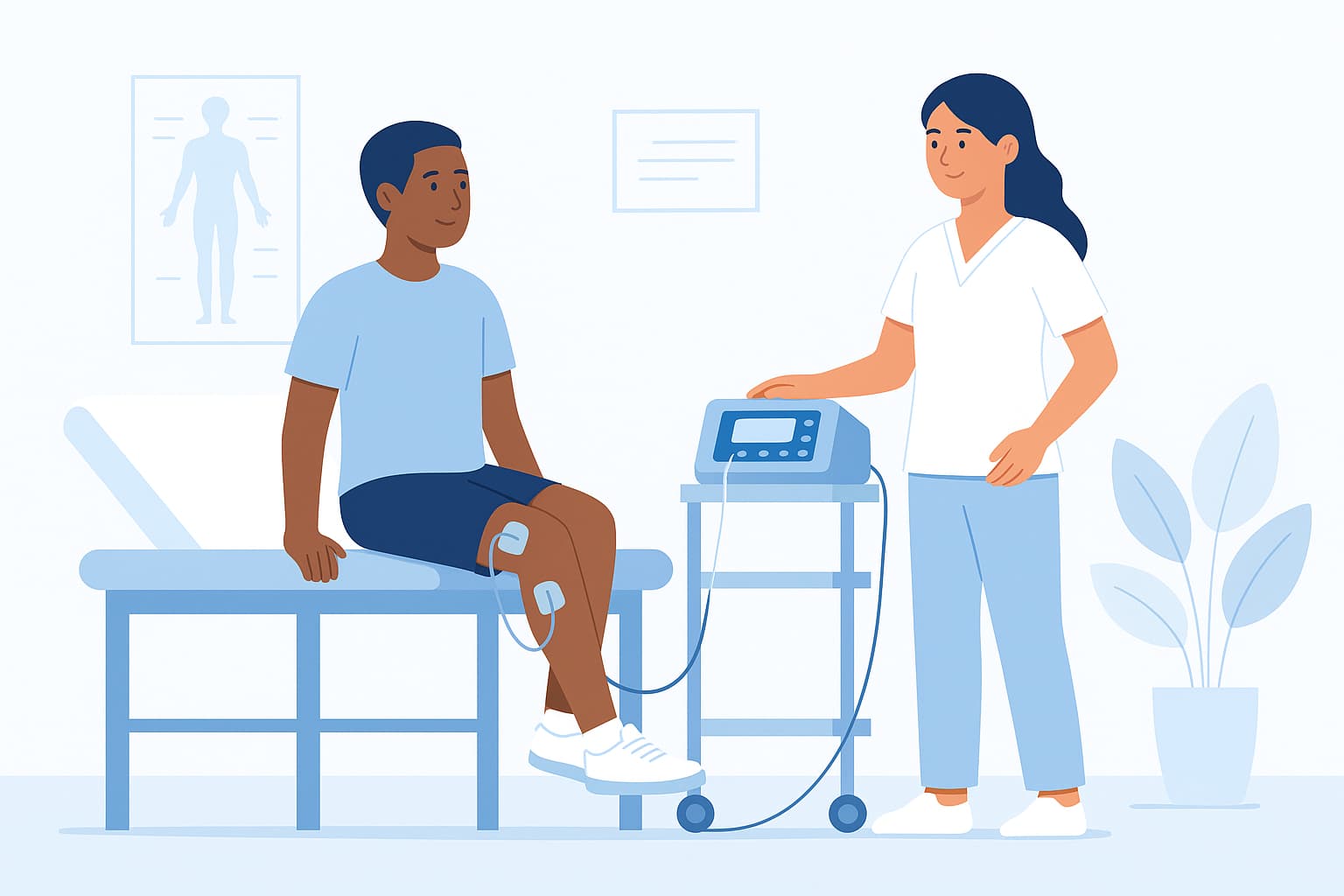
The Neubie machine has been gaining traction in physical therapy because it operates differently from conventional electrical stimulation. Instead of using alternating current, it delivers pulsed direct current, which allows therapists to guide muscle activation more intentionally during movement
Here in Overland Park, we use the Neubie as one option alongside exercise and hands-on care, particularly when someone is experiencing persistent pain, weakness, or difficulty activating certain muscles.
The device is FDA-cleared to improve mobility, reduce spasms, increase circulation, and support neuromuscular re-education. Research on neuromuscular electrical stimulation shows that combining stimulation with active exercise can improve strength, movement control, and functional outcomes across several rehab populations.
Because the Neubie is designed for use during active movement, many clinics use it to help with chronic pain, limited mobility, post-surgical recovery, and muscles that have difficulty firing on their own.
What is the Neubie Machine?
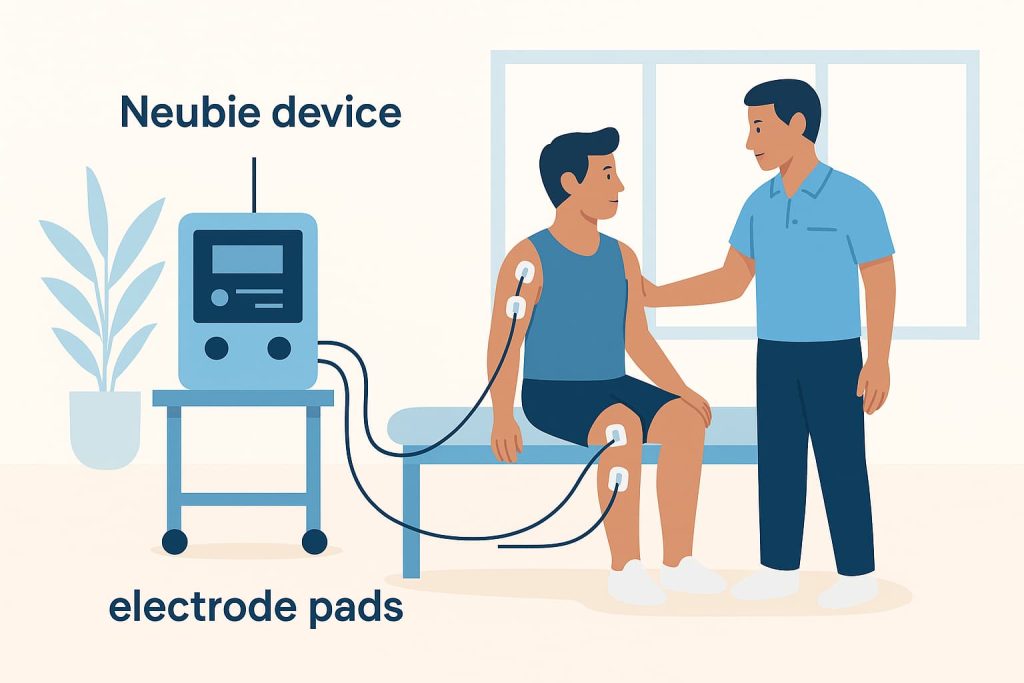
The Neubie is a neuromuscular electrical stimulation (NMES) device that uses pulsed direct current rather than the alternating current used in most traditional e-stim machines.
In simple terms, the Neubie is a rehab tool that sends carefully controlled electrical signals to your nerves and muscles while you move, with the goal of helping your body:
- Activate weak or “shut down” muscles
- Reduce pain and muscle spasms
- Improve circulation and range of motion
- Re-train movement patterns after injury or surgery
The Neubie is classified as a powered muscle stimulator and is FDA-cleared as a Class II medical device for functions such as maintaining or increasing range of motion, managing chronic pain, and preventing disuse atrophy.
The company that makes the Neubie describes it as a pulsed direct current neuromuscular stimulator designed specifically for neuromuscular re-education, meaning it helps the nervous system learn (or relearn) how to coordinate muscles more efficiently during movement.
In a physical therapy clinic, the Neubie is one tool among many. It is typically used alongside exercise, manual therapy, and education to help people with conditions such as shoulder pain, post-surgical weakness, chronic pain patterns, or difficulty activating certain muscles during everyday activities.
How the Neubie Machine Works
Most electrical stimulation devices in rehab use alternating current (AC), which rapidly switches direction. The Neubie works differently. It uses pulsed direct current (DC), which allows the current to flow in one direction and gives therapists more control over how specific nerves and muscles respond during movement.
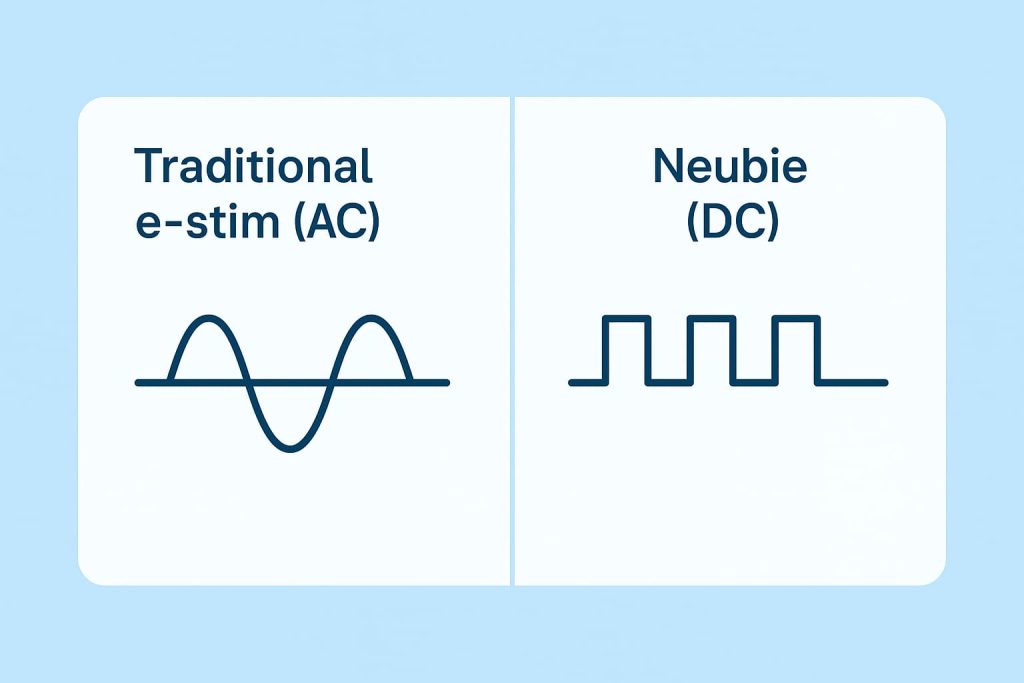
Studies on neuromuscular electrical stimulation have found that pairing stimulation with active exercise improves muscle recruitment, proprioception, and overall movement control.
In other words, the combination of current plus movement helps the nervous system learn how to fire muscles more efficiently.
Neuromuscular Re-education
The Neubie is designed around movement-based neuromuscular re-education. Instead of lying still while the machine does the work, you typically perform guided movements while the device stimulates specific muscles. This combination helps the nervous system relearn how to:
- Fire muscles in the right order
- Improve joint stability
- Reduce compensation patterns
- Restore smoother, more efficient motion
Motor relearning during active movement is supported by evidence that NMES combined with voluntary motion produces greater gains in strength and function than passive stimulation alone. A systematic review on NMES-assisted exercise highlights these benefits across several rehab populations.
Scanning for Dysfunctional Patterns
One unique aspect of the Neubie treatment is the “mapping” or scanning process, in which the therapist uses the device to identify areas of heightened sensitivity or neuromuscular dysfunction. These spots often correspond with areas that feel tight, weak, or difficult to activate during movement.
Once identified, the therapist adjusts electrode placement and guides you through movements to retrain that pattern.
Active, Movement-Based Treatment
Because DC stimulation tends to create stronger sensory feedback, many patients feel more connected to how their muscles are working. Research on movement-based NMES suggests that this sensory feedback can improve muscle timing and reduce pain through better neuromuscular control.
Research on movement-based NMES suggests that stimulation paired with functional exercise enhances the nervous system’s ability to learn and coordinate movement.
In short, the Neubie isn’t passive e-stim. It is designed to help you move better while you’re moving, tapping into the nervous system to rebuild strength, mobility, and coordination more directly.
Conditions the Neubie Machine Helps Treat
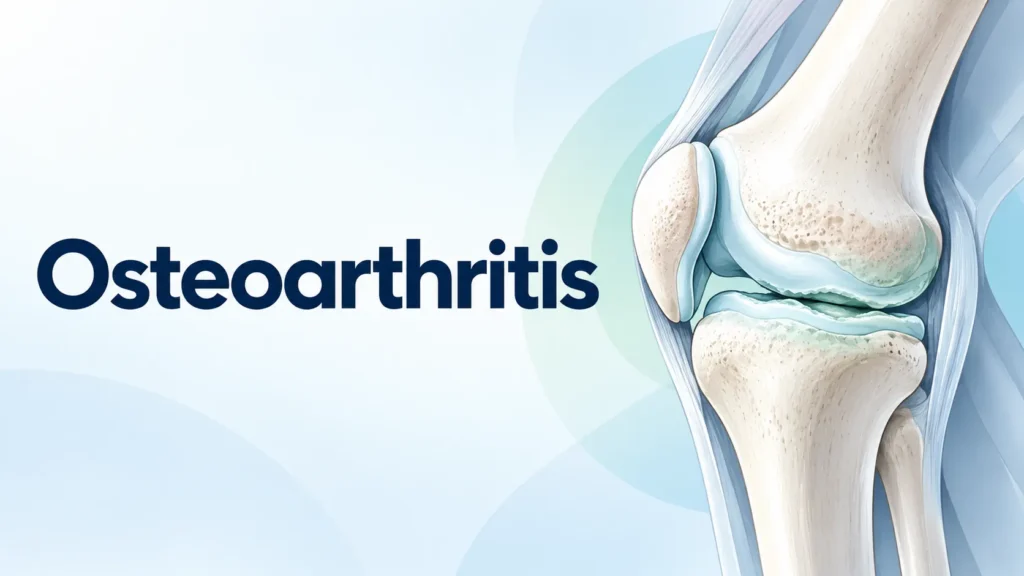
The Neubie is not a stand-alone cure, but it can be a helpful tool for many musculoskeletal and neuromuscular issues when paired with exercise and skilled physical therapy. Because it focuses on improving muscle activation and retraining movement patterns, therapists often use it for conditions in which the nervous system isn’t coordinating muscles as it should.
Here are some of the most common problems where the Neubie is used:
- Shoulder pain (rotator cuff irritation, impingement, mobility limitations)
- Tendinopathy (patellar, Achilles, rotator cuff, etc.)
- Frozen shoulder and other stiff-shoulder conditions
- Post-surgical recovery, such as after ACL repair or rotator cuff surgery
- Low back pain and movement-related back stiffness
- Muscle inhibition, especially after injury or swelling
- Chronic pain patterns are tied to poor motor control or compensation
- Balance or motor-control deficits that improve with sensorimotor feedback
- General mobility limitations where better muscle activation helps restore motion
It’s worth noting that treatment plans vary widely. The Neubie is usually just one part of a broader program that includes exercise, hands-on therapy, and retraining your movement during daily activities.
Who Is a Good Candidate for Neubie Therapy?
Neubie therapy is a good fit for people who need help improving muscle activation, reducing pain, or rebuilding efficient movement after an injury. Because the device is designed to support neuromuscular re-education, it’s especially useful in situations where the nervous system isn’t coordinating muscles the way it should. Here are some patient groups that tend to benefit the most.
People with post-injury or post-surgical weakness
After injuries like sprains, strains, or surgeries such as ACL reconstruction or rotator cuff repair, it’s common for certain muscles to “shut down.” Research on neuromuscular electrical stimulation shows that combining stimulation with exercise can help restore muscle recruitment more quickly during rehab. A recent review on NMES and early rehabilitation highlights these strength and activation benefits.
Patients with chronic pain or long-standing movement compensation
Chronic pain often changes how the nervous system fires muscles. Movement-based electrical stimulation has been shown to help improve motor control and reduce movement compensations in people with longstanding pain. A study on NMES and movement retraining found that stimulation paired with functional exercise improved coordination in people with chronic musculoskeletal conditions.
People with mobility limitations or stiffness
When muscles aren’t activating well, joints often lose range of motion. NMES-assisted mobility work has demonstrated improvements in flexibility and functional motion, as reported in a recent mobility and NMES study on task-specific training.
Shoulder conditions such as impingement, rotator cuff irritation, or frozen shoulder
The Neubie is frequently used to improve scapular activation and shoulder mechanics. Research on NMES for shoulder rehabilitation has shown that stimulation during movement can enhance motor unit recruitment, supporting improved overhead motion and reduced pain.
Individuals who struggle to “turn on” specific muscles
After swelling, pain, or periods of inactivity, certain muscles (like the quadriceps, glutes, deep core, or rotator cuff) may become inhibited. Movement-based stimulation is often used to re-establish normal firing patterns.
Athletes returning to sport
Athletes recovering from knee, ankle, hip, or shoulder injuries sometimes use the Neubie to retrain fast, coordinated muscle firing patterns needed for sport-specific movement.
Adults dealing with age-related weakness or coordination changes
Research on NMES in older adults has found improvements in muscle strength and functional mobility, making neuromuscular stimulation a useful option for people who want to stay active but struggle with muscle activation.
In general, if you have weakness, pain, limited mobility, or difficulty activating certain muscles, you may be a good candidate for Neubie therapy. A physical therapist can evaluate how your body is moving and determine whether the Neubie would support your recovery plan.
What a Neubie Therapy Session Feels Like
A Neubie session feels different from traditional e-stim because you’re not just sitting still while the machine does the work. Most people describe the sensation as a strong but manageable “tingling” or “pulling” feeling in the targeted muscles. The intensity is always adjustable, and your therapist monitors it throughout the session to ensure it remains within a safe, tolerable range.
Direct current tends to produce a sharper, more noticeable sensation than alternating current, which is one reason the Neubie is used during active movement. Research on direct-current stimulation reports that DC can elicit stronger sensory feedback than AC, which may help people perceive muscle activity more clearly.
During a session, you’ll typically go through:
- Warm-up stimulation at a low intensity to help the muscles “wake up”
- Guided movements, such as lifting your arm, squatting, or stabilizing your core
- Intensity adjustments based on how your muscles respond
- Feedback from your therapist to improve form and reduce compensation patterns
Movement is the key difference. Research on movement-based NMES shows that pairing stimulation with active exercise improves motor learning and muscle recruitment more than passive stimulation alone. Studies on NMES-assisted exercise show that combining stimulation with voluntary movement leads to better strength and coordination outcomes than passive stimulation alone
Most people report that the session feels challenging but productive, like the muscles are being cued to fire in a way they haven’t been able to do on their own. Afterward, it’s common to feel:
- Mild muscle fatigue, similar to finishing a workout
- A sense of improved movement or “looser” joints
- Light soreness that resolves within a day
Your therapist monitors all of this in real time and adjusts the intensity, electrode placement, and exercises to match your comfort and goals. The goal isn’t to flood the system with high intensity but to help your nervous system re-learn how to coordinate muscles efficiently during real movement.
What to Expect During the First Session
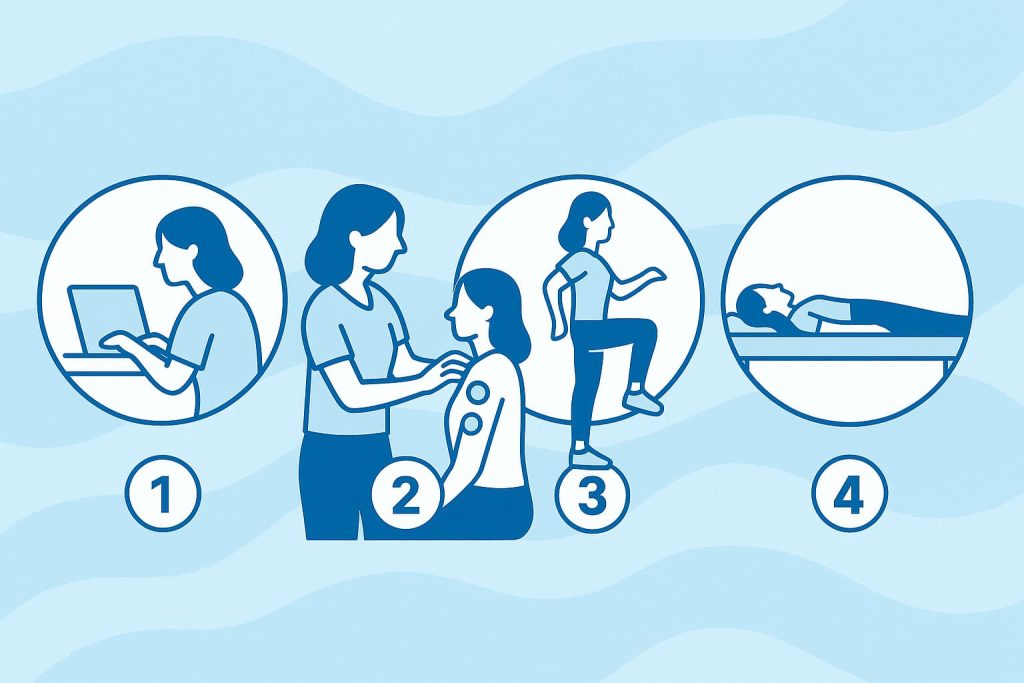
Your first Neubie session feels a lot like a regular physical therapy visit with one extra layer: learning how the device works and how your body responds to it. Here’s what to expect.
Brief conversation and movement assessment
Your therapist will ask about your symptoms, medical history, and goals, then watch how you move. They may assess posture, range of motion, strength, and how well specific muscles activate.
Electrode placement and “mapping”
Small adhesive pads are placed on the skin over key muscles or along the path of a movement you are working on, such as raising your arm or performing a squat. Your therapist may use the Neubie to “scan” for areas that feel unusually intense or reactive. These spots often line up with tight, weak, or inhibited tissues.
Finding the right intensity
The current is increased gradually while you provide feedback. You should feel a strong but manageable tingling or pulling sensation. The goal is to stay in a “challenging but tolerable” zone, not painful. You can ask to turn it down at any point.
Guided movement with stimulation
Once the settings are dialed in, you will perform specific exercises while the Neubie is running. This might include arm raises, step-ups, squats, or core work, depending on your condition. The stimulation serves as an additional cue, helping the right muscles fire at the right time.
Adjustments as you go
Your therapist may adjust electrode placement, adjust intensity, or switch exercises based on your response. The idea is to find positions and movements where you feel both the muscle working and the motion improving.
Cool down and next steps
Sessions often end with lower intensity work, gentle motion, or basic home exercises that reinforce what you worked on. Your therapist will explain what to expect after the session and how Neubie will fit into your broader plan of care.
Most people leave feeling like they did a focused workout on very specific muscles. It is common to feel pleasantly fatigued and a bit looser or more coordinated in the treated area.
Benefits of Neubie Therapy
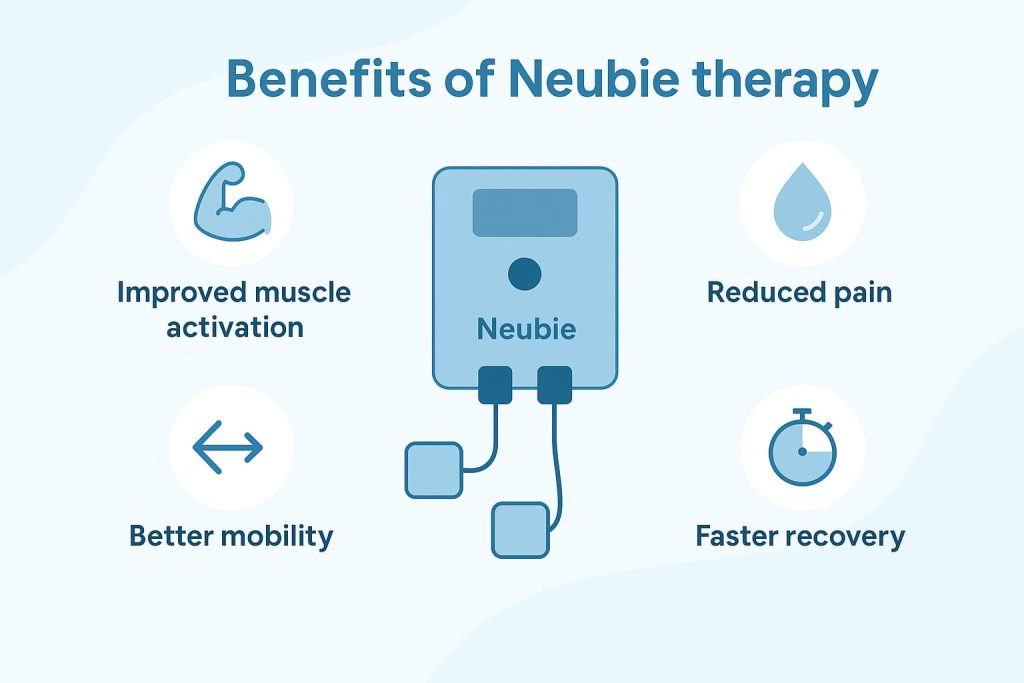
Neubie therapy is popular in physical therapy clinics because it combines electrical stimulation with active movement, which can produce faster and more noticeable improvements than passive electrical stimulation. While results vary by person, several consistent benefits have been observed in research on neuromuscular electrical stimulation and direct-current training.
Improved Muscle Activation
A key reason therapists use the Neubie is its ability to help “wake up” muscles that are not firing well after injury, surgery, or prolonged pain. Research on neuromuscular electrical stimulation shows that adding stimulation to exercise can increase motor unit recruitment and improve activation of weak muscles.
Reduced Pain
Electrical stimulation has been shown to reduce pain through both peripheral and central mechanisms. A study on direct-current stimulation and pain modulation found that DC-based treatments can reduce pain sensitivity and support more comfortable movement. Clinically, many patients report immediate short-term relief that improves their ability to participate in exercise.
Better Range of Motion and Mobility
When muscles activate more effectively, joints tend to move more freely. Research on movement-based NMES indicates that pairing stimulation with active exercise improves mobility and functional reach. One study on NMES-assisted mobility reported measurable gains in range of motion when stimulation was paired with task-specific exercises.
Faster Recovery After Injury or Surgery
Because the Neubie encourages neuromuscular re-education during movement, it can support more rapid strength and coordination improvements in rehabilitation.
Evidence from orthopedic rehabilitation research indicates that NMES, when combined with exercise, can improve functional outcomes more quickly than exercise alone, particularly early in recovery.
Nervous System Retraining
The DC stimulation used in the Neubie provides strong sensory feedback, which helps the brain relearn how to coordinate movement. A study on sensorimotor activation found that targeted stimulation can improve proprioception and motor control, which is why the Neubie is often used for people with chronic movement dysfunction.
Better Overall Movement Quality
When muscles fire in the right timing and intensity, movement becomes smoother and more efficient. Research on movement-based NMES shows that stimulation during functional motion reduces compensation patterns and helps restore more normal biomechanics. A recent neuromuscular control study highlighted these improvements during task-specific training.
Why These Benefits Matter
In a practical sense, this means people often notice:
- Less pain during everyday activities
- Better stability in the affected joint
- More confidence in movement
- Easier time activating stubborn or weak muscles
- Smoother progress during physical therapy
For many patients, especially those recovering from surgery or dealing with chronic pain, the Neubie becomes a helpful tool for speeding up the early phases of rehab and reinforcing better long-term movement patterns.
Risks and Side Effects
Like most electrical stimulation tools used in physical therapy, the Neubie is generally considered safe when used under the supervision of a trained clinician. Still, it’s helpful to know what to expect and who should avoid this type of treatment.
Common, Mild Side Effects
Most people experience only minor, temporary effects, such as:
- Mild skin redness where the electrodes were placed
- A light “workout soreness” in the treated muscles
- Temporary fatigue, especially if the session involved higher-intensity activation
These effects typically resolve within a few hours. Research on neuromuscular electrical stimulation reports similar patterns, with soreness being the most common short-term reaction after treatment. Safety reviews of therapeutic electrical stimulation note that these effects are expected and not considered harmful.
Less Common Reactions
In some cases, individuals with sensitive skin may experience mild irritation beneath the pads. Direct current can feel sharper than standard e-stim, so the intensity is always adjusted to a comfortable level. Your therapist will modify pad placement, intensity, or duration if you feel excessive discomfort.
Who Should Avoid Neubie Therapy
Neubie therapy is not appropriate for individuals with certain medical conditions, including:
- Pacemakers or implanted electrical devices
- Pregnancy (especially over the abdomen or low back)
- Active blood clots or DVT
- Cancer in the treatment area
- Open wounds or infected skin where electrodes would be placed
These contraindications are consistent with general electrical stimulation guidelines, such as those described in a safety review of therapeutic electrical stimulation.
When to Tell Your Therapist
You should let your therapist know if you:
- Have metal implants near the treatment area
- Have reduced skin sensation
- Are taking medications that affect skin sensitivity
- Have any history of unusual reactions to electrical stimulation
These details help your therapist adjust intensity and electrode placement to keep the session safe and effective.
Bottom Line
For most people, Neubie therapy is low-risk and well-tolerated. Any discomfort should stay within a “challenging but manageable” range, and your therapist will continuously adjust the session to match your comfort level and medical needs.
Neubie Machine Cost
Because the Neubie is a specialized medical device, the cost of purchasing one at the clinic level is significantly higher than that of standard e-stim units. Clinics typically invest several thousand dollars in equipment and in ongoing training and certification for therapists who use it. That’s one reason Neubie sessions are usually offered as part of a broader physical therapy plan rather than something billed on their own.
For patients, the cost of a Neubie session varies widely depending on the region, the clinic, and whether it’s bundled into a physical therapy visit. In many cases, Neubie treatment is simply integrated into a standard PT appointment at no extra charge. Other clinics may offer dedicated sessions or cash-based options for individuals without insurance.
A recent survey of neuromuscular electrical stimulation services in outpatient rehabilitation settings found that pricing can vary based on therapist training, equipment costs, and the way the service is packaged within a plan of care.
Because clinics structure their pricing differently, the most accurate way to obtain a number is to contact the clinic directly. Most will explain whether Neubie treatment is included in a regular session, available as a specialty service, or offered as part of a cash-pay program.
If you’re in the Overland Park area and considering Neubie therapy, contact Calibration Physical Therapy. A team member can walk you through what to expect based on your goals, insurance, and treatment plan.
Neubie Therapy vs Traditional E-Stim
Traditional e-stim in physical therapy usually relies on alternating current (AC). This type of stimulation is helpful for pain relief, reducing swelling, or inducing a light muscle contraction while you rest. It’s often used passively, meaning you sit or lie down while the machine does most of the work.
The Neubie takes a different approach. It uses pulsed direct current (DC), which behaves differently in the body and tends to elicit stronger sensory and motor responses. Some studies comparing DC and AC stimulation suggest that DC may elicit a different pattern of muscle activation, which may be advantageous during movement-based training. One recent review of neuromuscular stimulation found that pairing stimulation with active exercise yields greater strength and functional gains than passive stimulation alone.
With the Neubie, you’re not just receiving stimulation, you’re moving the entire time. The therapist guides you through exercises while the device activates specific muscles. This combination helps retrain how your brain and muscles communicate, a process often referred to as neuromuscular re-education. Studies on movement-based NMES have highlighted improvements in motor control, proprioception, and task-specific strength when stimulation is paired with active movement.
Here’s a simple breakdown of the differences:
Traditional E-Stim (AC):
- Often used for pain relief or light muscle activation
- Usually passive
- Less targeted during movement
- Helpful for early-stage swelling or soreness
Neubie (DC-based NMES):
- Designed for active, movement-driven therapy
- Stronger neuromuscular engagement
- Helps “wake up” inhibited muscles
- Supports motor learning and improved movement patterns
- Allows therapists to map dysfunctional areas more precisely
For many patients, especially those with chronic pain, mobility limitations, or trouble activating certain muscles after injury or surgery, the Neubie offers a more interactive and targeted option than traditional e-stim.
Frequently Asked Questions
Here are some common questions patients ask about Neubie therapy.
Is Neubie therapy legitimate?
Neubie therapy is built on the same basic principles as neuromuscular electrical stimulation, which has been used in rehab for decades. The device is FDA-cleared as a powered muscle stimulator for purposes such as improving range of motion, reducing spasms, increasing circulation, and supporting neuromuscular re-education.
In clinical practice, the Neubie is not used as a stand-alone treatment. It is one tool that therapists combine with exercise, manual therapy, and education to help people move better and feel better. If you are unsure whether it is appropriate for you, a physical therapy evaluation is the best place to start.
Does Neubie therapy hurt?
Neubie sessions are designed to feel intense but safe, not painful. Most people describe the sensation as:
- Strong tingling or buzzing
- A pulling or grabbing feeling in the muscle
- A workout-like fatigue as the session goes on
You and your therapist work together to set the intensity. The current is increased gradually, and you may request that it be stopped or reduced at any time. The goal is to stay in a zone where the treatment is effective without feeling overwhelming.
You may experience mild soreness later, similar to what you would experience after a strenuous workout. That usually fades within a day.
How many Neubie sessions do people usually need?
The number of sessions depends on:
- How long you have had your symptoms
- The underlying condition or injury
- Your overall health and activity level
- How consistent you are with exercises between visits
Some people notice a difference in how their muscles fire or how easily they move within the first few sessions. Others require several weeks of consistent work to observe larger changes.
In general, Neubie is most effective when it is part of a structured therapy plan that might last anywhere from a few weeks to a few months. Your therapist will provide a more specific estimate after your evaluation and will update the plan as you progress.
Can the Neubie help frozen shoulder?
Neubie therapy can be a helpful part of treatment for frozen shoulder, but it is not a magic fix on its own. In frozen shoulder, the joint capsule becomes stiff and painful, and the shoulder often loses significant motion.
Therapists may use the Neubie to:
- Improve activation of the muscles that support the shoulder blade
- Reduce guarding around the joint
- Make stretching and mobility work more comfortable
- Reinforce better movement patterns as the range of motion improves
The core of frozen shoulder treatment remains a combination of time, targeted mobility exercises, and progressive strengthening. Neubie can support that process by helping the nervous system learn to move the shoulder more efficiently and with less pain.
Are there long-term risks?
For most people, Neubie therapy is considered low risk when used by a trained professional and when standard safety guidelines are followed. The most common effects are short-term and mild, such as:
- Temporary skin redness where electrodes were placed
- Short-lived muscle soreness or fatigue
- A tired or “worked” feeling in the treated area
People with certain medical conditions should avoid this type of treatment, including those with pacemakers or implanted electrical devices, active blood clots, uncontrolled cancer in the treatment area, or open skin where pads would be placed. Pregnancy is also a standard precaution, particularly when examining the abdomen or lower back.
Your therapist will review your medical history, medications, and any prior reactions to electrical stimulation before recommending Neubie. If anything changes during your care, you can always ask to revisit whether it is still the right fit.
Book a Neubie Therapy Session
If you are dealing with pain, weakness, or difficulty getting certain muscles to activate, Neubie therapy may be a useful addition to your treatment plan.
A licensed physical therapist can evaluate:
- How your muscles and joints are moving
- Which areas are overworking or underworking
- Whether Neubie fits your goals and medical history
From there, they can design a plan that integrates Neubie with exercise, hands-on care, and education tailored to the individual.
If you live in or around Overland Park and want to know whether Neubie therapy is appropriate for your situation, scheduling a physical therapy evaluation is the best next step.

About the Author
Dr. Traci Smiley, DPT
Traci is a licensed physical therapist and owner of Calibration Physical Therapy, serving the Kansas City area. A Board-Certified Orthopedic Clinical Specialist with advanced training in manual therapy and strength conditioning, she helps individuals overcome pain and return to what they love.