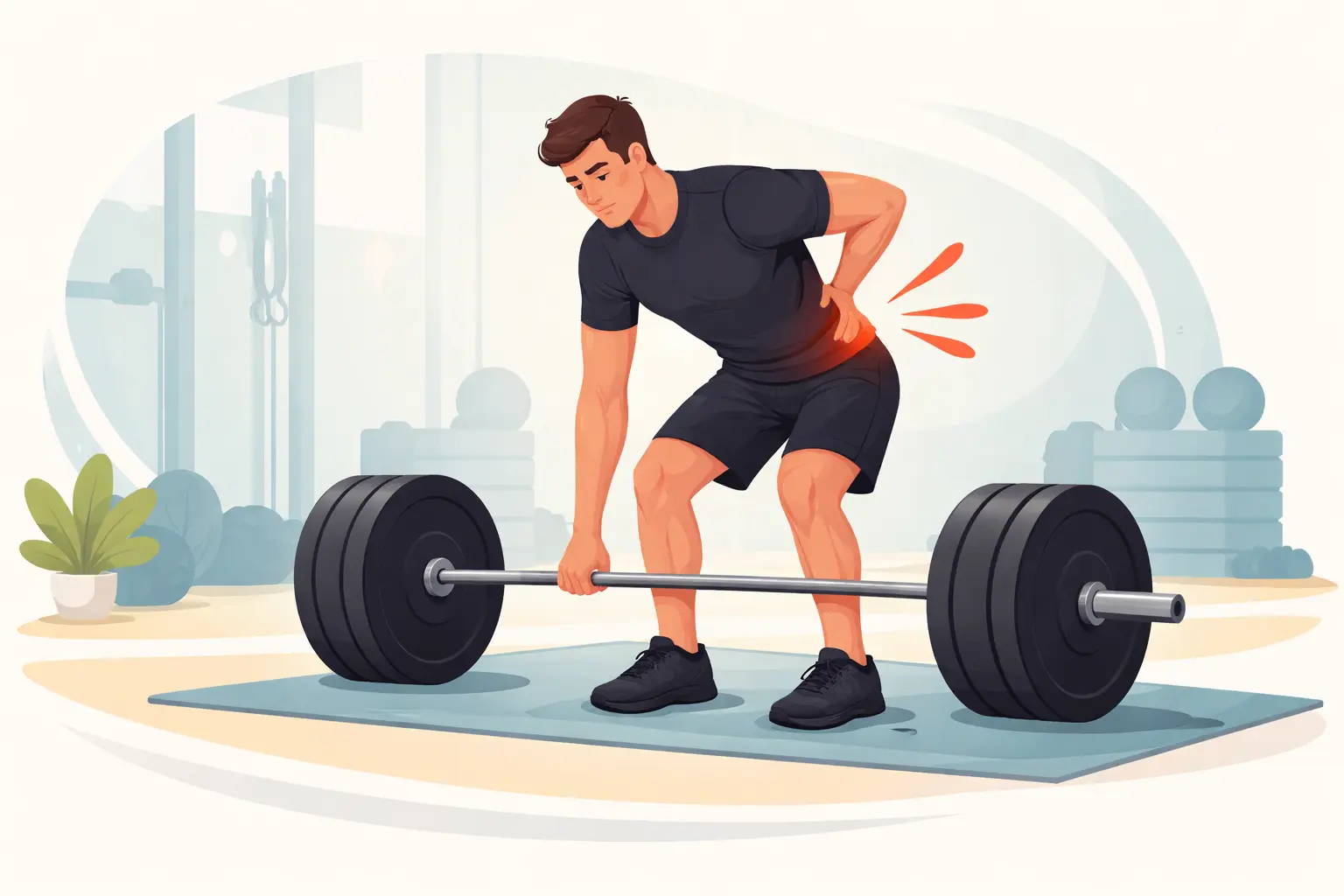
Deadlifts are one of the most effective strength exercises you can do. They are also one of the lifts most commonly associated with lower back pain.
If you have ever finished a workout and wondered whether what you are feeling is normal, you are not alone.
Some discomfort after deadlifting is expected, particularly if you train consistently, increase the weight, or increase volume. Other types of pain suggest that something is not tolerating the load as well as it should. The challenge for most people is not the pain itself, but understanding its meaning.
This guide explains what is normal after deadlifting, what may indicate injury, and when physical therapy may be beneficial. The goal is clarity, not scare tactics or gym folklore.
Why Deadlifts Trigger Lower Back Pain
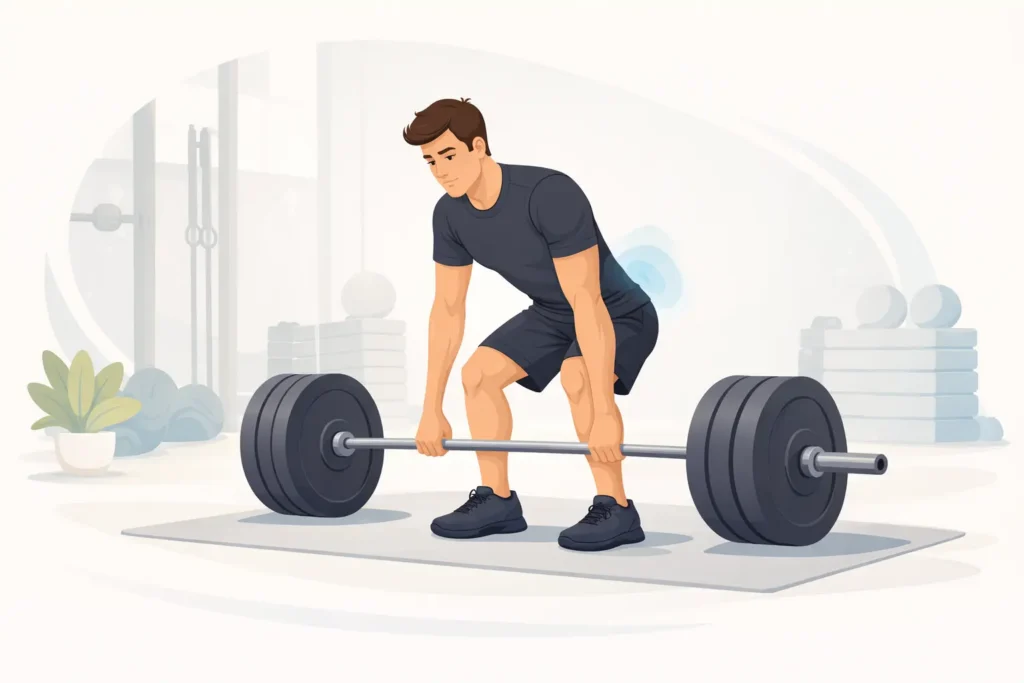
Deadlifts place a high demand on the muscles and joints of the lower back, hips, and core. That demand is not a flaw in the exercise. This is why deadlifts are effective.
Because the lift requires force production and control over a large range of motion, the lower back is often the area where limitations show up first.
Pain tends to appear when the overall demand of the lift exceeds what the body can tolerate on that day.
That can happen for several reasons:
- The load on the bar is higher than your tissues are currently prepared to handle
- Fatigue reduces movement control, especially late in a workout
- Limited hip or ankle mobility shifts stress into the lower back
- Recovery does not keep up with training volume or intensity
Pain after deadlifting does not automatically mean something went wrong.
In many cases, it simply means capacity was exceeded somewhere in the system. Understanding that context makes it easier to decide whether to adjust training, give things time, or get evaluated.
What’s Considered “Normal” After Deadlifting?
Normal post-deadlift discomfort usually feels muscular and familiar. It often shows up as stiffness or soreness in the lower back rather than sharp or sudden pain. Many people notice it most after sitting for a while, first thing in the morning, or when bending down, and it eases once they start moving.
That pattern is important. Normal muscle soreness tends to respond to movement rather than resist it.
In most cases, normal post-lift soreness shares common traits:
- It feels like a dull, achy tightness rather than something sharp or catching
- It is usually symmetrical, affecting both sides of the lower back
- It improves as you warm up, walk around, or change positions
Timing matters too. Normal soreness builds gradually after a workout, peaks within 24 to 48 hours, and then fades over the next few days. You may initially feel stiff or slow, but your strength and control remain. Daily activities remain manageable even when they are uncomfortable.
This type of response is often associated with delayed-onset muscle soreness or general tissue fatigue. It is part of how the body adapts when training stress increases, whether that comes from heavier loads, more volume, or returning to lifting after time off.
The key distinction lies in how the discomfort evolves over time. Normal soreness is uncomfortable, but it does not feel unstable or progressively worse. It settles with movement and recovery, and it does not limit your ability to function outside the gym.
Signs Your Lower Back Pain May Be an Injury
Some lower back symptoms feel different than normal post-workout soreness. Instead of fading with movement and time, they tend to change how you lift, move, or recover. These signals are less about discomfort and more about how the pain behaves.
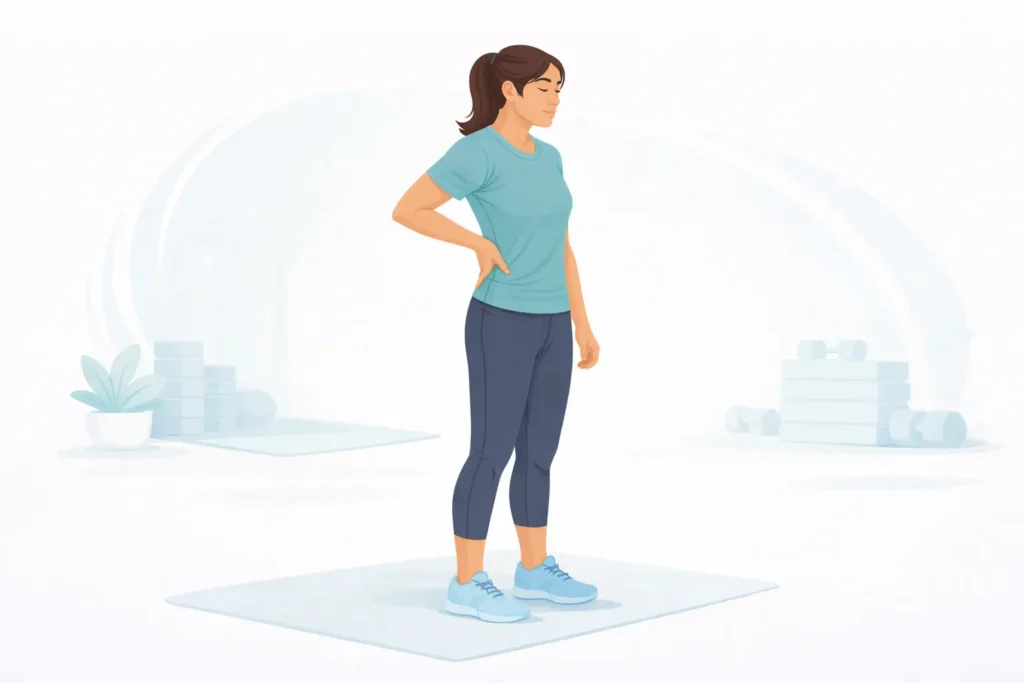
One of the clearest differences is consistency. Injury-related pain is often sharper, more specific, or harder to ignore. It may appear suddenly during a lift or immediately afterward, rather than building gradually later in the day. Instead of easing as you warm up, it may feel worse with increased activity or loading of the area.
Physical therapists pay close attention to a few common patterns:
- Sharp or catching pain during or immediately after a lift, especially if it stops the set
- Pain that worsens as you warm up instead of settling with movement
- Back pain that spreads into the leg
- A sudden loss of strength, stability, or confidence under load
- Pain that lingers beyond a few days or keeps returning with deadlifts
Duration matters as much as intensity. Pain that persists, escalates, or recurs with each training session is distinct from soreness that fades as your body recovers. The same is true when pain begins to interfere with everyday activities like sitting, bending, or sleeping.
Pain alone does not automatically mean structural damage. In fact, most acute low back pain is not caused by serious disease. What matters most are the patterns over time. Persistent, worsening, or spreading pain is a sign that guessing your way through training may no longer be the best option.
Common Reasons Deadlifts Cause Back Pain
When back pain shows up after deadlifting, the conversation often jumps straight to form. Technique does matter, but focusing on form alone usually misses the bigger picture. In physical therapy, injury risk is multifactorial rather than a single mistake.
Load Exceeding Current Capacity
One of the most common contributors is load exceeding the body’s tolerance at that moment. This does not mean the weight was reckless or inappropriate. Capacity changes day to day.
Fatigue, poor sleep, stress, and recent increases in training volume can all reduce how much load your tissues can handle, even if you have lifted similar weights before without issue.
Fatigue Over the Course of a Session
Many lifters move well during early sets and gradually lose control as repetitions accumulate. Bracing becomes increasingly difficult to maintain, timing shifts slightly, and small breakdowns begin to accumulate.
Notably, many deadlift-related flare-ups occur late in a workout rather than during warm-ups or first working sets.
Limited Hip or Ankle Mobility
Mobility limitations often shift stress into the lower back. When the hips or ankles do not move well, the spine compensates to complete the lift.
This does not mean the lower back is weak or fragile. It indicates that it is taking on additional work because other joints are not contributing as much as they should.
Core Bracing Endurance
Core strength is frequently misunderstood. Most people can brace effectively for a single rep. Fewer can sustain that control across multiple heavy repetitions.
In these cases, the issue is not strength, but endurance under load. As fatigue sets in, the ability to maintain consistent trunk control declines.
Rapid Changes in Volume or Intensity
Increasing training load too quickly can overload tissues before they adapt. Even well-designed programs can lead to pain if progression outpaces recovery.
This is especially common when returning to lifting after time off or stacking multiple hard sessions close together.
The Bigger Picture
The key takeaway is simple. Deadlift-related back pain is usually a capacity mismatch, not a technical failure.
Addressing it effectively means looking beyond form and understanding how load, fatigue, mobility, and recovery interact over time.
Should You Stop Deadlifting If Your Back Hurts?
Not necessarily.
For most people, staying active is often recommended for low back pain rather than prolonged rest. In many cases, complete rest leads to deconditioning and more uncertainty when you eventually return to lifting. That cycle is a common reason people feel hesitant or stuck every time they try to load their back again.
For most people, the more effective approach is not to stop deadlifting, but to adjust their technique while symptoms subside. This means finding a level of loading and movement that feels tolerable rather than forcing a full stop or pushing through pain.
Short-term changes are often sufficient to reduce irritation while maintaining progress.
These adjustments commonly include:
- Reducing load or total volume to stay within the current tolerance
- Limiting the range of motion to avoid positions that feel unstable
- Slowing tempo to improve control and awareness
- Temporarily using a different deadlift variation that feels more comfortable
The goal is not to ignore pain or prove toughness. It is to maintain movement in a manner that the body can tolerate while gradually restoring capacity. When managed effectively, this approach helps maintain strength, confidence, and momentum rather than having to restart from scratch later.
If pain continues to dictate what you can or cannot do, or if you are unsure how to modify safely, that is often a sign that guidance would be useful. Knowing when to adjust versus when to pause can make the difference between a short setback and a long interruption in training.
How Physical Therapy Helps With Deadlift-Related Back Pain
Physical therapy is not about telling people to stop lifting. For most lifters, the goal is to identify what is currently limiting them and to help them resume loading their back with greater confidence and less uncertainty.
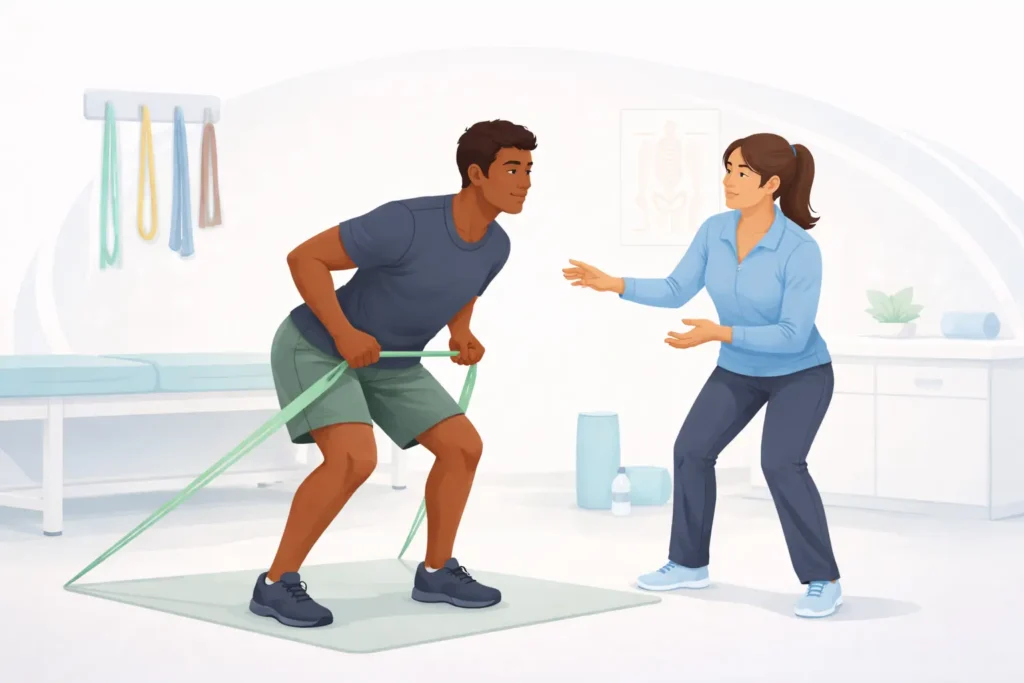
When deadlift-related back pain occurs, the issue is rarely limited to the lower back. A physical therapy evaluation assesses how the entire system contributes to symptoms, rather than focusing solely on the site of pain.
Identifying What’s Actually Limiting You
Pain often presents in the lower back, even when the primary limitation is elsewhere. This might be reduced hip motion, difficulty maintaining trunk control under fatigue, asymmetric loading patterns, or poor tolerance for training volume.
Identifying the true limiter matters. It determines whether the focus should be on mobility, control, endurance, loading strategy, or recovery, rather than on guessing or chasing symptoms.
Reducing Irritation Without Shutting Everything Down
Physical therapy aims to calm irritated tissues without unnecessary rest. Instead of stopping all training, the focus is usually on keeping people moving within tolerable limits.
This might involve adjusting the range of motion, load, tempo, or exercise selection to allow symptoms to subside while maintaining strength and confidence. The goal is progress, not waiting passively for pain to disappear.
Rebuilding Load Tolerance and Confidence
Once symptoms are under control, load is reintroduced in a structured way. Progression is guided by how the body responds rather than by arbitrary timelines.
This process helps rebuild tolerance to deadlifting and related movements while reducing the likelihood of repeated flare-ups. Over time, the focus shifts toward managing fatigue, improving endurance under load, and building resilience to prevent training interruptions.
This approach is especially helpful when back pain keeps returning, when it is unclear what discomfort is safe to work through, or when fear has started to influence how you train. Having a clear plan removes much of the guesswork and helps people move forward instead of cycling between flare-ups and rest.
When to Get Evaluated
Not every flare-up after deadlifting requires professional care. Many aches settle with time, small adjustments, and adequate recovery. The line is usually crossed when pain begins to create uncertainty, impede progress, or recur despite reasonable efforts to manage it.
It is worth considering an evaluation when pain lasts more than a few days without meaningful improvement, especially if it shows up every time you deadlift. Recurring pain often signals that something underlying has not been addressed, even if symptoms fade temporarily between sessions.
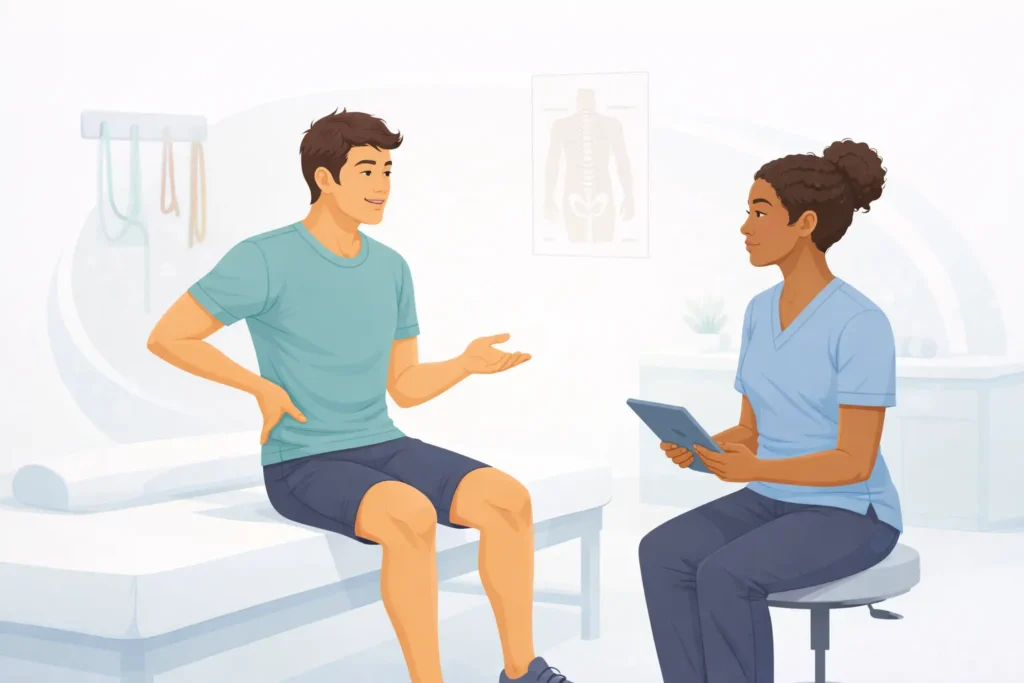
Another important distinction is whether the pain stays in the gym or follows you into daily life. Discomfort that interferes with sitting, bending, sleeping, or normal movement is distinct from soreness that appears only after training.
Uncertainty alone is also a valid reason to seek help. If you find yourself constantly guessing what is safe to push through and what is not, progress tends to stall. Over time, that hesitation can become more limiting than the pain itself.
A movement-based physical therapy evaluation can clarify what is driving your symptoms, what adjustments are likely to help, and how to proceed without discontinuing training. For many people, that clarity breaks the cycle of flare-ups and rest, allowing consistent progress again.
Final Thoughts
Lower back pain after deadlifting does not necessarily indicate an injury, but it is useful information. How that pain behaves over time matters more than the fact that it exists. Soreness that settles, responds to movement, and fades with recovery is part of training. Pain that persists, escalates, or repeatedly interrupts progress warrants closer attention.
Understanding the difference allows you to respond earlier and more intelligently, instead of guessing, avoiding lifts you enjoy, or pushing through something that keeps flaring up. In most cases, the goal is not to stop deadlifting but to ensure your body is prepared for the demands you place on it.
If recurring back pain is limiting your training, a movement assessment can help clarify what’s driving it and how to move forward confidently.
Tags

About the Author
Dr. Traci Smiley, DPT
Traci is a licensed physical therapist and owner of Calibration Physical Therapy, serving the Kansas City area. A Board-Certified Orthopedic Clinical Specialist with advanced training in manual therapy and strength conditioning, she helps individuals overcome pain and return to what they love.