
Physical Therapy Services
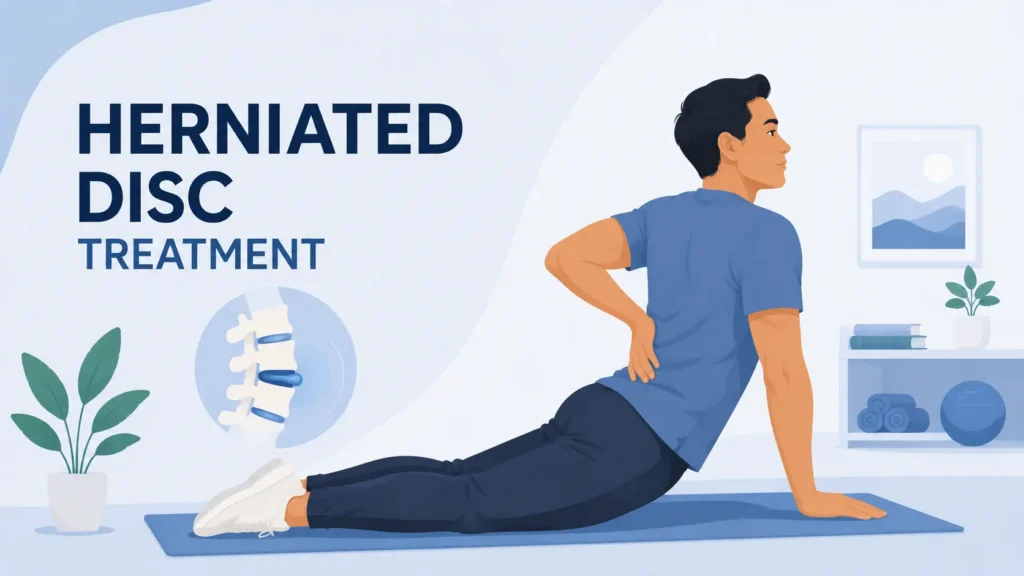
Herniated Disc Treatment in Overland Park
Ease nerve symptoms and improve spinal tolerance with progressive rehab that restores movement confidence.
Service details
A herniated disc can irritate nearby nerves and contribute to lower-back pain, leg pain, numbness, tingling, or weakness. These symptoms may make it harder to sit, stand, walk, bend, lift, or continue normal activities.
Consider physical therapy when symptoms affect your movement or daily activities. At Calibration Physical Therapy, an evaluation can help determine whether physical therapy fits your symptoms and goals.
What Is a Herniated Disc?
A herniated disc occurs when the softer inner material of a spinal disc pushes through a weakened or damaged area of its tougher outer layer. If the disc material irritates or presses on a nearby nerve, it may contribute to back pain, pain that travels into the leg, numbness, tingling, or weakness.
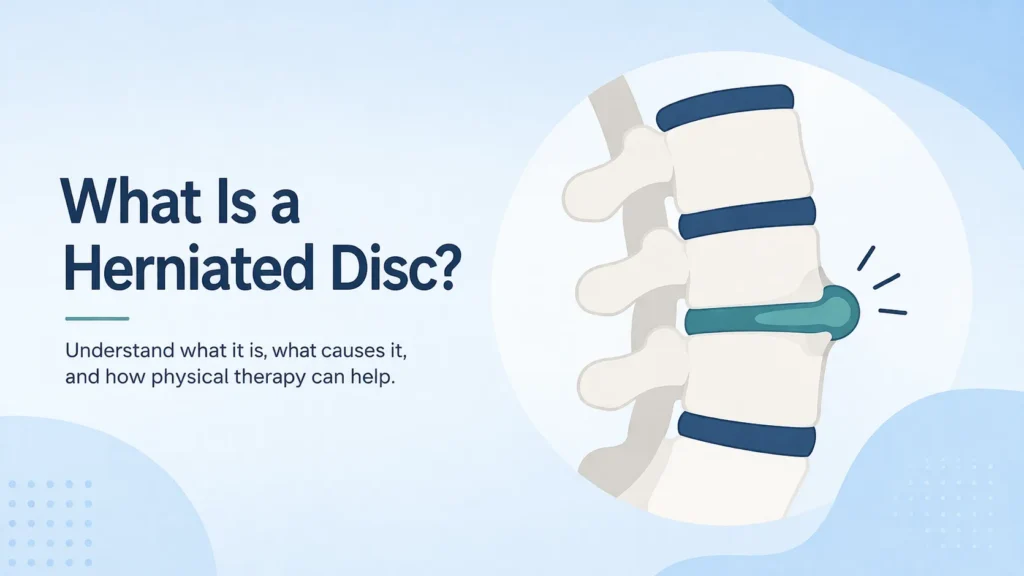
Herniated discs most often affect the lower back, although they can occur in other areas of the spine. Symptoms vary depending on the disc’s location and the nerves involved. Some people have few or no symptoms, while others may notice changes in movement or difficulty with activities such as sitting, standing, walking, bending, or lifting.
A herniated disc is sometimes called a slipped disc, although the disc does not actually slip out of place. A medical professional can help determine whether your symptoms stem from a herniated disc or another condition with similar symptoms.
Common Symptoms and Activity Limitations
Herniated disc symptoms can vary depending on the disc’s location and the nerves involved. Some people notice lower-back pain, while others feel symptoms that travel into the buttock, hip, leg, or foot.
Common symptoms may include:
- Lower-back pain that feels sharp, aching, or burning
- Pain that travels into the buttock or leg
- Numbness or tingling in the leg or foot
- Muscle weakness
- Increased symptoms with sitting, standing, bending, or lifting
These symptoms may also make everyday activities more difficult, including walking, climbing stairs, standing at work, carrying groceries, exercising, or getting in and out of a chair. An evaluation can help identify which movements are limited and how your symptoms respond to activity.
When Physical Therapy May Be Considered
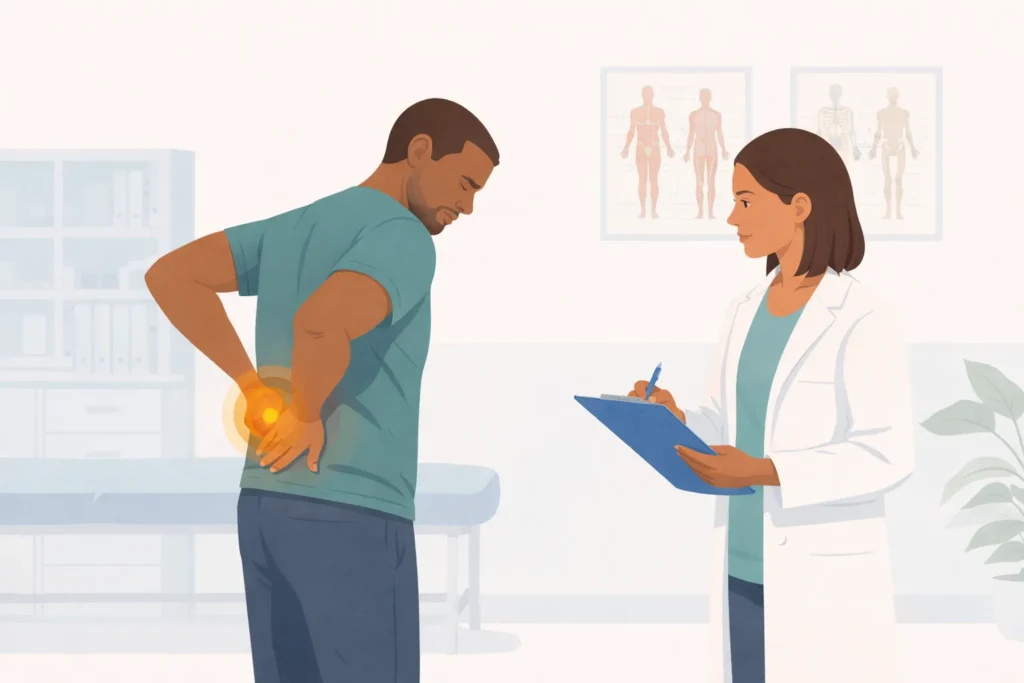
Physical therapy may be appropriate for some people with herniated-disc symptoms, especially when pain, stiffness, or nerve-related symptoms are limiting movement. Treatment decisions depend on your symptoms, medical history, examination findings, and any guidance you have received from another healthcare professional.
Physical therapy does not replace a medical diagnosis, imaging, medication management, surgical consultation, or emergency care when those services are indicated. You may need medical evaluation before or alongside physical therapy, especially if symptoms are severe, worsening, or associated with significant weakness or loss of sensation.
New loss of bladder or bowel control, numbness in the genital or rectal area, significant or rapidly worsening weakness, or major difficulty standing or walking requires urgent medical evaluation. If any of these symptoms are present, seek medical care before beginning or continuing physical therapy.
What Treatment May Involve
Treatment depends on your symptoms, movement findings, medical history, and response to care. Your physical therapist may use one or more of the following approaches:
| Treatment approach | How it may be used |
|---|---|
| Movement assessment | To understand how your symptoms respond to positions and activities such as walking, bending, lifting, or changing positions |
| Therapeutic exercise | To gradually build movement tolerance and strength |
| Core and trunk strengthening | To support control during activities such as lifting, carrying, and changing positions |
| Manual therapy | When appropriate, to address muscle tension, joint movement, or comfort. Learn more about Manual Therapy. |
| Neuromuscular re-education | To work on movement coordination and muscle activation. Calibration Physical Therapy also offers NEUBIE Therapy, which should be discussed with your therapist to determine whether it fits your plan |
| Heat or cold for comfort | As a supportive option for temporary comfort when appropriate |
The specific techniques and exercises depend on your presentation. Your plan may change as your symptoms and movement tolerance change, and no single treatment approach is appropriate for everyone with a herniated disc.
What to Expect During an Evaluation
An evaluation begins with a conversation about your symptoms, when they started, and how they affect your daily activities. Your therapist may ask where you feel pain, numbness, tingling, or weakness, along with which movements make your symptoms better or worse.
You can also discuss your work, exercise, or sport demands and any previous medical evaluation, imaging, or treatment. Sharing the activities you want to perform more comfortably can help connect the evaluation to your day-to-day needs.
Your therapist may observe how you move and discuss which activities you should continue, modify, or temporarily avoid. Together, you can review whether physical therapy is a reasonable part of your care and what treatment options may fit your situation.
Applying Treatment to Daily Activities
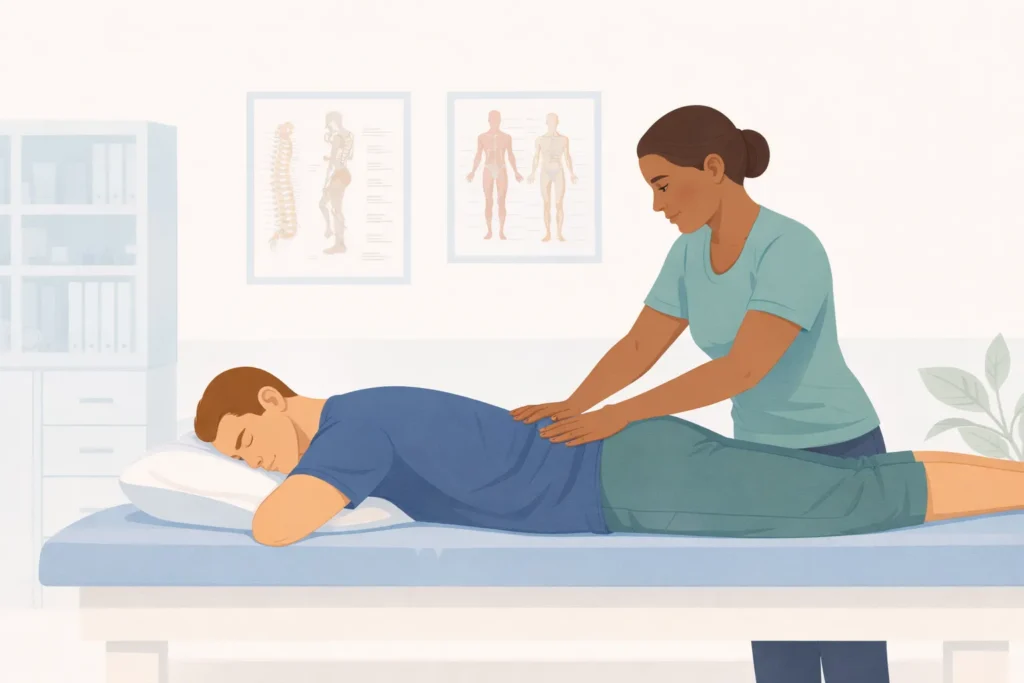
Herniated disc symptoms can make ordinary movements feel uncertain. Physical therapy may focus on helping you understand how to move within your current tolerance while making practical adjustments to daily activities.
Your therapist may discuss how symptoms respond to walking, standing at work, climbing stairs, getting in and out of a chair or vehicle, lifting, carrying, bending, or returning to exercise. These conversations can help connect treatment to the activities you need or want to perform.
Recommendations may change as your symptoms and movement tolerance change. Your therapist can help you consider the amount, position, and pace of activity that fits your current situation. No single activity plan applies to everyone with a herniated disc.
Safety and Clinical Limitations
Physical therapy is not appropriate as a substitute for urgent medical care. Contact a medical professional promptly if symptoms are severe, rapidly worsening, or accompanied by significant weakness, substantial loss of sensation, fever, recent serious injury, or changes in bowel or bladder function.
If you have already been evaluated by a physician or other healthcare professional, follow their guidance regarding imaging, medication, activity restrictions, injections, surgery, or other care. Tell your physical therapist about relevant diagnoses, procedures, restrictions, and changes in your symptoms.
Herniated Disc Treatment at Calibration Physical Therapy
Calibration Physical Therapy provides physical therapy services in Overland Park for people experiencing back pain, leg symptoms, and movement limitations related to a herniated disc.
An evaluation gives you an opportunity to discuss your symptoms, daily activities, and treatment goals with a physical therapist. Based on your symptoms and evaluation findings, the therapist can explain whether physical therapy may be appropriate or whether additional medical evaluation should come first.
Frequently Asked Questions
Can physical therapy help with a herniated disc?
Physical therapy may help some people manage movement limitations and activity-related symptoms associated with a herniated disc. Whether it is appropriate depends on your symptoms, medical history, examination findings, and response to treatment.
Do I need imaging before starting physical therapy?
Not everyone needs imaging before beginning physical therapy, but the decision depends on your symptoms and medical history. A medical professional may recommend imaging when symptoms are severe, persistent, worsening, or associated with neurological changes.
What symptoms should be evaluated urgently?
Seek urgent medical evaluation for new bowel or bladder changes, numbness in the genital or rectal area, significant or rapidly worsening weakness, or major difficulty standing or walking. Do not manage these symptoms through physical therapy alone.
Can I work or exercise while I have symptoms?
Some people can continue modified work or exercise, while others may need temporary changes based on their symptoms and medical guidance. Your physical therapist can help you discuss movements, loads, and activities that are appropriate for your current tolerance.
Should I stop moving if I have a herniated disc?
Complete rest is not appropriate for everyone with herniated-disc symptoms. Some people may be able to continue modified activities, while others may need temporary changes based on their symptoms and medical guidance. A physical therapist can help you determine which movements, positions, and activity levels fit your current tolerance.
Schedule an Evaluation
If herniated-disc symptoms are affecting your movement, work, exercise, or daily activities, schedule an evaluation with Calibration Physical Therapy.
You can schedule an evaluation online or call Calibration Physical Therapy at (913) 914-7174.