
Physical Therapy Services
Blood Flow Restriction Therapy in Overland Park
Use low-load exercise with strategic pressure to build strength while protecting healing tissue and joints.
Service details
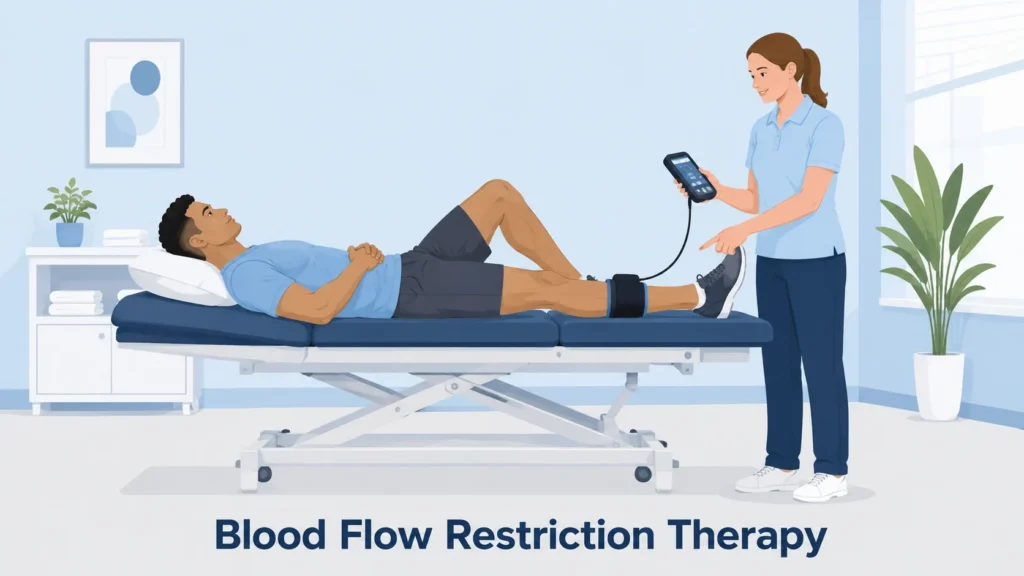
Blood flow restriction (BFR) therapy can help you build strength when heavier exercise isn’t right for you yet. It uses a specialized cuff and light resistance during selected exercises.
You may consider this after surgery, injury, or a period of reduced activity. Before using BFR, your physical therapist reviews your health history, current restrictions, strength, and activity goals.
What Is BFR Therapy?
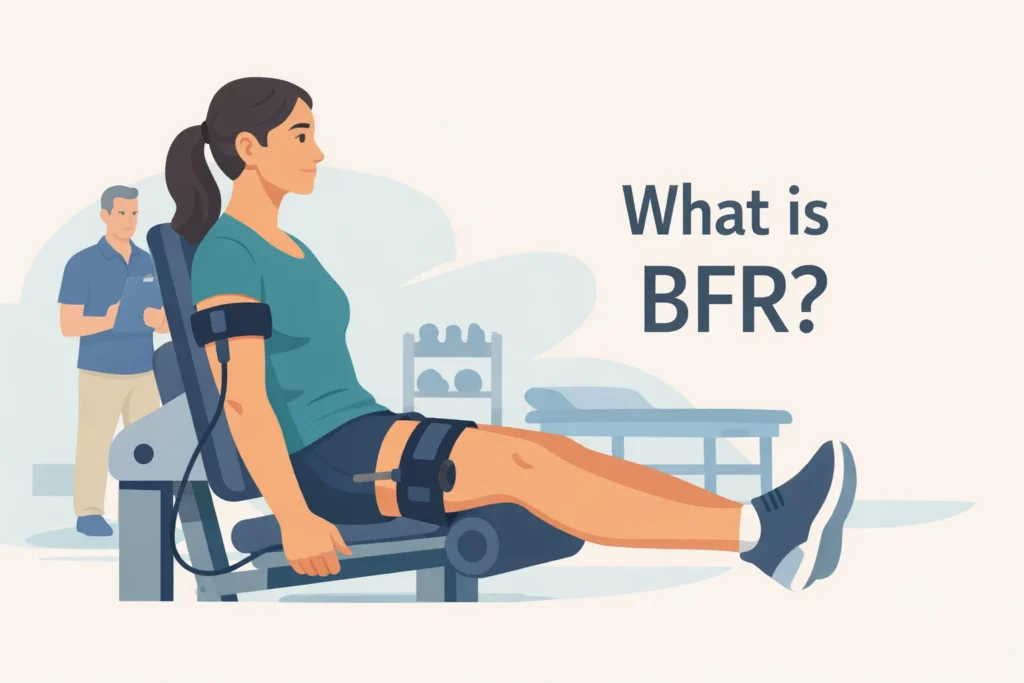
A BFR cuff fits around the upper arm or leg during exercise. It applies controlled pressure while your therapist monitors your movement and how the exercise feels.
The resistance stays light, but the muscles still have to work. That can be useful when lifting heavier weights would place too much demand on a healing area, painful joint, or weak limb.
BFR is not a standalone treatment. Depending on what you need, your plan may also include regular strengthening exercises, manual therapy, dry needling, or neuromuscular re-education.
Is BFR Right for Me?
BFR may be worth discussing if you are having trouble rebuilding strength because heavier exercise causes pain, feels too demanding, or is limited by your current rehabilitation instructions.

It may be relevant if you:
- Notice weakness after surgery or immobilization
- Are not yet ready for heavier weights
- Have temporary weight-bearing restrictions
- Need to rebuild strength for walking, stairs, work, or sport
- Want to ask whether BFR could fit your current treatment plan
BFR is not automatically appropriate based on a diagnosis alone. Your physical therapist will consider your symptoms, medical history, restrictions, and response to exercise.
Why Use Lighter Resistance?
Strength training usually becomes more challenging over time. That progression can be difficult when an injured or healing area cannot tolerate heavier exercise yet.
BFR gives your therapist another option for working the muscles with light resistance. Your therapist may consider it during a stage of rehabilitation when you need a gradual challenge but aren’t ready for heavier loading.
As your strength, movement, and exercise tolerance change, your therapist may adjust the exercises or transition to other forms of resistance.
Why Use BFR During Rehabilitation?
Building strength usually involves gradually increasing resistance. That can be difficult when an injured or healing area cannot yet tolerate heavier exercise.
BFR gives your physical therapist another way to challenge the muscles while keeping the external resistance light. It may be considered when you are dealing with weakness after surgery, a period of immobilization, pain with heavier exercise, or temporary limits on weight-bearing.
BFR does not replace regular strengthening. As your movement, tolerance, and restrictions change, your therapist may adjust the exercises or introduce other forms of resistance.
What Exercises Are Used With BFR?
The exercises depend on the limb being treated, your current strength, and the activities you need to perform. A session may use body weight, resistance bands, light weights, or other exercises your therapist selects.

Examples may include exercises that support:
- Leg strength for walking and climbing stairs
- Knee or hip strength for squatting, lifting, or running
- Arm strength for reaching, carrying, or work tasks
- A gradual return to jumping, cutting, or other sport movements
Your therapist will choose exercises that match your current restrictions. Do not use an improvised cuff or try to reproduce a supervised BFR session on your own.
What a BFR Session Feels Like
Your therapist places the cuff around your arm or leg and adjusts the pressure before you begin. You then perform selected exercises using light resistance or your body weight.
You may notice:
- Firm pressure from the cuff
- Muscle fatigue sooner than expected
- A challenging exercise even with light resistance
Tell your therapist if the pressure becomes painful or if you experience numbness, dizziness, unusual pain, or other concerning symptoms. Your therapist can adjust the cuff, exercise, or pressure, or stop the session if needed.
Is BFR Safe for Me?
Perform BFR with appropriate equipment, pressure selection, screening, and physical therapist supervision. Before recommending it, your therapist will review your health history, medications, circulation, blood pressure, surgery, and current restrictions.
Tell your therapist if:
- You have a history of blood clots or vascular problems.
- You have a cardiovascular condition or uncontrolled blood pressure.
- You are pregnant.
- You recently had surgery.
- You have another medical condition or take medication that may affect exercise or circulation.
If you are recovering from surgery, follow your surgeon’s restrictions and confirm when you may begin strengthening or BFR.
Seek prompt medical attention for severe or rapidly worsening pain or swelling, a visible deformity, sudden loss of function, rapidly worsening redness or warmth, or significant loss of sensation.
What to Expect at Your First Visit
Your first visit begins with an evaluation of your movement, strength, symptoms, injury history, and activity goals. Your therapist will also review any surgical or weight-bearing restrictions that affect exercise. Together, you will discuss what you need to do in daily life, at work, or in sport.

That might include:
- Walking longer distances
- Standing at work
- Climbing stairs
- Lifting or carrying
- Squatting or kneeling
- Running, jumping, or changing direction
Your therapist will explain whether BFR may be useful and how it would fit with the rest of your treatment plan. Follow-up care is adjusted based on your response, current restrictions, and progress.
How BFR Fits Into Your Progress
BFR is one part of a larger rehabilitation plan. Your therapist may use strength testing, movement quality, exercise tolerance, and your daily activities to decide when to continue BFR, change the exercise, or progress to heavier resistance.
The focus is not simply on completing a BFR session. It is on building the strength and control needed for activities such as walking, climbing stairs, lifting, standing at work, running, or participating in sport.
BFR Compared With Traditional Strengthening
BFR does not replace regular strengthening. It is one option your physical therapist may use when resistance needs to stay low.
| Factor | Traditional strengthening | BFR-assisted exercise |
|---|---|---|
| Resistance | Uses weight, bands, machines, or body weight | Uses light resistance or body weight with a specialized cuff |
| When it may be used | Progresses as your strength and tolerance improve | May be considered when heavier resistance is not appropriate yet |
| What you may feel | Muscle effort that increases with the exercise | Firm cuff pressure and muscle fatigue with light resistance |
| Supervision | Your therapist monitors form, symptoms, and progress | Your therapist also selects cuff pressure and monitors your response |
Your therapist will decide which exercises and loading approach fit your condition, restrictions, and goals.
BFR Therapy in Overland Park
Calibration Physical Therapy offers supervised rehabilitation for people dealing with weakness, injury, postoperative restrictions, or reduced activity. BFR may be included when it fits your evaluation and treatment plan.
Your therapist can explain whether BFR is appropriate and how it may relate to the activities you need to perform, such as walking, climbing stairs, lifting at work, running, or returning to sport.

Related Services
Talk With Our Clinic
Not sure whether BFR is appropriate for you? Tell us what is limiting your strength, movement, or exercise. We can discuss your concerns and determine whether an evaluation is the right next step.
Schedule an Evaluation or call (913) 914-7174.
Frequently Asked Questions
What does BFR feel like?
You may feel firm pressure from the cuff and muscle fatigue during the exercise. BFR should not be painful. Tell your therapist if you notice unusual pain, numbness, dizziness, or discomfort so they can adjust the pressure or exercise.
Is BFR therapy safe after surgery?
BFR may be considered during some postoperative rehabilitation plans, but timing depends on the procedure, medical restrictions, healing status, and overall health. Follow your surgeon’s instructions and discuss BFR with your physical therapist.
Is BFR only for athletes?
No. BFR may be considered for people rebuilding strength after surgery, injury, immobilization, or deconditioning. A physical therapist must determine whether it is appropriate for you.
How will we know if BFR is helping?
Your therapist will track changes that matter to your rehabilitation, such as strength, movement, exercise tolerance, walking, stair use, lifting, or sport-specific activity. Progress varies by person and condition.
How often should I do BFR sessions?
The frequency depends on your goals, exercise plan, symptoms, and response to treatment. Your therapist will determine how BFR fits with the rest of your visits and home program.
Will my insurance cover BFR therapy?
Insurance coverage depends on your plan, benefits, diagnosis, and how the service is billed. Contact our clinic or insurance provider for current coverage information.