Muscle pain and tightness are common reasons people seek physical therapy. You may have heard of dry needling from a friend or another provider, but the name can make it sound more intense than it is.
This article explains what dry needling is, when it is used, what it feels like, and how it fits into a broader rehabilitation plan.
What Is Dry Needling?

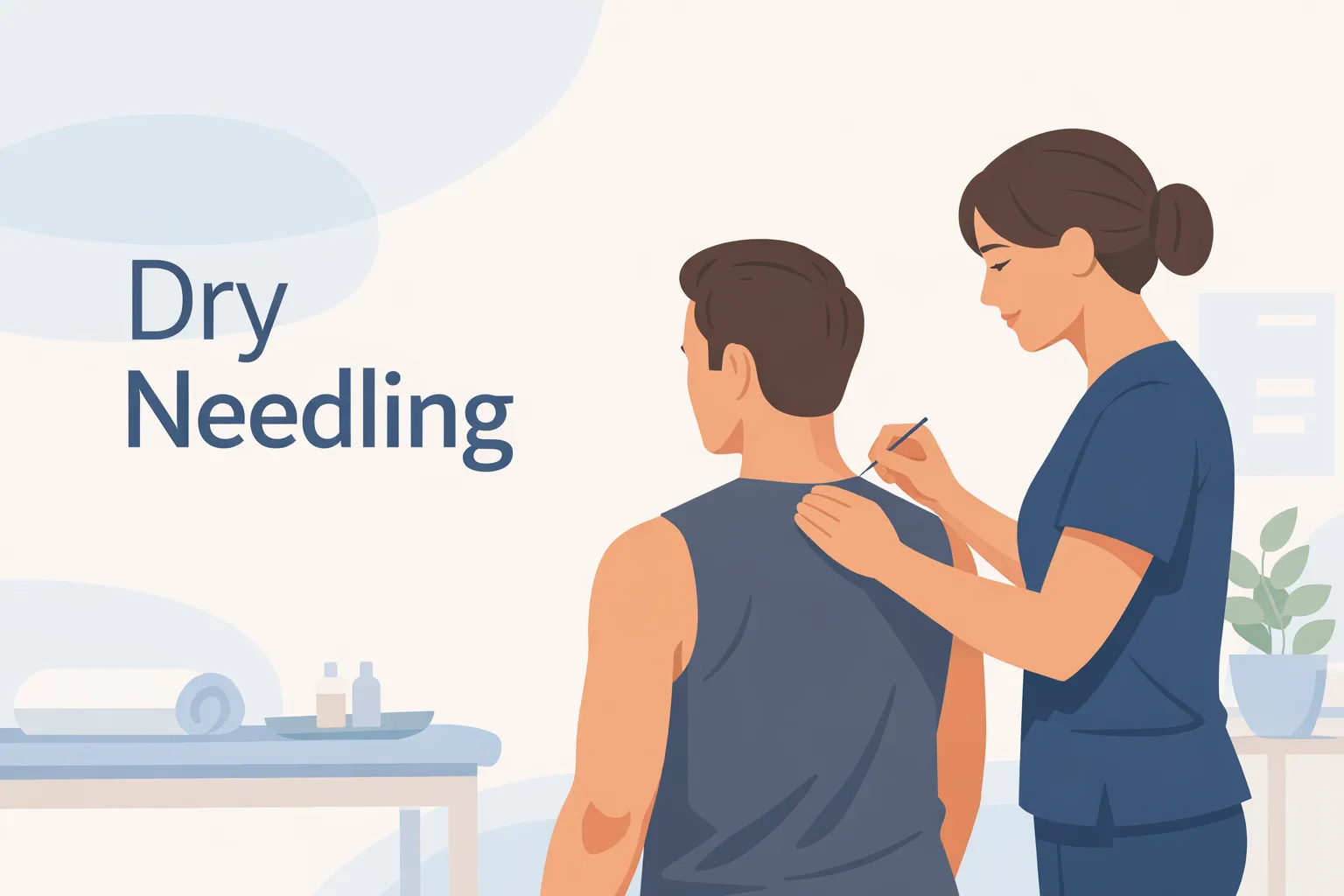
Dry needling is a technique used by some physical therapists to treat muscle-related pain, tightness, and movement limitation. A thin, sterile needle is placed into a specific area of muscle that is sensitive, reactive, or not tolerating load well.
Nothing is injected. There is no medication involved. The goal is to create a brief, controlled stimulus in the muscle and surrounding nervous system to reduce sensitivity and improve movement.
Dry needling is not meant to “fix damage” or put something back in place. Many painful muscles are not injured in a structural sense. They are often irritated, overworked, or protective, especially after a change in activity, stress, or an earlier injury.
What Dry Needling Is Trying to Change
When an area becomes painful, it often becomes more sensitive to normal stimuli, such as pressure, stretching, and loading. You might notice tightness that does not respond well to stretching, or pain that shows up earlier than it used to during exercise.
A helpful way to think about this is load tolerance. If the demand placed on a region exceeds its current capacity, symptoms tend to show up. The long-term solution is to improve capacity through progressive loading, rather than searching for something “damaged.”
Dry needling can reduce sensitivity enough to make subsequent steps more tolerable. It is typically used as a support measure, not a standalone solution.
What Dry Needling Is Like in Practical Terms
From a patient perspective, dry needling is often used for areas that feel persistently tight, guarded, or “stuck.” Physical therapists typically target muscles that reproduce your familiar symptoms when pressed and that limit motion due to guarding rather than true structural blockage.
People often associate dry needling with “trigger points.” That term can be overused, but the basic idea is straightforward: some areas of muscle become unusually tender and reactive, and they can contribute to pain with movement or activity.
You do not have to believe in “knots” to benefit. The practical goal is to reduce local sensitivity and improve function.
How Dry Needling Works
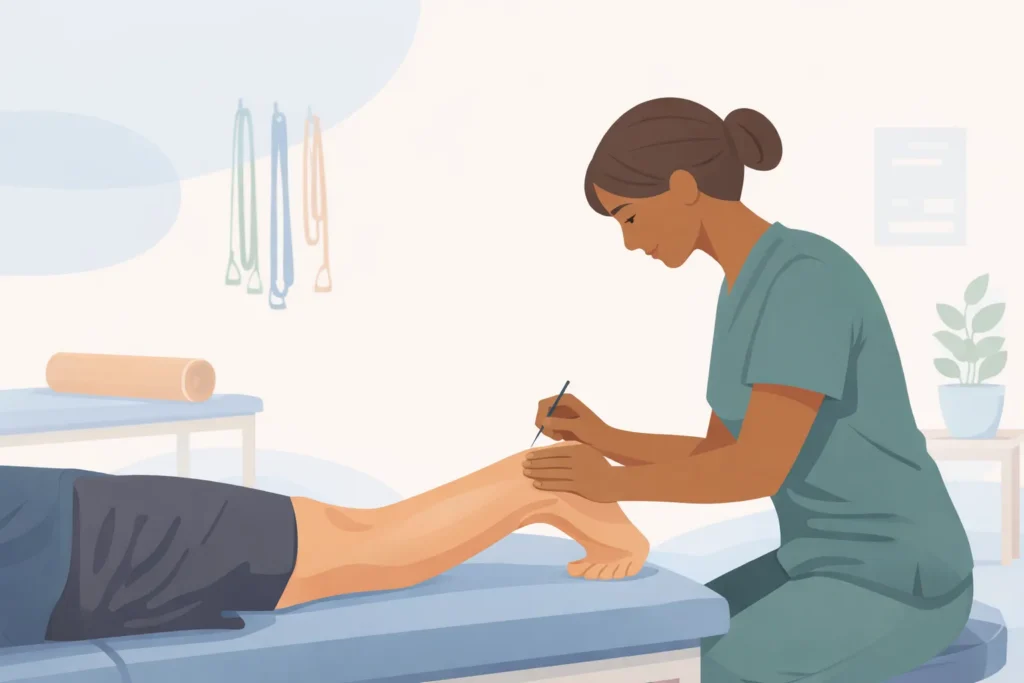
When a needle is placed into a reactive portion of muscle, it creates a small, controlled stimulus that can influence muscle tone and how the nervous system processes input from that area. In simple terms, it can help an overprotective region settle.
Potential effects include:
- Short-term changes in muscle tone
- Reduced sensitivity in irritated tissue
- Improved comfort with movement
- A temporary window where strengthening and loading feel easier
Not everyone feels immediate improvement. When it helps, people often describe decreased tightness, improved range of motion, or less familiar pain during a movement that was previously irritating.
Dry needling does not permanently change muscle structure or eliminate sensitivity on its own. Muscles adapt to what they repeatedly experience. That is why it is typically paired with exercise and progressive loading, so improvements carry over into daily life and training.
What It Feels Like and What’s Normal After
Most people feel a small pinch as the needle passes through the skin. Subsequently, the sensation often shifts to pressure, a deep ache, or a brief cramp within the muscle. Occasionally, the muscle produces a brief twitch response. That can feel unusual, but it is common and generally normal.
The experience varies by body region and by tissue reactivity. Some areas feel mild. Others feel more intense for a few seconds and then settle.
After treatment, temporary soreness is common. It typically feels similar to a strenuous workout or deep-tissue work. You may notice:
- Local tenderness when pressing on the area
- A heavy or fatigued sensation in the muscle
- Mild bruising
- Temporary improvement in motion or familiar pain
Soreness typically peaks within the first 24 hours and resolves within one to two days.
It is also normal for symptoms to fluctuate slightly. You might feel looser immediately after treatment, then sore later that day, and then improved the next day again. That pattern reflects a typical tissue response rather than injury.
Aftercare
You generally do not need to restrict activity. The goal is to restore normal movement, not to protect the area.
Light activity is encouraged. Gentle movement often helps soreness settle. You do not need aggressive stretching or massage unless your physical therapist specifically recommends it.
Dry needling is intended to support movement and loading, not to create fear about using the area.
Soreness vs Injury
It is common to wonder whether post-treatment discomfort is normal.
In most cases, it is.
When a needle is inserted into a reactive muscle, the tissue responds. That response can temporarily increase sensitivity before it returns to baseline, similar to how muscles respond after a challenging workout.
Normal post-needling soreness gradually improves over one to two days and stays localized to the treated region.
A problem is more likely if symptoms escalate rather than settle. Concerning signs would include increasing swelling, significant warmth or redness, worsening function that does not improve with gentle movement, or feeling unwell in a way that clearly began after treatment.
Those reactions are uncommon, but they warrant contacting your provider.
The broader point is this: muscles can be sensitive without being injured. The goal after dry needling is a gradual reduction in reactivity and improved tolerance to movement over time.
Who Tends to Benefit Most

Dry needling is most useful when pain has a clear muscular component and movement is limited by sensitivity rather than instability.
This often presents as persistent tightness that does not respond well to stretching, pain that increases with direct pressure on a specific muscle, or motion that feels blocked because the area is guarding.
For example, someone with ongoing neck tension may have upper trapezius muscles that remain reactive despite posture and mobility work. A runner with calf tightness may notice stiffness that escalates after changes in mileage. A person with shoulder pain may have guarding that limits overhead movement even when joint stability is adequate.
Dry needling can sometimes reduce that sensitivity enough to improve comfort and allow strengthening to progress more smoothly.
It is less helpful when symptoms are primarily driven by joint instability, significant structural pathology, or nerve irritation. In those cases, other strategies usually address the root issue more directly.
The decision is individualized. The question is whether reducing muscle sensitivity will meaningfully improve movement and load tolerance.
Dry Needling vs Acupuncture
Dry needling and acupuncture both use thin, solid needles, but they are based on different clinical frameworks.
Acupuncture is rooted in traditional East Asian medicine and often follows established meridian systems and point maps. Many people report symptom relief with acupuncture, and it is used for a wide range of conditions.
Dry needling in physical therapy is based on anatomy, biomechanics, and pain science. Placement is guided by movement assessment and identification of reactive muscle tissue.
In PT practice, dry needling is integrated into a broader rehabilitation plan that includes strengthening, progressive loading, and movement retraining. The goal is not only symptom relief but also improved tolerance for activity.
There can be overlap in technique, but the clinical reasoning behind the intervention differs.
How a PT Decides If It’s a Fit

Dry needling should follow a thorough evaluation.
Before considering it, we examine how your symptoms behave, which movements reproduce them, and whether applying direct pressure to a muscle reproduces the familiar pain. We also assess strength, mobility, recent activity changes, and overall conditioning.
If symptoms are primarily driven by muscular guarding and local sensitivity, dry needling may be helpful. If instability, nerve involvement, or joint-specific pathology are more prominent, other interventions are usually prioritized.
Timing also matters. In the early stages of injury, the focus may be on restoring basic movement and reducing inflammation. In more persistent cases in which exercise is underway, but a region remains reactive, dry needling may help reduce sensitivity enough to allow progression of loading.
Dry needling is always optional. The goal is to select interventions that improve function and long-term capacity, rather than relying on passive treatment alone.
FAQs About Dry Needling
Does dry needling permanently remove knots?
No. It can reduce sensitivity and muscle tone in the short term, but lasting improvement depends on progressive loading and conditioning.
How many sessions are typically needed?
There is no fixed number. Some people respond quickly. Others benefit from short-term use alongside strengthening. If there is no meaningful response after a session or two, the plan is adjusted.
Is dry needling safe?
When performed by a trained physical therapist using sterile technique, it is generally safe. Temporary soreness and mild bruising are common. Serious complications are rare.
Large reviews report that minor adverse events, such as temporary soreness or bruising, are common, whereas serious complications are rare when performed by trained providers.
Does it hurt?
Most people describe it as tolerable. There may be a brief pinch at insertion and a short-lived deep ache. Communication during treatment helps guide intensity.
Is it the same as an injection?
No. Nothing is injected. The needle is solid and used only to stimulate muscle tissue.
Will I need to avoid activity afterward?
Usually not. Light movement is encouraged. Temporary soreness may occur, but the goal is to continue progressing with activity.
When to Consider an Evaluation
If muscle tightness or recurrent pain persists despite stretching or exercise, an evaluation can clarify the underlying cause.
Dry needling may be appropriate when a muscle is overly reactive and limiting movement. In other cases, a different approach may be more effective.
The focus is not short-term relief alone. It is improving your ability to tolerate activity with less limitation over time.
If you would like to determine whether dry needling is appropriate for your situation, scheduling a movement assessment is the next appropriate step.
Tags

About the Author
Dr. Traci Smiley, DPT
Traci is a licensed physical therapist and owner of Calibration Physical Therapy, serving the Kansas City area. A Board-Certified Orthopedic Clinical Specialist with advanced training in manual therapy and strength conditioning, she helps individuals overcome pain and return to what they love.