
Physical Therapy Services
Neubie Therapy in Overland Park
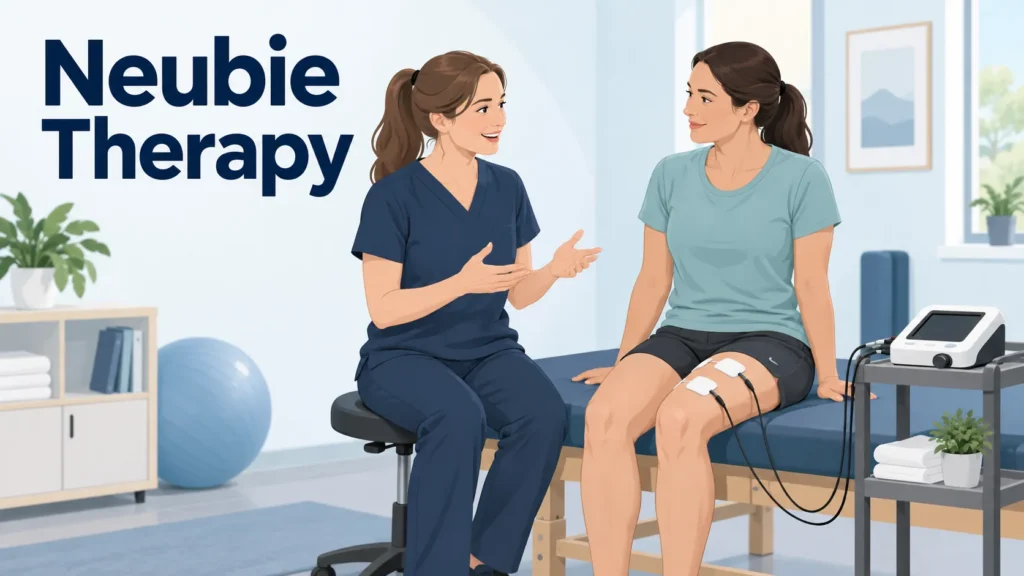
Neubie therapy in Overland Park uses targeted neuromuscular electrical stimulation alongside active rehabilitation to support muscle activation, movement, and recovery.
Service details
What Is Neubie Therapy?
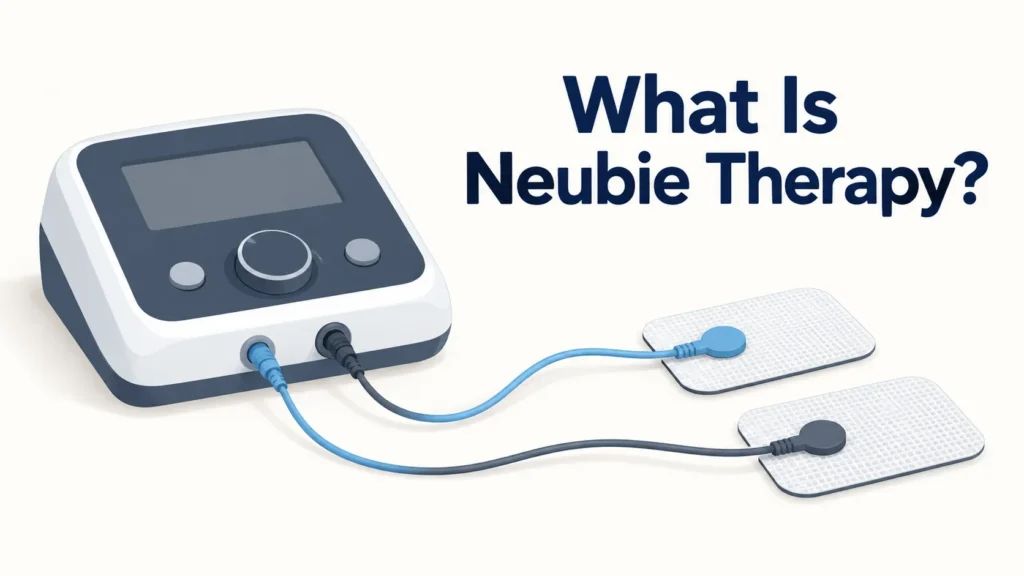
Neubie therapy is a form of electrical stimulation that may be used alongside exercise and movement training. At Calibration Physical Therapy in Overland Park, your therapist may include it in your rehabilitation plan to help you engage a muscle during movement.
The Neubie device uses pulsed direct current delivered through electrodes placed on your skin. Your therapist may combine that stimulation with a muscle contraction or guided exercise. “Muscle activation” simply means engaging a muscle to perform a movement, such as tightening your thigh to straighten your knee.
Your physical therapist considers how this approach fits the activities you are working toward, whether that involves climbing stairs, lifting at work, or returning to exercise. Neubie may support practicing a specific movement within a broader exercise and rehabilitation program.
When Neubie Therapy May Be Considered
Your therapist may consider Neubie when difficulty engaging a muscle, weakness, or discomfort interferes with rehabilitation. The assessment helps determine what limits movement and whether electrical stimulation could help.
Situations that may prompt that discussion include:
- Difficulty engaging a muscle after injury, surgery, or reduced activity. A muscle may feel difficult to engage even when you understand the exercise and are trying to perform it.
- Weakness or discomfort during prescribed exercises. You may have trouble controlling a movement or completing the prescribed repetitions. Your therapist can consider whether stimulation, an exercise adjustment, or another approach is appropriate.
- Movement limitations during a return to activity. Walking and basic home tasks may feel manageable, while heavier lifting or more demanding exercise remains difficult.
Your therapist will consider these difficulties, along with your current abilities and relevant precautions, when deciding whether to include Neubie.
What to Expect From Neubie Therapy
Your therapist will explain whether Neubie fits your care, what treatment involves, and how your response will be assessed. If it is included, you will receive guidance on the selected exercises and opportunities to ask questions throughout the visit.
Preparing for Your Appointment
Wear clothing that lets you move comfortably and allows access to the treatment area. Bring any relevant instructions from your medical team, along with examples of activities that have become difficult.
| What to prepare | Examples or details | Why it helps |
|---|---|---|
| A difficult activity | A task, movement, or exercise that causes trouble | Gives the assessment a practical focus |
| Relevant care instructions | Postoperative restrictions or instructions from your medical team | Helps keep rehabilitation within those limits |
| Suitable clothing | Clothing that permits movement and access to the treatment area | Makes assessment and treatment setup easier |
| Previous treatment experiences | What you have tried and how you responded | Helps inform the discussion of treatment options |
Contact the clinic if you are unsure what to wear or bring. You do not need to decide whether Neubie is appropriate before your appointment.
Evaluation and Treatment Selection
Your physical therapy evaluation begins with a discussion of your symptoms, medical history, and the activities you want to resume. Your therapist will assess relevant movement and strength to understand what is limiting you.
If your therapist recommends Neubie, they will explain what it is intended to address and how it connects to your exercises. This is also a chance to discuss other treatment options and ask how they will measure progress.
During a Neubie Session
Your therapist will place electrodes on the selected treatment area and explain the movement you will practice. Depending on your needs, this may involve holding a muscle contraction, moving a joint through a selected range, or completing an exercise while stimulation is applied.
You may notice an electrical sensation and muscle engagement. Describe what you feel and whether you can perform the movement as instructed. Your therapist can use that feedback to adjust the settings or exercise difficulty.
You may also receive guidance to slow down, change your position, or adjust how far you move. Ask for another demonstration if you are unsure what to do.
After the Session and Between Visits
Your therapist may repeat a movement or strength check to compare it with your performance before treatment. Before leaving, make sure you understand which exercises to continue, how much to do, and what changes to report.
Between appointments, notice what feels easier, what remains difficult, and whether symptoms change. Specific examples, such as completing an exercise with better control or managing a previously difficult task, help your therapist assess whether progress carries over into daily life.
These observations, together with reassessment during visits, help guide whether to continue Neubie, adjust its use, or focus on other parts of rehabilitation.
How Neubie May Fit Into Your Rehabilitation
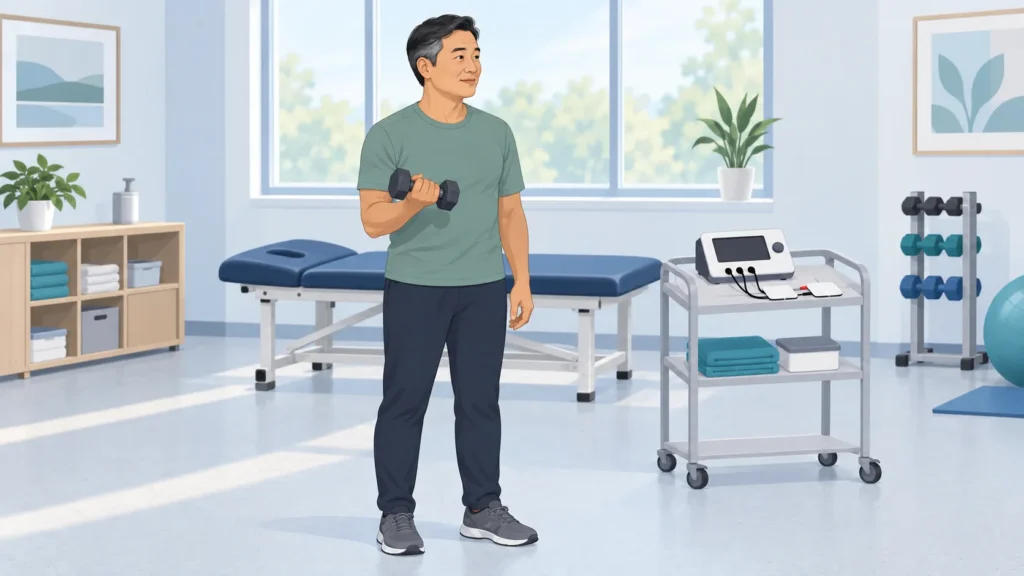
You may use Neubie alongside therapeutic exercise, mobility work, hands-on care, and education. These treatments address different needs: practicing muscle engagement, building strength, working on restricted movement, or learning how to manage activity between appointments.
Your exercise program connects treatment to the demands of daily life. If your goal is returning to a job that involves lifting, rehabilitation may include practicing the lift itself and gradually adjusting the load or repetitions. Electrical stimulation may have a role in selected exercises, while other parts of the program involve movement without the device.
Manual therapy may also be included when your therapist identifies a reason for hands-on treatment. The combination depends on what is limiting you and what you need to practice.
At home, the focus is on exercises and activity guidance you can follow independently. That might mean fitting shorter practice sessions into your day or gradually increasing a task within the limits your therapist recommends. The goal is to build the strength and movement skills you need to manage daily activities and return to more demanding tasks.
Safety and Comfort Considerations
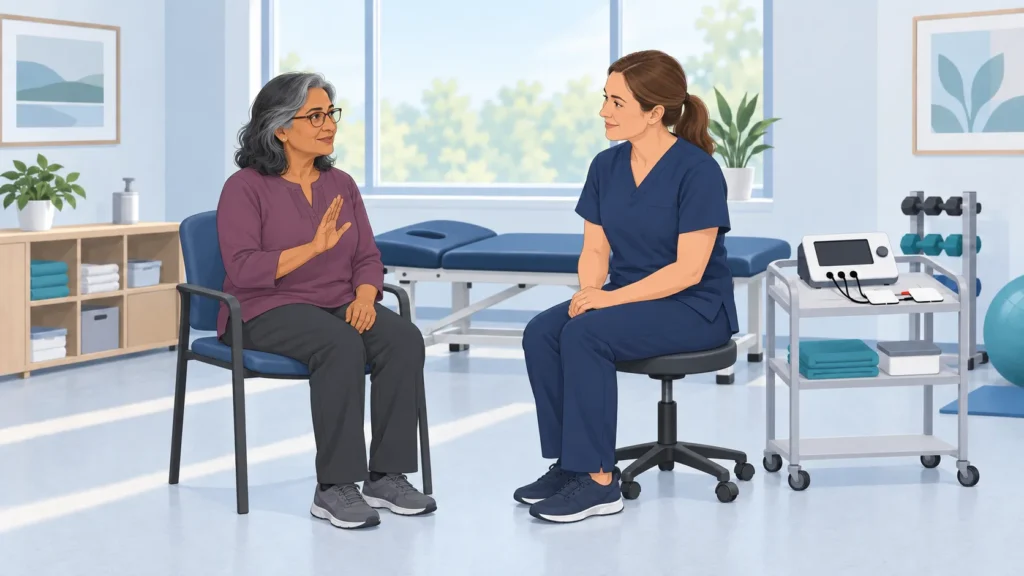
Before treatment, tell your therapist about implanted electronic devices, pregnancy, recent surgery, reduced skin sensation, or skin irritation in the proposed treatment area. NeuFit lists pregnancy and cardiac pacemakers as contraindications, meaning you should not use the device in those situations. Your therapist will also review other precautions relevant to your medical history.
After surgery, your rehabilitation must stay within your surgeon’s instructions for weight bearing, joint movement, and resistance. Using Neubie does not change those restrictions or replace clearance to progress an activity.
During treatment, report burning, sharp pain, dizziness, or an uncomfortable sensation immediately so your therapist can pause and reassess. You can ask to stop at any point.
Contact your therapist if you develop skin irritation beneath the electrodes or symptoms that persist or worsen after the visit. Describe what changed and when it began so they can determine the appropriate next step.
FAQs About Neubie Therapy
Understanding the research, treatment differences, and coverage questions can help you discuss Neubie with your physical therapist.
Does the Neubie machine actually work?
Some research has reported benefits in specific patient groups. A randomized study involving people with diabetic peripheral neuropathy compared Neubie with TENS and reported improvements in several measured outcomes in the Neubie group. However, that study does not establish effectiveness for unrelated injuries or post-surgery recovery. Consider the evidence alongside your condition and treatment goals, and measure progress through relevant changes in symptoms and function.
How is Neubie different from TENS?
TENS provides temporary pain relief, while Neubie may be incorporated into exercises focused on muscle engagement and movement. Neubie uses pulsed direct current, and its application differs from a typical home TENS session. Both involve electrical stimulation, but they are not interchangeable. The choice depends on the intended treatment goal, relevant precautions, and how the device will be used.
Is Neubie FDA-cleared?
NeuFit describes Neubie as an FDA-cleared Class II medical device, with indications including neuromuscular re-education and maintaining or increasing range of motion. FDA clearance is a regulatory status, not a guarantee that a treatment will work for an individual patient. It also does not establish that Neubie is more effective than other rehabilitation options.
How many Neubie therapy sessions will I need?
The number depends on what is being addressed and how you respond. Your therapist can explain Neubie’s proposed role and when they’ll review its usefulness. It may be included in only part of your rehabilitation, so the number of Neubie sessions may differ from your total physical therapy visits.
Does insurance cover Neubie therapy?
Coverage depends on your benefits and how the services during your visit are billed. Physical therapy coverage does not guarantee payment for every treatment or charge. Before starting, ask the clinic how the proposed care is billed, then check with your insurer about coverage, authorization requirements, visit limits, and your expected share of the cost.
Schedule a Neubie Therapy Evaluation in Overland Park
If weakness or difficulty with movement is affecting your daily activities, Calibration Physical Therapy can help you explore your rehabilitation options, including whether Neubie fits your care.
Our Overland Park clinic serves patients from Leawood, Olathe, Lenexa, and nearby Johnson County communities. Tell us what has become difficult and what you want to get back to. Schedule an Evaluation or call (913) 914-7174 to get started.