Shoulder pain is incredibly common. One large epidemiological review estimates that approximately 16% of people globally experience shoulder pain at any given time, making it one of the most common musculoskeletal complaints seen in healthcare. Women tend to experience shoulder pain more frequently than men, and rates are notably higher in high-income nations.
Large population studies estimate that between 7.7 and 62 out of 1,000 people develop new shoulder pain each year, with a median of about 38 per 1,000. The impact of shoulder pain on daily life can be significant, affecting everything from sleep quality to your ability to work, lift, and move comfortably.
The encouraging news is that physical therapy has strong research support as a first-line treatment for shoulder pain. Studies consistently show that therapeutic exercise, especially when paired with hands-on treatment, reduces pain and restores function. Shoulder-specific exercise programs have been shown to significantly reduce pain compared to standard medical care, and outcomes are often even better when combined with manual therapy.
This guide breaks down how physical therapy treats shoulder pain, what the research says, and what you can expect during your recovery.
Common Causes of Shoulder Pain
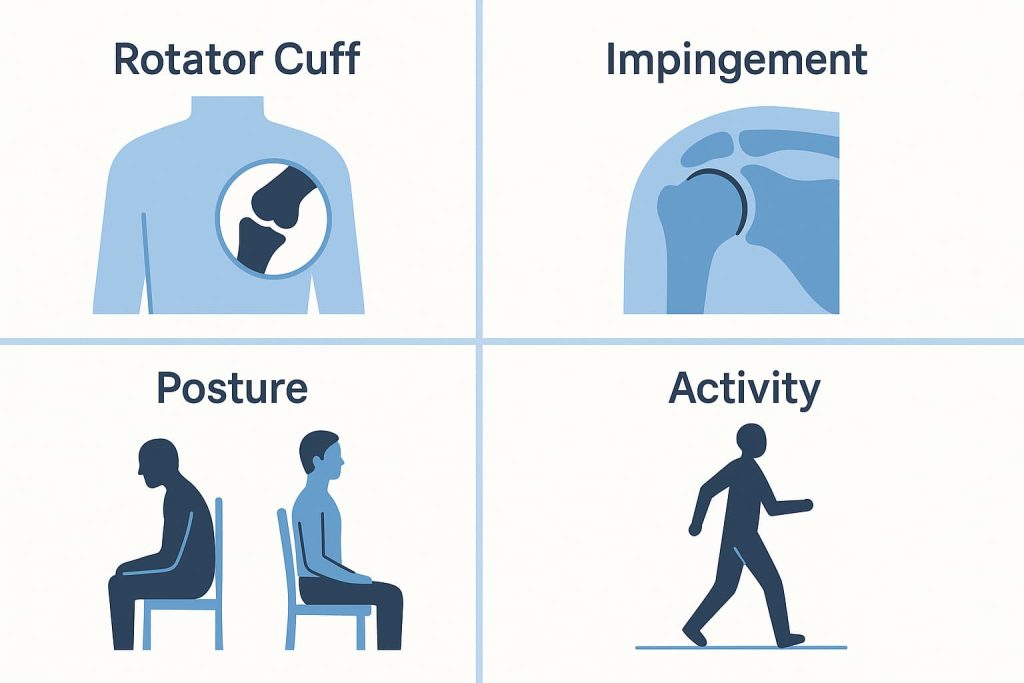
Shoulder pain can develop for many reasons, and different conditions often produce similar symptoms. Physical therapists look at posture, movement, strength, and joint health to pinpoint what is actually causing your pain and to create a treatment plan that fits your specific needs.
Common sources of shoulder pain include:
- Rotator cuff strains or tendinopathy
- Shoulder impingement
- Bursitis
- Frozen shoulder (adhesive capsulitis)
- Shoulder instability
- Labral irritation
- Poor posture or movement mechanics
- General stiffness or weakness after inactivity
Because these issues frequently overlap, an individualized evaluation is essential. A therapist identifies which tissues are irritated, weak, or restricted so treatment can target the true drivers of your pain.
Rotator Cuff Problems
Rotator cuff conditions are among the most common causes of shoulder pain. Population-based reviews estimate they affect roughly 20% of the general population, with rates increasing steadily with age.
Rotator cuff injuries span a spectrum, from tendinopathy to partial or full-thickness tears. Adults under 40 more often experience trauma-related injuries, while older adults tend to develop gradual, degenerative changes over time.
Shoulder Impingement Syndrome
Shoulder impingement is one of the most frequently diagnosed shoulder conditions. Clinical studies suggest it accounts for 44% to 65% of shoulder complaints in outpatient settings. Impingement occurs when the rotator cuff tendons or bursa become compressed beneath the acromion, particularly during overhead movements.
Among athletes involved in repetitive overhead activities, the numbers are even higher. One study of elite handball players found that up to 52% reported shoulder pain consistent with impingement.
Frozen Shoulder (Adhesive Capsulitis)
Frozen shoulder affects 2%-5% of the population, according to clinical practice guidelines and supporting epidemiological research.
The condition develops gradually and progresses through three phases: freezing, frozen, and thawing, which can last several months to three years.
People with diabetes are at particularly high risk. Guideline authors note that individuals with diabetes are about five times more likely to develop frozen shoulder than those without diabetes. Other risk factors include thyroid disease, Parkinson’s disease, and prolonged immobilization.
Bursitis and Shoulder Instability
Shoulder bursitis is inflammation of the fluid-filled sacs that cushion the joint and often co-occurs with rotator cuff irritation or impingement.
Shoulder instability, by contrast, is more common among younger, active individuals, particularly those in contact sports or activities that require extreme ranges of motion. Instability often stems from ligament laxity or a prior dislocation.
The Role of Posture and Movement Patterns
Not all shoulder pain stems from injury or degeneration. Prolonged sitting, forward shoulder posture, and repetitive device use can overload the shoulder and create chronic irritation. Faulty lifting or reaching mechanics can also stress tendons and joints, contributing to pain over time.
Your therapist will look at these lifestyle factors during your initial physical therapy evaluation. Book one with us today to take the next steps.
Why Individual Assessment Matters
Many shoulder conditions share overlapping symptoms, making an accurate diagnosis critical. A skilled physical therapist evaluates movement, strength, posture, and joint mobility to identify the structures involved. This leads to targeted, personalized treatment rather than a one-size-fits-all exercise program and significantly improves the chances of full recovery.
How Physical Therapy Helps Shoulder Pain
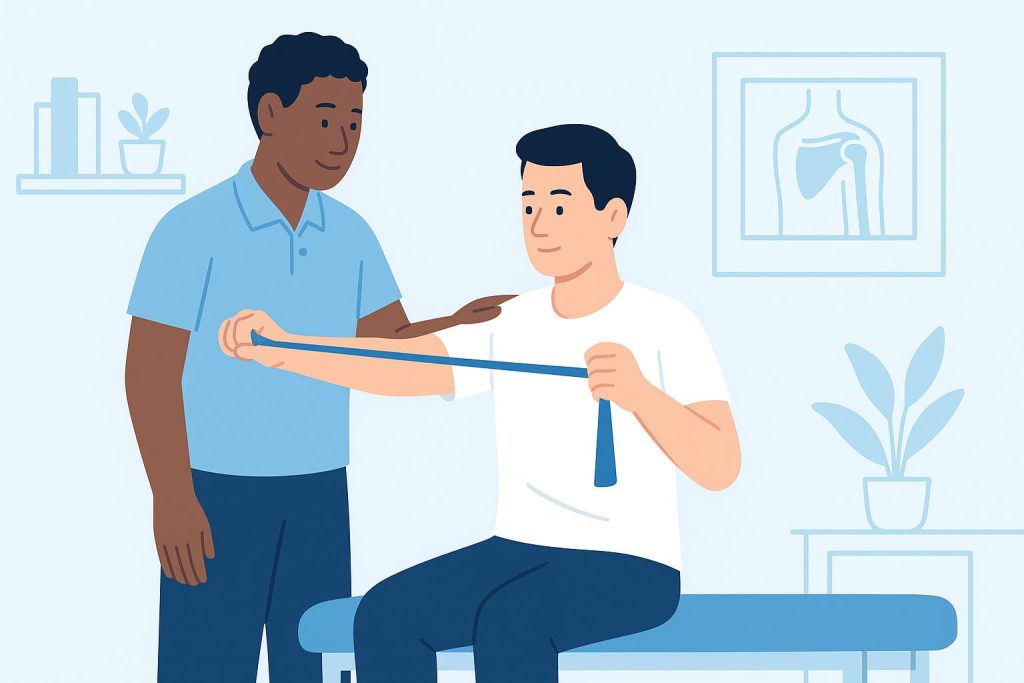
Physical therapy addresses shoulder pain through multiple evidence-based approaches, each targeting different aspects of the problem. The most effective treatment plans combine several of these strategies based on your specific condition and goals.
Exercise Therapy: The Foundation of Shoulder Rehabilitation
Research strongly supports exercise therapy as a first-line treatment for improving pain, mobility, and function in people with subacromial shoulder pain. One open-access review of randomized trials found that structured exercise programs led to clinically meaningful improvements in pain and function.
Shoulder-specific exercise programs can also have lasting effects. A long-term follow-up study reported meaningful pain relief and functional gains that were maintained for up to 1 year after completion of an exercise-based program.
Therapeutic exercise focuses on two main goals: restoring mobility and building strength. Many shoulder problems involve a limited range of motion, which physical therapists address through targeted stretching, joint mobilization, and thoracic spine mobility work. Strengthening the rotator cuff and scapular muscles then creates the stability your shoulder needs to function properly. This combination reduces pain during overhead movements, improves lifting capacity, stabilizes the joint, and helps prevent reinjury.
Your therapist selects exercises matched to your specific condition and progressively advances them as you improve.
Manual Therapy: An Important Addition to Exercise
Manual therapy encompasses techniques such as soft-tissue mobilization, myofascial release, and joint mobilization. Evidence from clinical trials suggests that manual therapy can improve shoulder mobility and may reduce pain, particularly when used alongside exercise.
The key point is that manual therapy is most effective when used as a complement to active rehabilitation, rather than as a stand-alone intervention. Your therapist uses these hands-on techniques strategically to decrease pain sensitivity, improve tissue mobility, and create a better foundation for the exercises that drive long-term recovery.
Correcting Posture and Movement Mechanics
Poor shoulder mechanics systematically overload tendons and joints, creating or perpetuating pain. Physical therapists identify and correct problems like forward shoulder posture, weak scapular stabilizers, limited thoracic extension, and faulty movement patterns during reaching, lifting, or pushing activities.
Therapy reduces stress on painful tissues and supports sustainable recovery by addressing these mechanical faults. This component is particularly important for preventing recurrence as your pain improves.
The Critical Role of Home Exercise Programs
What you do between clinic visits has a major impact on your results. Studies of people with shoulder pain and other musculoskeletal conditions show that those who consistently follow their home exercise programs tend to have better pain relief and functional outcomes than those who do not.
Your therapist designs a progressive home program that evolves as your shoulder improves. This helps maintain momentum between sessions and accelerates overall recovery.
Several factors facilitate consistency: understanding how each exercise supports your goals, maintaining a clear schedule, receiving regular feedback on your form, and using reminders or simple tracking tools. When patients feel confident in what they are doing and why, adherence improves, and results follow.
Evidence-Based Treatment Planning
Importantly, research comparing different treatment options shows that adding adjunct therapies such as injections, electrotherapy, or passive modalities to shoulder-specific exercise therapy often adds little benefit in terms of pain reduction beyond the exercise itself.
This is why skilled therapists prioritize active treatment, such as exercises, movement retraining, and manual therapy that complements exercise, rather than relying on passive treatments alone. Your physical therapist synthesizes these approaches into an individualized plan that addresses your specific impairments, supports your functional goals, and adapts as you progress through recovery.
What to Expect at Your First Physical Therapy Visit
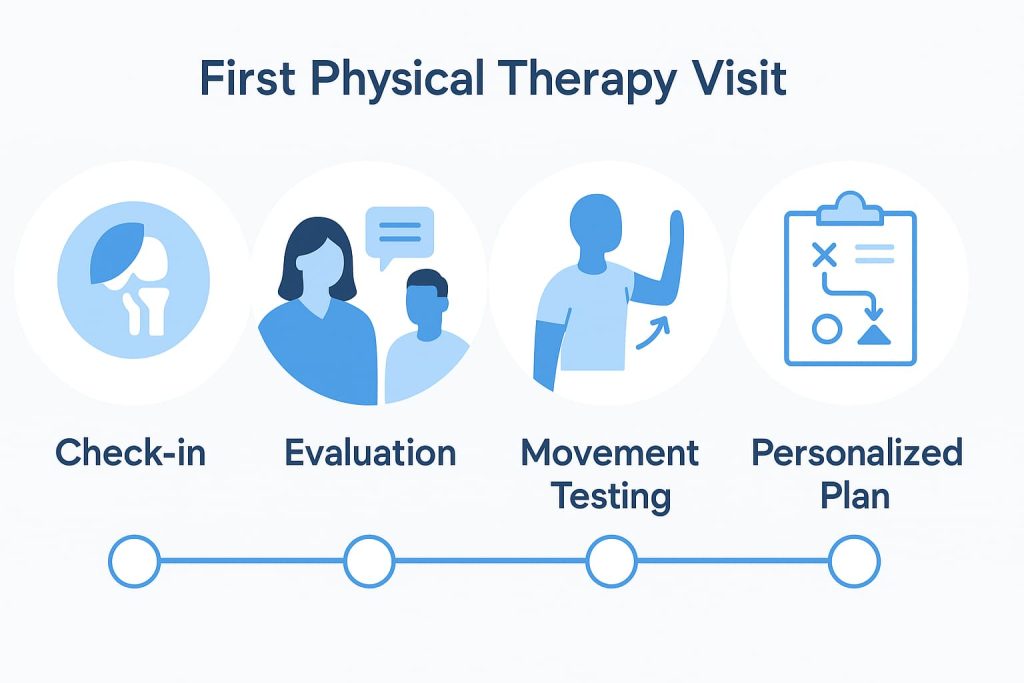
Your initial physical therapy evaluation serves as the foundation for your entire treatment plan. Most initial visits include a detailed conversation, a thorough movement assessment, and an introduction to treatment so you can begin making progress immediately.
Before You Arrive: Practical Preparation
Wear comfortable, loose-fitting clothing that allows easy movement and provides access to your shoulder, such as a T-shirt or tank top paired with shorts, sweatpants, or leggings. Supportive athletic shoes are usually recommended. Many clinics ask you to arrive a little early to complete intake paperwork covering your medical history, current medications, past surgeries, and symptom patterns.
The Comprehensive Interview
Your therapist begins by learning about more than just your shoulder. They ask about your work demands, recreational activities, how pain affects your daily routine, and what matters most to you in your recovery. This conversation also covers how long symptoms have been present, what makes them better or worse, and any previous treatments you have tried.
During this stage, your therapist also screens for signs or symptoms that might require referral to a physician, such as severe night pain that does not improve with rest, unexplained swelling or warmth, or pain radiating down the arm.
The Physical Assessment
Next, your therapist performs a structured examination. This typically includes:
- Observation of posture and shoulder position
- Palpation to check for tenderness, swelling, or temperature changes
- Active and passive range of motion testing
- Strength assessment
- Special tests as needed to help identify which structures are involved
Rather than focusing solely on the painful shoulder, therapists often assess the neck, upper back, and opposite shoulder, since problems in these areas can contribute to your symptoms.
Understanding Your Diagnosis and Plan
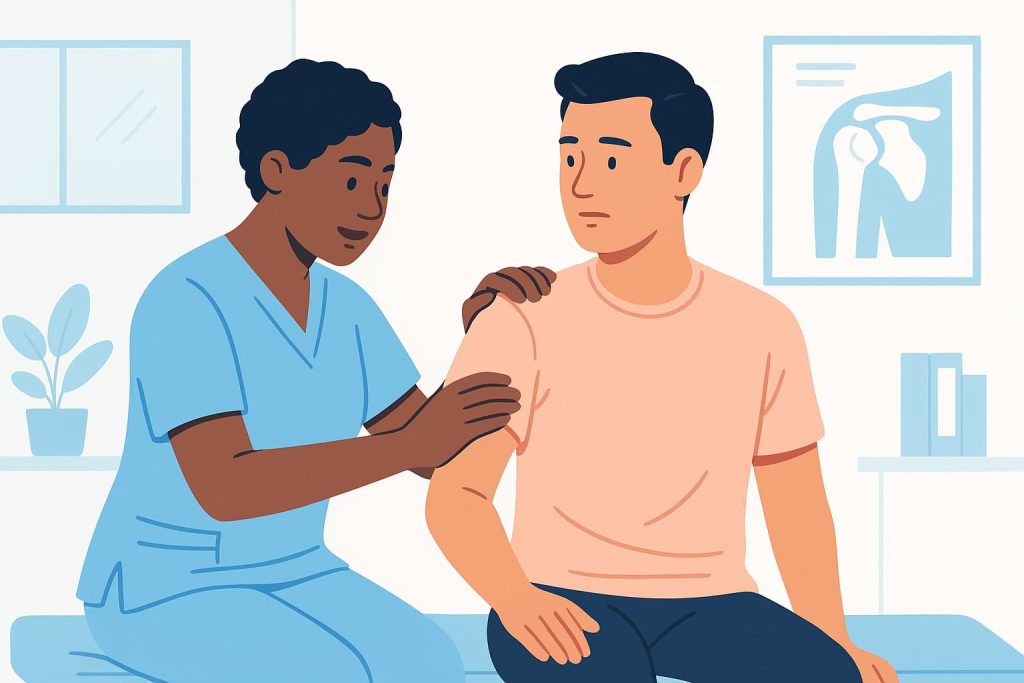
Once the evaluation is complete, your therapist explains their findings in clear language and outlines both short-term and long-term goals. They describe which tissues appear irritated or weak, what is likely driving your pain, and what type of recovery timeline is realistic based on your condition and overall health.
This discussion helps set expectations. Some conditions respond within a few weeks, while others require several months of consistent work. Knowing what to expect facilitates staying motivated.
Beginning Treatment During Your First Visit
Most therapists begin treatment during the first session. This might include gentle exercises, basic mobility or strengthening work, and hands-on techniques to reduce pain and improve movement. You will also receive a home exercise program to begin working on your recovery between visits.
Your therapist will recommend how often to attend therapy based on the severity and complexity of your condition. Before you leave, you will usually schedule follow-up appointments to maintain continuity.
Building a Partnership
The first visit is also the start of a partnership. Open communication about your progress, questions, and any discomfort allows your therapist to adjust your plan as needed. This collaborative approach, combined with evidence-based treatment, greatly improves your chances of achieving lasting results.
How Long Does It Take to Feel Better?
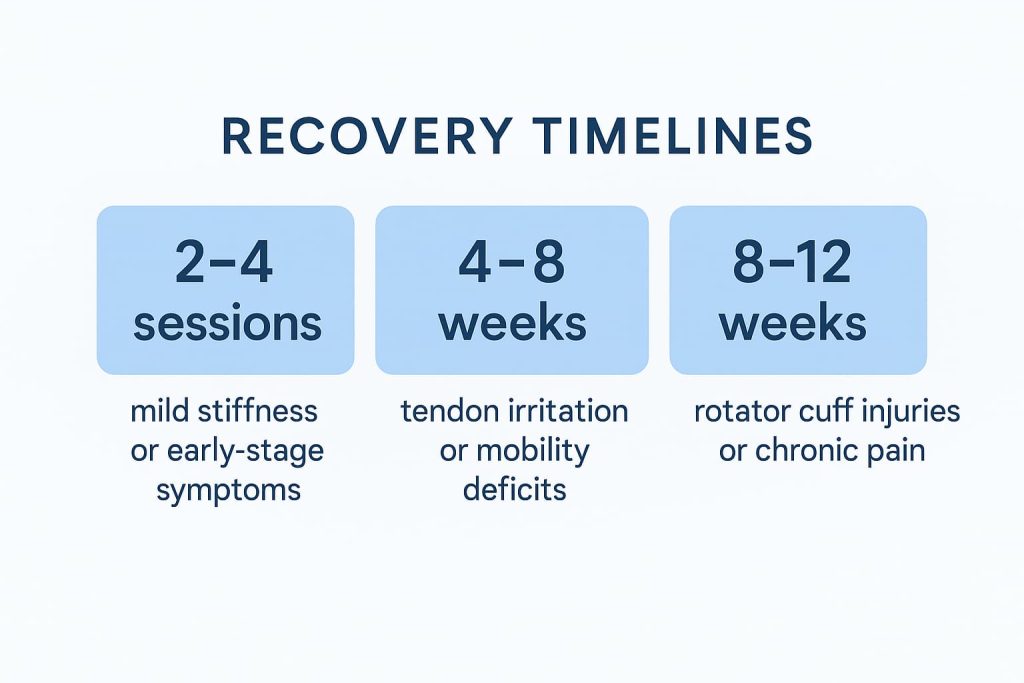
Recovery timelines vary depending on the underlying condition, the duration of symptoms, and the consistency with which you follow your treatment plan. As a general guideline, many people experience improvements within these ranges:
- 2–4 sessions for mild stiffness, overuse, or early-stage symptoms
- 4–8 weeks for tendon irritation, mobility deficits, or postural contributors
- 8–12 weeks for rotator cuff injuries, chronic pain, or long-standing movement restrictions
Progress is rarely linear, but consistency with your exercises and scheduled visits is one of the biggest predictors of successful recovery.
When Should You Seek Physical Therapy?
You should schedule a physical therapy evaluation if you’re experiencing any of the following:
- Pain lasting longer than 1–2 weeks
- Difficulty reaching, lifting, or sleeping due to shoulder discomfort
- Clicking, catching, or sharp pain during movement
- Noticeable weakness or reduced range of motion
- Pain that keeps returning after activity
- Stiffness that interferes with daily tasks
Early evaluation can prevent minor issues from becoming long-term conditions, shorten recovery time, and help you return to normal movement with confidence.
Get Expert Shoulder Pain Treatment in Overland Park
If shoulder pain is affecting your daily life, physical therapy offers safe, evidence-based solutions that help you recover and move confidently again.
???? Learn more about our Shoulder Pain Treatment Services
???? Schedule your evaluation today
Tags

About the Author
Dr. Traci Smiley, DPT
Traci is a licensed physical therapist and owner of Calibration Physical Therapy, serving the Kansas City area. A Board-Certified Orthopedic Clinical Specialist with advanced training in manual therapy and strength conditioning, she helps individuals overcome pain and return to what they love.