
Physical Therapy Services
Sciatica Treatment in Overland Park
Address radiating nerve pain with symptom-guided progression, movement retraining, and strategies that reduce irritation.

Service details
Sciatica can affect much more than your back. Pain, tingling, numbness, or weakness may extend through the buttock, hip, thigh, calf, or foot. When symptoms persist, sitting at work, driving, exercising, sleeping, and completing household tasks can become difficult.
At Calibration Physical Therapy, we help people in Overland Park and nearby communities understand their symptoms and find a practical way forward. Your treatment is based on how you move, what aggravates your symptoms, and what you need to get back to doing.
Your first evaluation includes a review of your symptoms, movement, strength, mobility, work demands, exercise habits, and daily activities. We use that information to create a treatment plan that fits your goals and your current abilities.
What Causes Sciatica?

Sciatica refers to symptoms that follow the path of the sciatic nerve, which travels from the lower spine through the buttocks and into the legs. Symptoms may develop when a nerve is irritated, compressed, or placed under increased stress.
This can happen for several reasons. Disc changes, narrowing around the spinal nerves, bone and joint changes in the spine, irritation near the piriformis, inflammation, and sudden changes in lifting or activity can all contribute. In some cases, symptoms begin after a clear injury. In others, they develop gradually as work demands, exercise, or daily movement changes.
Sciatica may feel sharp, aching, burning, or electric-like. You may also notice tingling, numbness, or weakness. Symptoms can increase with sitting, bending, lifting, coughing, walking, or certain sleeping positions.
Because sciatica looks different for everyone, your evaluation focuses on how your symptoms behave and which movements make them better or worse.
Sciatica does not always follow the same pattern
Some people have back and leg pain after lifting. Others develop symptoms gradually after changes in work, exercise, sitting, or daily activity. Symptoms can also vary in location and intensity. That is why treatment should be based on an individual evaluation rather than a standard diagnosis alone.
When Should You See a Physical Therapist?
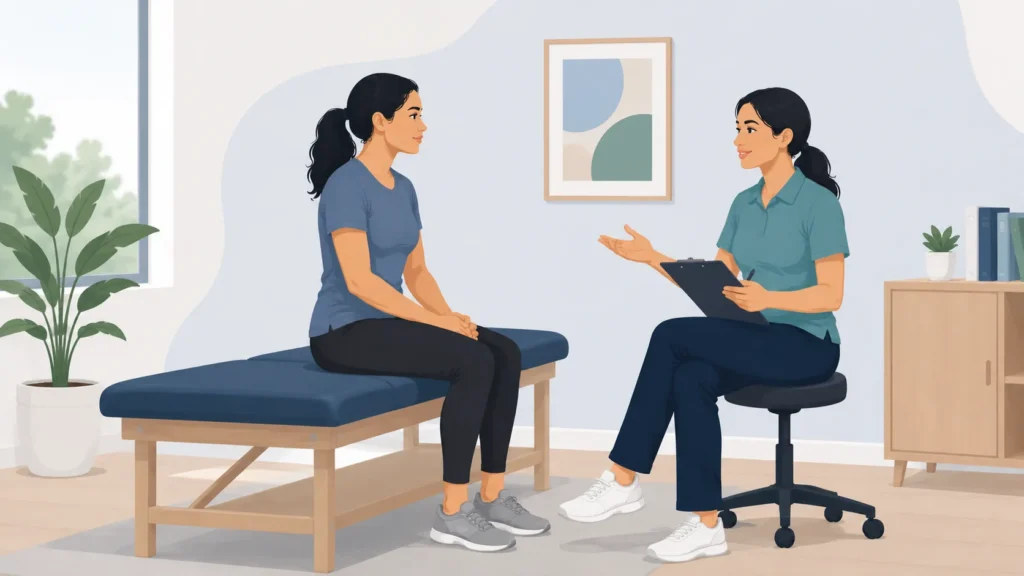
Consider a physical therapy evaluation if your symptoms are interfering with work, sleep, exercise, driving, or normal household activities. You may also benefit from an evaluation if pain, tingling, or numbness continues, returns repeatedly, or is making normal activities harder. Discuss new or worsening weakness promptly with a medical professional.
A physical therapist can assess how your symptoms respond to movement and help determine what may be contributing. You do not need to wait until the pain becomes severe before asking for help.
Seek prompt medical attention for severe or worsening weakness, new loss of bladder or bowel control, numbness in the groin area, fever, or unexplained weight loss.
When Physical Therapy Might Help
| What you are noticing | How it may affect you |
|---|---|
| Pain traveling into the leg | Sitting, walking, driving, or sleeping may become uncomfortable |
| Tingling or numbness | You may notice changes in sensation in the thigh, calf, or foot |
| Weakness | Stairs, lifting, exercise, or prolonged walking may feel more difficult |
| Symptoms that keep returning | Temporary relief may not address what continues to aggravate the problem |
| Symptoms that limit daily activities | Work, household tasks, recreation, or sleep may become harder to manage |
If these changes are affecting your work, sleep, exercise, driving, or daily activities, a physical therapy evaluation may help clarify what is contributing to your symptoms and what options are available.
How We Treat Sciatica

Treatment begins with understanding what is aggravating your symptoms. We assess your spine, hips, legs, movement patterns, strength, mobility, and how you respond in different positions. This helps us determine which areas may need more mobility, strength, coordination, or support.
Reduce irritation
We may use hands-on care, movement changes, positioning advice, and activity guidance to help settle symptoms while keeping you as active as possible.
Restore movement and strength
Exercises may focus on spinal and hip mobility, trunk and leg strength, coordination, or nerve mobility when appropriate.
Build back to your goals
As your symptoms improve, we gradually increase the demands of your exercises and daily activities. The goal is to help you return to work, exercise, driving, recreation, and other activities with more confidence.
What Progress May Look Like
At first, progress may mean finding more comfortable positions, sleeping with fewer interruptions, or getting through basic daily activities without a major increase in symptoms.
As your tolerance improves, you may be able to sit longer, walk farther, drive more comfortably, or return to modified exercise.
Over time, treatment focuses on helping you resume the activities you care about, whether that means working a full day, lifting at home, training at the gym, or participating in recreation.
We measure your progress by the activities you want to resume, how your symptoms respond to daily demands, and how much more capable you feel managing movement.
What to Expect at Your First Visit

Your first visit begins with a conversation about your symptoms, health history, previous injuries, work, exercise, and daily routine. We also discuss the activities you want to resume and the changes you have already tried.
Next, we assess your movement, strength, mobility, flexibility, and how you respond to different positions or activities. The evaluation is not about forcing painful movements. It is about understanding how your symptoms behave and identifying useful starting points for treatment.
Before you leave, we explain what we found, answer your questions, and outline your next steps. You will also receive specific guidance for managing your symptoms between visits.
What You Leave With
By the end of your first visit, you should have a clearer understanding of what may be contributing to your symptoms and how your symptoms respond to movement.
You will leave with practical next steps and a treatment plan based on your goals, your current abilities, and what we learn during the evaluation.
Start Moving Forward

Calibration Physical Therapy helps people in Overland Park, Leawood, Prairie Village, and nearby Kansas City communities address sciatica and return to the activities they value.
You should not have to plan your day around leg pain or avoid normal movement because you are afraid of making things worse. An evaluation can help you understand your symptoms and identify practical next steps.
Schedule your evaluation at Calibration Physical Therapy.
FAQs
Can physical therapy help with sciatica?
Physical therapy can help many people improve movement, strength, and daily function while reducing irritation around the sciatic nerve. Your evaluation helps determine whether physical therapy is appropriate and which treatments best fit your symptoms.
Do I need an MRI before physical therapy?
Not necessarily. Many people can begin physical therapy without imaging. If your symptoms or examination suggest that additional medical evaluation is needed, we will discuss that with you.
Do I need a doctor’s referral?
Many people can begin physical therapy without seeing a doctor first. Referral requirements depend on your insurance plan and situation. Contact our office or your insurance provider to confirm your coverage.
What happens during a sciatica evaluation?
We discuss your symptoms, health history, work, exercise, and daily activities. We then assess your movement, strength, mobility, flexibility, and how you respond in different positions. After the evaluation, we explain our findings and recommend next steps.
How long does treatment take?
Treatment length depends on the cause of your symptoms, how long they have been present, your goals, and how you respond to treatment. We monitor your progress and update your plan as your abilities improve.
What should I do during a flare-up?
A flare-up does not always mean that you have caused new damage. Follow your physical therapist’s instructions, temporarily reduce activities that clearly increase your symptoms, and continue gentle movement as tolerated.
Contact us if your symptoms worsen significantly or change unexpectedly. Seek prompt medical attention for severe weakness, new loss of bladder or bowel control, numbness in the groin area, fever, or unexplained weight loss.