
Physical Therapy Services
Dry Needling in Overland Park
Release trigger points, reduce muscle guarding, and improve movement quality when pain patterns stay stuck.
Service details
What Is Dry Needling?
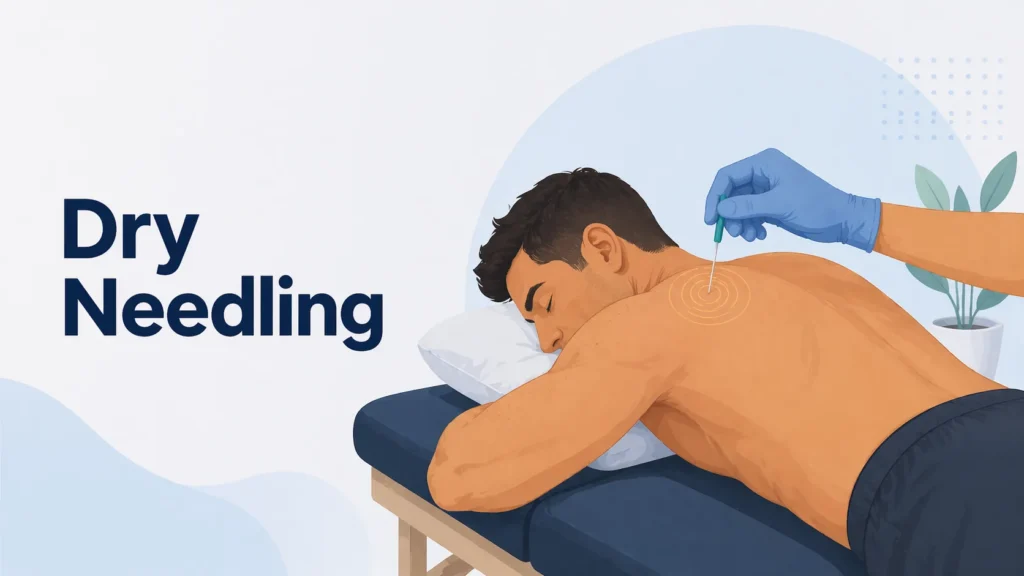
Dry needling is a physical therapy technique that uses thin, solid needles to treat sensitive, tight, or overworked areas within a muscle. The needles do not contain medication and are not used to inject anything.
At Calibration Physical Therapy in Overland Park, dry needling may be one part of your physical therapy plan. After your evaluation, your therapist may combine it with strengthening, mobility work, manual therapy, or movement retraining based on your symptoms and goals.
Dry needling is different from acupuncture. Although both use thin needles, dry needling is used within a physical therapy plan to address musculoskeletal pain, muscle tension, and movement limitations.
When May Dry Needling Be Considered?

Consider dry needling when muscle tightness, tenderness, or protective guarding contributes to painful movement or limited mobility. Your physical therapist may discuss it when you have:
- Persistent muscle tightness or guarding
- A tender area that reproduces familiar symptoms
- Limited range of motion
- Tendon or joint pain with a muscular component
- Pain that makes exercise difficult
- Symptoms that have not improved enough with exercise alone
Dry needling works best when it supports the rest of your rehabilitation. If dry needling creates a short-term change in discomfort or movement, your therapist can use that opportunity to work on strength, mobility, control, and activities such as walking, lifting, climbing stairs, running, or participating in sports.
What Happens During a Dry Needling Evaluation and Treatment?
Your first visit starts with a physical therapy evaluation, not automatically with dry needling. Your therapist will ask about your symptoms, injury history, daily activities, and goals. They will also assess your movement, strength, mobility, and how your symptoms change during specific positions or tasks.

If dry needling may be appropriate, your therapist will explain which area they recommend treating, what you may feel during the session, how it fits into your treatment plan, what care may follow, and what to expect afterward.
You can ask questions at any point. If you are nervous about needles or have concerns about a particular area, tell your therapist before treatment begins. You can also let them know if you need them to pause or adjust the treatment.
What Does Dry Needling Feel Like?
The experience varies from person to person. You may feel a brief prick as the needle passes through the skin, followed by pressure, aching, or a quick muscle twitch.
Dry needling can cause brief discomfort, especially when your therapist is locating a tender or highly sensitive area. Your therapist should explain what to expect and adjust the treatment based on your response.
Some people notice a change in movement during or soon after treatment. Others feel temporary soreness first and notice changes later. Tell your therapist if a sensation feels sharp, unusually intense, or different from what you were told to expect.

Before Your First Visit
Bring a list of relevant medical conditions and medications, and tell your therapist about pregnancy, bleeding concerns, or a significant fear of needles. Your first visit begins with an evaluation, so be prepared to discuss what has been difficult, which activities you want to improve, and what you hope to accomplish through physical therapy.
What Should I Expect After Dry Needling?
Temporary soreness, tightness, fatigue, or bruising near the treatment area can occur after dry needling. Your therapist may recommend light movement, mobility work, or other aftercare based on how you respond.
Follow the instructions you receive after your session. Contact your healthcare provider if you experience a reaction that concerns you or does not improve as expected.
Safety and When to Seek Medical Evaluation
Dry needling is not appropriate for everyone. Your physical therapist will review your health history and discuss whether it is suitable for you. Before treatment, tell the clinic about relevant medical conditions, medications, pregnancy, bleeding concerns, or a significant fear of needles.
Dry needling should be part of an evaluation-based treatment plan, not a substitute for medical care when symptoms may require further evaluation.
You control the treatment. Ask questions before or during the session, share concerns about the treatment area, and tell your therapist if you want to pause, adjust, or stop treatment.
Dry Needling at Calibration Physical Therapy
At Calibration Physical Therapy in Overland Park, dry needling supports a broader movement and rehabilitation plan. Your therapist will consider what is limiting you, which activities are difficult, and what may help you move forward.
Your treatment may combine dry needling with progressive strengthening, mobility work, manual therapy, movement retraining, activity-specific exercise, or guidance on pacing and training load. Your treatment plan will depend on your symptoms, goals, and response to treatment. No preset number of sessions or protocol fits every patient.

Schedule a Dry Needling Evaluation
If you are dealing with muscle tightness, painful movement, or limited mobility, schedule an evaluation with Calibration Physical Therapy in Overland Park. Your therapist can discuss your symptoms, goals, and whether dry needling is appropriate for you.
Dry needling is not automatic at the first visit. You will have an opportunity to ask questions and understand your treatment options before deciding whether to proceed. Schedule an evaluation to get started.
Frequently Asked Questions
Is Dry Needling the Same as Acupuncture?
No. Both techniques use thin needles, but dry needling is used within a physical therapy plan to address musculoskeletal pain, muscle tension, and movement limitations. Acupuncture is based on traditional Chinese medicine.
How Many Dry Needling Sessions Will I Need?
There is no standard number of sessions. Your therapist will base recommendations on your evaluation, goals, response to treatment, and progress with the rest of your plan.
Can Dry Needling Replace Physical Therapy?
No. Dry needling is generally used as one part of physical therapy rather than as a replacement for it. Exercise, strengthening, mobility work, and education help address the movement demands connected to your symptoms.
Does Dry Needling Leave Bruises?
It can. Temporary soreness, tightness, fatigue, or bruising may occur near the treatment area. Your therapist will explain what to expect and how to care for the area afterward.
Is Dry Needling Safe for Everyone?
No treatment is appropriate for every person. Your therapist will review your health history and discuss whether dry needling is suitable for you.
Before treatment, tell the clinic about relevant medical conditions, medications, pregnancy, bleeding concerns, or a significant fear of needles.
Where Can I Get Dry Needling in Overland Park?
Calibration Physical Therapy provides dry needling as part of physical therapy in Overland Park, Kansas. Schedule an evaluation to discuss your symptoms, goals, and whether dry needling belongs in your treatment plan.