
Physical Therapy Services
Cupping Therapy in Overland Park
Decrease tissue stiffness, improve local mobility, and pair soft-tissue work with movement that restores tolerance.

Service details
Cupping therapy is one technique a physical therapist may use to address muscle tightness, soft-tissue sensitivity, or limited movement. At Calibration Physical Therapy, we consider cupping alongside your symptoms, movement, activities, and goals.
Cupping does not replace a physical therapy evaluation or active rehabilitation. Your therapist may use it with exercise, mobility work, and other hands-on techniques when they believe it could support a specific movement or treatment goal.
If tightness or discomfort is making it harder to stand at work, lift, climb stairs, run, or participate in sport, schedule an evaluation to discuss your options.
What Is Cupping Therapy?
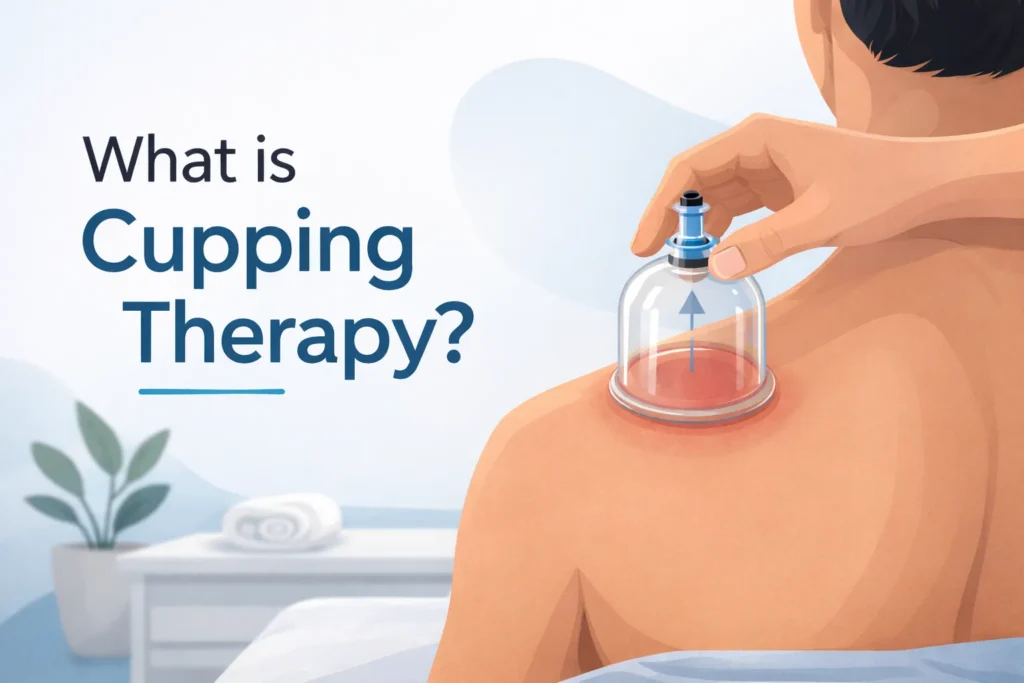
Cupping therapy uses specialized cups placed on the skin to create gentle suction. The suction lifts the skin and superficial soft tissue instead of pressing directly into it.
Consider cupping when tightness or sensitivity makes movement uncomfortable. The technique may temporarily change how an area feels or moves, but it does not diagnose the source of a problem or repair damaged tissue.
Cupping is different from massage because it creates a lifting sensation rather than direct compression. Your physical therapist may use it as one part of treatment while also addressing mobility, strength, coordination, and the activities you want to perform.
When May Cupping Therapy Be Considered?
Cupping may be considered when your physical therapist identifies muscle tightness, soft-tissue sensitivity, or a movement restriction that could respond to hands-on treatment.
It may be discussed if you are experiencing:
- Muscle tightness or tenderness
- Limited flexibility or local mobility
- Stiffness that affects daily movement
- Soft-tissue sensitivity after exercise or sport
- Difficulty tolerating a specific movement or exercise
Cupping is not automatically appropriate for every diagnosis or body area. Your therapist will consider your examination, medical history, skin condition, current symptoms, and activity goals before recommending it.
What Happens During Treatment?
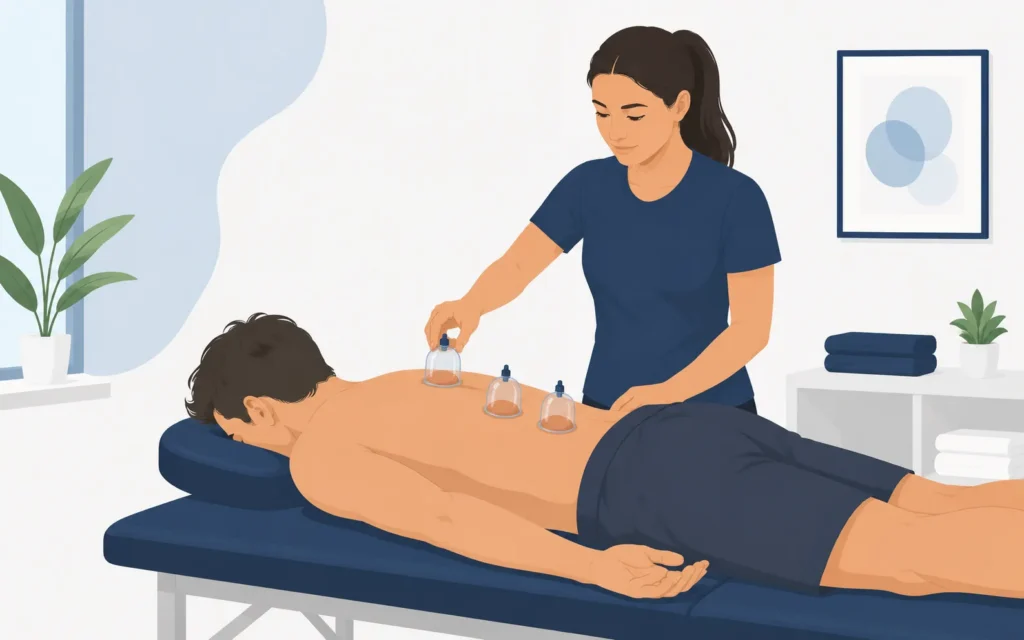
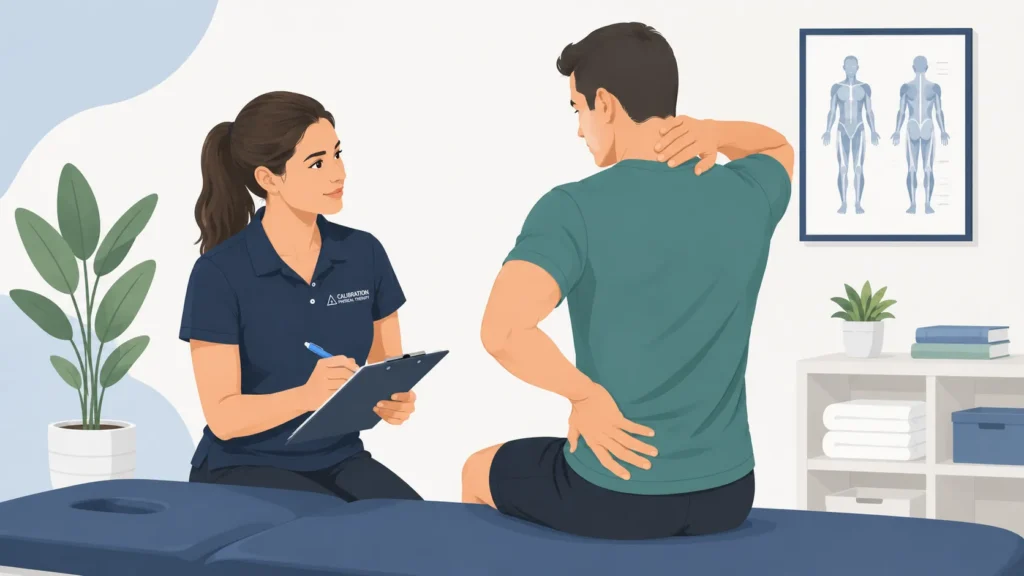
Your therapist will begin by discussing the area affecting your movement and the activities you want to perform. They will assess your movement and decide whether cupping fits into your treatment plan.
If cupping is appropriate, cups may be placed on selected areas of the skin and adjusted based on your response. Depending on the treatment goal, your therapist may use:
- Static cupping: Cups remain in place while you relax.
- Dynamic cupping: The therapist moves the cups across the skin.
- Flash cupping: The therapist applies and removes cups in a short, repeated pattern.
- Functional cupping: The therapist combines cupping with movement or exercise.
Cupping may be paired with manual therapy, mobility work, or strengthening. The specific technique depends on your symptoms and how you respond during treatment. It should support a defined treatment goal rather than be used automatically for every patient.
What Can Cupping Feel Like?
Cupping may create a pulling, lifting, or pressure sensation on the skin. Discuss the sensation with your therapist and adjust it to your comfort. Tell your therapist if it becomes painful, too intense, or does not feel right.
Cupping may also cause temporary circular marks, redness, or tenderness. The appearance and duration of these changes can vary depending on the technique, treatment area, and your individual response.
What to expect: Cupping may leave temporary marks. Ask your therapist what changes are expected and when to contact the clinic about a concerning response.
If cupping is included in your treatment, your therapist may follow it with a mobility exercise, movement practice, or strengthening exercise. The goal is to connect any short-term change in comfort or movement to the activity you are working to perform.
Safety and Clinical Limitations
Cupping is not appropriate for everyone or for every area of the body. Tell your physical therapist about relevant medical conditions, medications, skin problems, recent procedures, surgery, and any restrictions provided by another medical professional.
Your therapist may need to modify or avoid cupping if you have:
- Irritated, broken, infected, or recently injured skin
- Unexplained bruising or unusual bleeding
- A condition or medication that affects bleeding or clotting
- Recent surgery or postoperative restrictions
- Significant swelling, redness, warmth, or skin sensitivity
Cupping is not a guaranteed treatment for pain, inflammation, scar tissue, circulation, or recovery. Research on cupping varies, and some people may notice a short-term change in comfort or movement.
Cupping also does not replace physician evaluation, imaging, fracture management, surgery, or postoperative instructions. Seek appropriate medical care for severe or rapidly worsening symptoms. Urgent evaluation may be needed for visible deformity, inability to bear weight, a snap or pop followed by loss of function, rapidly worsening redness or warmth, or significant loss of sensation.
How Cupping Fits Into Physical Therapy
Cupping is one possible tool within a broader physical therapy program. Your plan may also include education, mobility work, strengthening, balance or coordination training, and activity-specific movement practice.
| Approach | What it may involve | How it fits into care |
|---|---|---|
| Cupping therapy | Suction applied to the skin and superficial soft tissue | May support comfort or movement during a larger treatment plan |
| Exercise therapy | Strength, mobility, balance, or coordination exercises | May support tolerance for daily and recreational activities |
| Manual therapy | Hands-on techniques directed at movement or soft-tissue restrictions | May be combined with exercise and education |
| Medical evaluation | Assessment for symptoms that may require imaging, medication, surgery, or other care | Important when symptoms fall outside physical therapy or become urgent |
Your therapist will connect treatment to the activities you need to perform. For example, shoulder tightness may affect overhead lifting, calf tightness may affect running, and back stiffness may make standing through a work shift uncomfortable.
If cupping makes a movement more tolerable, your therapist may use that opportunity to practice the movement or exercise. If it does not help you tolerate the activity or causes an unwanted response, the treatment plan can be adjusted.
Other relevant services may include dry needling, instrument-assisted soft tissue mobilization, and condition-specific physical therapy services.
Schedule an Evaluation
If muscle tightness, stiffness, or discomfort is affecting how you move, an evaluation can help determine whether cupping or another treatment approach fits your goals.
Calibration Physical Therapy serves patients in Overland Park and the greater Kansas City area.
Schedule an Evaluation or call (913) 914-7174.
Frequently Asked Questions
Does cupping therapy hurt?
Cupping may feel like pulling, pressure, or tightness on the skin. Tell your therapist if the sensation becomes painful, too intense, or concerning.
Will cupping leave marks?
Cupping may leave temporary circular marks, redness, or tenderness. Ask your therapist what to expect based on the technique and area being treated.
Does cupping replace physical therapy?
No. Cupping is a technique that may be included in a physical therapy plan. It does not replace evaluation, exercise, movement training, or medical care when those are needed.
Can anyone receive cupping therapy?
No. Your therapist will consider your symptoms, medical history, skin condition, medications, recent procedures, and activity goals before deciding whether cupping is appropriate.
What should I do if my symptoms worsen after treatment?
Contact the clinic if you are concerned about your response. Seek urgent medical evaluation for severe or rapidly worsening pain or swelling, visible deformity, inability to bear weight, rapidly worsening redness or warmth, or significant loss of sensation.