Preoperative care plays a major role in how your body responds to surgery and how smoothly you recover afterward. While most people focus on the procedure itself, the steps you take before surgery can significantly influence pain levels, mobility, the risk of complications, and how quickly you return to daily activities.
Research shows that patients who enter surgery stronger and better educated tend to have better early outcomes. Even small improvements in strength, mobility, and overall health can meaningfully impact recovery. This is supported by NIH-funded evidence on prehabilitation effectiveness, which shows reduced postoperative pain, improved function, and faster postoperative recovery among patients who participate in structured pre-surgery preparation.
This guide explains what preoperative care is, why it’s important, and how physical therapy fits into a modern pre-surgery plan.
What Is Preoperative Care?
Preoperative care refers to the steps you take before surgery to optimize your health, reduce risks, and support a smoother recovery. It typically includes medical evaluations, patient education, lifestyle adjustments, and targeted physical therapy, all designed to strengthen your body and prepare you for the physical stress of surgery.
The goal is straightforward: Enter surgery with your body as strong, mobile, and stable as possible.
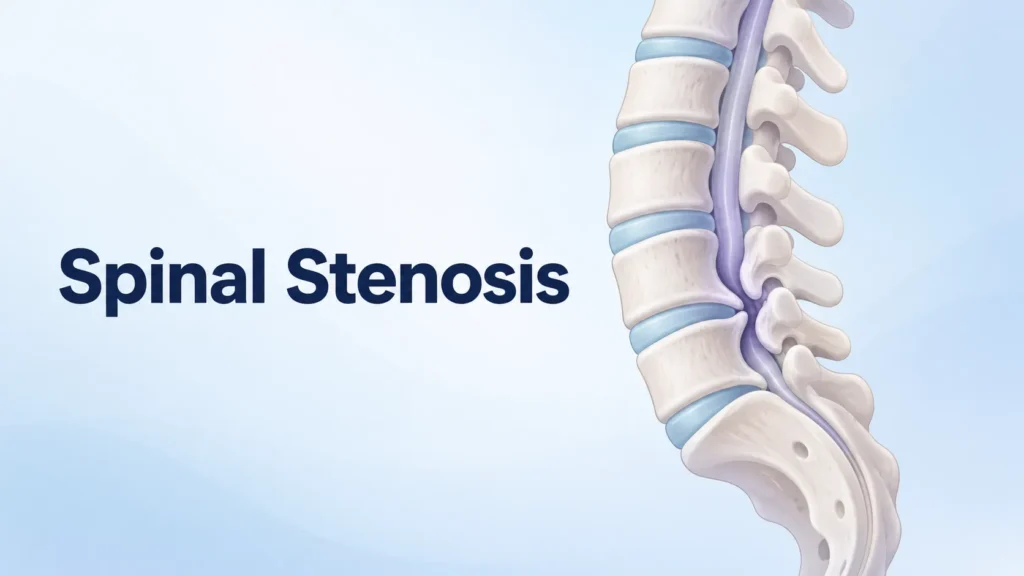
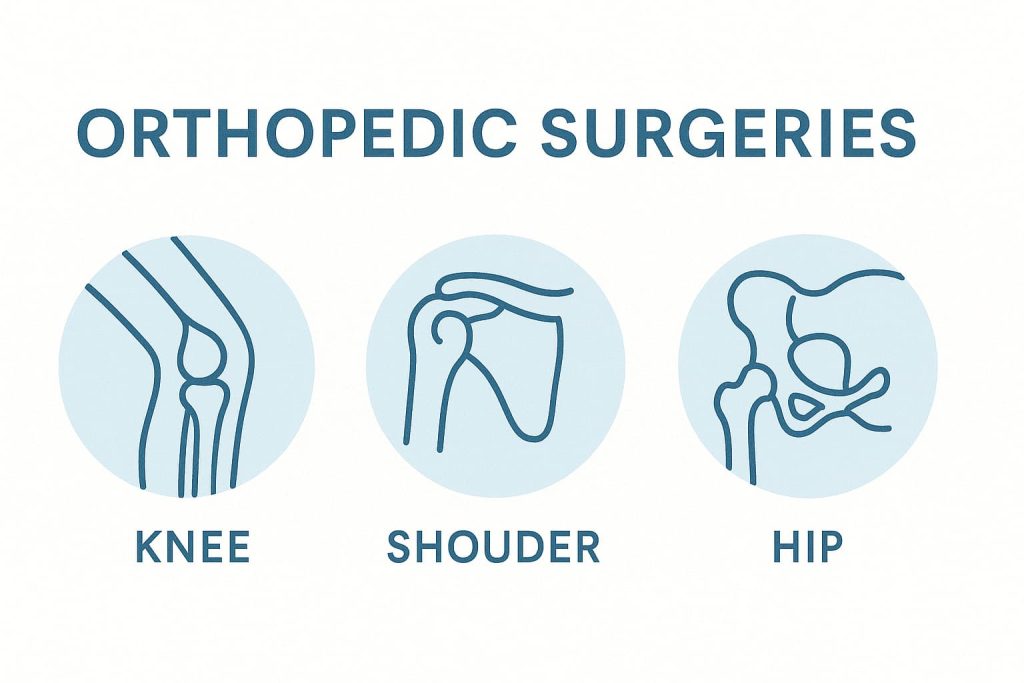
For orthopedic procedures such as joint replacement, ACL reconstruction, rotator cuff repair, or spine surgery, this preparation can significantly affect movement, strength, and overall outcomes. Research supported by the NIH on prehab for orthopedic surgery shows that patients who address mobility and strength beforehand often recover faster and report less postoperative pain.
Why Preoperative Care Is Important
Surgery places stress on your body, and preparing ahead of time helps you handle that stress more effectively. Even small gains in strength, mobility, and conditioning can improve early surgical outcomes.
Preparing ahead of time can:
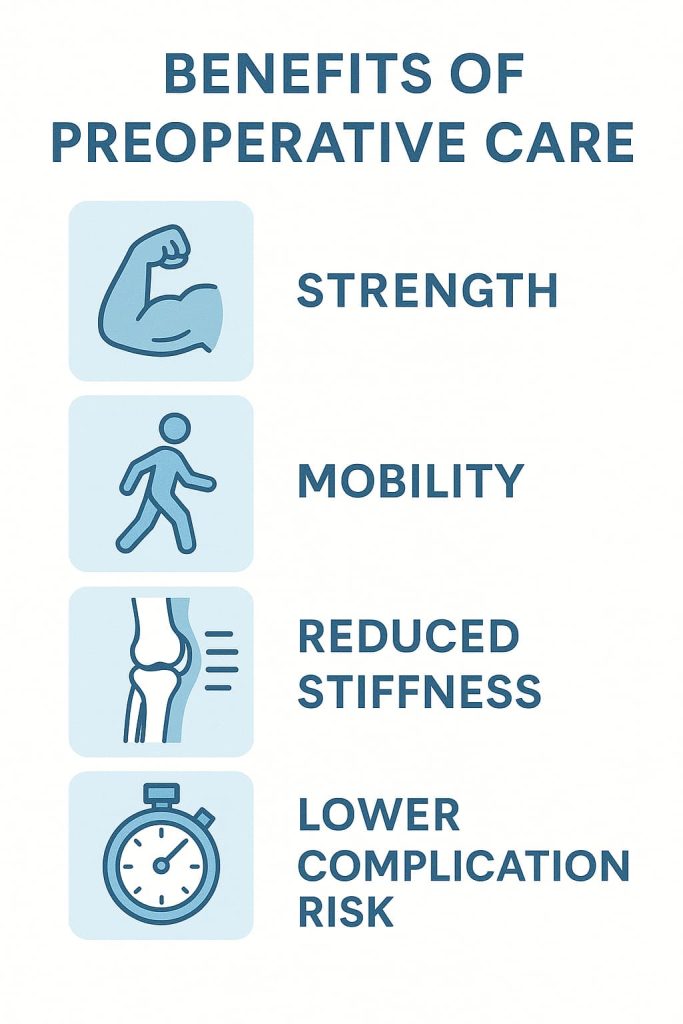
- Improve strength and mobility
- Reduce inflammation and stiffness
- Lower the risk of complications (Johns Hopkins guidance on preparing for surgery)
- Improve anesthesia and pain-management responses
- Speed up return-to-function after surgery (research on faster recovery with pre-surgery conditioning)
People who follow a structured preoperative plan often experience faster recovery, less pain, and better long-term outcomes. This is consistently supported in clinical evidence on prehab effectiveness for orthopedic and general surgery patients.

Components of Preoperative Care
While every surgical plan is different, most preoperative programs include the elements below.
1. Medical Evaluation
Your surgical team will review:
- Medical history
- Current medications
- Blood pressure, heart, and lung health
- Lab work or imaging
- Risk factors that may affect surgery
This evaluation ensures the procedure is safe and that your providers can plan appropriately. The American Society of Anesthesiologists’ surgery preparation guidelines highlight the importance of identifying risk factors early to reduce complications.
2. Preoperative Education
Preoperative education helps you understand what to expect before, during, and after surgery. This often includes:
- How the procedure works
- What the first few days after surgery will look like
- How will pain be managed
- Equipment you may need at home
- Your early post-operative exercise plan
3. Strength and Mobility Training
This is where preoperative physical therapy makes a meaningful difference.
A therapist may focus on:
- Improving joint mobility
- Strengthening supporting muscles
- Practicing walking or movement patterns
- Reducing compensations and imbalances
- Teaching pre-surgery home exercises
Better strength and mobility before surgery typically lead to better function afterward.
4. Cardiovascular Conditioning
Light cardiovascular activity like walking, cycling, or low-impact aerobics can:
- Boost endurance
- Improve circulation
- Reduce anesthesia risks
- Support faster tissue healing
Even small improvements in conditioning can make a difference during recovery.
5. Lifestyle and Health Recommendations
Your team may encourage:
- Increasing protein intake
- Staying hydrated
- Improving sleep
- Reducing smoking or alcohol use
- Managing blood sugar
These habits support your immune system and healing potential. Mayo Clinic’s surgical preparation guidance emphasizes lifestyle modification as a key factor in reducing risk.
6. Pain and Swelling Management
For conditions such as arthritis, shoulder pain, or lumbar stiffness, reducing inflammation before surgery helps you feel more comfortable afterward.
Your therapist may use:
- Manual therapy
- Gentle mobility work
- Dry needling
- Cupping
- Neuromuscular re-education (including devices like the NEUBIE)
Managing pain and swelling beforehand helps you enter surgery with better mobility and muscle activation, which supports smoother post-op rehabilitation.
Benefits of Preoperative Physical Therapy
Physical therapy is one of the most effective ways to improve your strength, movement quality, and confidence before surgery. Research from the NIH on prehabilitation outcomes shows that patients who complete targeted PT before surgery often recover faster and experience less postoperative pain.
Benefits include:
- Faster return to walking and daily activities: Patients who build strength and mobility beforehand tend to regain function more quickly after surgery.
- Improved joint mobility and flexibility: Preparing the joint for upcoming surgical stress helps reduce stiffness in the early recovery phase.
- Better control of swelling and inflammation: Entering surgery with reduced irritation supports smoother healing and less discomfort in the first few postoperative days.
- Reduced risk of postoperative complications: Strengthening muscles, improving balance, and addressing gait issues beforehand reduces the likelihood of early mobility-related complications.
- Greater confidence heading into surgery: Learning how to move safely and understanding the early rehab process reduces anxiety and helps you feel prepared.
- Clear expectations for early recovery: Knowing the exercises, movement restrictions, and milestones you’ll begin immediately after surgery helps you return to function more efficiently.
Knowing the movements, exercises, and precautions ahead of time helps you adapt more quickly after the procedure and start your rehab with a stronger foundation.
What to Expect in a Preoperative Physical Therapy Session
A preoperative PT session is designed to evaluate how you move, identify factors that could affect recovery, and begin preparing your body for the early postoperative phase. The goal is to build strength, mobility, and confidence before surgery, supported by evidence showing that targeted prehab improves early functional outcomes.
A typical session may include:
- Movement assessment: Identifying stiffness, weakness, balance deficits, or gait changes that could influence recovery and post-op mobility.
- Targeted strength training: Strengthening the major muscle groups that support the surgical area, which helps accelerate early rehab and reduces difficulty with daily movements after surgery.
- Mobility and flexibility work: Improving joint mobility and soft tissue flexibility to reduce stiffness and improve post-op range of motion.
- Education and exercise instruction: Learning the exact exercises you’ll begin immediately after surgery so you feel prepared and confident. Pre-op practice improves adherence and early mobility.
- Baseline measurements: Documenting your strength, balance, swelling, and range of motion to set targets for your recovery plan and track progress after surgery.
How Soon Before Surgery Should You Start?
Most people benefit from beginning preoperative care 4-6 weeks before surgery, which gives enough time to build strength, improve mobility, and establish good movement patterns. This timing aligns with recommendations from organizations such as the American Academy of Orthopaedic Surgeons on preparing for surgery, which emphasize conditioning and education as key factors in a smoother recovery.
Even starting 2-3 sessions before surgery can make a measurable difference. Short-term pre-surgery exercise programs can still improve postoperative function and reduce pain.
Beginning earlier is always better, but it’s never too late to start preparing.
Key Takeaways
- Preoperative care prepares your body for surgery, reduces risks, and improves recovery outcomes.
- It typically includes medical evaluation, patient education, strength training, mobility work, cardiovascular conditioning, and lifestyle optimization.
- Preoperative physical therapy helps improve strength, mobility, confidence, and pain control before surgery—setting you up for a smoother transition into post-operative rehab.
- Starting early makes a meaningful difference, but even a few focused sessions can positively impact recovery.
- Better preparation often leads to faster mobility, less pain, and improved long-term quality of life.
Ready to Start Preparing for Surgery?
If you’re planning for an upcoming procedure, preoperative physical therapy can make a meaningful difference in how you feel before and after surgery. Our team at Calibration Physical Therapy provides one-on-one, customized prehab programs designed to improve strength, mobility, and confidence heading into your procedure.
Have questions or want to get started?
You can call our clinic or schedule an appointment online, whichever is easier for you.
Starting early gives you the best chance at a smooth, confident recovery. We’re here to help you prepare.
Tags

About the Author
Dr. Traci Smiley, DPT
Traci is a licensed physical therapist and owner of Calibration Physical Therapy, serving the Kansas City area. A Board-Certified Orthopedic Clinical Specialist with advanced training in manual therapy and strength conditioning, she helps individuals overcome pain and return to what they love.