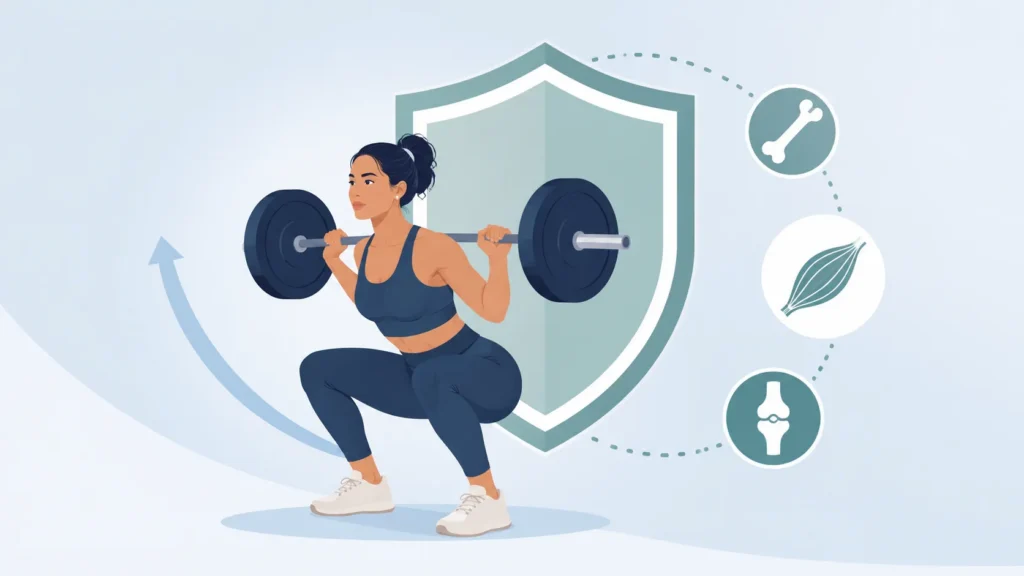
Female athletes experience many of the same injuries as male athletes, but some injury patterns occur more frequently in women. Conditions such as ACL injuries, patellofemoral knee pain, bone stress injuries, and certain overuse injuries appear at higher rates across many sports and activity levels.
The reasons are rarely simple. Injury risk is influenced by a combination of training load, recovery habits, strength, movement demands, nutrition, sleep, stress, and overall health. In most cases, there is no single factor to blame.
Understanding these influences can help athletes identify potential problems earlier, make better training decisions, and stay active with fewer interruptions. In this article, we’ll look at common injury patterns in female athletes, why they develop, and how physical therapy can help reduce injury risk and support long-term performance.
What Causes Injury Risk to Be Different in Female Athletes?

When people talk about injury risk in female athletes, they often focus on anatomy alone. While anatomical differences may play a role in some injuries, they are only one piece of a much larger picture.
In practice, injury risk often increases when training demands exceed an athlete’s ability to recover. This can happen during a new running program, a busy competition season, a return to sport after time away, or even during periods of high life stress when recovery becomes more difficult.
Female athletes may also face unique considerations regarding energy availability, menstrual health, and bone health. For example, consistently underfueling relative to training demands can affect recovery, performance, and the body’s ability to adapt to exercise. Over time, this may contribute to fatigue, recurring injuries, or bone stress injuries.
Injury risk often develops through an interaction of several factors rather than a single mistake, including:
- Sudden increases in training volume or intensity
- Inadequate recovery between workouts
- Strength, power, or conditioning deficits
- Poor sleep quality
- Underfueling relative to activity demands
- Previous injury history
For example, a runner who increases mileage while also underfueling, sleeping poorly, and managing a demanding work schedule may struggle to recover between sessions, even though her training plan appears reasonable on paper. Injury risk is often influenced by the combination of these factors rather than any single variable alone.
Early Warning Signs Athletes Should Not Ignore

One of the challenges with injury prevention is that warning signs are often subtle. Athletes rarely wake up one day with a major overuse injury. More commonly, the body begins showing signs that training demands are becoming difficult to manage long before a significant injury develops.
For many female athletes, these early changes are not always painful. Performance may plateau despite consistent training. Recovery may take longer than usual. Workouts that once felt routine may start feeling unusually difficult. Some athletes notice persistent fatigue, declining motivation, or soreness that seems to linger from session to session.
Some female athletes may also notice changes in sleep, recovery, energy levels, or menstrual cycle regularity during periods when training and recovery become imbalanced.
In other cases, athletes begin modifying activities without realizing it. A runner may avoid hills because of knee discomfort. A lifter may subconsciously reduce squat depth. A volleyball player may become hesitant during jumping or landing. These small adjustments can be early indicators that the body is struggling to tolerate current demands.
The following patterns are commonly reported before more significant symptoms develop:
| What athletes often notice | What it may suggest |
|---|---|
| Workouts feel harder than expected | Recovery may not be keeping up with training |
| Persistent soreness between sessions | Accumulating fatigue |
| Minor aches during activity | Early tissue irritation |
| Declining performance despite training | Possible overload or under-recovery |
| Longer recovery after exercise | Reduced ability to tolerate current workload |
These signs do not automatically indicate injury, but they may signal that training and recovery are becoming imbalanced. Recognizing them early often allows athletes to make small adjustments before symptoms become more disruptive.
How Symptoms Often Behave During Training and Activity
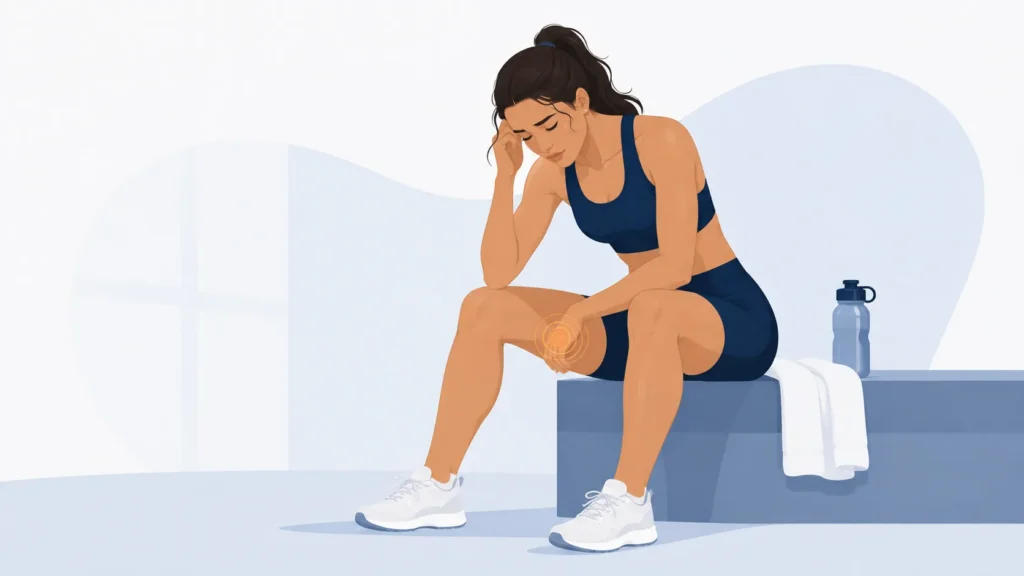
One reason injuries can be difficult to recognize early is that symptoms do not always appear in a predictable way. Many female athletes continue training successfully for weeks or months while early warning signs gradually become more noticeable.
For example, a runner may feel completely normal during the first few miles of a run but develop knee pain as fatigue accumulates. A soccer player may feel fine during practice yet notice soreness later that evening. A lifter may complete a workout without difficulty but feel unusually irritated the following morning.
These patterns often provide more useful information than the pain itself. Physical therapists pay close attention to when symptoms appear, how long they last, and how the body responds afterward.
Athletes commonly notice that symptoms become more noticeable when:
- Training volume increases significantly
- Recovery between workouts becomes limited
- Sleep quality declines
- Stress levels increase
- Multiple hard training sessions occur close together
- Activity intensity increases faster than fitness can adapt
Many athletes expect symptoms to increase in a perfectly linear fashion, but that is rarely how the body works. Two seemingly identical workouts can produce very different responses depending on recovery, fatigue, nutrition, and recent training demands.
This is why physical therapists often focus on symptom trends rather than isolated bad days. A temporary increase in soreness after a challenging workout is not necessarily concerning. Symptoms that appear more frequently, require longer recovery periods, or begin limiting normal activity are often more meaningful indicators that training demands may need to be adjusted.
Common Mistakes People Make When Symptoms Start
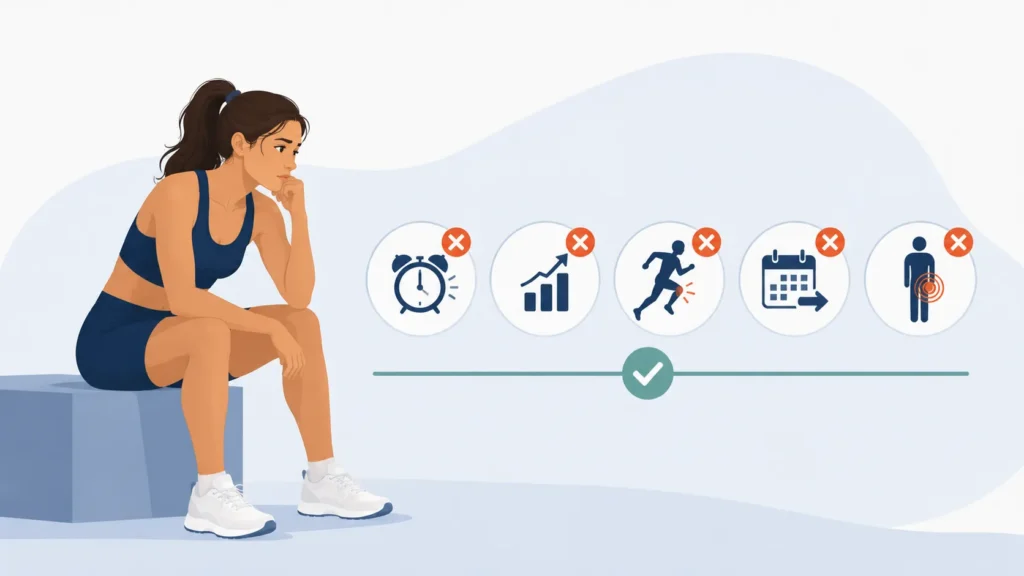
When discomfort first appears, athletes often react in ways that unintentionally increase irritation or delay recovery. The goal is usually not to stop all activity, but to make smart adjustments while identifying what is driving symptoms.
Common mistakes include:
- Ignoring symptoms that are becoming more consistent: A little soreness after a hard workout is normal. Pain that starts appearing more often, lasts longer, or affects performance deserves attention before it becomes a bigger problem.
- Increasing training volume too quickly: Rapid jumps in mileage, weight, practice time, or workout frequency can overwhelm the body’s ability to adapt. Many overuse injuries begin after a sudden change in workload rather than a single event.
- Trying to push through worsening pain: Continuing to train at the same intensity despite increasing symptoms rarely improves the situation. Small modifications early are often more effective than being forced into a lengthy break later.
- Returning to full training too soon: Feeling better does not necessarily mean the body is ready for previous workloads. Gradual progression usually leads to more durable results than jumping straight back into normal training.
- Focusing only on the painful area: Athletes often assume the problem exists only where symptoms are felt. Factors such as sleep, recovery habits, training load, strength, nutrition, and overall stress can all influence how the body responds to activity.
The most successful approach is usually somewhere between ignoring symptoms and avoiding activity altogether. Understanding what is contributing to symptoms allows athletes to make targeted adjustments while continuing to train, recover, and progress toward their goals.
Why Symptoms Often Develop Gradually

Most overuse injuries in female athletes develop over weeks or months rather than during a single event. The body is constantly adapting to the demands placed on it, and problems often arise when those demands outpace its ability to recover.
One reason these injuries can be difficult to recognize is that early symptoms are usually easy to explain away. An athlete may assume lingering soreness is simply the result of a hard workout, a busy training week, poor sleep, or normal fatigue. Because symptoms often improve temporarily with rest, the underlying issue may go unnoticed.
In many cases, performance changes appear before significant pain develops. Workouts may feel more difficult than expected. Recovery may take longer. Athletes may notice they are struggling to maintain training volume, pace, strength, or consistency despite putting in the same effort.
Over time, what begins as occasional soreness or fatigue can become a more consistent pattern. Symptoms last longer, appear more frequently, and require greater recovery between sessions. By the time many athletes seek help, the issue has often been developing quietly for weeks or even months.
How Physical Therapy Evaluates Injury Risk and Symptoms
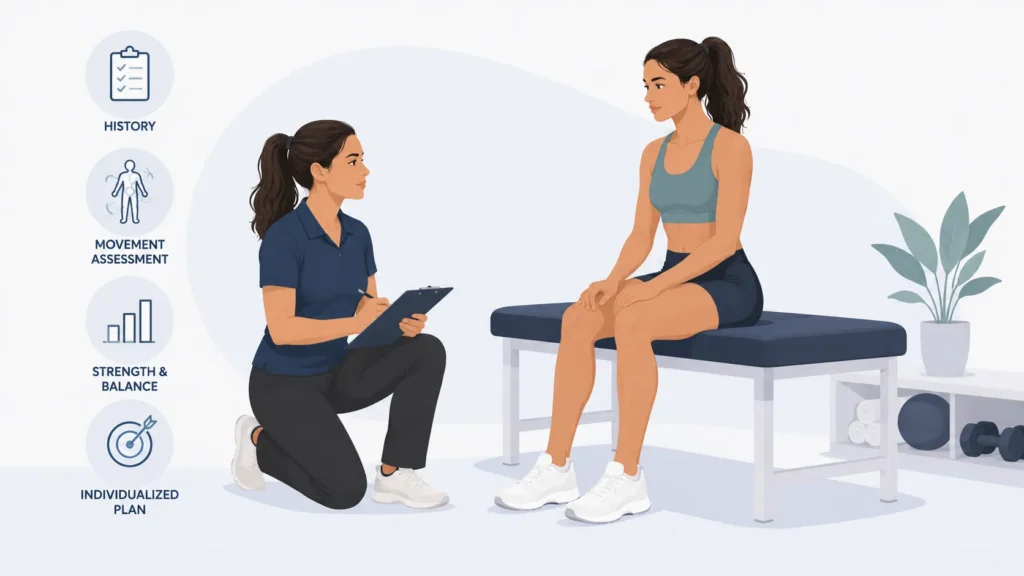
A physical therapy evaluation involves much more than identifying where the pain is located. Two athletes with the same symptoms may arrive there for completely different reasons, which is why understanding the full picture is so important.
The evaluation usually begins with a detailed discussion about training history, recent workload changes, recovery habits, symptom behavior, and athletic goals. A physical therapist wants to understand not only what hurts, but also what was happening in the weeks and months before symptoms appeared.
For female athletes, additional factors may sometimes be relevant. Training volume, recovery practices, nutrition, sleep quality, previous injury history, and menstrual health can all influence how the body adapts to exercise and recovers from physical stress.
Movement testing helps identify how the body responds to specific demands. Depending on the athlete and sport, this may include:
- Strength and mobility testing
- Balance and movement assessment
- Running, jumping, or sport-specific movement analysis
- Functional tasks relevant to the athlete’s sport
The therapist also looks for patterns. For example, symptoms that appear late in a run may tell a different story than symptoms that occur immediately. Pain that improves during activity may require a different approach than pain that steadily worsens with increasing load.
The goal is not simply to diagnose an injury. The goal is to understand why symptoms developed, what factors may be contributing to them, and what changes are most likely to help the athlete continue training and performing successfully.
How Physical Therapy Helps Female Athletes
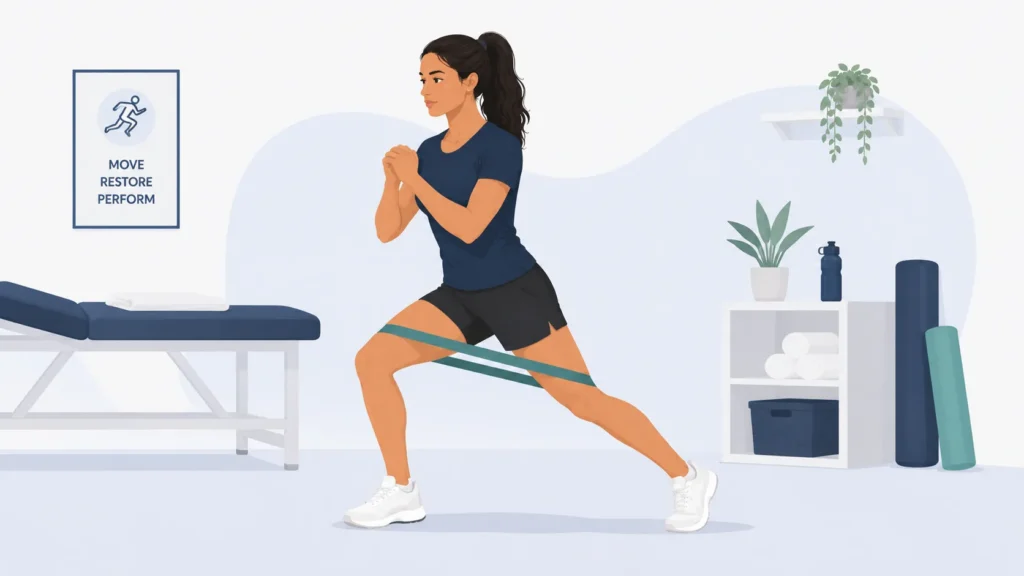
Successful rehabilitation focuses on helping athletes continue moving toward their goals while improving their ability to tolerate the demands of training, sport, and daily life.
Early treatment often begins by identifying which activities are most irritating and determining how to temporarily adjust them. This does not necessarily mean stopping exercise altogether. A runner may reduce mileage, a lifter may temporarily modify training volume, or an athlete may adjust participation in practice while symptoms settle.
As symptoms become less irritable, treatment shifts toward building the physical qualities needed for long-term success. Depending on the athlete and sport, this may include improving:
- Strength and force production
- Balance and coordination
- Landing and cutting mechanics
- Running efficiency
- Mobility where limitations are contributing to symptoms
- Overall workload tolerance
The ultimate goal is not simply to eliminate pain. The goal is to help athletes build the capacity, confidence, and resilience needed to participate in their sport with fewer setbacks and greater consistency.
Rehabilitation Progression
Rehabilitation typically moves through overlapping phases as symptoms become less irritable and activity tolerance improves.
| Rehab phase | Main goal |
|---|---|
| Early phase | Reduce irritation and modify aggravating activities |
| Building phase | Improve strength, endurance, and movement quality |
| Advanced phase | Reintroduce higher-demand athletic activities |
| Return to sport | Restore confidence and consistent participation |
| Performance phase | Continue building resilience and injury prevention habits |
Progression is based on how the athlete responds rather than a strict timeline. Some athletes move through these stages quickly, while others benefit from a more gradual approach.
Returning to Activity
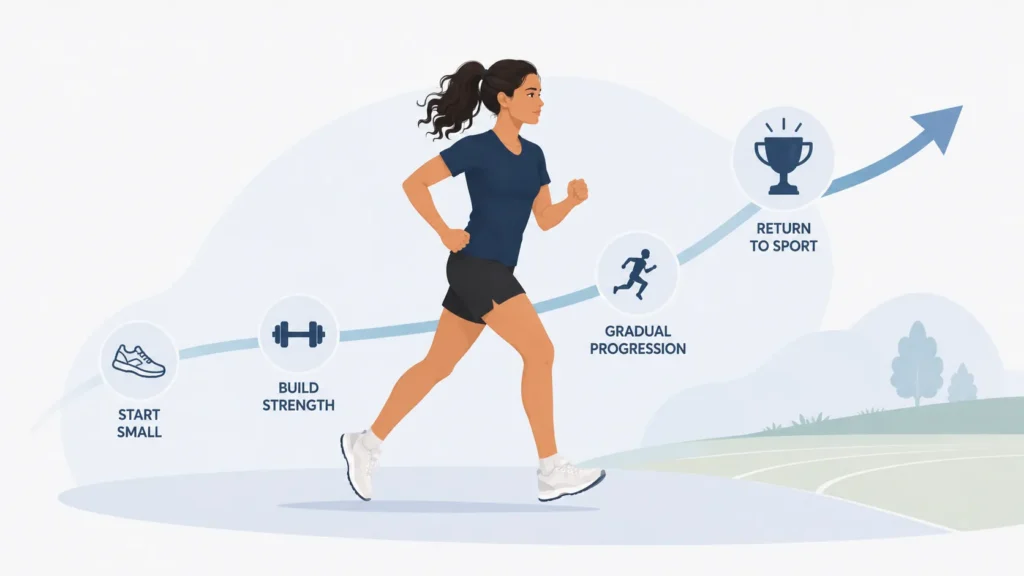
Returning to activity is rarely an all-or-nothing decision. Most athletes benefit from gradually increasing workload while monitoring how symptoms respond during activity and over the following 24 to 48 hours.
In general, athletes are progressing appropriately when:
- Symptoms remain mild and manageable during activity
- Symptoms return to baseline within a reasonable recovery period
- Training consistency continues to improve week to week
- Confidence in movement gradually increases
- Performance measures are moving in the right direction
On the other hand, training progression may need adjustment if symptoms become increasingly intense, recovery times continue to lengthen, or participation in activities becomes increasingly limited.
For runners, this may involve gradually increasing mileage, pace, or workout frequency. For lifters, it may mean progressing weight, volume, or exercise complexity. Team sport athletes often build from modified practice participation to unrestricted training and eventually competition.
Consistency is often more important than intensity during this phase. Small, sustainable increases in workload typically produce better long-term outcomes than large jumps followed by setbacks.
When to See a Physical Therapist
An evaluation may be helpful if symptoms are limiting activity, recurring frequently, or becoming more noticeable over time.
Many athletes wait until pain is severe before seeking help, but earlier evaluation is often more useful. Addressing training errors, recovery challenges, movement limitations, or early signs of overuse can help prevent longer interruptions to activity.
Consider scheduling an assessment if:
- Pain is consistently affecting training or exercise
- Symptoms return whenever activity increases
- Recovery takes longer than expected
- Performance is declining without a clear explanation
- You are unsure whether modifications or rest are appropriate
You do not need to stop exercising completely before seeing a physical therapist. In many cases, physical therapy can help you continue participating in modified training while addressing the factors contributing to your symptoms.
Early evaluation often allows athletes to identify potential problems before they become more significant barriers to training, competition, or everyday activity.
Final Thoughts
Injury prevention for female athletes is not about avoiding challenging training. It is about understanding how workload, recovery, nutrition, sleep, and overall health influence the body’s ability to adapt and perform.
Small warning signs often appear before significant injuries develop. Recognizing those changes early and making thoughtful adjustments can help athletes stay healthier, train more consistently, and continue pursuing the activities they enjoy.
At Calibration Physical Therapy in Overland Park, Kansas, we help active adults, runners, lifters, and athletes understand the factors contributing to their symptoms and develop practical strategies to stay active, perform at their best, and reduce their risk of injury. Schedule an evaluation today.
Tags

About the Author
Dr. Traci Smiley, DPT
Traci is a licensed physical therapist and owner of Calibration Physical Therapy, serving the Kansas City area. A Board-Certified Orthopedic Clinical Specialist with advanced training in manual therapy and strength conditioning, she helps individuals overcome pain and return to what they love.