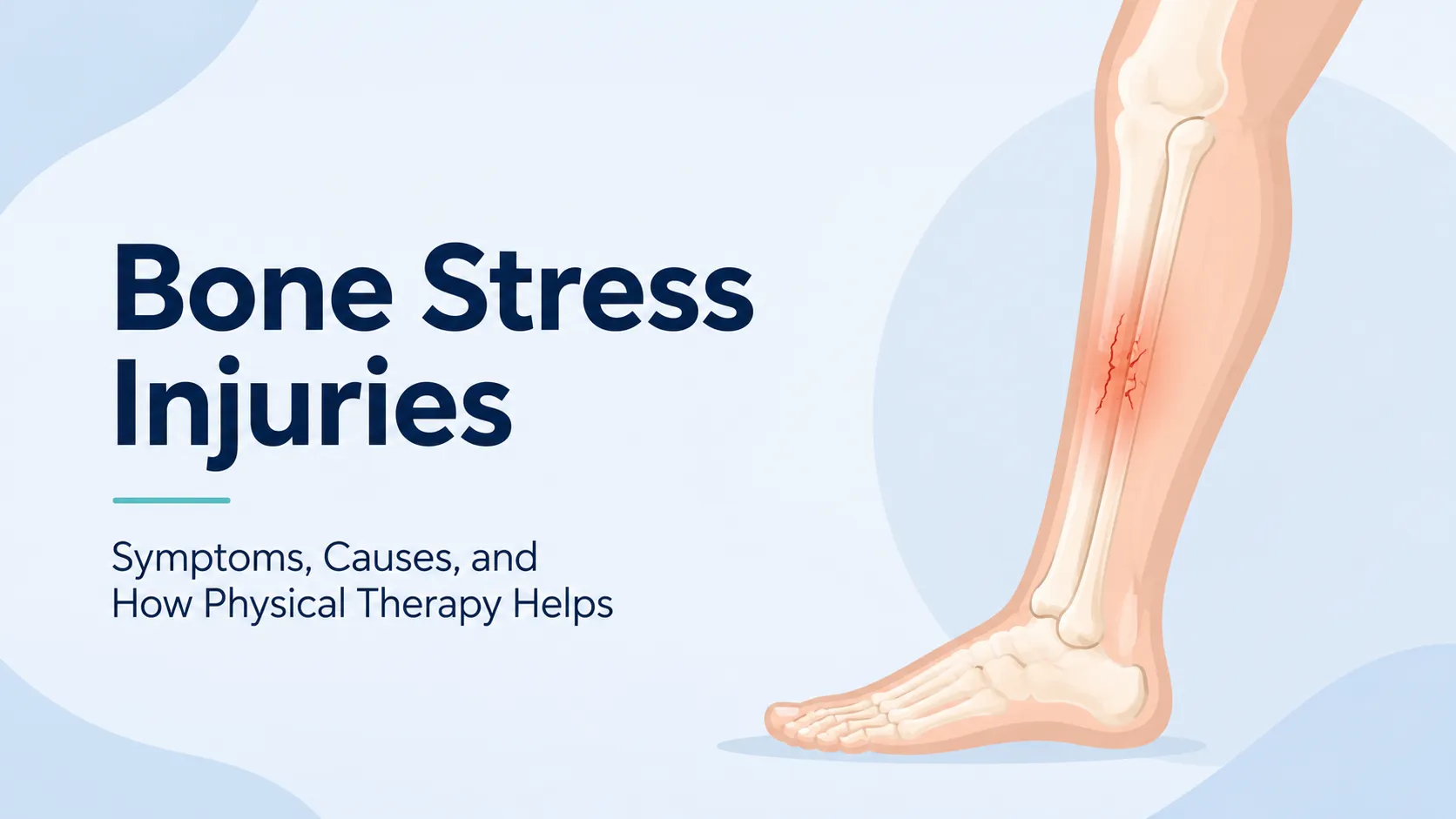
Bone stress injuries develop when repetitive loading exceeds the body’s ability to recover between activities. They are common among runners, athletes, military training populations, and active adults who increase activity too quickly or repeatedly stress the same area over time.
These injuries can range from mild bone irritation to more significant stress reactions and stress fractures. Symptoms often begin gradually, especially during periods of training change, such as increased mileage, added speed work, or a return to exercise after time away.
Because symptoms can feel inconsistent early on, many people assume the discomfort is normal soreness or fatigue. This article explains what bone stress injuries are, what they feel like, why they happen, and how physical therapy helps people return to activity safely.
What Is a Bone Stress Injury?
A bone stress injury is a gradual overuse injury characterized by irritation and breakdown of the bone caused by repetitive loading. Instead of a single traumatic event, the problem develops when the bone experiences more stress than it can recover from over time.
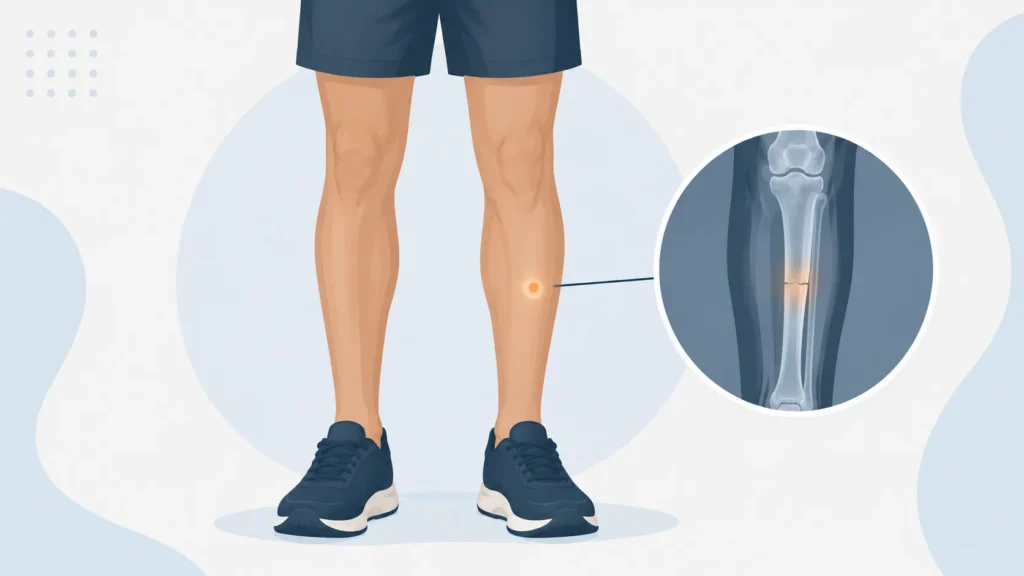
Bone tissue constantly remodels in response to activity. Running, jumping, lifting, and other impact activities normally help bones adapt and stay strong. Problems develop when repeated stress accumulates faster than the bone can adapt.
Bone stress injuries exist along a spectrum. Early stages may involve irritation and inflammation within the bone. More advanced cases can progress to a stress fracture, where the bone can no longer tolerate continued repetitive loading.
Unlike a sudden fracture caused by a fall or direct trauma, bone stress injuries usually build gradually over time. The body attempts to adapt to repeated stress, but symptoms develop when recovery cannot keep up with loading demands.
Common areas include:
- Shin
- Foot
- Hip
- Pelvis
- Femur
- Metatarsals
The location often depends on the person’s sport, training habits, movement patterns, and loading history. Distance runners commonly develop symptoms in the shins or feet, while higher-force jumping and cutting sports may place more stress on the hips or pelvis.
What Causes Bone Stress Injuries?
Bone stress injuries usually develop from a combination of repetitive loading and insufficient recovery. In many cases, there is not one single cause. Several contributing factors gradually increase stress on the tissue.
Training errors are one of the most common contributors. Rapid increases in mileage, adding hills or speed work too quickly, sudden changes in activity level, or returning to exercise aggressively after time off can overload the bone before it has had a chance to adapt.
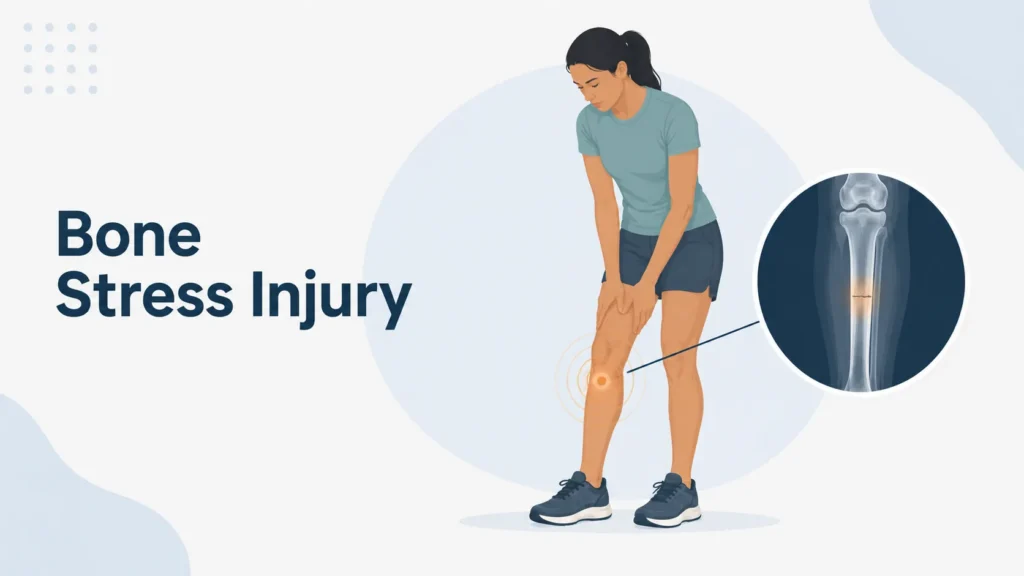
In some cases, the issue is not simply doing “too much” activity. It is often a mismatch between workload and recovery capacity. Two people can complete the same training plan and respond very differently depending on sleep, nutrition, conditioning level, recovery habits, and overall stress levels.
Physical therapists also examine how force is transmitted through the body during activity. Reduced strength, poor muscular endurance, stiffness, or altered movement patterns can sometimes shift more stress into certain areas repeatedly during running and impact exercise.
Other contributing factors may include:
- Sudden increases in running volume
- Inadequate recovery between workouts
- Poor sleep or high overall fatigue
- Changes in footwear or training surfaces
- Reduced strength or muscle endurance
Nutrition and energy availability can also influence recovery. When the body does not recover well between sessions, tissues may become more sensitive to repetitive loading over time.
In runners and athletes, symptoms often become more persistent when hard training combines with poor recovery, fatigue, or increased overall stress.
What Does a Bone Stress Injury Feel Like?
Bone stress injuries often begin with localized pain during activity. Early on, symptoms may only appear toward the end of a workout or afterward. As irritation increases, pain usually starts earlier during activity and may linger longer afterward.
People commonly describe the pain as deep, specific, and easy to pinpoint with one finger. Unlike general muscle soreness, the discomfort tends to remain focused in a specific area.
Symptoms usually progress in fairly recognizable stages as irritation increases over time.
| Symptom pattern | What people commonly notice |
|---|---|
| Early-stage irritation | Pain only during or after activity |
| Progressive symptoms | Pain begins earlier during workouts |
| Activity limitation | Running or impact becomes difficult |
| Persistent irritation | Symptoms during walking or daily activity |
Some people also notice tenderness when pressing directly on the area. Hopping, stairs, or impact activities may reproduce symptoms more clearly than simple walking.
How Symptoms Behave During Activity
Bone stress injuries typically respond predictably to load. Higher-impact activity usually increases symptoms, while reduced loading often helps calm irritation.
Running is one of the most common aggravating activities. Many runners notice symptoms beginning at a predictable distance or at a predictable intensity level. Some feel relatively normal at the start of a run, then develop worsening discomfort as loading accumulates.
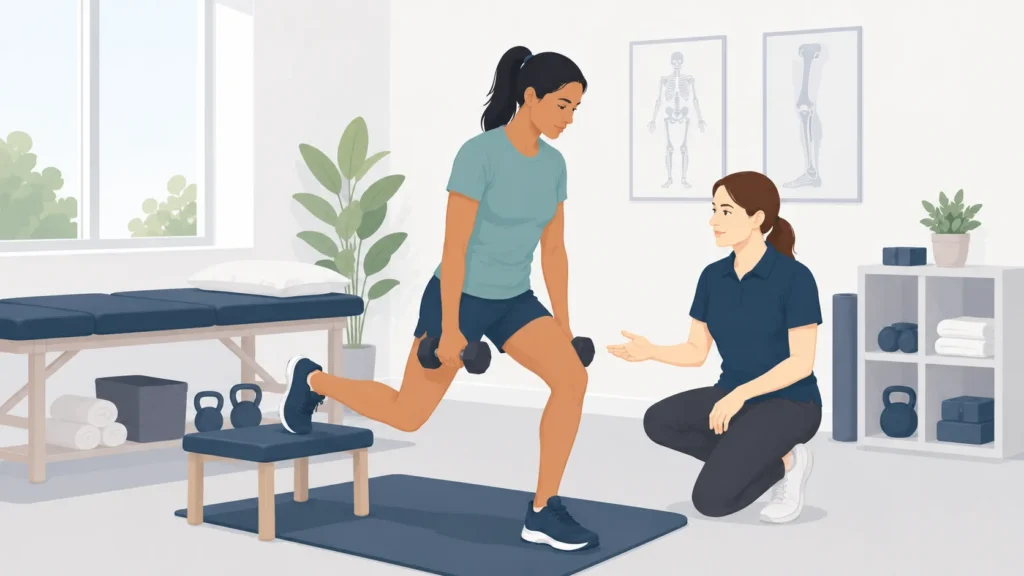
People also commonly notice that symptoms change depending on workout intensity or recovery status. Easier runs may feel manageable, while speed work, hills, jumping, or back-to-back training days increase irritation much more quickly.
Bone stress injuries are often sensitive to cumulative loading. Even if a single workout feels manageable, repeated stress over several days may still increase irritation.
Other activities that commonly increase symptoms include:
- Jumping
- Sprinting
- Hiking hills
- Prolonged walking
- Repetitive impact exercise
Symptoms often settle with rest initially, but as the injury progresses, recovery between activities becomes less complete. Some people eventually notice discomfort during everyday activities such as walking, standing, or climbing stairs.
Pain patterns can also vary depending on location. Bone stress injuries in the foot or shin often become noticeable during impact activities, while injuries involving the pelvis or hip may cause discomfort during prolonged standing, walking, or single-leg loading. Pain that originally appeared only after workouts may eventually occur during warm-ups, during daily walking, or at lower levels of activity.
Why Bone Stress Injuries Often Develop Gradually
One reason bone stress injuries are frequently overlooked is that they usually develop slowly. Many people can continue functioning for weeks while symptoms gradually increase.

The body often tolerates repetitive loading for some time before symptoms become severe enough to stop activity. During this phase, people commonly modify workouts, shorten runs, or push through discomfort without realizing the bone is becoming increasingly irritated.
This gradual progression can make symptoms confusing at first. Pain may come and go depending on training volume, recovery, or recent activity levels.
Several patterns are common:
- Pain that improves after warming up
- Symptoms that worsen later in the workout
- Discomfort the day after the activity
- Temporary improvement with reduced activity
- Recurrence after returning too quickly
Recognizing these patterns early is important because continuing to load an irritated bone aggressively can increase recovery time.
Bone Stress Injuries vs Muscle Soreness
Bone stress injuries are sometimes mistaken for normal training soreness, especially in active people who exercise regularly. The difference is usually related to symptom location, irritability, and consistency.
Muscle soreness tends to feel broad and generalized, spreading across larger regions. Bone stress symptoms are usually more focused and predictable.
There are a few common differences that help distinguish normal soreness from a possible bone stress injury.
| Muscle soreness | Bone stress injury |
|---|---|
| Diffuse aching | Localized pain |
| Improves with movement | Often worsens with impact |
| Affects larger muscle areas | Specific tender spot |
| Resolves within days | Persists or progresses |
Pain that repeatedly returns with impact activity, especially in the same location, deserves further evaluation.
How Physical Therapy Evaluates Bone Stress Injuries
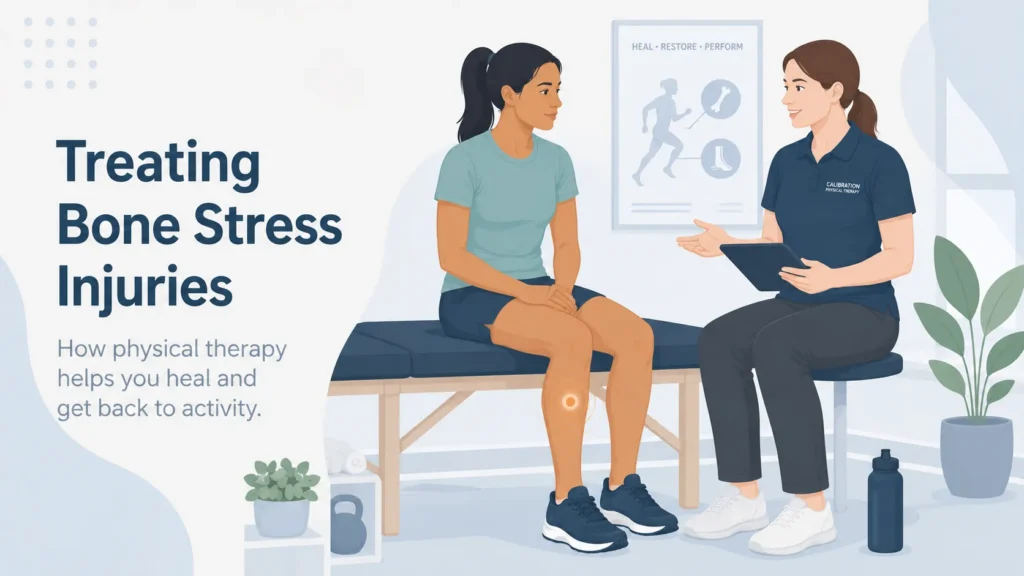
A physical therapy evaluation focuses heavily on symptom behavior and loading history. Understanding how symptoms respond to activity helps guide both diagnosis and treatment planning.
The evaluation usually begins with questions about training volume, recent changes in activity, recovery habits, footwear, and symptom progression. Physical therapists also assess how symptoms respond during walking, on stairs, while hopping, squatting, and during other functional tasks.
Rather than focusing solely on the painful area itself, the evaluation also examines the broader movement system. Weakness, stiffness, fatigue, reduced balance, or altered mechanics can all influence how repetitive force moves through the body during activity.
Movement assessment may include:
- Walking and running mechanics
- Single-leg balance and control
- Strength and endurance testing
- Mobility assessment
- Impact tolerance testing
Several parts of the evaluation help physical therapists understand both symptom irritability and contributing factors.
| Evaluation focus | Why it matters |
|---|---|
| Training history | Identifies loading spikes |
| Symptom behavior | Helps determine irritability |
| Functional movement | Assesses load distribution |
| Strength and control | Identifies contributing deficits |
Physical therapists also evaluate how symptoms behave after activity, not just during it. Some people tolerate exercise reasonably well in the moment but develop increased pain later in the day or the following morning.
This broader picture helps guide decisions about activity modification and rehabilitation progression, so the body can gradually tolerate loading safely again.
Imaging may be used, especially when symptoms are severe or persistent, but clinical history and movement assessment remain important for understanding the problem.
How Physical Therapy Helps Bone Stress Injuries
Physical therapy helps manage bone stress injuries by reducing irritation while gradually rebuilding the body’s tolerance to loading.
Early treatment focuses on calming symptoms and protecting the irritated tissue from excessive stress. This does not always mean complete rest. In many cases, activity can be modified rather than eliminated entirely.
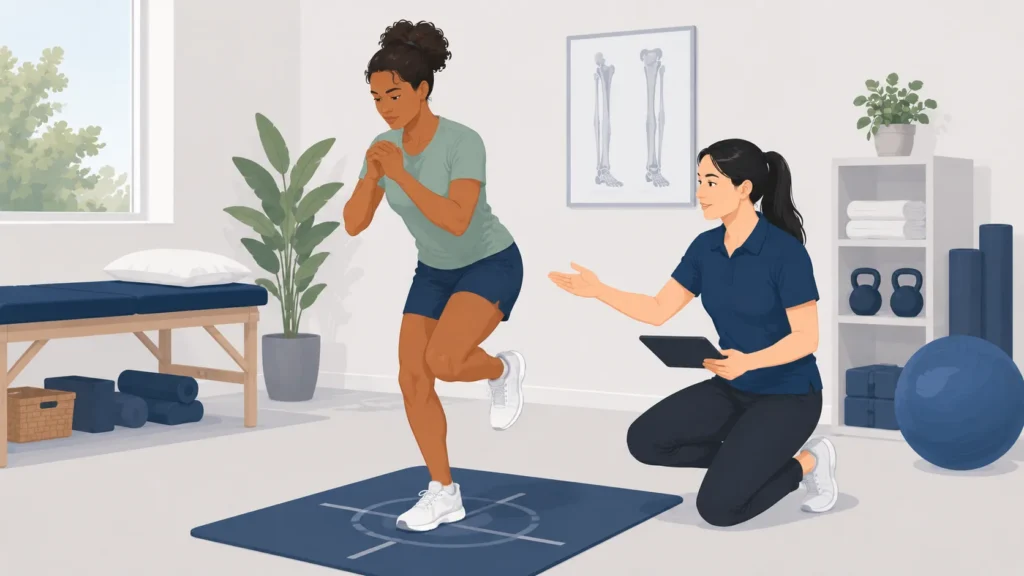
For example, someone may temporarily reduce running volume while maintaining cardiovascular fitness through lower-impact activities. The goal is to keep the person active without continually aggravating the bone.
Treatment commonly includes:
- Activity modification
- Load management guidance
- Strengthening exercises
- Mobility work
- Return-to-running progression
Strength and movement quality are also important parts of rehabilitation. Weakness, reduced endurance, or poor force absorption through the hips, legs, or feet can increase stress on certain areas during repetitive activity.
Rehabilitation often focuses on improving the body’s overall ability to handle force. Depending on the person, treatment may address hip strength, calf endurance, landing control, running mechanics, balance, or general conditioning.
Education is also an important part of treatment. Many active adults benefit from learning how to monitor symptoms and progress activity more gradually.
As symptoms improve, rehabilitation gradually shifts toward rebuilding impact tolerance and preparing the person to return to normal activities. The progression is usually gradual and based on symptom response rather than strict timelines alone.
Rehabilitation Progression
Rehabilitation typically progresses in stages based on symptom response rather than strict timelines. Advancing too quickly can increase irritation, while progressing too slowly may delay return to activity.
Rehabilitation typically moves through several overlapping phases as tolerance improves.
| Rehab stage | Primary focus |
|---|---|
| Early phase | Reduce irritation and modify load |
| Mid phase | Restore strength and movement capacity |
| Late phase | Reintroduce impact and higher-demand activity |
| Return to sport | Gradual progression back to full activity |
A successful progression usually involves small increases in activity over time, while carefully monitoring symptom response.
Returning to Running and Exercise
Returning to activity after a bone stress injury should be gradual and structured. Symptoms often improve before the tissue is fully prepared for unrestricted loading.
Many people feel significantly better walking before they are ready to run or jump. This is normal. Impact activities place much higher stress on the body than everyday movement.
Return-to-running programs often begin with short intervals of jogging mixed with walking. Volume and intensity are then increased gradually based on tolerance.

The return process is rarely perfectly linear. Some days feel better than others, especially as impact loading increases again. Mild soreness can occasionally occur during rehabilitation, but symptoms should remain manageable and recover appropriately afterward.
Significant increases in pain, limping, or lingering symptoms the next day often suggest progression is moving too quickly. In these situations, temporary workload adjustments are usually more helpful than trying to push through worsening irritation.
Important factors during return to activity include:
- Symptom response during exercise
- Symptoms the following day
- Recovery between sessions
- Weekly loading progression
- Overall fatigue levels
A gradual approach usually leads to better long-term consistency than rushing back into full activity too quickly.
When to See a Physical Therapist
Pain that repeatedly returns during impact activity deserves attention, especially when symptoms are becoming more consistent or limiting.

Early evaluation can help identify contributing factors before symptoms progress further. This is particularly important for runners and active adults trying to maintain training consistency.
You may benefit from an evaluation if you notice:
- Localized pain during running or impact
- Symptoms that worsen with training volume
- Persistent tenderness in one area
- Pain that returns repeatedly with exercise
- Difficulty returning to activity after rest
A physical therapist can help determine whether your symptoms are related to a bone stress injury, identify contributing movement or training factors, and create a plan for safely returning to activity.
Final Thoughts
Bone stress injuries are common overuse problems that develop when repetitive loading exceeds the body’s ability to recover. They often begin gradually and can become more limiting when training continues without adequate recovery or modification.
Physical therapy focuses on reducing irritation, improving load tolerance, and helping people safely return to exercise and daily activity. At Calibration Physical Therapy in Overland Park, Kansas, we work with active adults, runners, and athletes to evaluate persistent pain and develop individualized plans to return to movement with confidence.
Tags

About the Author
Dr. Traci Smiley, DPT
Traci is a licensed physical therapist and owner of Calibration Physical Therapy, serving the Kansas City area. A Board-Certified Orthopedic Clinical Specialist with advanced training in manual therapy and strength conditioning, she helps individuals overcome pain and return to what they love.