
Physical Therapy Services
Knee Pain Treatment in Overland Park
Learn how we approach evaluation, hands-on treatment, and progressive rehab for this service.
Service details
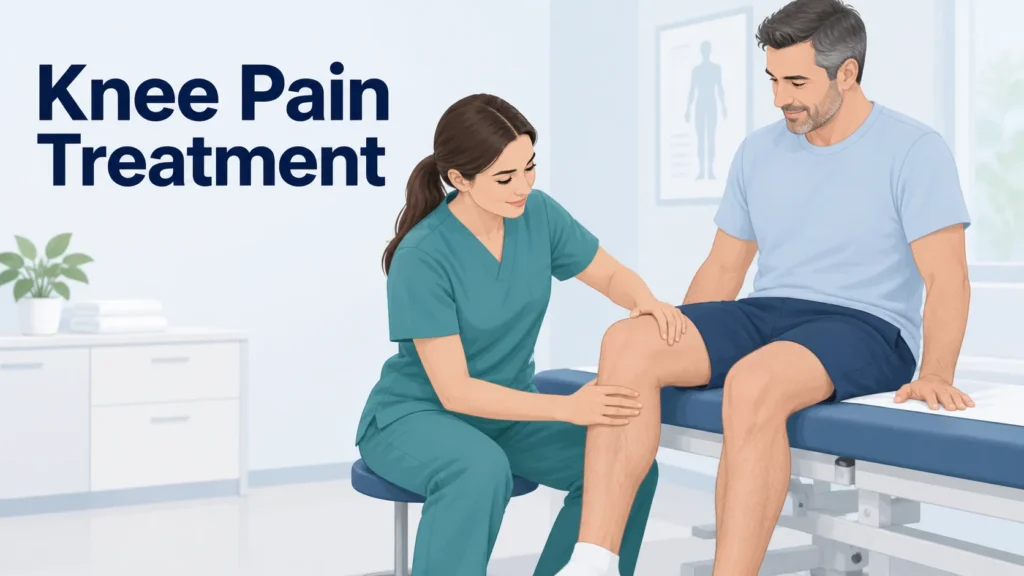
Knee pain can make you hesitate before taking the stairs, shorten your walks, or interrupt your workouts. It can begin after an injury or develop gradually, with stiffness, aching, or discomfort during certain movements.
At Calibration Physical Therapy in Overland Park, we assess your symptoms, strength, and movement to understand what needs attention. We’ll explain what we find and help you work toward activities that have become difficult, whether that’s kneeling in the garden or returning to running.
Understanding Your Knee Pain
Knowing when your knee hurts is often as useful as knowing where it hurts. You might feel comfortable walking on level ground but struggle going downstairs. Your knee may feel stiff when you first stand up, or become sore later in the day after being on your feet.
Knee pain can involve the joint or surrounding tissues, including tendons and ligaments. Pain around the kneecap, tendon irritation, and arthritis are among the problems that can affect everyday movement. An injury involving a twist, fall, or direct impact brings different concerns than symptoms that develop over several weeks.
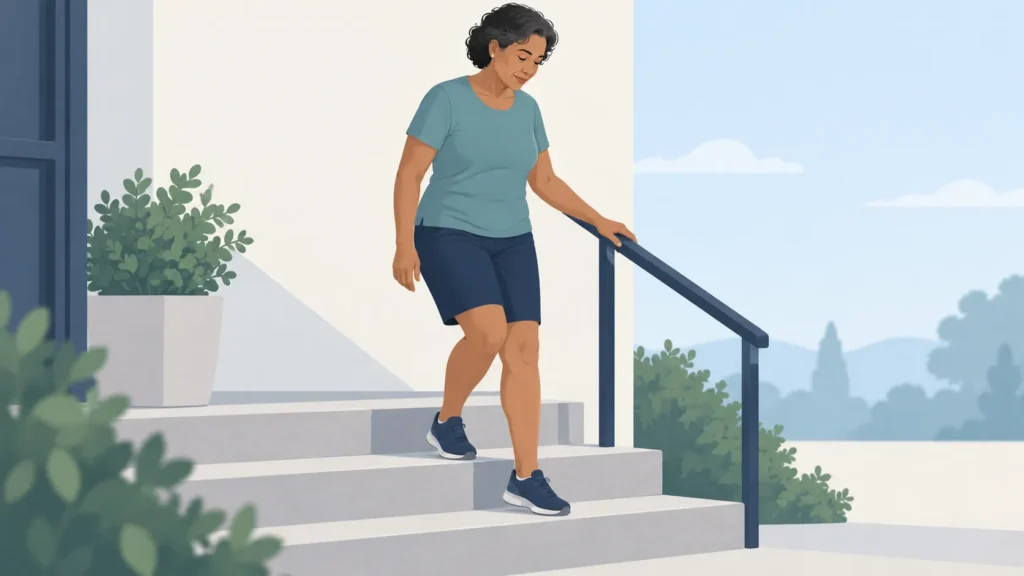
Changes in activity can also contribute. Adding hills to your runs, increasing your lifting weight, or spending more time kneeling can place demands on your knee that it isn’t used to. Your strength, joint movement, and recovery between activities can influence how you tolerate those changes.
These patterns don’t diagnose an issue on their own. During an evaluation, we consider them alongside your health history and physical examination. Tell us about swelling, catching, or a feeling that your knee might give way, as well as pain. The “When to Seek Care” section below explains which symptoms need urgent medical attention.
Your First Visit
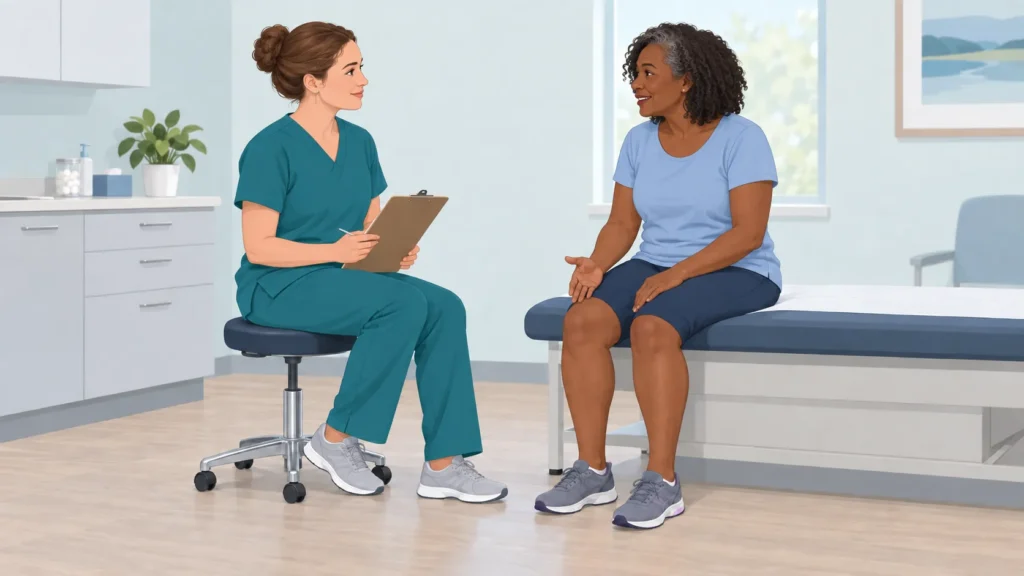
We start by asking how your symptoms began and what has changed since then. Tell us which activities are difficult, what you’ve stopped doing, and what you’ve already tried. It helps to describe what happens during activity and afterward. For example, you might finish a walk comfortably but notice soreness that evening. We’ll also discuss previous injuries or surgery, relevant medical conditions, and your goals.
The physical assessment includes checking how well your knee bends and straightens, along with strength and movements relevant to your routine. Depending on your symptoms, we may watch you walk, rise from a chair, squat, or step up and down. We assess the hips and ankles when they may be contributing to the difficulty.
We’ll explain the findings and agree on the first treatment priorities. You’ll have a chance to ask what to practice at home, how an exercise should feel, and which activities to adjust. If your symptoms suggest you need a medical assessment, we’ll discuss that next step.
Treatment for Knee Pain
Treatment includes exercises, practice with difficult activities, and guidance you can use between appointments. We choose exercises based on your assessment and explain how each one relates to your goals.
The examples below show how everyday difficulties can guide treatment. Your plan will depend on what your knee can comfortably manage and what you need to work toward.
| Activity that feels difficult | What therapy can address | A practical goal |
|---|---|---|
| Going down stairs | Leg strength and control when lowering your body | Taking steps with less discomfort |
| Getting up from a low chair | Strength and coordination when standing | Rising with less help from your arms |
| Walking longer distances | Walking tolerance and leg endurance | Completing more of your usual route |
| Returning to running | Strength and tolerance for repeated impact | Gradually handling longer running intervals |
| Kneeling for household tasks | Positioning, knee movement, and ways to modify the task | Working more comfortably near the floor |
Strength and Movement
Exercises can target the muscles around your knee and hip, as well as any difficulty bending or straightening your knee. We’ll show you how to perform each movement and check your technique as you practice.
We choose a level of difficulty that lets you practice with control. We can change the resistance, range of movement, or amount of support to find a suitable starting point. For example, using a higher seat may make standing practice more manageable before trying a lower chair.
Tell us if an exercise feels awkward or you’re unsure where you should feel the effort. We can adjust the setup or choose another exercise that addresses the same need.
Managing Activity Between Visits
Your home program gives you specific exercises to practice between appointments. We’ll discuss how to fit them into your routine and use the space and equipment you have available.
You may also need temporary changes to activities that aggravate your knee. That could mean shortening a walk, reducing squat depth, or adjusting your running schedule. Whether you need to pause an activity depends on your symptoms and any injury-related restrictions.
Notice how your knee feels during activity, later that day, and the following morning. Tell us about increased soreness, swelling, or difficulty with your usual tasks. That information helps us review your exercise level and decide what needs adjusting.
Hands-On Treatment
We may use manual therapy, which involves hands-on techniques for joints or soft tissues, to address discomfort or limited movement.
If we recommend it, we’ll explain what we’re trying to improve and check how you respond. Hands-on treatment supports the exercise and activity portions of your care when it’s useful.
Getting Back to Your Usual Activities

As you improve, therapy shifts toward the demands of your work, exercise, and daily routine. Being comfortable around the house is different from managing a full shift on your feet or a weekend hike. Tell us what you want to return to, including how long you need to be active and whether the activity involves lifting, running, or changing direction.
We check progress through strength, movement, endurance, and your response to specific tasks. For a runner, that may include gradually introducing running intervals. For someone with a physical job, it may mean practicing repeated lifting or carrying. Any restrictions related to an injury or surgery remain part of those decisions.
If progress slows, we review what’s still difficult and whether the exercises and activity levels are appropriate. Persistent or worsening symptoms may also need medical review.
Before visits end, we’ll discuss which exercises to continue, how to increase activity on your own, and when to seek further guidance.
When to Seek Care
Schedule an evaluation if knee pain keeps returning, limits your activities, or isn’t improving despite changes to your routine. If you’re regularly avoiding stairs, cutting walks short, or skipping exercise because of pain, it’s reasonable to ask for help.
Some symptoms need urgent medical attention. Seek urgent care if:
- You cannot put weight on your leg or move your knee.
- Your knee is severely painful, badly swollen, or visibly misshapen.
- Your knee locks or repeatedly gives way.
- You have a fever or feel unwell with a hot, red knee.
Don’t wait for a routine physical therapy appointment to have these symptoms assessed.
Knee Pain Treatment FAQs
These answers cover common questions about imaging, knee symptoms, and preparing for physical therapy.
Do I need an MRI before starting physical therapy?
An MRI isn’t routinely needed before starting care for many knee problems. Your history and examination help determine whether imaging would be useful. A medical clinician may recommend it after certain injuries or if symptoms persist despite treatment. Bring any existing imaging reports, but don’t assume you need a scan before arranging an evaluation.
Can physical therapy help with knee arthritis?
Yes. Physical therapy can help with the pain, stiffness, and activity limitations associated with knee osteoarthritis. Treatment focuses on strength, joint movement, and finding manageable ways to stay active. It won’t reverse arthritis, but it can help you work on specific difficulties, such as standing from a chair or walking through a store.
Does knee clicking or popping mean something is wrong?
Painless clicking can be normal and doesn’t necessarily mean your knee is injured. Whether the sound comes with pain or a change in how the knee works matters more than the sound alone. Painful clicking needs prompt medical advice. For other symptoms that need urgent attention, see “When to Seek Care” above.
How long does physical therapy for knee pain take?
The length of care depends on your knee problem, starting abilities, goals, and response to treatment. We’ll discuss expectations after your evaluation and review whether visits are helping you make progress. Appointment frequency is a separate decision. It depends on the guidance and supervised practice you need, as well as what you can manage between visits.
What should I wear or bring to my first appointment?
Wear comfortable clothing that lets you bend your knee and allows the therapist to examine it. Shorts are often a practical choice. Bring relevant medical instructions, existing imaging reports, and any exercises you’re already doing. If you’ve been told to use a brace or walking aid, bring that too.
Schedule a Knee Pain Evaluation
If knee pain is changing how you move, our team at Calibration Physical Therapy in Overland Park can help you understand your next steps. Schedule an evaluation or call (913) 914-7174 to get started.