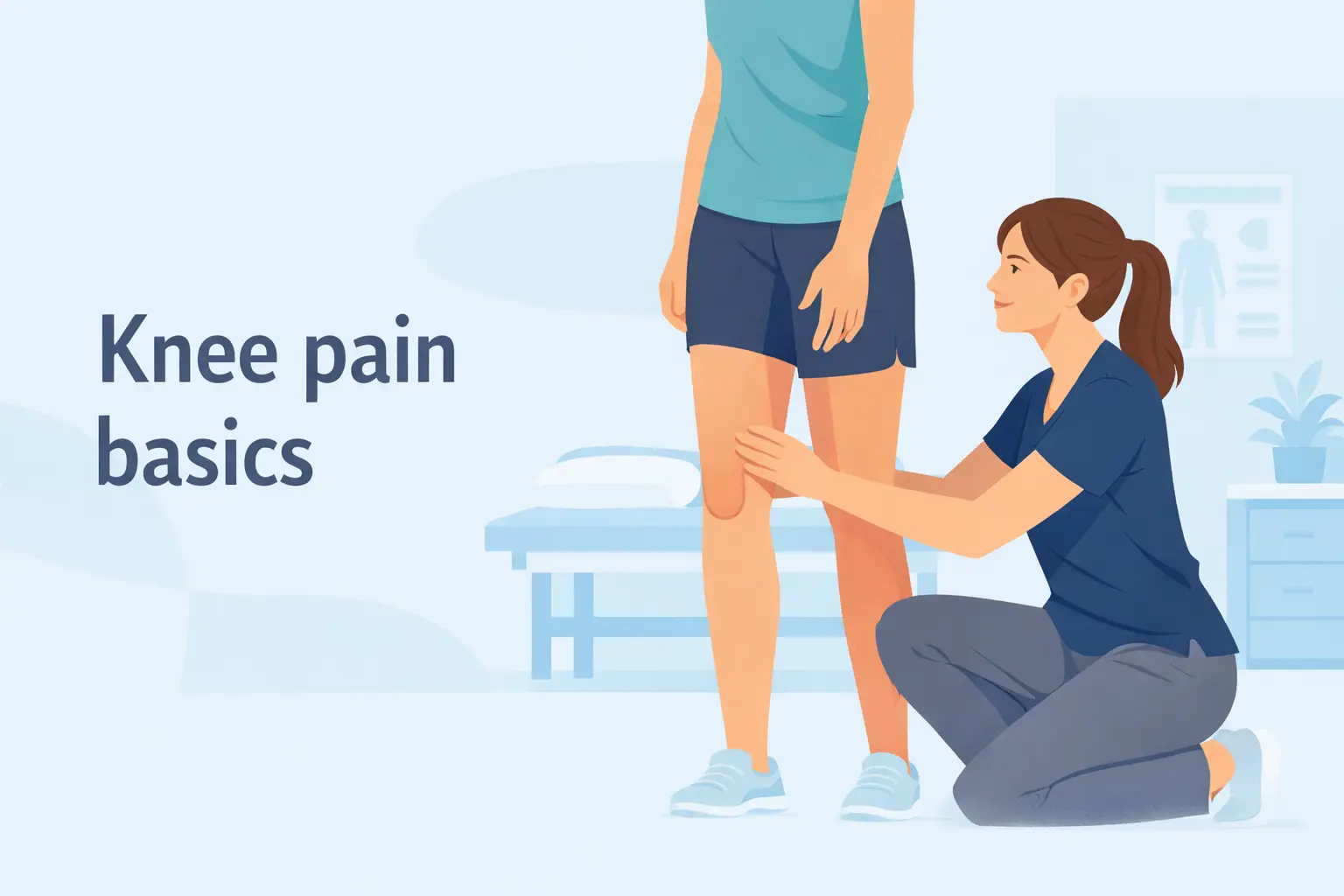
Knee pain is one of the most common musculoskeletal complaints in both active and non-active adults. It can develop suddenly after an injury or gradually over time due to irritation, overuse, or changes in joint mechanics.
Because the knee sits between the hip and ankle, problems in several areas of the body can contribute to knee discomfort. This article explains common causes of knee pain, how symptoms typically present, and when physical therapy may help.
Knee Pain Basics
Knee pain refers to discomfort in or around the knee joint. It can come from irritation of muscles, tendons, ligaments, cartilage, or other structures that help stabilize and move the joint.
The knee must provide both stability and movement during activities such as walking, squatting, climbing stairs, and running. When one or more of these structures becomes irritated or overloaded, pain and stiffness can develop.
Knee pain may involve several structures, including:
- Tendons that connect muscles to the knee
- Ligaments that stabilize the joint
- Cartilage that cushions the bones
- The kneecap (patella) and surrounding tissues
- Muscles of the thigh and lower leg
Some people experience mild irritation that improves with rest, while others notice persistent pain that interferes with daily activities.
Common Causes of Knee Pain
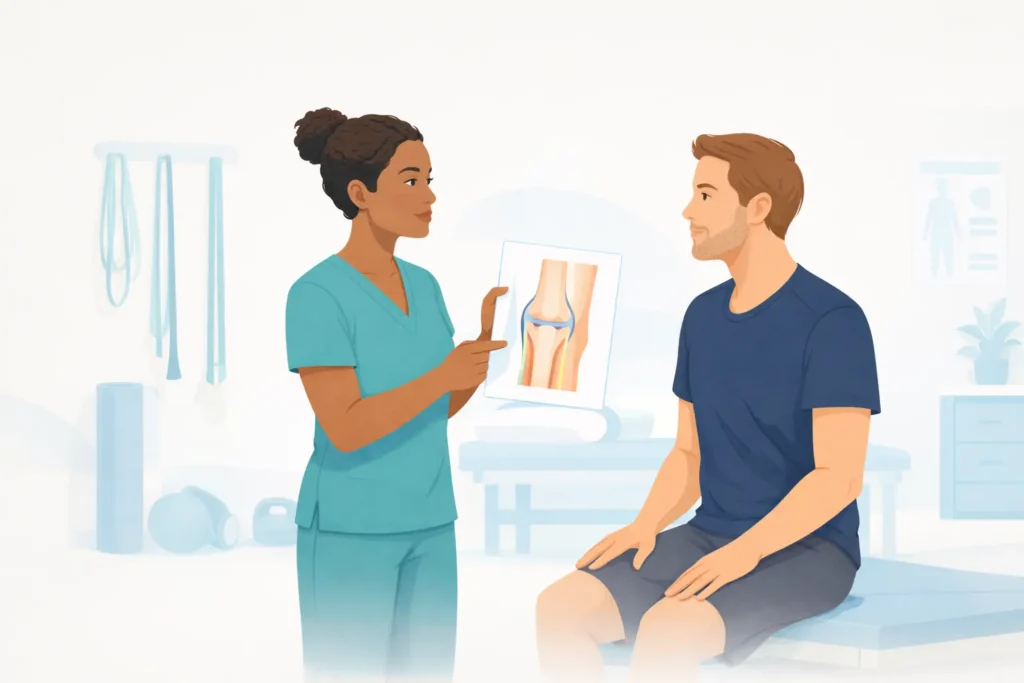
Knee pain can develop from several different conditions. Sometimes it follows a clear injury, such as a twist or fall. In other cases, it develops gradually as certain tissues become irritated from repeated stress or changes in activity levels.
Several conditions account for a large portion of knee pain seen in outpatient physical therapy clinics.
Common causes of knee pain include:
- Patellofemoral pain syndrome
- Tendon irritation around the knee
- Meniscus irritation or degeneration
- Ligament sprains
- Early knee osteoarthritis
Each of these conditions affects different structures of the knee and can present with slightly different symptoms. Understanding the underlying cause helps guide treatment and activity recommendations.
Patellofemoral Pain Syndrome
Patellofemoral pain syndrome is one of the most common causes of knee pain, particularly in active adults, runners, and people who frequently use stairs. Pain typically develops at the front of the knee, where the kneecap moves along the groove of the thigh bone during bending and straightening.
People often notice symptoms such as:
- Pain around or behind the kneecap
- Discomfort when squatting or climbing stairs
- Increased pain after sitting with the knee bent for long periods
Muscle strength and movement control around the hip and thigh often influence how the kneecap tracks during movement.
Tendon Irritation
Several tendons connect powerful thigh muscles to the knee joint. When these tendons are repeatedly loaded without enough recovery time, irritation can develop.
Two common examples include:
- Patellar tendon irritation, which occurs below the kneecap
- Quadriceps tendon irritation, which occurs above the kneecap
People with tendon-related knee pain often report discomfort during activities that place a higher load on the knee, such as jumping, running, or rapid changes in direction. Symptoms may begin as mild soreness after activity and gradually become more noticeable if loading continues to increase.
Meniscus Irritation
The meniscus is a crescent-shaped cartilage structure that helps cushion the knee joint and distribute forces during movement. Each knee has two menisci that sit between the thigh bone and shin bone.
Meniscus irritation may occur after twisting movements, deep squatting, or gradual wear over time.
Common symptoms include:
- Pain along the inside or outside of the knee joint
- Swelling that develops after activity
- Occasional catching or clicking sensations
Not every meniscus issue requires surgery. Many people improve with strengthening, activity modification, and improved movement mechanics.
Ligament Sprains
Ligaments stabilize the knee by connecting bones and limiting excessive motion. These structures are often injured during sports or activities that involve sudden changes in direction.
Examples include:
- Anterior cruciate ligament (ACL) injury
- Medial collateral ligament (MCL) sprain
- Posterior cruciate ligament (PCL) injury
The severity of ligament injuries varies widely. Some mild sprains recover with conservative care, while more significant injuries may require a longer rehabilitation process.
Early Osteoarthritis
Some knee pain develops gradually as the cartilage within the joint changes over time. This process is often described as knee osteoarthritis.
People may notice symptoms such as:
- Stiffness when first standing up
- Discomfort during stairs or prolonged walking
- Swelling after activity
Strength, mobility, and movement patterns still play an important role in how the knee tolerates activity. Physical therapy can often help people maintain comfortable movement and stay active.
Where Knee Pain Is Usually Felt
The location of knee pain often provides clues about the structures involved. Clinicians commonly evaluate both pain location and movement patterns to narrow down possible causes.
| Pain location | Common associated issues |
|---|---|
| Inside of the knee | Patellofemoral pain, tendon irritation |
| Back of the knee | MCL strain, meniscus irritation |
| Inside the knee | IT band irritation |
| Back of knee | Hamstring strain, joint irritation |
| Around kneecap | Patellofemoral tracking issues |
Pain location alone does not confirm a diagnosis, but it can help guide evaluation.
Common Symptoms of Knee Pain
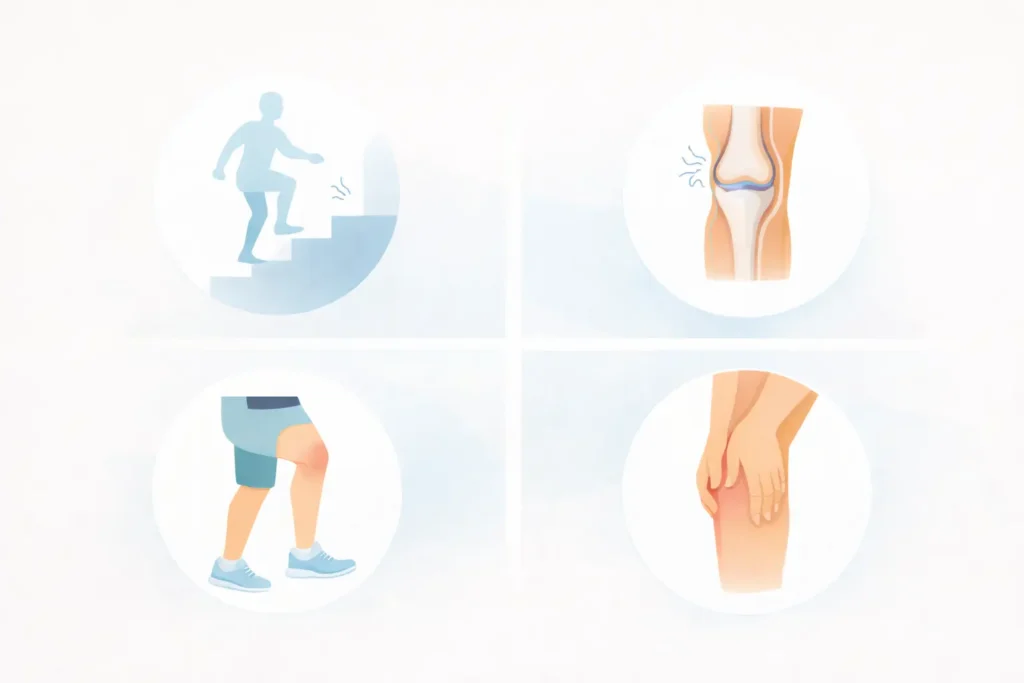
Knee pain rarely appears in isolation. Many people also notice changes in how the joint moves, how stable it feels, or how it responds to activity. These additional knee pain symptoms can provide useful clues about which structures may be irritated.
Some symptoms appear immediately after an injury, while others develop gradually as certain tissues become overloaded over time.
Common symptoms that may accompany knee pain include:
- Stiffness when bending or straightening the knee
- Swelling after activity
- Clicking or popping sensations
- Difficulty squatting or climbing stairs
- A feeling that the knee is unstable or weak
Stiffness is often most noticeable after periods of inactivity, such as sitting at a desk or getting out of bed in the morning. Some people feel a brief period of tightness that improves once the joint starts moving again.
Swelling may appear shortly after activity or develop gradually over the course of a day. This can happen when irritated tissues inside the knee respond to increased load or movement.
Clicking or popping sensations are also common. In many cases, these sounds occur when structures move over one another during joint motion. While the sensation can feel concerning, it does not always indicate a serious injury.
Some people primarily notice symptoms during exercise or sports. Others experience discomfort during everyday movements such as walking, getting up from a chair, or going up and down stairs. Understanding when symptoms occur is often an important part of determining the best treatment approach.
Risk Factors for Developing Knee Pain
Knee pain does not always come from a single injury. In many cases, it develops gradually when the joint is exposed to repeated stress without enough recovery or support from surrounding muscles. Several factors can increase the likelihood that the knee becomes irritated over time.
Some of the most common contributing factors include:
- Sudden increases in running or training volume
- Muscle weakness around the hips or thighs
- Limited ankle or hip mobility
- Previous knee injury
- Repetitive squatting or kneeling at work
- Changes in footwear or activity surfaces
Sudden changes in activity are one of the most frequent contributors to knee pain. When running distance, workout intensity, or sports participation increases too quickly, the tissues around the knee may not have enough time to adapt to the new level of stress.
Muscle strength also plays a large role in how the knee handles load. The muscles of the hips and thighs help control the position of the leg during movements such as squatting, running, and climbing stairs. When these muscles are not providing adequate support, additional stress may be placed on structures inside the knee joint.
Mobility in nearby joints is another important factor. Limited ankle or hip movement can change how the body distributes forces through the lower extremity. In some cases, this causes the knee to compensate for restrictions elsewhere in the movement chain.
Previous knee injuries can also influence long-term joint mechanics. Even after an injury has healed, people may unconsciously change how they move or load the leg during activity.
Because knee pain often develops from several small contributing factors rather than a single event, addressing these issues together is an important part of recovery and long-term prevention.
How Physical Therapy Helps Knee Pain
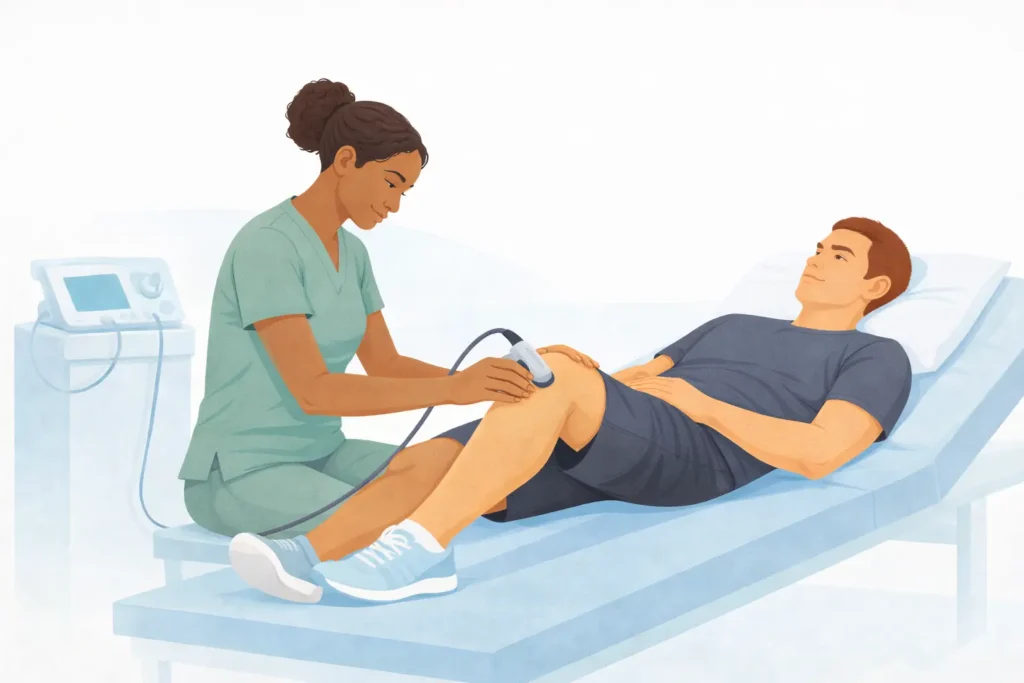
Physical therapy focuses on identifying and addressing the factors that place excess stress on the knee joint. While the pain is felt at the knee, the underlying cause is often related to how the entire lower body moves and distributes load during everyday activities.
For that reason, a physical therapy evaluation usually looks beyond the knee itself. Clinicians often assess the hip, ankle, and overall movement patterns to understand why certain tissues may be becoming irritated.
Treatment plans are individualized, but most rehabilitation programs include several core components:
Movement Assessment
A physical therapist typically begins by observing how the knee moves during common functional tasks. The goal is not simply to locate the painful area but to understand how the body is coordinating movement during everyday activities.
Movement assessment may include:
- Walking and gait observation
- Squatting mechanics
- Step-down or stair movements
- Single-leg balance tasks
These movements often reveal patterns such as knee collapse, limited ankle mobility, or hip weakness that increase stress on the knee joint. Identifying these patterns helps guide the rest of the rehabilitation plan.
Strength and Control
Strength plays a major role in how the knee handles load during activity. When surrounding muscles are not providing adequate support, certain structures within the knee may absorb more stress than they are designed to handle.
Physical therapy programs often focus on improving strength and control in key muscle groups, including:
- Quadriceps
- Hamstrings
- Gluteal muscles
- Calf muscles
Strengthening these areas helps the knee move with better alignment during tasks such as climbing stairs, standing from a chair, or returning to running.
Equally important is developing neuromuscular control, which refers to how efficiently the body coordinates muscle activity during movement.
Mobility and Joint Mechanics
Limited mobility of nearby joints can alter how forces travel through the knee. For example, reduced ankle flexibility can shift stress upward into the knee during walking or squatting.
Physical therapy may include strategies to improve mobility in areas that influence knee mechanics, such as:
- Hip mobility
- Ankle mobility
- Soft tissue flexibility in the surrounding muscles
Even small improvements in joint motion can allow the knee to move more naturally and tolerate activity with less irritation.
Activity Guidance
One of the most valuable aspects of physical therapy is helping patients return to activity without repeatedly aggravating symptoms.
Many cases of knee pain develop when training volume, activity intensity, or workload increases faster than the body can adapt. Rather than recommending complete rest, therapists typically help patients adjust activity levels so tissues can recover while maintaining activity.
This guidance may include:
- Gradually increasing running or exercise volume
- Adjusting training schedules
- Modifying movements that provoke symptoms
The goal is to keep people active while allowing irritated tissues time to recover.
When Knee Pain Should Be Evaluated
Many episodes of knee pain improve with a short period of reduced activity and gradual return to normal movement. Minor irritation from a new workout, a long hike, or an unfamiliar activity often settles as the tissues recover.
However, persistent symptoms may indicate that the knee is being overloaded or that certain structures need more structured rehabilitation. When pain continues for several weeks or begins interfering with daily movement, a professional evaluation can help identify the underlying cause.
Consider evaluation if you notice:
- Pain that lasts more than a few weeks
- Swelling that continues after activity
- Difficulty walking or climbing stairs
- A feeling that the knee is unstable
- Pain that interferes with exercise or daily routines
Persistent swelling or pain after activity can indicate that the joint is not tolerating current activity levels. In these cases, continuing to push through symptoms may prolong recovery.
A feeling that the knee is unstable or likely to give way can also indicate that certain muscles are not providing adequate support to the joint. A structured assessment can help determine whether strength, mobility, or movement coordination is contributing to the problem.
Early evaluation often allows small issues to be addressed before they become long-term limitations. For many people, identifying and correcting movement patterns early can help them return to exercise, sports, and daily activities more comfortably.
The Value of Early Assessment
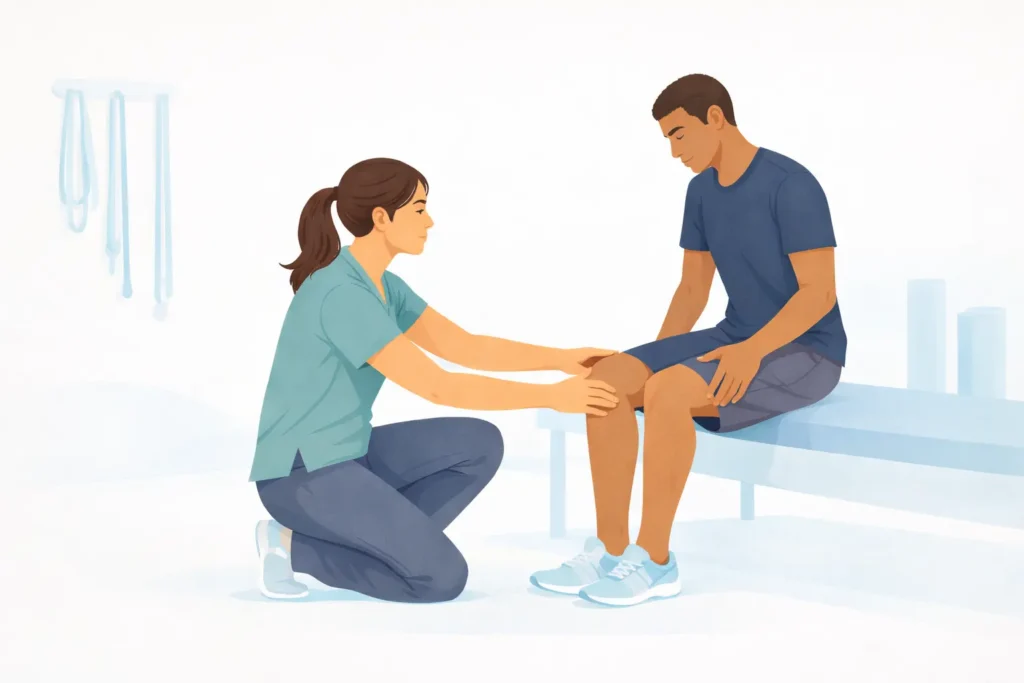
When knee pain continues for several weeks, people often fall into one of two patterns:
- Some try to push through the discomfort and hope it improves on its own.
- Others begin avoiding activity entirely because they worry that movement will make the problem worse.
In many cases, knee pain persists because certain movement patterns, strength deficits, or mobility limitations continue to place stress on irritated tissues. A structured evaluation helps identify the factors that are contributing to the problem.
During an assessment, a physical therapist may evaluate several areas, including:
- Movement patterns during activities such as squatting, walking, or stair use
- Strength levels in the hips, thighs, and lower legs
- Mobility of the hip and ankle joints
- Balance and coordination during single-leg movements
These findings help guide a treatment plan that targets the specific factors influencing the knee. Rather than focusing only on the painful area, therapy can address the surrounding mechanics that affect how the joint handles load.
Early assessment also helps people stay active safely. With the right guidance, most patients can continue some level of exercise or daily activity while gradually improving strength and movement quality.
Addressing contributing factors early often leads to faster improvement and reduces the chance that knee irritation becomes a longer-term limitation.
Conclusion
Knee pain can develop for many reasons, from temporary irritation after activity to longer-term changes in how the joint moves. Because the knee sits between the hip and ankle, symptoms are often influenced by strength, mobility, and movement patterns throughout the entire lower body.
Many cases improve when the contributing factors are identified and addressed early. Improving muscle strength, restoring joint mobility, and adjusting activity levels can often reduce irritation and help the knee tolerate daily movement more comfortably.
If knee pain is lingering, limiting exercise, or interfering with everyday activities, a professional assessment can help clarify what is contributing to the problem.
At Calibration Physical Therapy, our team evaluates how your knee and surrounding joints move to identify the factors affecting your symptoms and build a plan that supports safe, confident activity.

About the Author
Dr. Traci Smiley, DPT
Traci is a licensed physical therapist and owner of Calibration Physical Therapy, serving the Kansas City area. A Board-Certified Orthopedic Clinical Specialist with advanced training in manual therapy and strength conditioning, she helps individuals overcome pain and return to what they love.