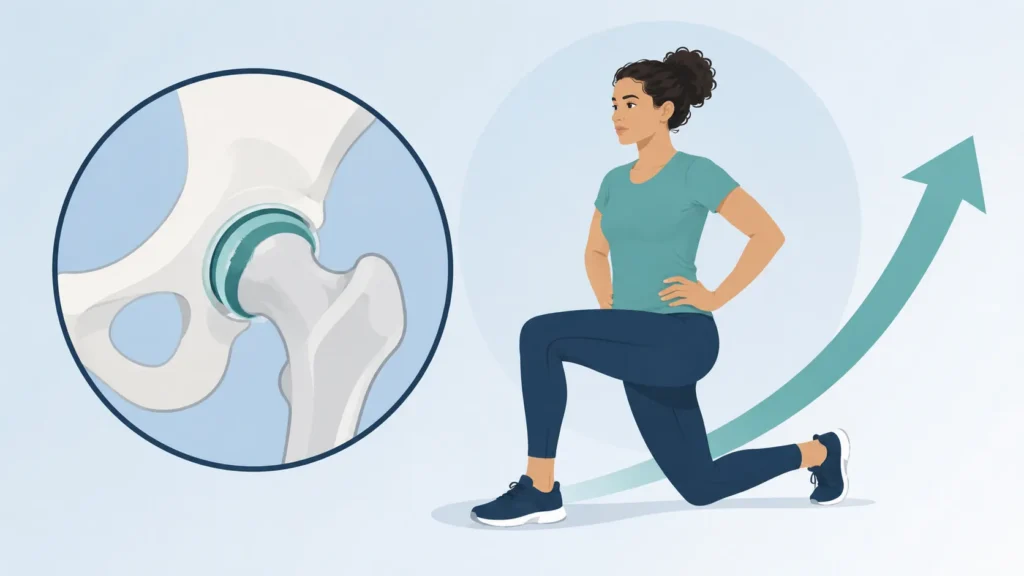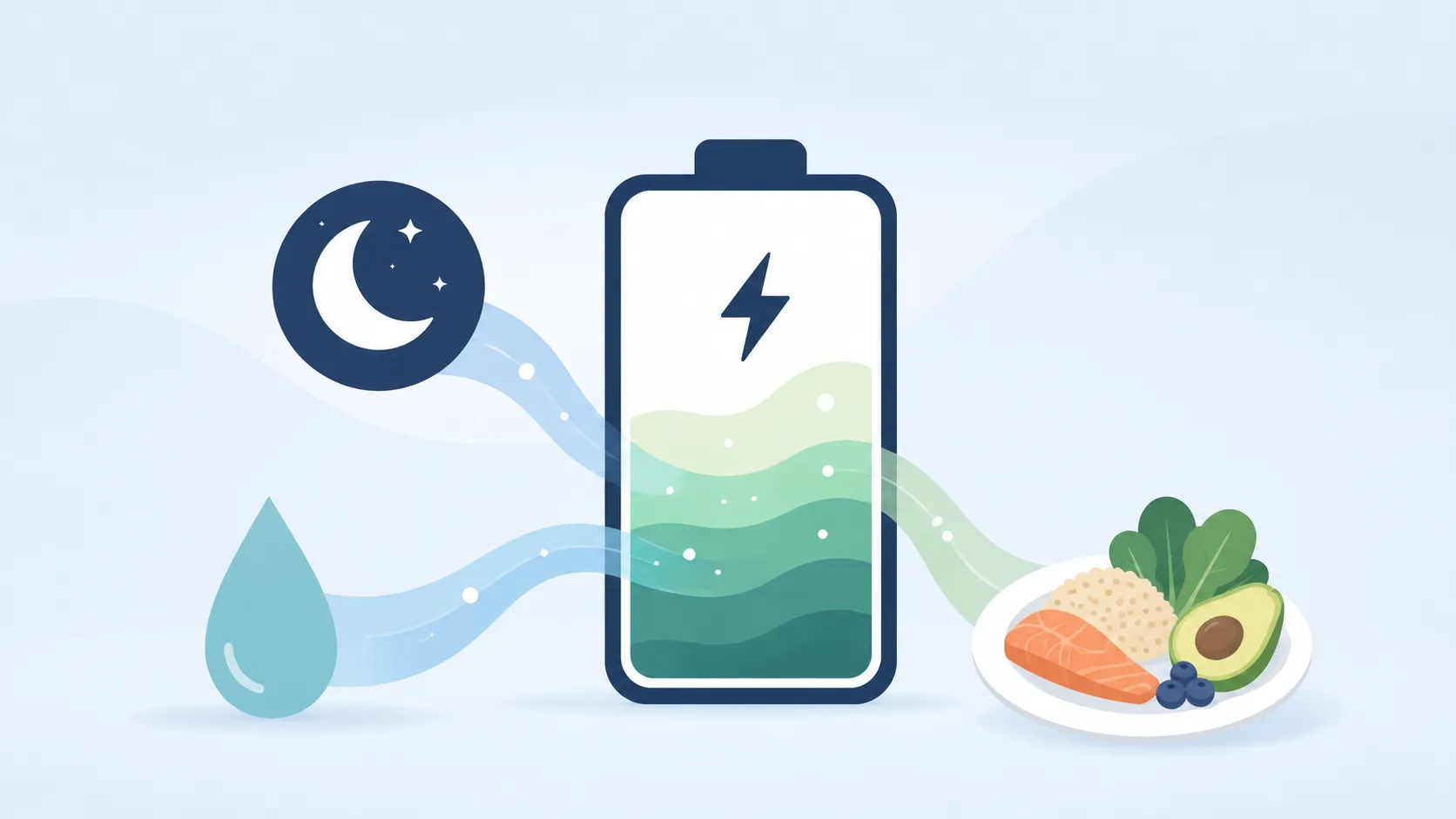
Most people think about their workouts. Fewer people think about what happens between workouts. If recovery consistently falls behind training demands, soreness may last longer, performance may stall, and small aches can become harder to ignore.
Recovery is not just important for competitive athletes. Recreational runners, gym-goers, pickleball players, cyclists, and active adults all benefit from understanding how their bodies respond to exercise and what helps them recover more efficiently.
In this article, we’ll discuss why recovery matters, what influences it, how normal post-exercise soreness behaves, and how physical therapy can help when recovery consistently becomes a limiting factor.
How to Recover Faster Between Workouts
Most people looking for faster recovery are hoping for a single solution. In reality, recovery is influenced by several factors that work together. Sleep, nutrition, hydration, training volume, stress levels, and overall fitness all affect how quickly your body bounces back after exercise.
The good news is that recovery usually does not require expensive equipment, supplements, or complicated routines. Most recovery improvements come from getting enough sleep, eating and drinking appropriately for your activity level, managing training volume, and allowing enough time between harder sessions.
This guide explains the factors that influence recovery, how normal post-workout soreness behaves, and when lingering symptoms may signal something more than typical training fatigue. While every person responds differently to exercise, following sound recovery habits gives your body the best opportunity to adapt between workouts.
What Influences Recovery Between Workouts?
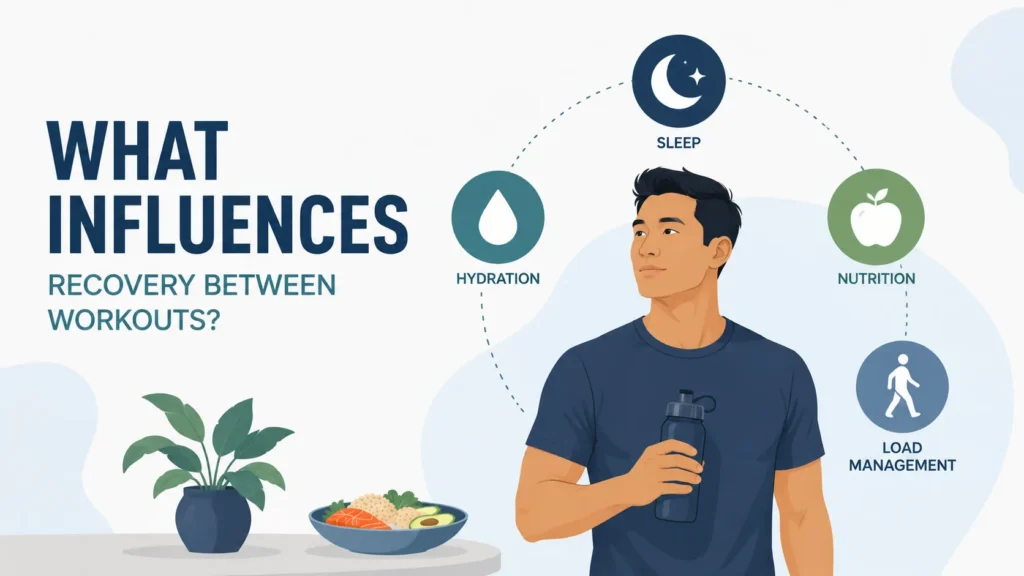
Recovery is affected by much more than what happens during a workout. The same training session can feel manageable one week and surprisingly difficult another week, depending on what else is happening in your life.
Several factors influence how quickly your body recovers between training sessions.
Sleep and Recovery
Sleep is often the biggest factor. During sleep, the body carries out many of the processes involved in tissue repair, energy restoration, and adaptation to training. A few nights of poor sleep can make workouts feel harder and extend recovery times even when your exercise routine has not changed.
Training Load and Recovery
Training load matters as well. Recovery becomes more challenging when volume, intensity, or frequency increase faster than the body can adapt. This often happens when preparing for a race, starting a new gym program, returning after time away from exercise, or trying to make rapid fitness gains.
Nutrition, Hydration, and Recovery
Recovery requires energy and resources. If your body is consistently underfueled, it may struggle to meet the demands of training. Likewise, dehydration can contribute to fatigue, reduced performance, and a greater sense of effort during exercise.
How Life Stress Affects Recovery
Stress outside the gym affects recovery, too. Work deadlines, family responsibilities, travel, and other life demands place stress on the body even though they are not exercise. It is common for people to feel slower, more fatigued, or less resilient during periods of high life stress despite maintaining the same workout schedule.
Fitness Level and Recovery Capacity
Someone who has been strength training consistently for several years will usually recover differently from someone just beginning an exercise program. As fitness improves, the body generally becomes more efficient at handling training demands.
When recovery feels slower than expected, the cause is often not a single factor. More commonly, several smaller factors combine to reduce the body’s ability to adapt between workouts.
For most active adults, improving recovery starts with consistent sleep, adequate hydration, appropriate nutrition, and avoiding sudden increases in training volume.
What Does Normal Post-Workout Recovery Feel Like?
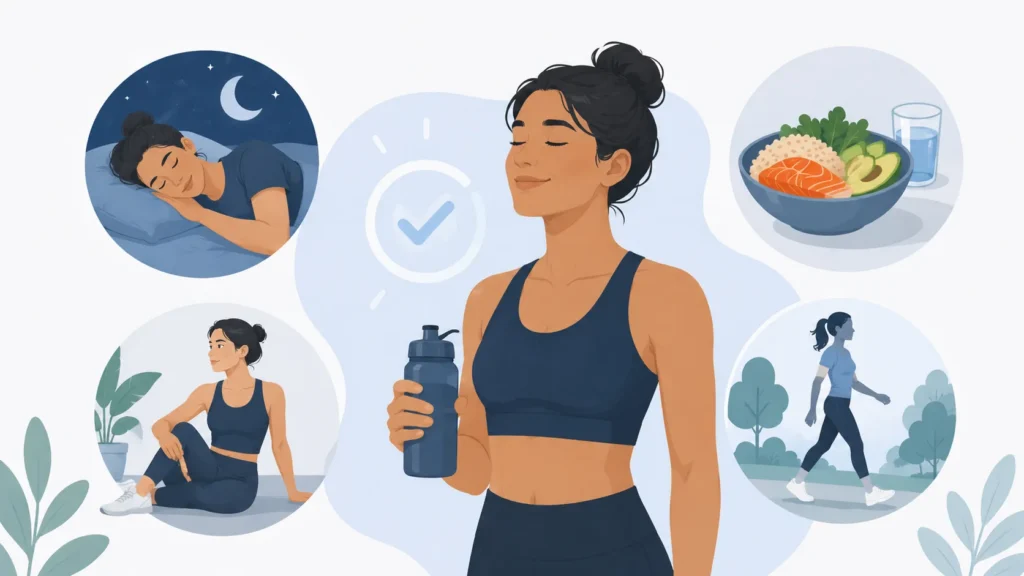
Many people notice soreness the day after a workout and assume something is wrong. In many cases, this is simply delayed onset muscle soreness, often called DOMS. It commonly occurs after introducing a new exercise, increasing training volume, or performing movements your body has not done recently.
People often describe recovery-related symptoms as muscle stiffness, heaviness, tenderness, or a feeling that movements require more effort than usual.
The following table highlights common recovery experiences.
| What people often notice | What it may mean |
|---|---|
| Mild muscle soreness the next day | Normal response to training |
| Stiffness when first moving | Temporary post-exercise muscle tightness |
| Fatigue during warm-up that improves with movement | Typical recovery response |
| Mild tenderness when pressing on muscles | Common after higher training loads |
| Symptoms that gradually improve over several days | Expected recovery pattern |
Recovery-related soreness generally feels different from injury pain. It tends to affect larger muscle groups, is often symmetrical, and gradually improves without causing significant limitations in daily activities.
How Recovery Behaves During Daily Activity
Recovery symptoms often change throughout the day. Many people feel stiff when getting out of bed or after sitting for extended periods, but movement frequently helps the body feel better.
Walking, light cycling, mobility exercises, and other low-intensity activities often improve circulation and reduce feelings of stiffness. This is one reason active recovery can be helpful between harder training sessions.
Someone returning to strength training may feel stiff when sitting at a desk but notice symptoms ease after standing up and moving around for a few minutes.
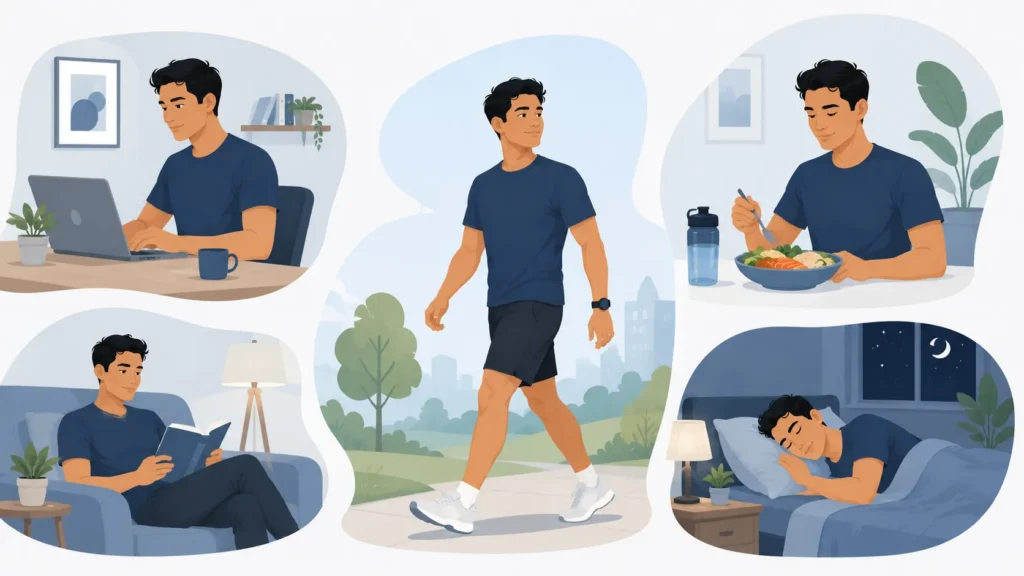
On the other hand, activities that place significant demands on already fatigued tissues may temporarily increase discomfort. A runner recovering from a long run may notice that hills feel harder than usual. Someone who has completed a challenging leg workout may feel more fatigued when climbing stairs for a day or two.
Recovery is rarely perfectly linear. Some days feel better than expected, while others feel more difficult despite following the same routine. This variation is normal and often reflects the combined influence of sleep, stress, nutrition, and overall workload.
Common Mistakes People Make When Recovery Feels Slow
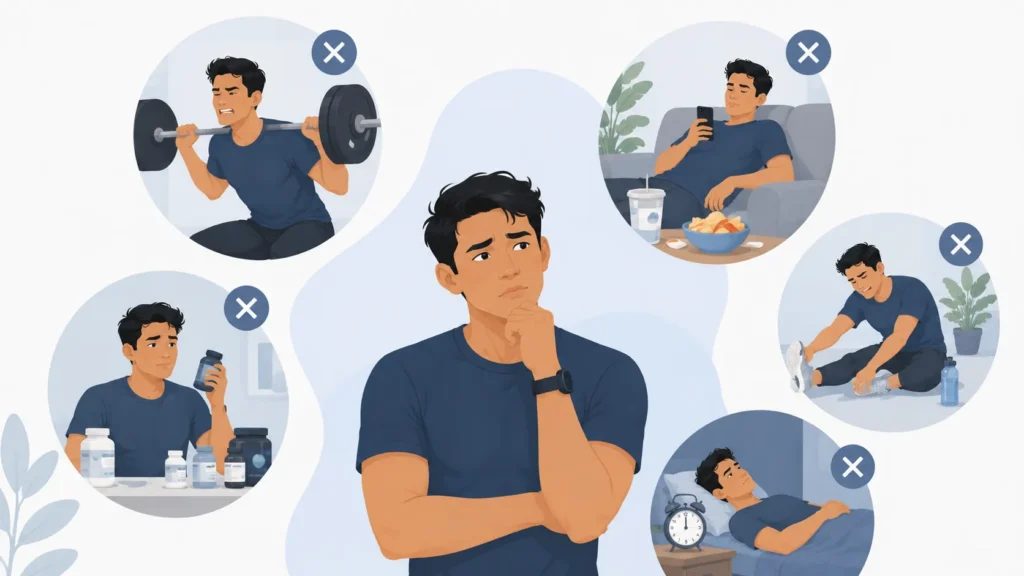
One of the most common mistakes is assuming that every workout should feel easy after a day or two. Recovery timelines vary based on training history, exercise intensity, and overall health.
Another common response is to repeatedly test for symptoms. People often perform the same movement throughout the day to see if soreness has improved. Constantly checking can create frustration and make recovery feel slower than it actually is.
Some individuals move in the opposite direction and stop all activity as soon as soreness appears. Complete rest is occasionally appropriate, but prolonged inactivity can sometimes contribute to stiffness and reduced confidence in movement.
Returning immediately to maximum intensity after a few good days can also be problematic. Recovery tends to work best when training loads increase gradually rather than in large jumps.
Why Recovery Challenges Often Develop Gradually
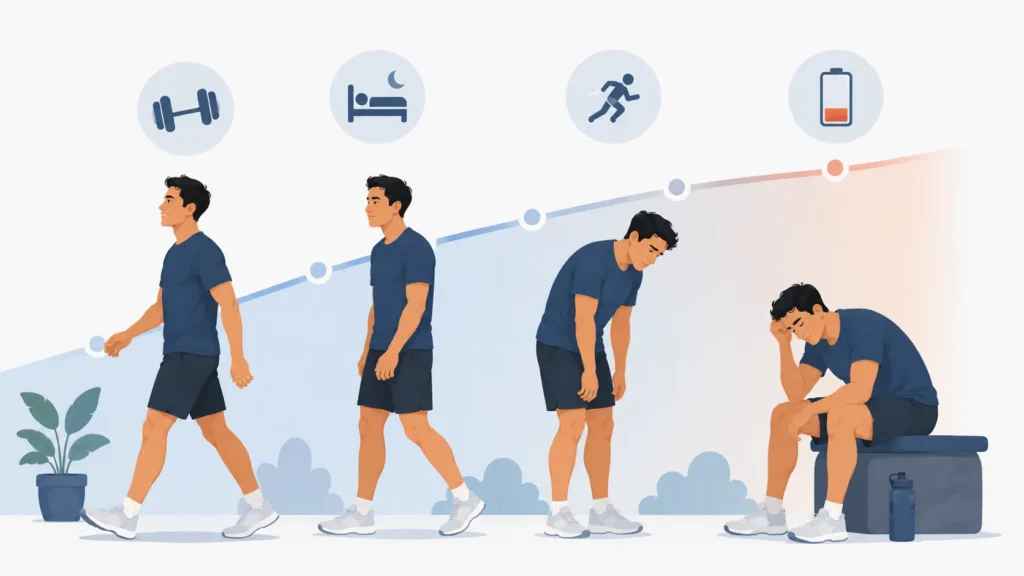
Most recovery issues do not begin with a single workout. They usually develop when training demands slowly outpace the body’s ability to adapt.
This can happen during race preparation, busy work periods, seasonal sports, or after starting a new fitness routine. Individual workouts may feel manageable, but fatigue accumulates over days or weeks. Because the change is gradual, many people do not recognize that recovery is becoming a problem until performance or symptoms become more noticeable.
Many active adults ignore early signs that recovery is becoming limited. They may notice persistent soreness, declining performance, reduced motivation, or feeling unusually tired after routine workouts. Because these changes happen gradually, they are easy to dismiss.
Over time, recovery windows become longer, and symptoms become more noticeable. What once required a day of recovery may begin requiring several days.
Recognizing these trends early often allows people to make small adjustments before larger problems develop.
Muscle Soreness vs Injury: How Can You Tell the Difference?
Many people wonder whether what they are experiencing is normal recovery or the beginning of an injury.
While there is overlap, certain patterns can provide useful clues.
| What you’re noticing | More consistent with recovery | More consistent with injury |
|---|---|---|
| Symptoms affect both sides similarly | Often | Less common |
| Symptoms improve steadily over several days | Often | Not always |
| Pain remains localized to one specific area | Less common | More common |
| Symptoms worsen with each workout | Less common | More common |
| Daily activities become increasingly painful | Less common | More common |
Recovery soreness usually follows a predictable timeline and gradually improves. Injuries often become more consistent, more localized, or increasingly disruptive during daily activities.
When symptoms persist beyond expected recovery timelines, a physical therapy evaluation can help determine what may be contributing.
How Physical Therapy Evaluates Recovery Problems
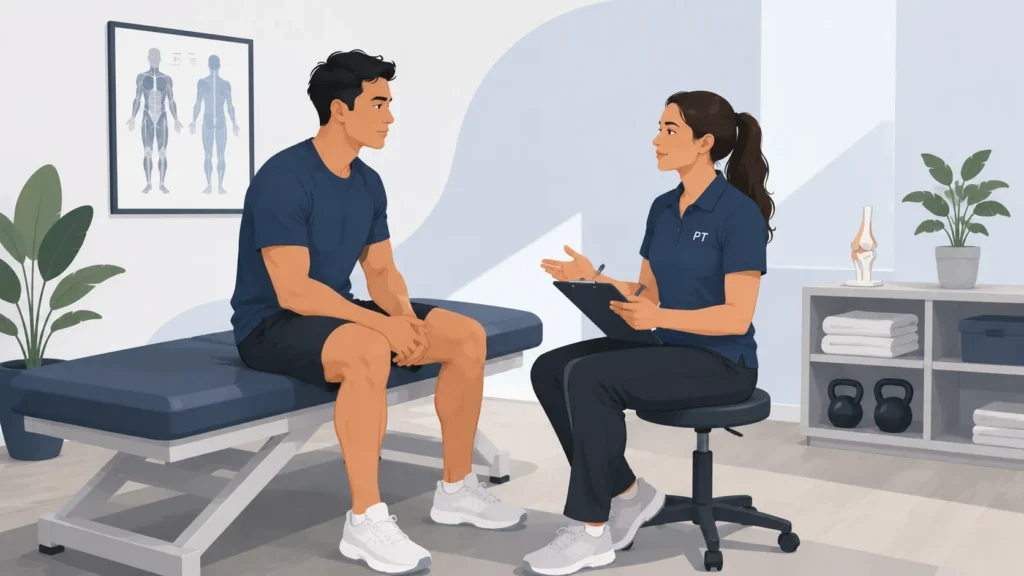
When someone reports difficulty recovering between workouts, physical therapists look beyond the specific area that feels sore.
A runner training for a half-marathon may need a different evaluation than someone whose recovery challenges began after starting a new strength program. Understanding what changed, when symptoms appear, and how long recovery is taking often provides important clues.
We also look at how your body responds to repeated activity. Some people feel fine during exercise but struggle for several days afterward. Others feel stiff at the beginning of a workout but improve as they warm up. Those patterns can help determine whether the issue is simply training load, an underlying injury, or a combination of both.
The goal is not simply to identify what hurts. The goal is to understand why recovery is consistently falling behind workload demands.
Once those contributing factors are identified, it becomes much easier to determine what changes are likely to have the biggest impact on recovery.
How Physical Therapy Helps Improve Recovery
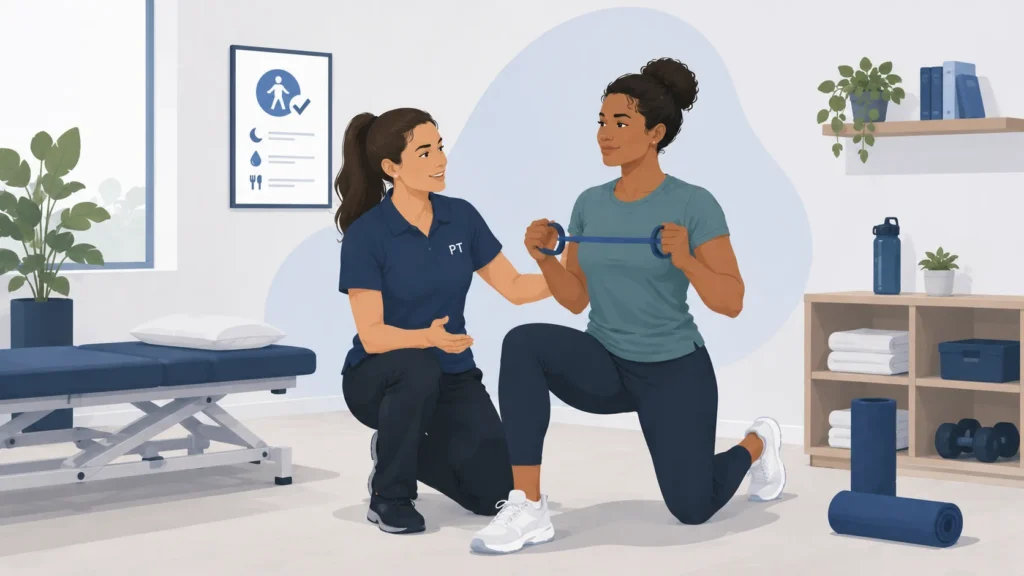
Improving recovery is rarely about finding a single magic exercise or recovery tool. Physical therapy focuses on identifying why recovery is falling behind training demands and addressing the factors that may be limiting your body’s ability to tolerate training effectively.
In some cases, temporary modifications to workout intensity or frequency may be helpful. This allows irritated tissues to calm down while maintaining overall activity levels.
A runner preparing for a race may need temporary mileage adjustments while building strength and improving recovery habits. Someone returning to strength training after an injury may need a different progression focused on gradually increasing training tolerance.
Physical therapy may also focus on improving movement efficiency. If certain joints or muscle groups are consistently overloaded, addressing underlying mobility or strength deficits can reduce unnecessary stress during exercise.
Education plays an important role as well. Understanding how symptoms should respond to training helps people make better decisions about activity progression and recovery expectations.
Many individuals feel more confident once they understand the difference between normal training responses and signs that additional adjustments may be needed.
Rehabilitation Progression
Recovery-focused rehabilitation typically progresses through several overlapping phases.
| Phase | Focus |
|---|---|
| Initial phase | Reduce excessive fatigue and establish recovery habits |
| Load management phase | Match training demands to current capacity |
| Capacity-building phase | Improve strength, conditioning, and recovery tolerance |
| Return to full training | Gradually restore normal training volume and intensity |
Progression is based on symptom response rather than arbitrary timelines. Some people move through these phases quickly, while others require a more gradual approach.
Returning to Exercise and Training
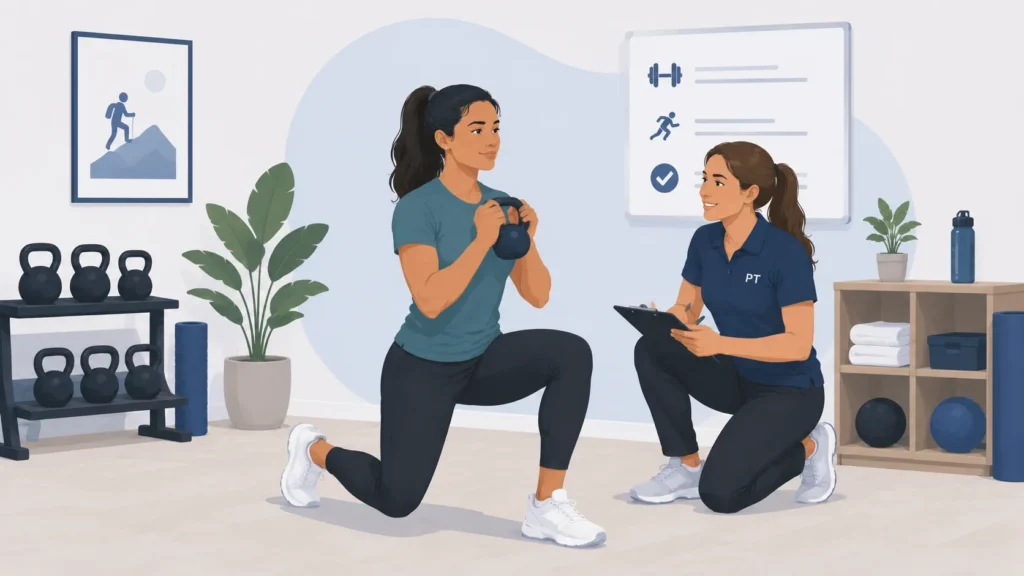
A successful return to training is usually gradual. A good progression is based on how your body responds over several workouts, not just how you feel during a single session. Even when symptoms improve, tissues may still be adapting to recent workloads.
Increasing volume, intensity, and frequency simultaneously often creates setbacks. Most people do better when only one variable changes at a time.
Monitoring how the body responds over the next 24 to 48 hours can provide valuable information. Mild soreness that resolves on its own is usually expected. Symptoms that continue escalating after each session may indicate that training demands are progressing too quickly.
Consistency tends to produce better long-term results than periods of aggressive training followed by forced rest. Small, sustainable increases often allow people to return to their preferred activities with fewer interruptions.
When to See a Physical Therapist
Normal recovery should gradually trend in the right direction. Some days may feel better than others, but soreness, fatigue, and stiffness should generally become less noticeable as your body adapts to training.
If symptoms are becoming more frequent, lasting longer, or interfering with your ability to exercise consistently, it may be worth seeking an evaluation. Many people assume they simply need more rest when the real issue may involve training errors, strength deficits, mobility limitations, or an injury that has started to develop alongside normal workout soreness.
You may benefit from physical therapy if:
- Recovery consistently takes longer than expected
- Symptoms are limiting workouts or daily activities
- Pain feels increasingly localized to one area
- Performance continues to decline despite adequate recovery time
- Symptoms repeatedly return when training volume increases
- You are unsure whether you are dealing with soreness or an injury
An evaluation can help determine whether your recovery challenges are primarily related to workload management, physical limitations, tissue irritation, or another contributing factor. Identifying the cause early often makes it easier to stay active while addressing the problem.
Final Thoughts
Recovery is not separate from training. It is part of the training process itself. The ability to consistently recover between workouts allows you to build strength, improve fitness, and continue participating in the activities you enjoy.
Most people recover best when they focus on the fundamentals. Consistent sleep, appropriate training progression, good nutrition, hydration, and stress management often have a greater impact than any recovery gadget or trend.

When Recovery Isn’t Keeping Up
At Calibration Physical Therapy in Overland Park, Kansas, we help active adults, runners, lifters, and recreational athletes understand the factors influencing their recovery, recurring soreness, and ability to train consistently.
If recovery is taking longer than expected, soreness keeps returning, or exercise has become harder to maintain, we can help identify potential contributing factors and build a practical plan to return to activity with greater confidence. Book an evaluation to get started.
Tags

About the Author
Dr. Traci Smiley, DPT
Traci is a licensed physical therapist and owner of Calibration Physical Therapy, serving the Kansas City area. A Board-Certified Orthopedic Clinical Specialist with advanced training in manual therapy and strength conditioning, she helps individuals overcome pain and return to what they love.