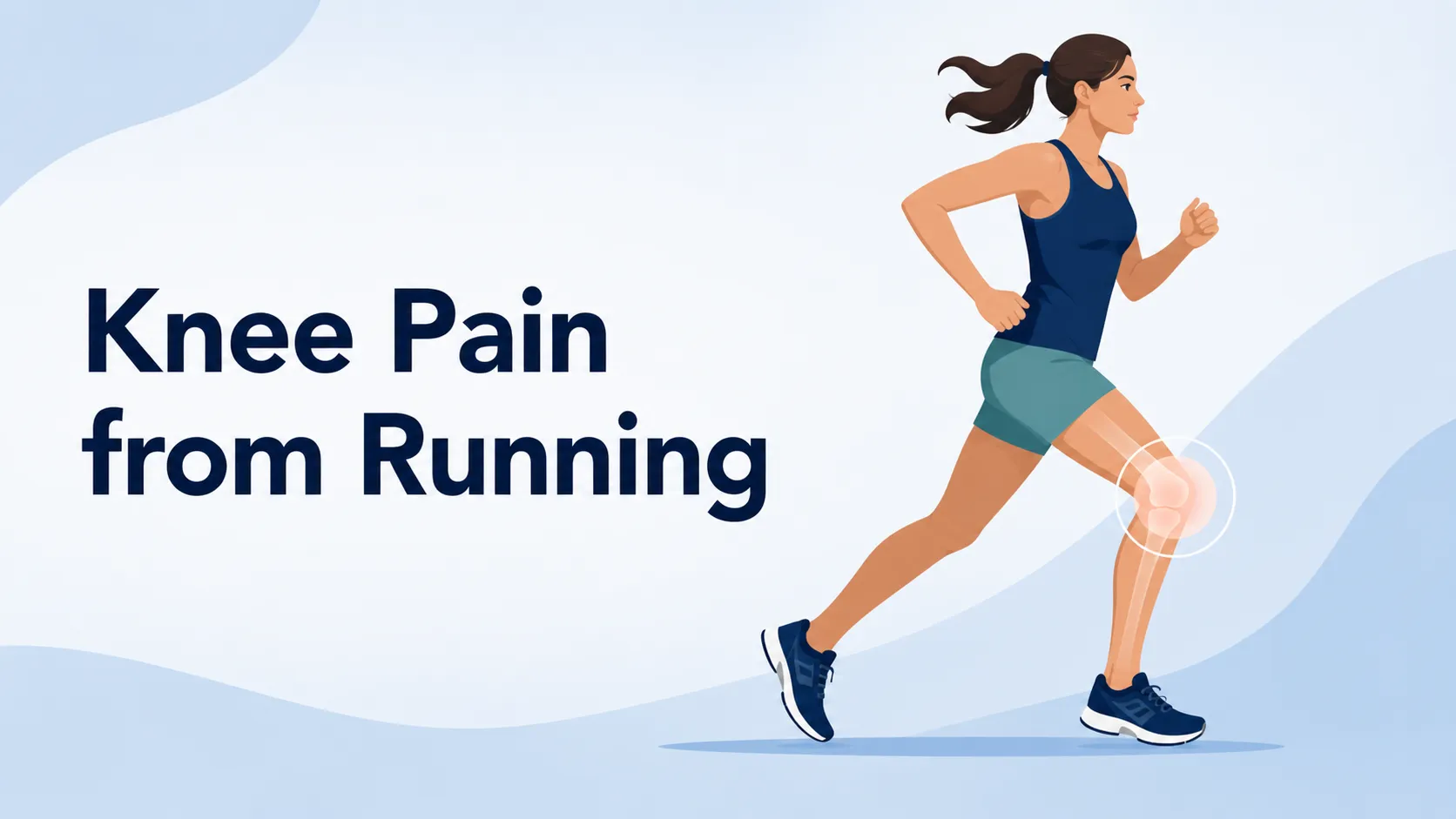
Knee pain from running is one of the most common issues we see in active adults and recreational athletes. It can show up when you are building mileage, returning to running after time off, or trying to push your pace or distance.
In many cases, there is no single moment where something goes wrong. The discomfort tends to build gradually as the knee handles more impact and repetition than it is currently prepared for. You might notice it halfway through a run, on hills, or later in the day after you finish.
This does not always mean you need to stop running completely. It usually means your knee needs a better balance of load, recovery, and strength to handle your current training.
This article explains what knee pain from running usually means, why it develops, and how physical therapy can help you return to running.
Knee Pain from Running Basics
Knee pain from running is discomfort that develops when the knee is exposed to more repetitive impact and load than it can currently tolerate. It usually builds over time rather than coming from a single injury.

With each step, force travels from the ground up through the foot, ankle, and knee. Running multiplies that load because it is repeated hundreds or thousands of times in a single session. When the body is not prepared for that demand, the joint can become sensitive.
The pain can show up in different areas of the knee, including around the kneecap, along the sides, or just below it. What matters most is how it responds to running and daily movement.
In most cases, the knee itself is not damaged. Instead, the joint is becoming irritated because the surrounding muscles and joints are not sharing the load as well as they could. This is why symptoms often improve when strength, mobility, and training load are adjusted.
What Causes Knee Pain When Running?
Running repeatedly stresses the knee. When training volume, intensity, or terrain changes faster than the body can adapt, symptoms can develop.
This often happens when mileage increases, speed work is added, or hills are introduced too quickly. Even small changes can add up when repeated hundreds or thousands of times in a single run.
The knee does not work in isolation. The hip, ankle, and foot all help absorb and distribute force. If those areas are not contributing well, the knee may take on more stress than it should.
Most runners are dealing with a mix of training changes and physical limitations rather than a single clear cause.
Common contributing factors include:
- Rapid increase in mileage or intensity
- Changes in running surface or terrain
- Limited hip or ankle mobility
- Weakness in the hips or quadriceps
- Poor recovery between runs
- Changes in footwear or running routine
These factors tend to overlap. For example, a runner might increase mileage while also running on varied terrain and experiencing reduced recovery. Over time, that combination can be enough to irritate the knee, even if each change alone seems manageable.
What Does It Feel Like?

Knee pain from running can show up in different ways depending on the person and their training.
Some runners feel pain during the run itself, especially as the distance increases. Others feel relatively fine while running, but notice stiffness, soreness, or irritation later in the day or the next morning. It is also common to feel symptoms when going up or down stairs, squatting, or after sitting for a while.
Many runners can point to a pattern once they start paying attention. The knee may feel consistent early in the run, then change as fatigue builds or distance increases. In other cases, the run feels manageable, but the knee becomes more noticeable afterward.
Common symptom patterns include:
- Pain around or behind the kneecap during or after running
- Discomfort when going up or down stairs
- Stiffness after sitting for long periods
- Pain that starts later in a run rather than right away
- Aching or soreness later in the day or the next morning
These patterns matter because they show how your knee is responding to load over time. Two runners can feel pain in the same location but require different adjustments depending on when and how the symptoms appear.
How Symptoms Change During Activity
One of the most useful things we look at is when symptoms show up and how they change with different types of movement.
Some runners feel fine at the start of a run, then notice discomfort building as distance increases. Others feel stiffness early that improves as they warm up, but symptoms return later in the day. In some cases, the run itself feels manageable, but the knee becomes more noticeable once activity stops.
Terrain and pace can also shift how the knee responds. Hills, faster efforts, or longer runs tend to bring symptoms on sooner.
You might also notice that the same run feels different depending on recovery. A session that feels fine one day may feel more difficult the next if the knee has not fully settled.
These patterns help us understand how well your knee is tolerating load over time. They also make it easier to adjust training to build tolerance rather than repeatedly triggering symptoms.
Why Knee Pain Often Develops Gradually
Most running-related knee pain does not come from a single moment. It builds over time as small amounts of stress are repeatedly experienced without sufficient recovery or adaptation.
Each run adds to the total demand placed on the knee. That demand is influenced by distance, pace, terrain, and frequency. When those factors stack up, the knee can become more sensitive even if no single run felt excessive.
Adaptation takes time. Muscles, tendons, and joints respond to consistent training, but they need recovery between sessions to keep up with those demands. When recovery is limited, the knee may not fully settle before the next run, leading to a gradual increase in symptoms.
This is why pain can seem inconsistent at first. One run may feel fine, while the next feels more uncomfortable under similar conditions. Over time, that variability can shift into more consistent discomfort if the underlying demand stays the same.
Understanding this pattern helps guide changes in training and recovery to allow the knee to adapt.
How Physical Therapy Evaluates Knee Pain
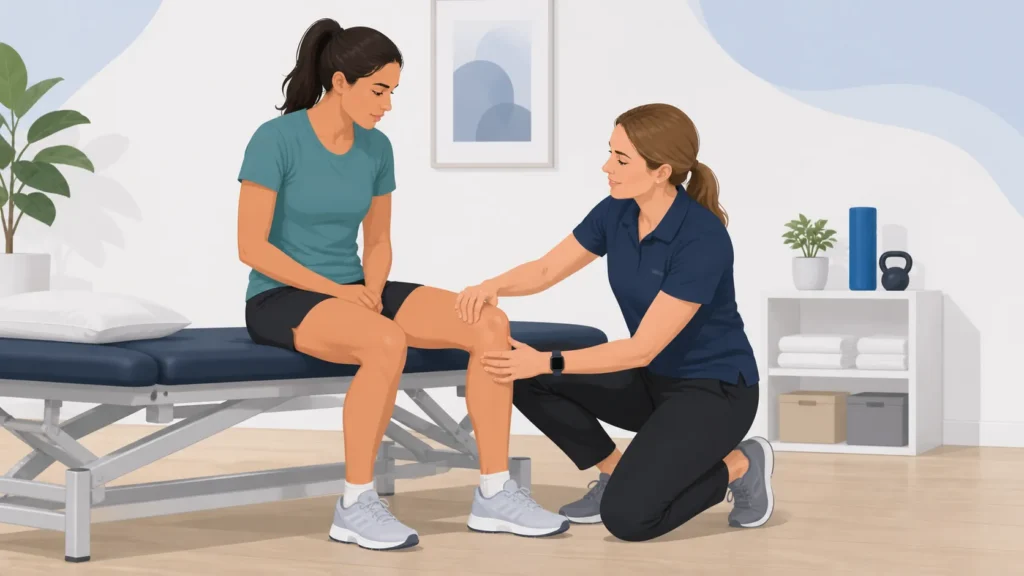
A physical therapy evaluation focuses on understanding how your knee responds to movement and load in your specific situation. The goal is not just to name the issue, but to figure out why it is happening and what is keeping it going.
We start by talking through your running history, recent changes in training, and how your symptoms behave during and after activity. Details like when the pain starts, how it progresses during a run, and how it feels later in the day help guide the rest of the evaluation.
From there, we assess how your body handles movement. This often includes tasks like squatting, stepping, balancing, and sometimes jogging. We are not only watching the knee itself but also how the hips, ankles, and trunk contribute to it.
Strength and mobility are also assessed to determine whether certain areas are not adequately supporting the knee under repeated loading.
Rather than relying on a single test, we look at how your symptoms respond across different movements. For example, if discomfort increases with repeated squatting or step-downs, that gives us useful information about how the knee is tolerating load.
A typical evaluation may include:
- Reviewing training patterns and recent changes
- Looking at how symptoms change during and after activity
- Assessing strength through the hips and legs
- Checking mobility at the hips, knees, and ankles
- Observing movement during functional tasks like squatting or stepping
From there, treatment can be more targeted and progress more easily without guessing.
How Physical Therapy Helps
Physical therapy focuses on improving your body’s ability to handle the demands of running. The goal is not just to reduce pain, but to build enough capacity so you can run consistently without symptoms returning.
Early on, the focus is on calming irritation and adjusting load. This may involve modifying your running volume, changing your running frequency, or temporarily avoiding movements that consistently aggravate your knee. The goal is to keep you active while reducing the stress driving your symptoms.
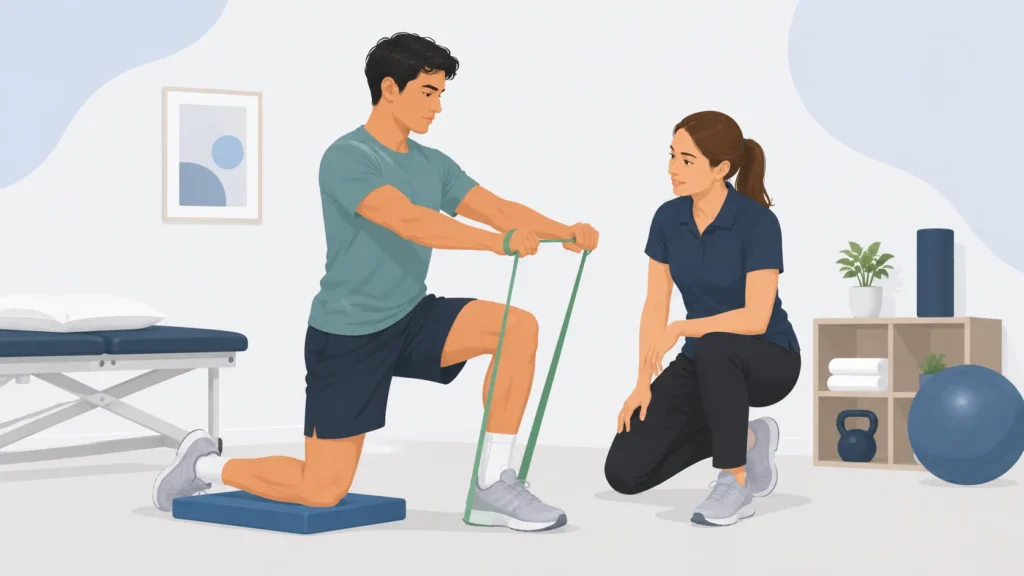
As symptoms become more manageable, treatment shifts toward addressing the underlying factors that led to the issue. This usually includes improving strength, restoring mobility, and refining your body’s ability to handle movement during tasks like squatting, stepping, and running.
A large part of this process involves improving how your body distributes load so the knee doesn’t have to do more than it needs to.
Common areas we focus on include:
- Improving strength in the hips and legs
- Restoring mobility at the hips, knees, and ankles
- Improving control during single-leg movements
- Gradually reintroducing running load
- Building tolerance to distance, pace, and terrain
Rehabilitation is typically progressive and based on how your symptoms respond over time.
Early on, the goal is to reduce irritation and find an activity level that feels manageable. As that improves, the focus shifts toward building strength and improving movement quality so the knee can handle more demand. Later, running is reintroduced and progressed in a controlled way so you can return to your usual routine without setbacks.
This progression is adjusted based on how your knee responds, helping avoid pushing too quickly and causing symptoms to return.
Returning to Running Safely
Returning to running is not just about waiting for pain to go away. It involves gradually rebuilding your tolerance to impact and repetition so the knee can handle consistent training again.
Most runners benefit from starting with a reduced version of what they were doing before symptoms began. This might mean shorter distances, slower pacing, or fewer running days per week. The goal is to find a level at which symptoms remain manageable during and after activity.
Once you find that starting point, the next step is building consistency. Running the same manageable distance a few times per week is more effective than jumping between good days and bad days.

From there, running progresses in a controlled way. Distance is usually increased first, followed by pace or terrain. For example, it is often better to tolerate a steady distance on flat ground before adding hills or speed work.
As tolerance improves, the knee should feel more predictable. You may still notice some awareness during or after runs, but it should not continue to escalate or limit your ability to train.
Throughout this process, it helps to pay attention to how your knee responds over the next 24 hours. If symptoms stay stable, progression can continue. If symptoms increase and linger, it is usually a sign that the current level is too much and needs to be adjusted.
Consistency matters more than pushing through. Small, steady increases tend to work better than large jumps followed by setbacks.
When to See a Physical Therapist
It can be helpful to get your knee assessed if symptoms are not improving or are starting to interfere with your ability to run consistently.
Some soreness with training changes can be normal. The difference is when symptoms linger, increase, or begin to affect other parts of your routine, like walking, stairs, or sitting.
You may benefit from a physical therapy evaluation if:
- Pain is limiting how far or how often you can run
- Symptoms last longer than a couple of weeks without improvement
- Pain is gradually getting worse instead of stabilizing
- You are adjusting your training but not seeing progress
- The issue improves, then returns when you try to build back up
A physical therapist can help identify what is contributing to the problem, not just where the pain is. This usually leads to a more direct plan to improve tolerance and get back to running without repeating the same cycle.
Getting PT Treatment for Knee Pain
Knee pain from running is common, but it is usually manageable with the right approach. Most cases come down to how the knee handles repeated demands over time, not to a serious injury.
The key is not just reducing symptoms but improving your body’s tolerance to running. Small adjustments in training and strength can make a meaningful difference.
If your knee is limiting your activity or not improving on its own, scheduling a physical therapy evaluation can help you move forward with a clear and practical plan.
Tags

About the Author
Dr. Traci Smiley, DPT
Traci is a licensed physical therapist and owner of Calibration Physical Therapy, serving the Kansas City area. A Board-Certified Orthopedic Clinical Specialist with advanced training in manual therapy and strength conditioning, she helps individuals overcome pain and return to what they love.