What Is Instrument-Assisted Soft Tissue Mobilization?
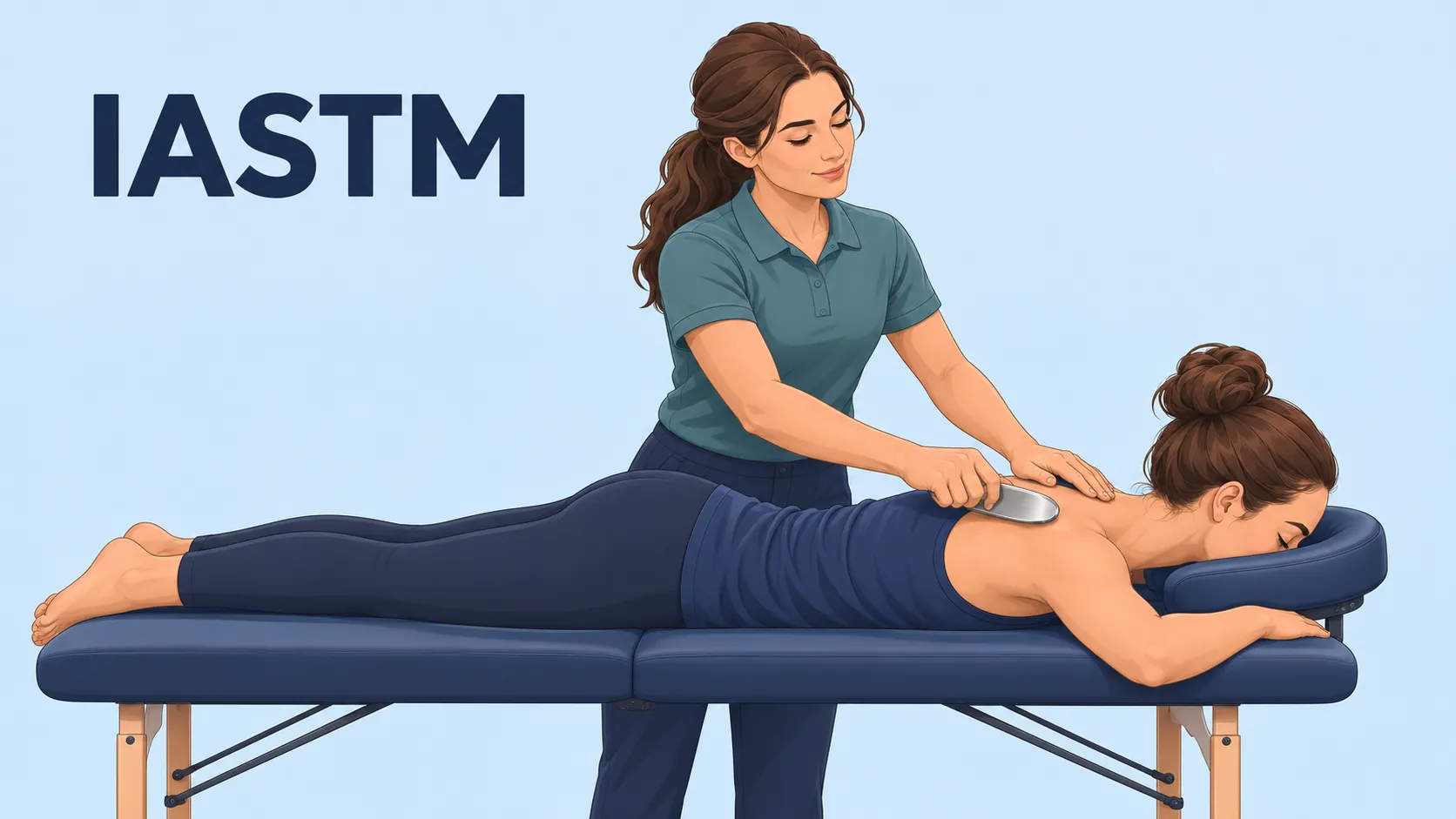
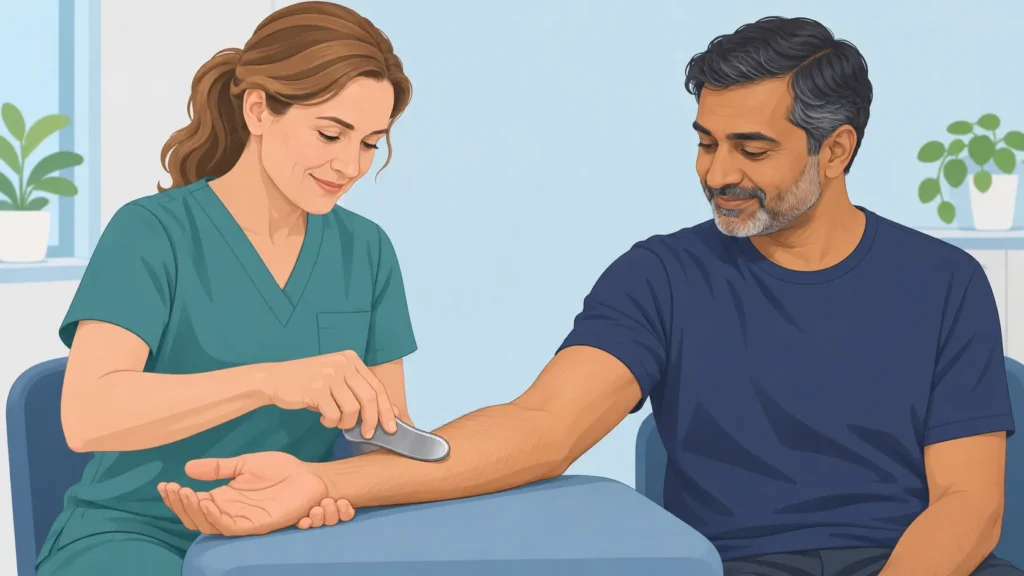
Instrument-assisted soft tissue mobilization (IASTM) is a manual therapy technique in which a physical therapist uses a smooth handheld tool to apply pressure as it glides over your skin. Your therapist can adjust the angle and pressure based on the area being treated and how it feels to you.
A therapist may try IASTM when pain or stiffness makes a specific movement difficult. For example, if turning your head to check a blind spot feels limited, your therapist might ask you to turn your head before treatment, then repeat the movement afterward. They’ll see how far you can turn and ask whether the motion feels easier. That gives you both a way to judge whether the technique helped with something you actually do.
What Can IASTM Help With?
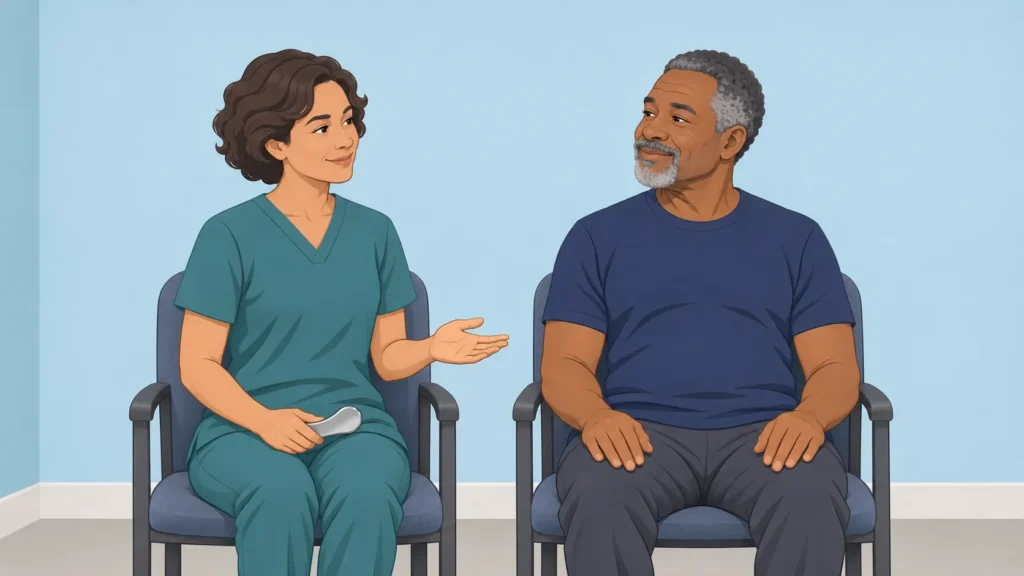
IASTM may help reduce pain or make it easier to move a joint in the short term. A 2026 review of randomized trials found improvements in pain and range of motion across several musculoskeletal conditions. The studies varied in who they treated, how they used the technique, and how they measured results. The evidence for improvements in everyday function was less certain.
What researchers compare IASTM with matters, too. In a 2025 trial involving women with neck and upper shoulder muscle pain, both groups exercised. One group also received IASTM, while the other received a simulated version of the treatment. The IASTM group reported greater improvement in how much neck symptoms interfered with daily activities, while pain improved by a similar amount in both groups.
Can IASTM Break Up Scar Tissue After Surgery?
There’s limited evidence that IASTM physically breaks up scar tissue after surgery. In a 2025 trial of 33 people recovering from rotator cuff repair, those who received IASTM alongside standard rehab had greater short-term improvements in pain, shoulder motion, and function than those who received standard rehab alone. The study didn’t measure changes in scar tissue or how long it took people to recover.
Scar tissue is part of normal healing. If you feel a pull near an incision when you move, your therapist may check how sensitive the area is, how the skin moves, and how much motion is available at the joint. Those findings help your therapist decide where to focus treatment.
After surgery, your therapist considers how the incision and underlying tissues are healing and what your surgeon has cleared you to do. An open incision or wound is a reason to avoid using the tool at that site. Even once the skin has closed, your surgical restrictions still guide which movements and treatments are appropriate. 2025 expert consensus on IASTM precautions
What to Expect if Your Physical Therapist Uses IASTM
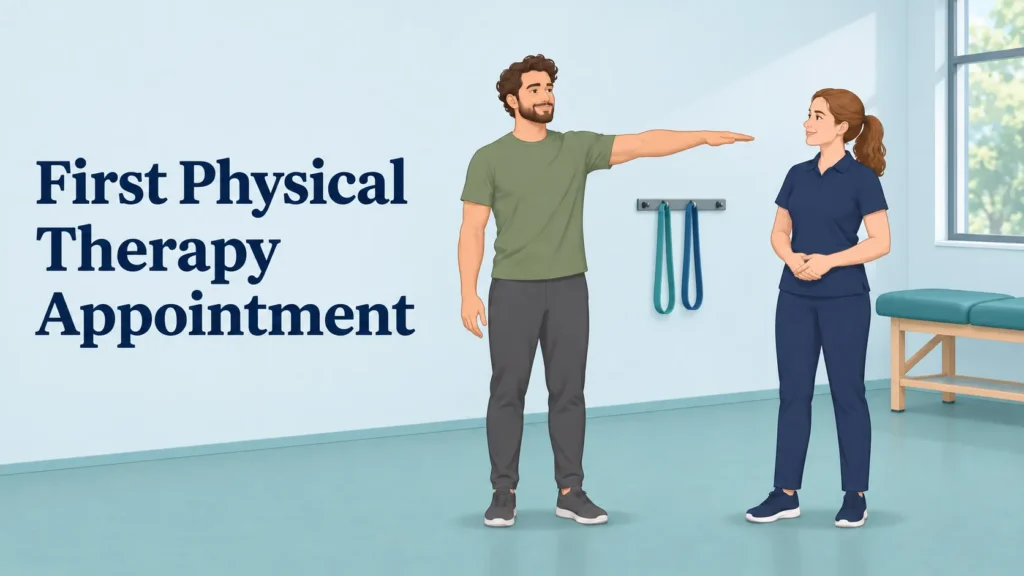
Your therapist will ask what you’re having trouble doing and look at how you do it. If putting on a jacket is difficult after shoulder surgery, they might compare how far you can move the arm on your own with how far it moves with support, within the limits of your rehab plan. If you can move farther with support, they may start with assisted movement. If the motion is available but you tire quickly using it, the plan may put more emphasis on building strength as your recovery allows.
During IASTM, you’ll feel the tool glide across your skin. The pressure may feel more noticeable in a tender area. Tell your therapist if it feels sharp or makes you tense up so they can adjust the pressure, move to another area, or stop.
Afterward, your therapist may ask you to repeat part of the movement you had trouble with. If reaching into a sleeve feels easier, you can practice that motion while it’s more comfortable. Over the next few visits, a more meaningful sign of progress might be getting dressed with less help or reaching a shelf more comfortably once you’re cleared to do so. Your therapist can use that information to decide whether to keep IASTM in the plan and how to progress your exercises.
Frequently Asked Questions
Is IASTM the same as Graston or gua sha?
Graston is a named approach to IASTM. Gua sha also uses a tool that strokes the skin, but it comes from traditional East Asian medicine and has its own methods and goals. In physical therapy, the tool is selected and used based on your exam and the movement you’re working on.
Is IASTM supposed to hurt or leave bruises?
You may feel pressure or tenderness during treatment. Bruising isn’t a treatment goal. If it occurs, your therapist can reassess the pressure or technique. Tell your therapist if you bruise easily, take a blood thinner, or notice bruising after a session. 2025 expert consensus on IASTM precautions
Can IASTM help with an old surgical scar?
It depends on what you feel and what it keeps you from doing. If a healed scar is sensitive to clothing, your therapist may start with ways to help the area tolerate touch. If the main issue is pulling during a specific movement, they may assess how the skin and joint move before deciding whether any scar treatment is worth trying.
How long do the effects of IASTM last?
There’s no reliable timeline. Many studies measure outcomes right after treatment or at the end of a short rehab course. If you notice a change, pay attention to whether it helps during the activity that usually bothers you and whether the improvement lasts the next time you do it. 2026 systematic review of IASTM for musculoskeletal conditions
Should I use an IASTM tool on myself at home?
Ask your physical therapist before using a tool on a surgical area or persistent pain. If they recommend home care, ask them to show you where to work, how much pressure to use, and when to stop. Your home plan may start with a movement you can already do comfortably.
Final Thoughts
If IASTM makes it easier to practice a movement that’s been difficult, it may be worth including in your rehab plan. If the relief fades before it helps you move more comfortably or practice your exercises, tell your therapist so you can decide together whether to keep using it.
Get Help With Stiffness After an Injury or Surgery
If pain or stiffness is keeping you from an activity you want to get back to, a physical therapist at Calibration Physical Therapy in Overland Park, Kansas, can evaluate your movement and discuss whether IASTM fits your rehab plan.
Call 913-914-7174 or schedule an evaluation online.
Tags

About the Author
Dr. Traci Smiley, DPT
Traci is a licensed physical therapist and owner of Calibration Physical Therapy, serving the Kansas City area. A Board-Certified Orthopedic Clinical Specialist with advanced training in manual therapy and strength conditioning, she helps individuals overcome pain and return to what they love.