What Is the Nervous System?
The nervous system is the network of your brain, spinal cord, and nerves. It serves several functions related to how you feel and move. For example, it lets you feel the ground under your feet, reach for a glass, and adjust your balance when a bus starts moving. It also helps regulate heart rate and digestion and supports functions such as sleep, memory, and attention.
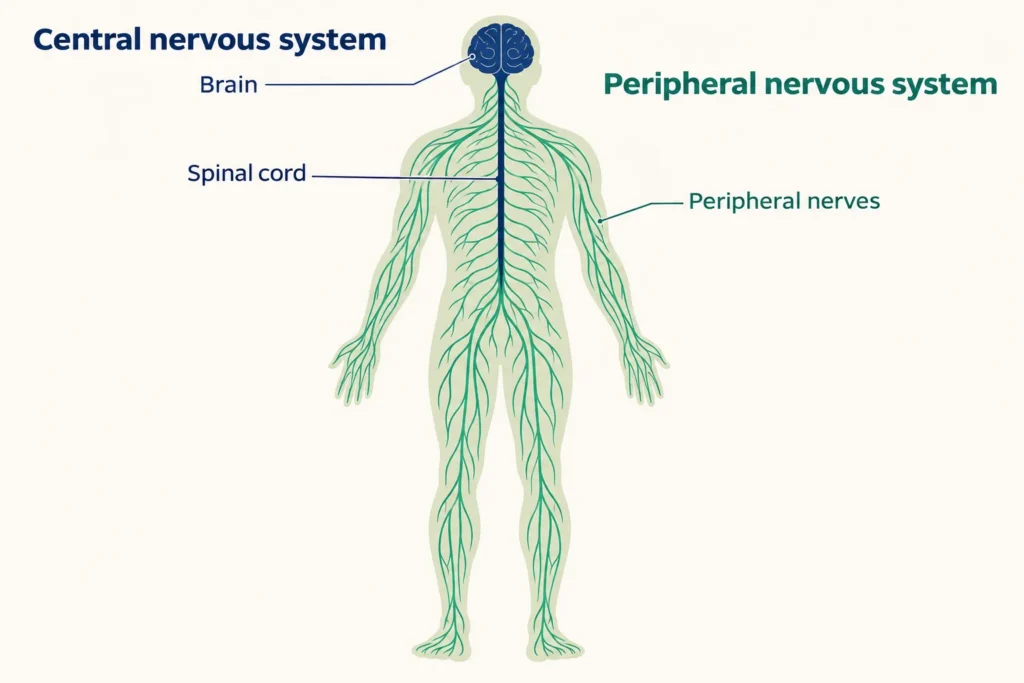
The central nervous system consists of the brain and spinal cord. Your brain processes information and helps plan what to do with it. Your spinal cord carries signals between your brain and much of your body and coordinates some quick responses. If you touch a hot pan, circuits in the spinal cord can start pulling your hand away before you’ve had time to decide what to do.
The peripheral nervous system includes the nerves outside the brain and spinal cord. Some of their fibers carry sensory information inward, such as pressure under your foot. Others carry signals outward to muscles and organs. When you step off a curb, both directions matter. You send signals to move your leg, then use feedback from your foot and ankle to adjust as you take your weight. See the NIH overview of the parts of the nervous system for more.
Everyday Functions of the Nervous System
The nervous system is involved in both the things you choose to do and the changes your body makes automatically. During a brisk walk, you choose your route and pace while your body adjusts your heart rate, breathing, and sweating. Several functions are at work at once.
| Function | What the nervous system helps you do | Everyday example |
|---|---|---|
| Sensation | Detect touch, pressure, temperature, and body position | Feel a pebble in your shoe and tell where it is |
| Movement and balance | Activate muscles in sequence and adjust as conditions change | Steady yourself when the ground slopes under one foot |
| Heart rate and blood pressure | Adjust circulation as you change position or activity | Maintain blood flow when you stand up from a chair |
| Digestion | Coordinate muscle contractions and secretions that help move and break down food | Move a meal through your digestive tract while you go about your day |
| Sleep and alertness | Help regulate when you feel sleepy, when you wake, and how alert you are | Become more alert after waking and feel sleepy again at night |
| Learning and memory | Store information and refine skills through practice | Get smoother at a new dance step after repeating it |
The autonomic nervous system helps regulate functions such as circulation and digestion. When you stand up from a chair, gravity briefly shifts more blood toward your legs. Your nervous system responds by tightening some blood vessels and adjusting your heart rate. These changes help maintain blood flow to your brain while you’re thinking about where to go next.
The brain also helps regulate when you feel alert or sleepy. Light reaching your eyes helps set your internal clock, which helps time your sleep and wake cycles. If you’ve ever flown across several time zones and felt wide awake at local bedtime, you’ve felt what happens when that clock is still running on your old schedule.
Movement and Balance
If you reach for the next stair without looking down, you rely in part on proprioception, your sense of where your body parts are and how they’re moving. Feedback from muscles, tendons, and joints helps you judge how far your leg has moved. You can use that information to place your foot even when a laundry basket blocks your view of the steps.
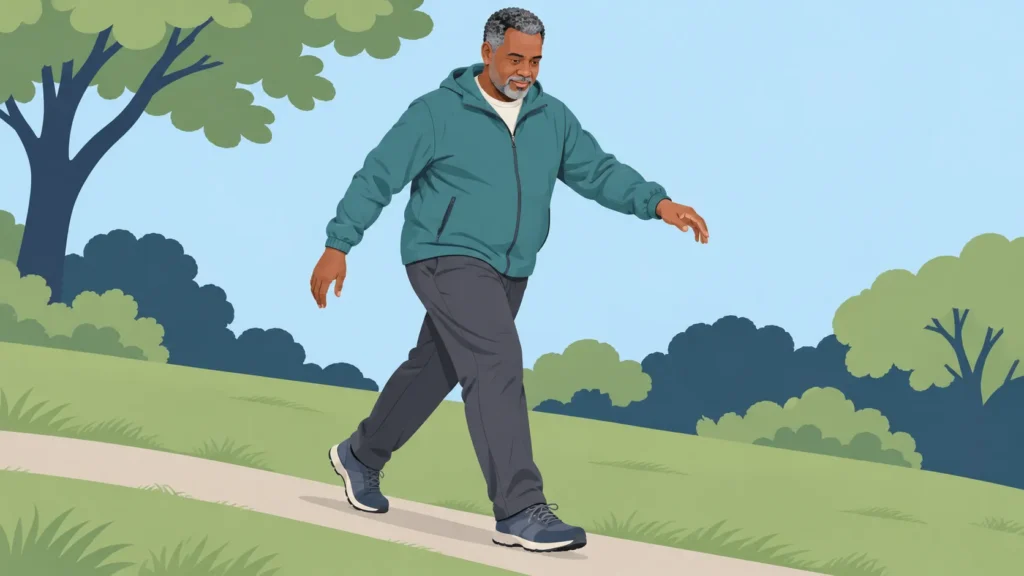
Your eyes help you judge where you are in relation to the ground or the room around you. The balance organs in your inner ears sense head movement and tilt. In a dim hallway, where there are fewer visual cues, you rely more on those signals and on what you feel through your feet and legs. On a rocky trail, the same sources of information help you place your foot and take a quick step to steady yourself if the ground shifts.
These demands help explain why someone can feel steady walking around the house but still feel unsure hiking after an ankle injury. A trail asks you to place your foot on changing surfaces and shift your weight quickly. In physical therapy, that difference can guide which tasks to assess and what to practice.
Pain, Sensation, and Strength
If you roll your ankle, sensory nerves can signal that tissues have been stretched or injured. Your nervous system processes those signals, and the pain you feel may prompt you to stop and take weight off the ankle. Pain intensity alone can’t tell you how much tissue damage occurred. A clinician also considers how the injury happened, how well you can use the ankle, and what the exam shows.
- Tingling is an added sensation, like the pins and needles you might feel after sitting with a leg tucked under you.
- Numbness is reduced or absent sensation. You might notice it when the fabric of a sock feels less distinct against one foot.
- Weakness is difficulty producing force, such as struggling to lift the front of your foot to clear a step.
These changes can occur together. If they keep happening, notice where you feel them, what you were doing when they started, and whether they settle after you change position or stop the activity. That pattern helps guide what a clinician checks.
What a PT Checks
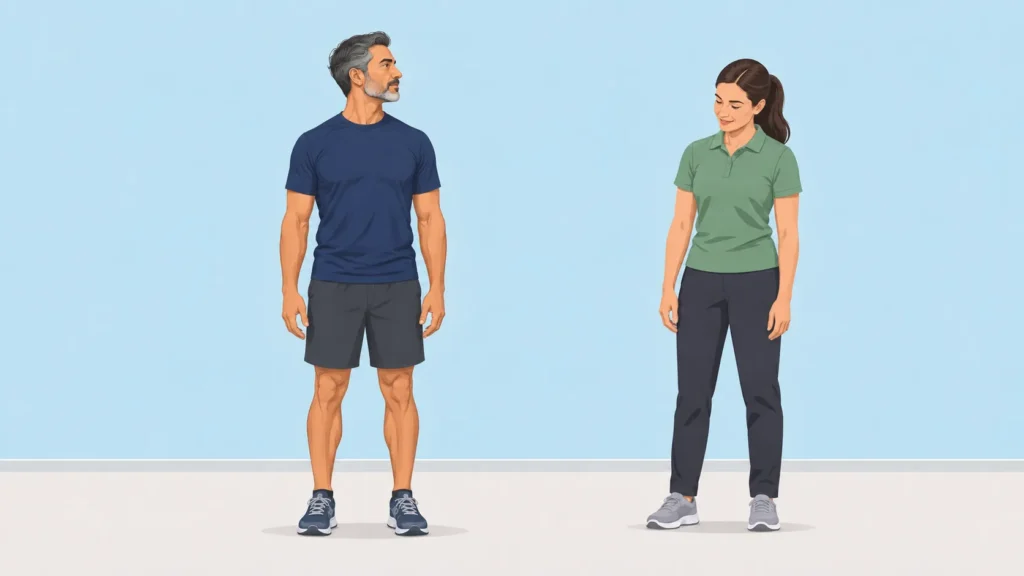
A physical therapist starts by asking what you’ve noticed and how it affects what you do. If your fingers start tingling during a bike ride, the therapist may ask which fingers are affected, how long the tingling lasts, and whether you also notice it while typing or sleeping. If it affects your grip on the handlebars or your ability to brake, that helps the therapist decide what you can safely practice.
The exam may include checks of sensation, strength, and reflexes. The therapist might lightly touch the same spots on each hand and ask whether the touch feels different from side to side. They may also check how much force you can produce with your fingers or wrist, look at how your neck and arm move, or ask you to show how you grip the handlebars. They use those findings together with your symptom history to decide what to look at next.
If the tingling settles with a change in grip and the exam shows no clear loss of strength or sensation, the therapist may start by looking at how long you stay in that position and how much weight you put through your hands. Persistent numbness or worsening grip weakness can shift the priority to medical follow-up before you build back up to longer rides.
Recurring symptoms that interfere with activity are a reason to get evaluated. Call 911 right away for sudden weakness or numbness on one side of the body or sudden trouble speaking. These can be signs of a stroke, even if the symptoms pass. See the CDC stroke signs and symptoms for reference.
How Rehab Helps
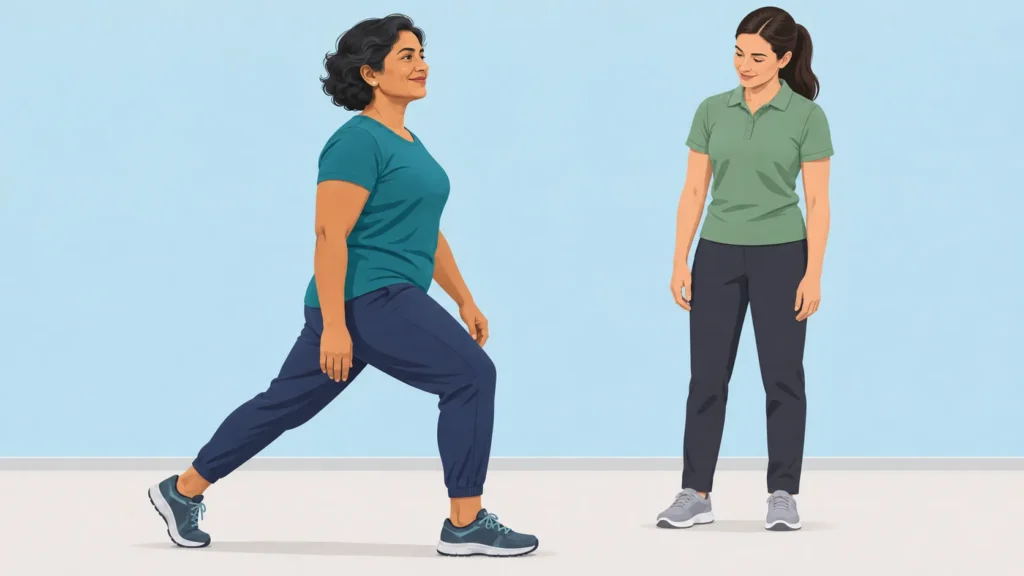
Rehab gives you a way to practice the part of a movement that’s giving you trouble. After an ankle injury, a trail runner might feel steady on flat ground but hesitate when stepping down from a rock. A physical therapist may start with a low step and some hand support. That gives the runner room to practice controlling the landing and adjusting their weight as the foot meets the ground.
As that gets easier, the therapist can change the height of the step, the direction of the landing, or the surface underfoot. Each change gives the runner practice using the same skill under slightly different conditions. If the runner handles single steps well but gets unsteady late in a run, practice may focus on repeating those movements as fatigue builds.
Progress shows up on the trail. The runner may start to step down with less hesitation, recover more easily when the ground shifts, or feel steadier on familiar terrain near the end of a run. Those changes help the therapist decide when to add distance or more demanding terrain.
Frequently Asked Questions
Is the spinal cord the same thing as the spine?
The spine is the column of bones and other structures that supports your body. The spinal cord is nervous tissue that runs through a canal within the spine. The bones help protect the cord, and spinal nerves pass through openings between the vertebrae.
Can stress change how my body feels?
Yes. The nervous system helps coordinate the stress response, which can affect how fast your heart beats, how much you sweat, and how tense your muscles feel. If a symptom keeps recurring or affects what you can do, its timing and pattern are still worth discussing with a healthcare professional.
Why does my foot fall asleep when I sit?
Sitting with a leg tucked under you can put pressure on nerves and temporarily change sensation. The pins and needles usually fade after you shift position. If the feeling lingers, keeps happening without an obvious trigger, or comes with weakness, bring it up with a healthcare professional.
Can nerve symptoms show up far from where they start?
Yes. Irritation of a nerve root in the neck can sometimes be felt in the arm or hand. A problem closer to the hand can produce symptoms in some of the same areas. A clinician considers where you feel the symptoms alongside what brings them on and what the exam shows.
Can I move normally and still have numbness?
Yes. Nerves carry signals for sensation and signals that activate muscles. A change in feeling can occur even when strength seems normal. For example, you might still be able to button a shirt while noticing that the fabric feels less distinct against one fingertip. If the numbness persists or keeps returning, mention it during an evaluation.
Final Thoughts
Standing up from a chair brings several jobs of the nervous system together. You decide to stand, feel your weight shift through your feet, and adjust your balance as you come upright. At the same time, your body adjusts your circulation. In physical therapy, looking at what changes during a familiar task can help identify which part of the movement needs attention and what to practice.
Get Help With Tingling, Numbness, or Weakness
If tingling, numbness, or weakness keeps interrupting work, exercise, or daily activity, schedule an evaluation with Calibration Physical Therapy in Overland Park, Kansas. A physical therapist can assess what’s changing and help you decide on the next step.
Tags

About the Author
Dr. Traci Smiley, DPT
Traci is a licensed physical therapist and owner of Calibration Physical Therapy, serving the Kansas City area. A Board-Certified Orthopedic Clinical Specialist with advanced training in manual therapy and strength conditioning, she helps individuals overcome pain and return to what they love.