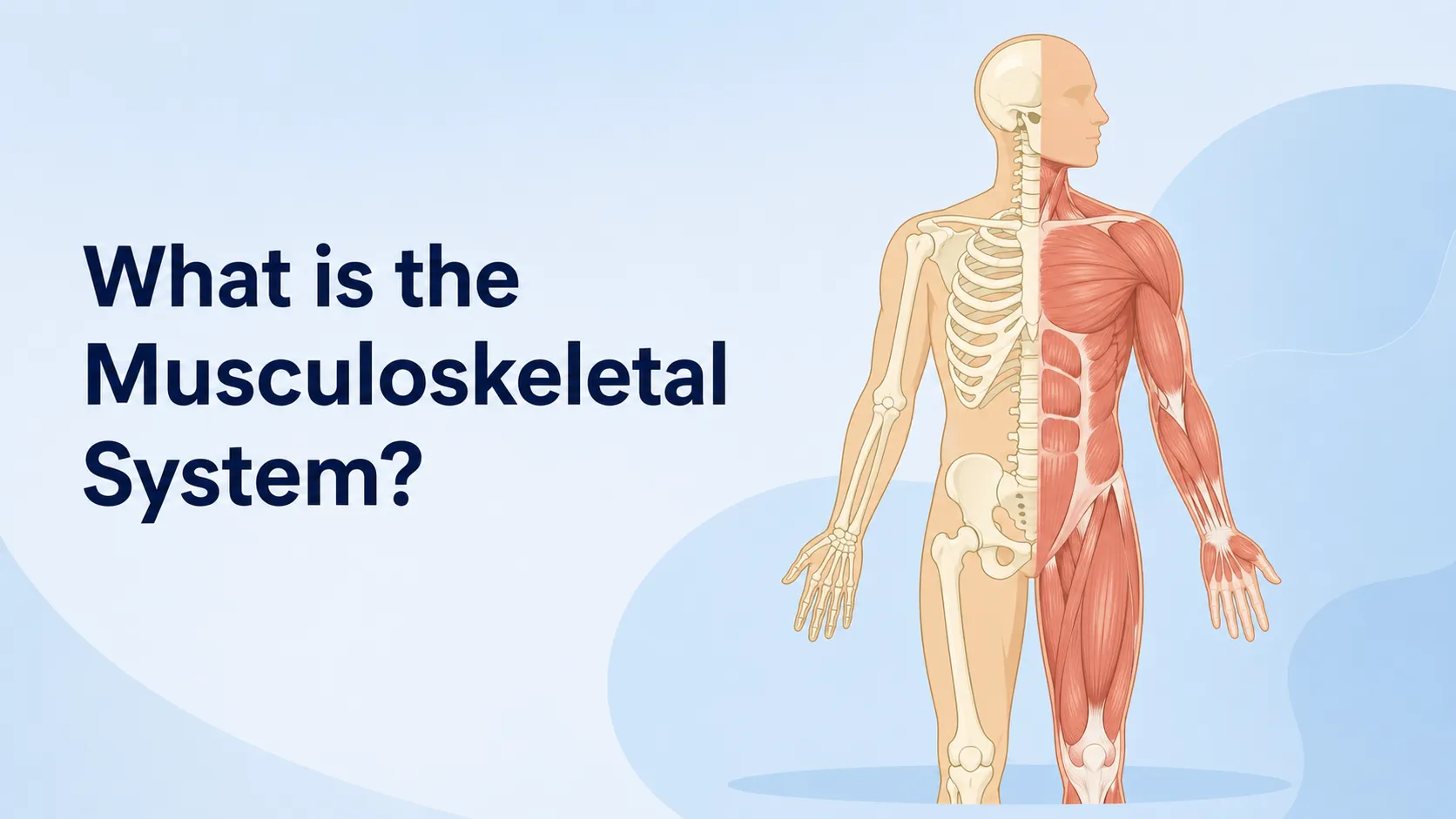
The musculoskeletal system allows your body to move, maintain posture, and perform everyday physical tasks. It includes bones, muscles, joints, tendons, ligaments, and connective tissues that work together to produce motion and maintain stability.
Most people rarely think about the musculoskeletal system until something starts to hurt. Pain during running, stiffness after sitting, or shoulder discomfort when lifting are often early signs that the body’s movement system is being asked to handle a load it cannot comfortably tolerate.
For active adults and recreational athletes, this system carries the physical demands of daily life. Walking, lifting, reaching, running, and even sitting at a desk all place a load on the musculoskeletal system.
Understanding how the musculoskeletal system works can help explain why certain injuries develop and how physical therapy helps people return to activity safely.
What Is the Musculoskeletal System?
The musculoskeletal system is the framework and movement system of the body. It combines structural support with the ability to generate motion.
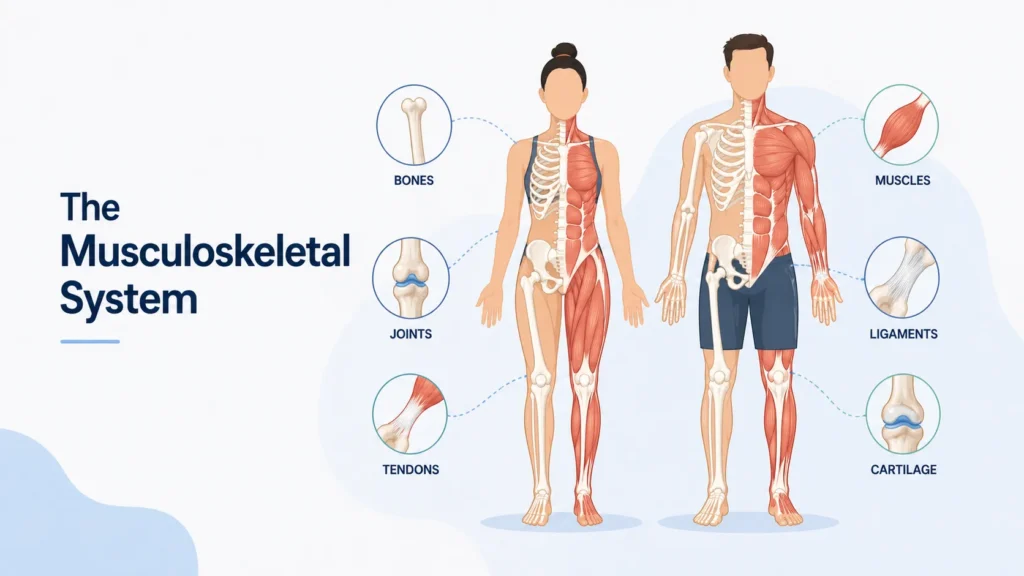
Bones provide the structure that supports the body. Muscles create movement by contracting and pulling on bones through tendons. Joints allow bones to move relative to one another, while ligaments help stabilize those joints.
These tissues work together during nearly every physical activity. Even simple movements, such as standing up from a chair, require coordinated muscle contraction, joint motion, and load transfer through the skeleton.
The musculoskeletal system allows you to:
- Stand and maintain posture
- Walk, run, and change direction
- Lift and carry objects
- Reach, bend, and twist
- Absorb and transfer forces during movement
When musculoskeletal health is good, these movements feel automatic. When tissues become irritated or overloaded, pain and stiffness can start to limit activity.
The Main Parts of the Musculoskeletal System
Several different tissues make up the musculoskeletal system. Each plays a specific role in movement and stability.
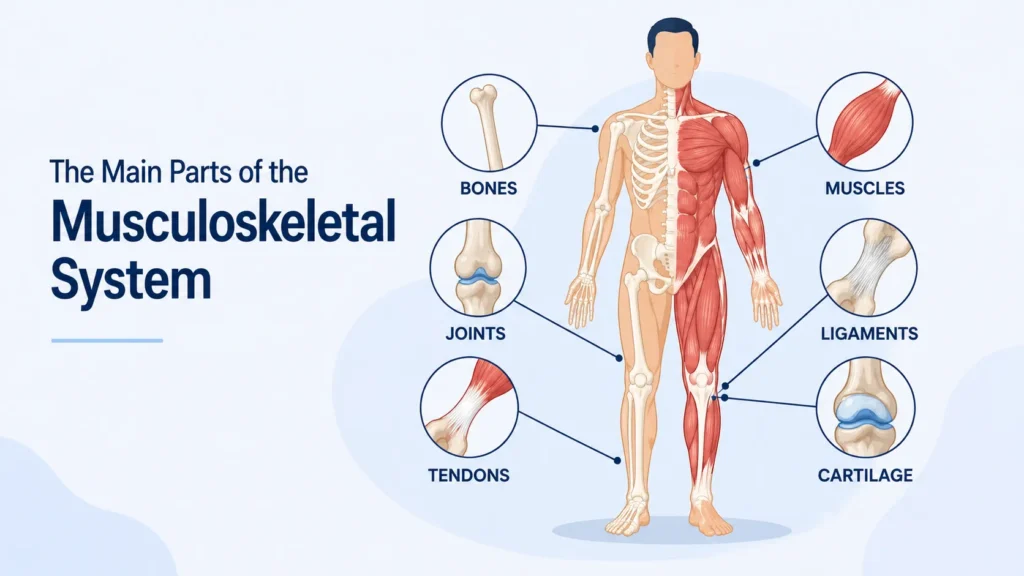
Bones form the structural foundation of the body. They form the skeleton’s shape and provide attachment points for muscles.
Muscles generate force and produce movement. They contract to move joints and control motion during activity.
Joints connect bones and allow them to move relative to one another. Some joints allow large ranges of motion, such as the shoulder or hip, while others are designed for stability, such as the spine.
Ligaments connect bones to other bones. Their main role is to provide joint stability and guide normal movement.
Tendons connect muscles to bones. They transfer the force created by muscle contraction to move joints.
Cartilage covers the surfaces of bones inside joints. It helps joints move smoothly and distributes load during movement.
Here’s a summary of the musculoskeletal system’s components:
| Structure | Primary role |
|---|---|
| Bones | Provide structure and support |
| Muscles | Generate force and movement |
| Joints | Allow motion between bones |
| Tendons | Transfer muscle force to bones |
| Ligaments | Stabilize joints |
| Cartilage | Reduce friction and distribute load |
Because these tissues function as a system, a problem in one structure often affects the behavior of the surrounding structures.
How the Musculoskeletal System Supports Movement
Movement occurs when muscles contract and pull on bones across joints. The nervous system coordinates this process so that muscles activate in the correct sequence and at the appropriate intensities.
For example, lifting a box from the floor requires several joints and muscle groups to work together. The hips and knees bend to lower the body. The spine stabilizes the trunk. The shoulders and arms position the hands to grasp the object.
As the body stands up, the hips and legs generate force to raise the body while the spine and core muscles control the load through the trunk.
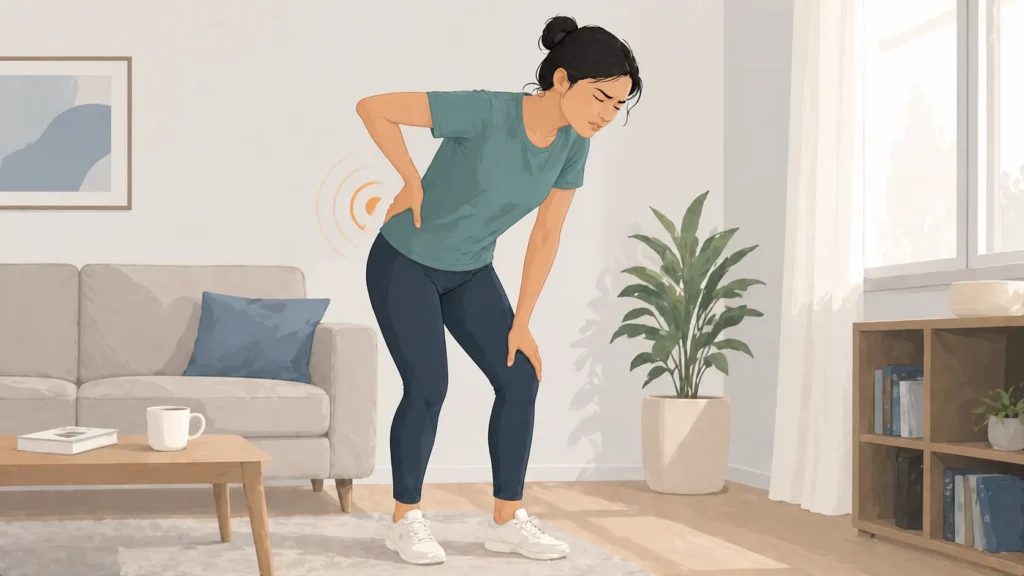
During walking or running, this process happens repeatedly and at higher speeds. Muscles absorb impact forces, joints guide motion, and connective tissues help transfer load through the body.
The musculoskeletal system also plays an important role in controlling movement, not just producing it. Muscles work together to slow down motion, stabilize joints, and keep the body balanced as forces move through the limbs and spine.
For example, when you step off a curb, your muscles absorb the impact as your foot contacts the ground. When you reach overhead to place something on a shelf, shoulder muscles stabilize the joint while the arm moves through space.
These constant adjustments allow the body to move efficiently during complex activities such as:
- Running or hiking
- Lifting objects from the floor
- Reaching overhead
- Changing direction during sports
- Carrying groceries or equipment
The musculoskeletal system is constantly adapting to these demands. When activity levels increase gradually, tissues often become stronger and more tolerant to load. When demands increase too quickly, irritation or injury may develop.
How Symptoms Develop in the Musculoskeletal System
Most musculoskeletal pain develops gradually rather than from a single event. In many cases, symptoms appear when tissues are repeatedly exposed to stress levels they cannot comfortably tolerate.
This often happens during changes in activity. A sudden increase in exercise, repetitive work tasks, or long periods in the same posture can place extra load on certain joints or muscles.
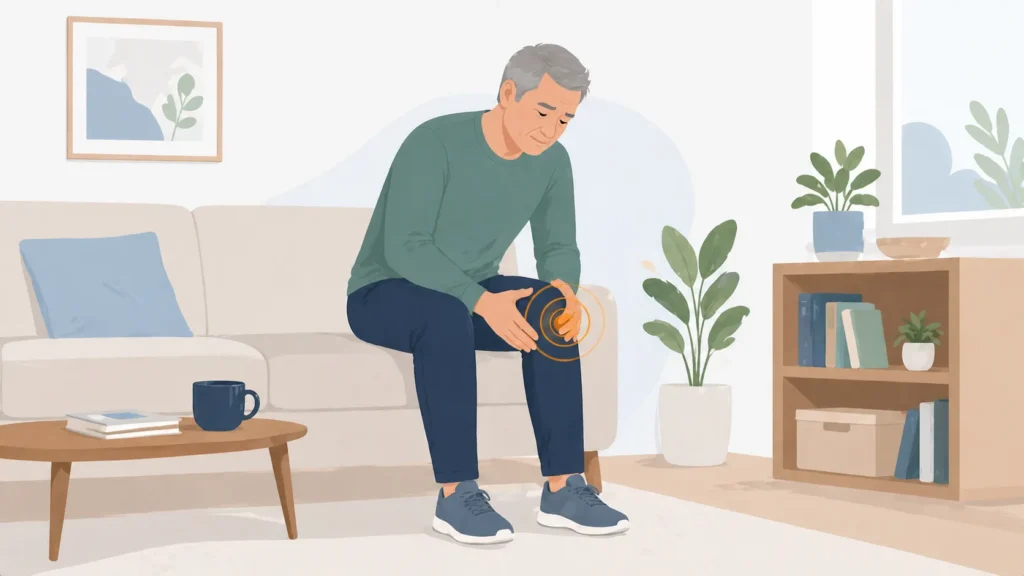
For example, someone who increases running distance quickly may develop knee pain. A person who begins a new weightlifting routine may experience shoulder irritation. Long periods of sitting and computer work can also contribute to neck pain or back discomfort.
Common factors that contribute to musculoskeletal symptoms include:
- Sudden increases in activity volume
- Repetitive movements performed frequently
- Sustained postures such as prolonged sitting
- Reduced strength or mobility in certain areas
- Previous injuries that changed movement patterns
These factors affect how load is distributed across joints and tissues. When certain muscles become fatigued or movement patterns change, nearby structures may begin handling more stress than they normally would.
Over time, this can lead to irritation in muscles, tendons, or joints. Symptoms may start as mild soreness during activity and gradually become more noticeable during everyday movements.
Many people notice that musculoskeletal symptoms follow predictable patterns during the day. Pain may increase with repeated activity and improve with rest or changes in position.
Symptoms can also change depending on how the body has been used throughout the day. Certain activities may increase discomfort, while others may temporarily relieve it.
| Activity | How symptoms may respond |
|---|---|
| Prolonged sitting | Stiffness in the neck, back, or hips |
| Walking or running | Gradual increase in joint soreness |
| Lifting objects | Pain during bending or reaching |
| Desk work | Shoulder or upper back discomfort |
| Sleep positions | Morning stiffness or soreness |
Understanding when symptoms appear and what activities trigger them is often key to identifying the underlying problem.
Why Activity Tolerance Matters
The musculoskeletal system functions best when tissues can tolerate the physical demands placed on them. This concept is often referred to as “load tolerance.”
Every tissue has a specific capacity to withstand force. Muscles, tendons, and joints adapt over time when they are exposed to gradually increasing levels of activity.
Problems often arise when activity increases faster than the body can adapt. For example, someone returning to exercise after a long break may try to resume their previous routine too quickly.
This can lead to symptoms such as:
- Tendon irritation during repetitive movement
- Joint soreness during running or jumping
- Muscle tightness during activity
- Fatigue or discomfort with lifting
On the other hand, too little activity can also affect tissue health. Long periods of inactivity may reduce strength, mobility, and endurance, making everyday tasks feel more difficult.
The goal is not to avoid movement but to restore a level of activity that the body can tolerate comfortably.
Musculoskeletal Pain vs Injury
Many people assume that musculoskeletal pain always means something in the body is seriously damaged. In reality, many symptoms develop without a major structural injury.
Tissues in the body can become irritated when they are exposed to a load beyond their capacity. This irritation may cause soreness, stiffness, or sensitivity during movement.
For example, someone who suddenly increases their running mileage may develop knee pain even without a major joint injury. Similarly, shoulder discomfort can develop after repetitive overhead work, even in the absence of a clear structural tear.
This type of pain often reflects how tissues are responding to activity rather than a single injury event.
| Situation | What may be happening |
|---|---|
| Sudden increase in running mileage | Tendons and joints adapting to increased load |
| Repetitive lifting at work | Muscles and connective tissues becoming irritated |
| Long periods of desk work | Reduced movement and increased joint stiffness |
| Returning to exercise quickly | Tissues not yet conditioned for the activity |
In many cases, symptoms improve when activity levels are adjusted, and movement patterns are improved. Physical therapy often focuses on helping the body tolerate these demands more comfortably rather than simply resting the area completely.
How Physical Therapy Evaluates Musculoskeletal Pain
A physical therapy evaluation focuses on how symptoms behave during movement and activity. Rather than focusing on a single isolated structure, the evaluation considers how different parts of the body work together.
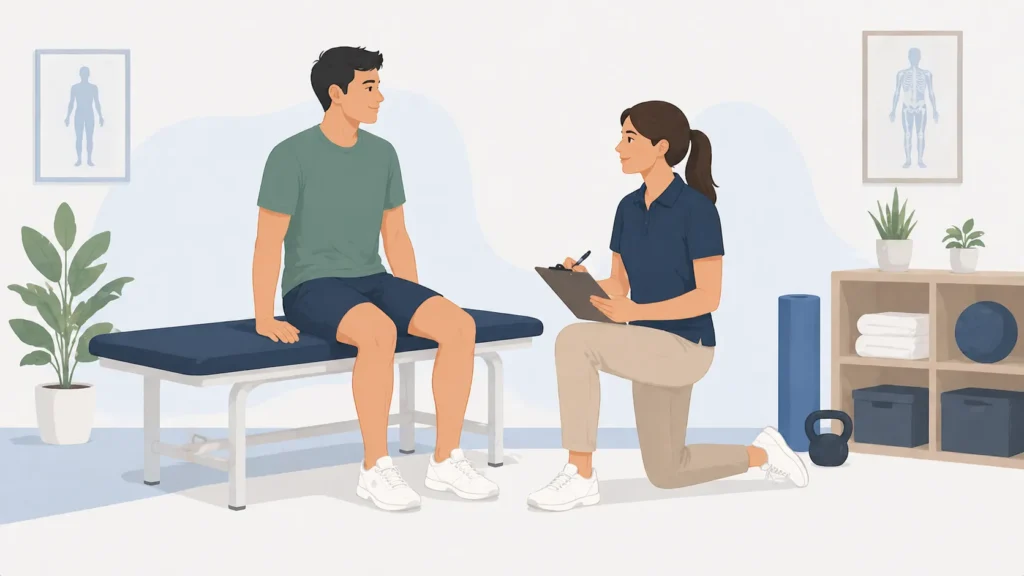
The process usually begins with a conversation about symptoms. An experienced physical therapist will ask when the pain started, which activities make it worse, and which positions or movements provide relief.
Movement testing is a key part of the assessment. Therapists often observe how someone performs common tasks such as bending, reaching, squatting, or walking.
Strength and mobility in nearby joints and muscles are also evaluated to identify areas that may be contributing to symptoms. Therapists also examine mobility and strength in nearby joints and muscles.
| Evaluation component | What it helps identify |
|---|---|
| Symptom history | When and how the symptoms developed |
| Movement testing | How joints and muscles behave during activity |
| Strength assessment | Areas of reduced support or endurance |
| Mobility testing | Stiff or restricted movement patterns |
| Functional tasks | How symptoms appear during real activities |
These findings help determine what factors may be contributing to the symptoms and guide the treatment plan.
How Physical Therapy Helps the Musculoskeletal System
Physical therapy focuses on improving the musculoskeletal system’s ability to handle movement and load. Treatment typically aims to reduce symptoms while gradually restoring activity tolerance.
Early treatment often focuses on calming irritated tissues. This may involve modifying activities, improving movement mechanics, and introducing gentle exercises.
As symptoms settle, rehabilitation shifts toward improving strength, mobility, and endurance.
Therapists typically focus on several key principles during rehabilitation:
- Improving joint mobility and movement quality
- Strengthening muscles that support the joint
- Increasing tolerance to load and activity
- Restoring coordination during functional movement
- Gradually returning to normal activities
Rehabilitation usually progresses in steps to allow tissues to adapt safely.
| Rehabilitation stage | Focus of treatment |
|---|---|
| Early stage | Reduce symptom irritability and restore basic movement |
| Middle stage | Improve strength and joint control |
| Late stage | Increase load tolerance and functional activity |
| Return to activity | Gradual return to sport or exercise |
This gradual progression allows the musculoskeletal system to rebuild tolerance to movement and physical stress.
Returning to Everyday Activity
Recovery usually involves improving how the body handles movement rather than eliminating activity altogether. In most cases, the goal is to gradually restore the body’s ability to tolerate everyday physical demands.

For example, someone recovering from knee pain may slowly return to walking longer distances, climbing stairs, or resuming a running routine. A person with shoulder pain may rebuild tolerance to reaching, lifting, and overhead activity.
This gradual progression allows tissues to adapt safely while reducing the risk of symptoms returning.
Many people benefit from small adjustments, such as:
- Taking breaks during prolonged sitting
- Varying exercise routines
- Gradually increasing training intensity
- Improving strength in supporting muscles
- Paying attention to early signs of irritation
These changes help the musculoskeletal system stay adaptable and resilient. Over time, improved strength, mobility, and coordination allow the body to handle physical demands more comfortably.
When to See a Physical Therapist
Musculoskeletal pain that persists for several weeks or limits normal activity may benefit from evaluation by a physical therapist.
Common signs that an evaluation may help include:
- Pain that interferes with exercise or daily movement
- Symptoms that worsen during specific activities
- Recurring joint or muscle discomfort
- Stiffness that limits normal motion
- Difficulty returning to activity after injury
A physical therapy evaluation can help identify what is contributing to the symptoms and develop a plan for safely returning to normal movement.
At Calibration Physical Therapy, the focus is on understanding how your body moves and how symptoms behave during activity. A physical therapy evaluation looks at the movement patterns contributing to pain and identifies ways to improve load tolerance.
From there, treatment focuses on restoring comfortable movement, rebuilding strength, and helping you return to exercise, work, and everyday activity with confidence.
Tags

About the Author
Dr. Traci Smiley, DPT
Traci is a licensed physical therapist and owner of Calibration Physical Therapy, serving the Kansas City area. A Board-Certified Orthopedic Clinical Specialist with advanced training in manual therapy and strength conditioning, she helps individuals overcome pain and return to what they love.