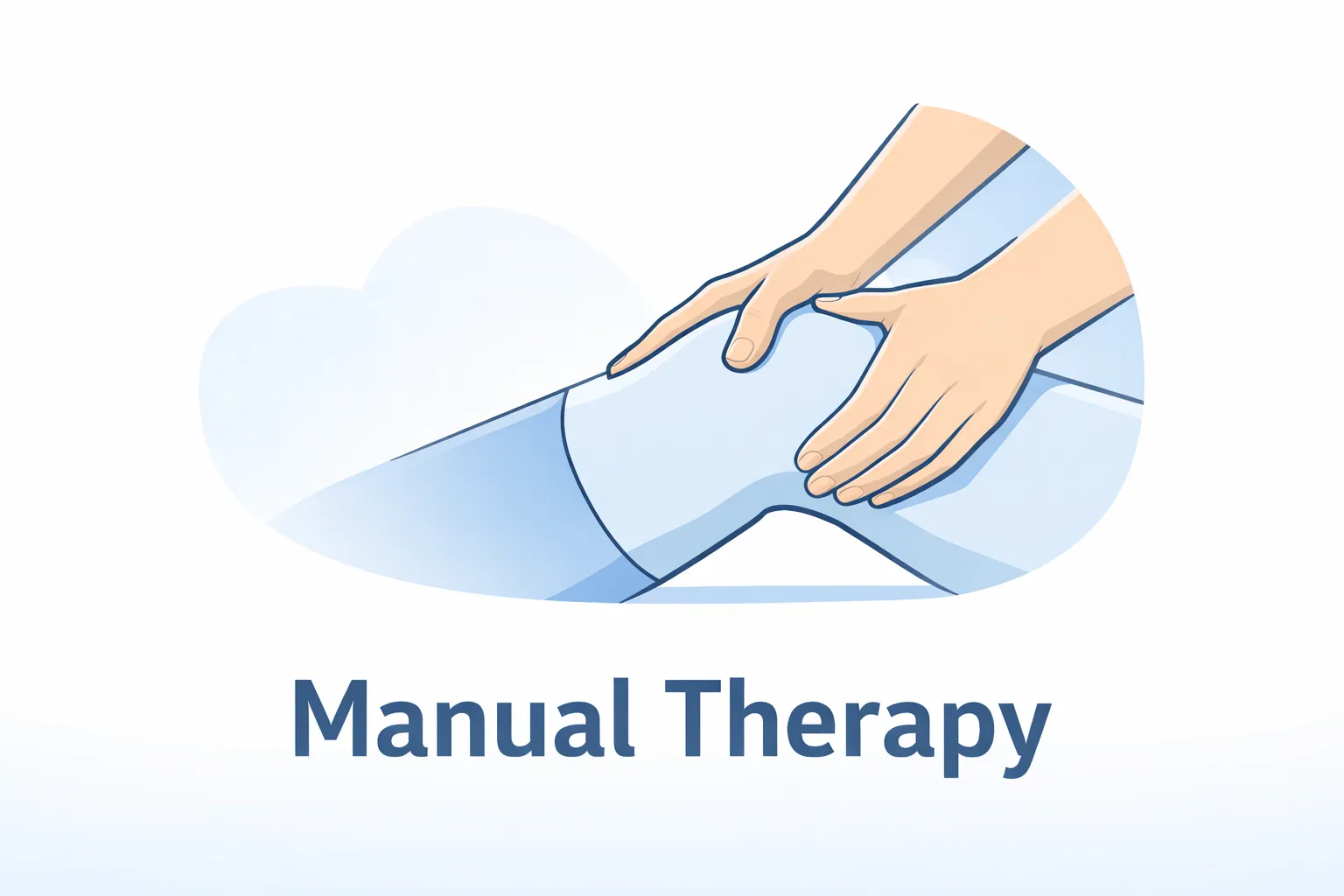
Manual therapy is a hands-on approach used by physical therapists to help reduce pain, improve movement, and support recovery. You may experience it during treatment through joint movements, soft-tissue work, or guided stretching.
For many patients, manual therapy is one part of a broader plan. It is often used to help you move more comfortably so you can return to normal activities, exercise, or sport with better control and confidence.
What Is Manual Therapy?
Manual therapy is a group of hands-on techniques performed by a physical therapist to improve joint mobility, reduce muscle tension, and decrease pain.
These techniques are applied directly to joints, muscles, and connective tissues. The goal is to restore more normal movement and reduce irritation in the affected area.
Manual therapy may include:
- Joint mobilization or manipulation
- Soft tissue mobilization
- Myofascial release
- Passive stretching
- Assisted movement techniques
It is not a standalone solution. It is typically used alongside exercise and movement-based rehab to support long-term results.
What Does Manual Therapy Do?
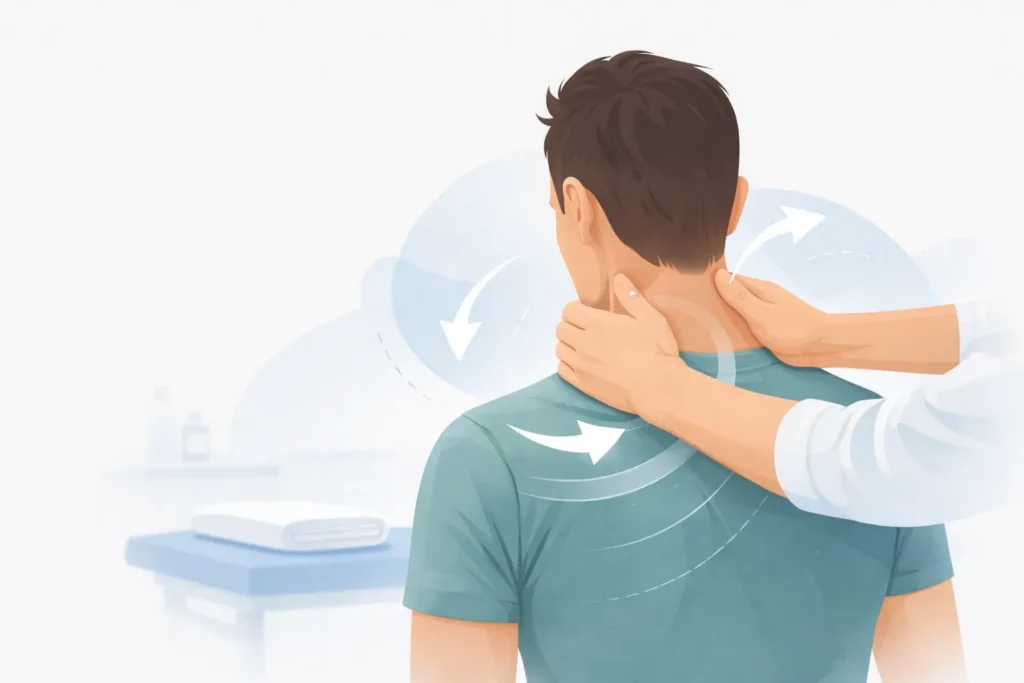
Manual therapy helps restore movement in areas that have become stiff, guarded, or uncomfortable to use.
In the clinic, this often shows up as someone who can technically move, but the motion feels restricted, uneven, or harder on one side. It may not always be sharp pain. More often than not, it feels like something is not moving the way it should.
Hands-on treatment can help reduce that restriction and improve joint or tissue mobility. It can also reduce the body’s tendency to protect the area by tightening the muscles.
Patients often notice that movement feels easier immediately after treatment. That change is not just mechanical. It is also a shift in how the nervous system is interpreting the area.
These improvements are usually temporary on their own. The goal is to use that window to build more lasting changes through movement and exercise.
How Manual Therapy Affects Pain and Movement
Manual therapy does not just change the tissue. It changes how your body perceives movement.
Many patients come in thinking something is “tight” or “out of place.” In many cases, the body guards the area because it has become sensitive. That sensitivity can limit motion just as much as actual stiffness.
Hands-on treatment can help reduce that guarding and make movement feel more available. It gives your body a chance to move without the same level of resistance or hesitation.
This is why people often describe feeling “looser” or more comfortable right after a session.
That effect creates a brief window in which movement feels easier. If you use that time to move well and build strength, those changes are more likely to last.
Common Types of Manual Therapy
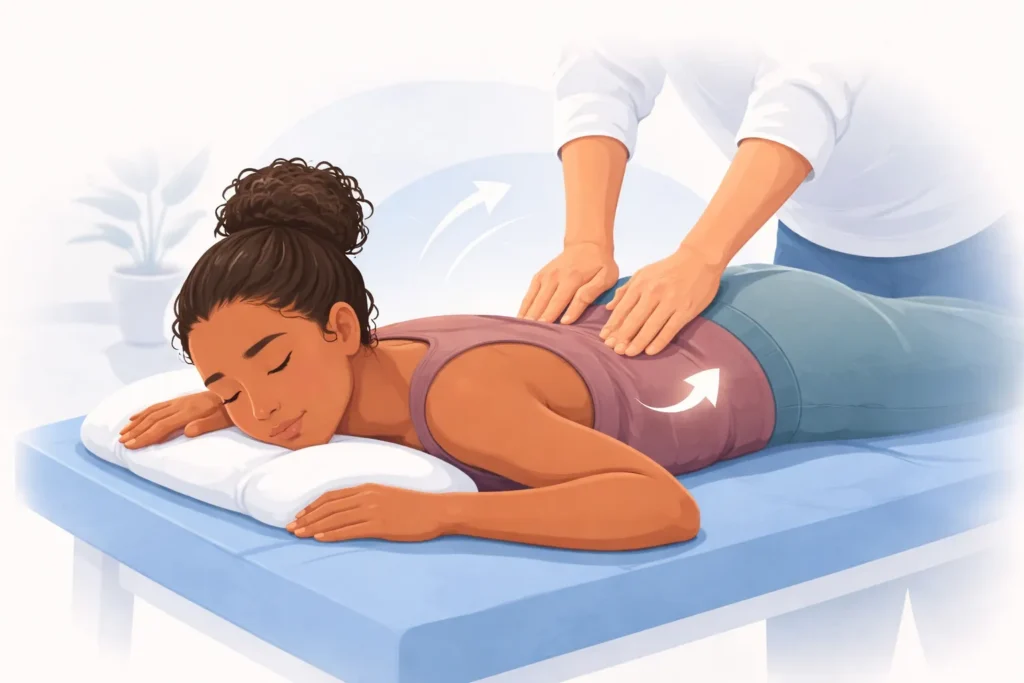
There are several types of manual therapy techniques, and they are not interchangeable. Each one is used for a specific purpose based on how your body is moving and what your symptoms feel like.
In the clinic, the decision is less about the technique’s label and more about what your body needs in that moment.
Joint Mobilization
Joint mobilization involves slow, controlled movements applied to a joint. These are often used when a joint feels stiff or restricted.
Patients often describe this as a gentle, repetitive movement. It is typically not painful and may feel relieving.
This is commonly used for patients who describe stiffness more than sharp pain. For example, someone who feels limited when turning their neck or squatting may benefit from this approach.
Joint Manipulation
Manipulation is a quicker movement applied to a joint, sometimes producing a “pop” or “crack.”
This technique is used selectively and is not necessary for most conditions. When used appropriately, it may help improve motion and reduce discomfort.
Some patients feel immediate improvement in motion after manipulation, while others may not need it at all. It is one option, not a requirement.
Soft Tissue Mobilization
This focuses on muscles and surrounding tissues. It may feel similar to deep pressure or targeted massage.
Common goals include:
- Reducing muscle tension
- Improving tissue mobility
- Decreasing localized soreness
This is often helpful when muscles feel overworked, tight, or reactive, especially after repetitive activity or training.
Myofascial Release
This technique targets connective tissue, specifically fascia. It involves sustained pressure and stretching.
It is often used when movement feels restricted or when there is a sense of tightness that does not improve with basic stretching.
Passive Stretching
In passive stretching, the therapist moves a part of your body while you remain relaxed.
This can help improve flexibility and reduce stiffness, especially when movement is limited by pain or guarding.
What Problems Does Manual Therapy Help With Most?
Manual therapy tends to work best for problems involving stiffness, sensitivity, or limited movement rather than for clear structural damage.
In the clinic, this often sounds like someone saying, “It just doesn’t move right.” They may not have constant pain, but certain motions feel blocked, uneven, or harder on one side.
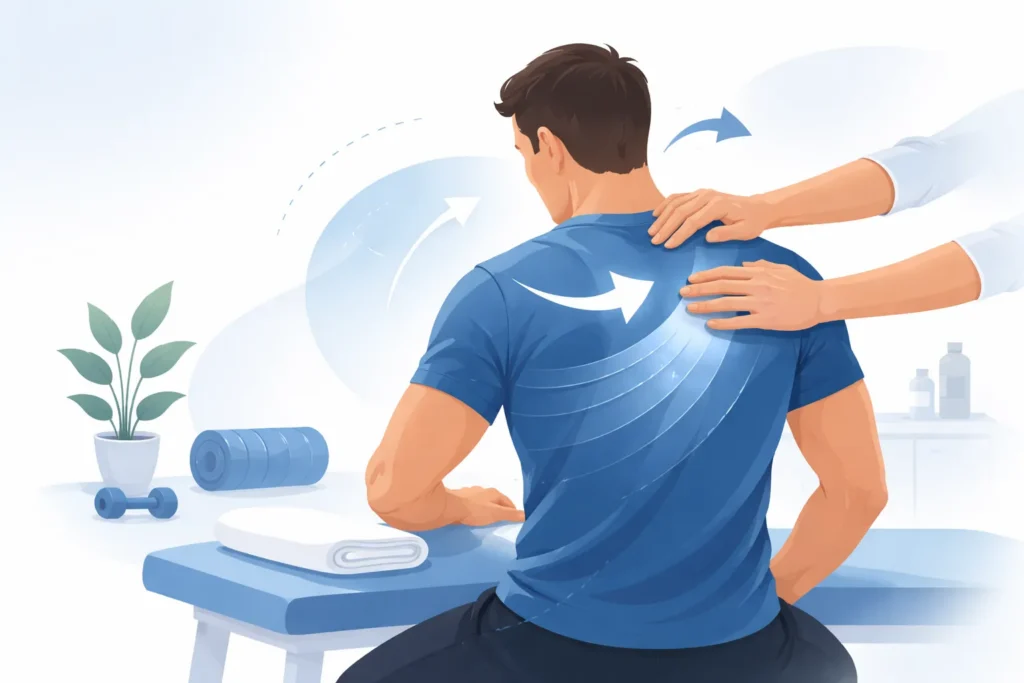
You might notice this when turning your head, reaching overhead, squatting, or trying to move after sitting for a while. The movement is there, but it does not feel smooth or natural.
This is something we commonly see in runners, active adults, and people with desk-heavy routines.
Manual therapy can help restore some of that motion and reduce the surrounding resistance. From there, the focus shifts to building strength and control so the improvement holds.
What Conditions Is Manual Therapy Used For?
Manual therapy is commonly used for a wide range of orthopedic conditions. It is most helpful when pain or stiffness is limiting movement.
Common examples include:
- Neck pain and stiffness
- Low back pain
- Shoulder pain
- Hip mobility limitations
- Knee pain
- Sports-related muscle tightness
- Post-injury or post-surgical stiffness
It is not limited to one diagnosis. Instead, it is used based on how your body is moving and responding to load.
What Does Manual Therapy Feel Like?
Most patients find manual therapy comfortable or relieving. The exact sensation depends on the technique being used.
Some common experiences include:
- Gentle pressure or stretching
- A feeling of increased looseness
- Temporary soreness afterward, similar to a workout
- Occasional joint “popping” during certain techniques
Your therapist will adjust based on your comfort level. It should not feel aggressive or overwhelming.
Some techniques may feel slightly uncomfortable, especially if the area is sensitive. This should stay within a tolerable range. Communication during treatment helps ensure the right level of pressure and intensity.
Is Manual Therapy the Same as Massage?
Manual therapy and massage share some similarities, but they are not the same.
Massage is typically focused on relaxation and general muscle tension. Manual therapy is more targeted and based on a clinical assessment.
| Manual therapy | Massage |
|---|---|
| Goal is to improve movement and reduce pain | Goal is relaxation and general tension relief |
| Based on clinical evaluation | Not always condition-specific |
| Often combined with exercise | Usually a standalone service |
| Targets joints and specific tissues | Primarily focuses on muscles |
In physical therapy, manual therapy is used as part of a larger treatment plan.
How Physical Therapists Decide to Use Manual Therapy
Manual therapy is not automatically applied. It is based on how your body responds during the evaluation.
A physical therapist is looking for patterns. Does a joint feel more limited on one side? Do certain movements reproduce your symptoms? Does anything improve when we assist or guide the motion?
Those small changes matter. If a movement becomes easier or less painful during the session, it suggests that manual therapy may be useful as part of your plan.
Just as important, we are constantly reassessing. If it is not helping you move better or feel better, we shift focus quickly.
The goal is not to perform a specific technique. It is to help you move more comfortably and make progress toward your goals.
How Long Do the Effects of Manual Therapy Last?
The effects of manual therapy can vary depending on the person and the condition.
Some patients feel noticeable relief right away that lasts for a few hours. Others may carry that improvement into the next day or longer, especially if they continue moving well afterward.
On its own, manual therapy is usually temporary. That is not a flaw. It is part of how it is meant to be used.
The goal is to take that short-term improvement and build on it with movement. Strength work, mobility exercises, and a gradual return to activity help make that initial change more lasting.
Over time, the need for hands-on treatment typically decreases as your body becomes more capable and resilient.
How Manual Therapy Fits Into a Treatment Plan
Manual therapy is best thought of as a tool, not the main solution.
It is often used to create a “window” where movement feels easier. During that time, exercise and activity can be introduced or progressed.
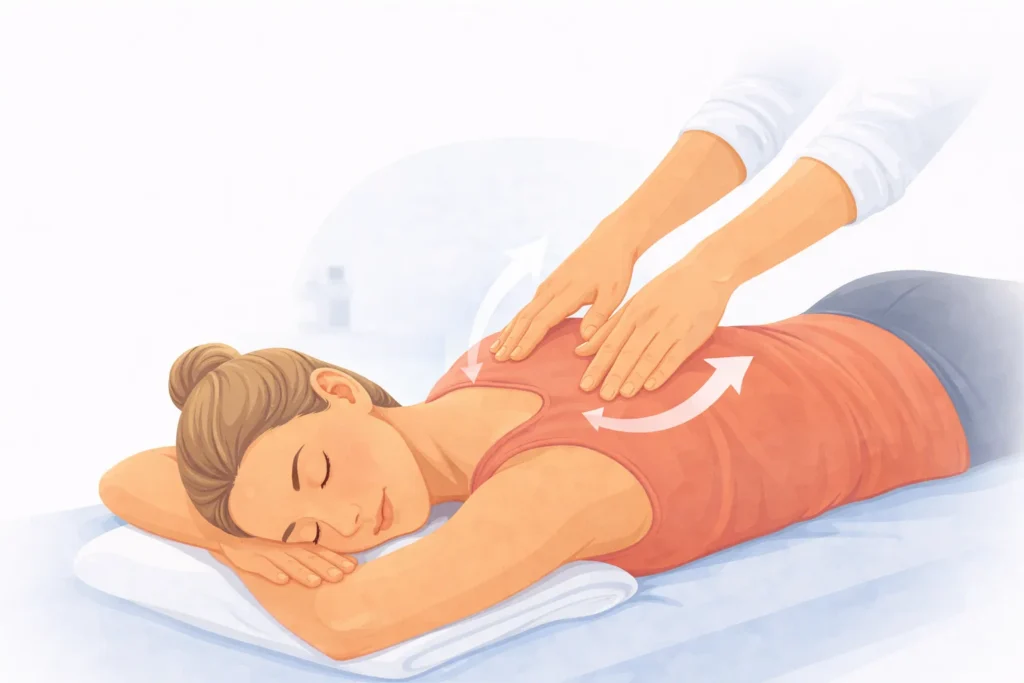
A typical plan may include:
- Manual therapy to reduce pain or stiffness
- Targeted exercises to improve strength and control
- Movement retraining for daily activities or sports
- Gradual return to higher levels of activity
This combination helps create longer-lasting results.
Does Manual Therapy Fix the Problem?
Manual therapy can help reduce symptoms, but it does not fix underlying issues on its own.
For example:
- If pain is related to weakness, strengthening is still needed
- If movement patterns are contributing, they need to be retrained
- If the load tolerance is low, it needs to be gradually built back up
Manual therapy can make these steps easier, but it is not a replacement for them.
A helpful way to think about it is that manual therapy can open the door, but movement is what keeps it open.
What Patients Often Notice After Treatment
Patients often report small but meaningful changes after manual therapy.
These may include:
- Moving with less hesitation
- Feeling more balanced side to side
- Reduced stiffness during everyday tasks
- Improved comfort during exercise
These changes help guide the next steps in treatment.
When Manual Therapy May Not Be Enough
Some patients rely heavily on passive treatments like manual therapy. This can feel helpful in the short term, but may not lead to lasting improvement.
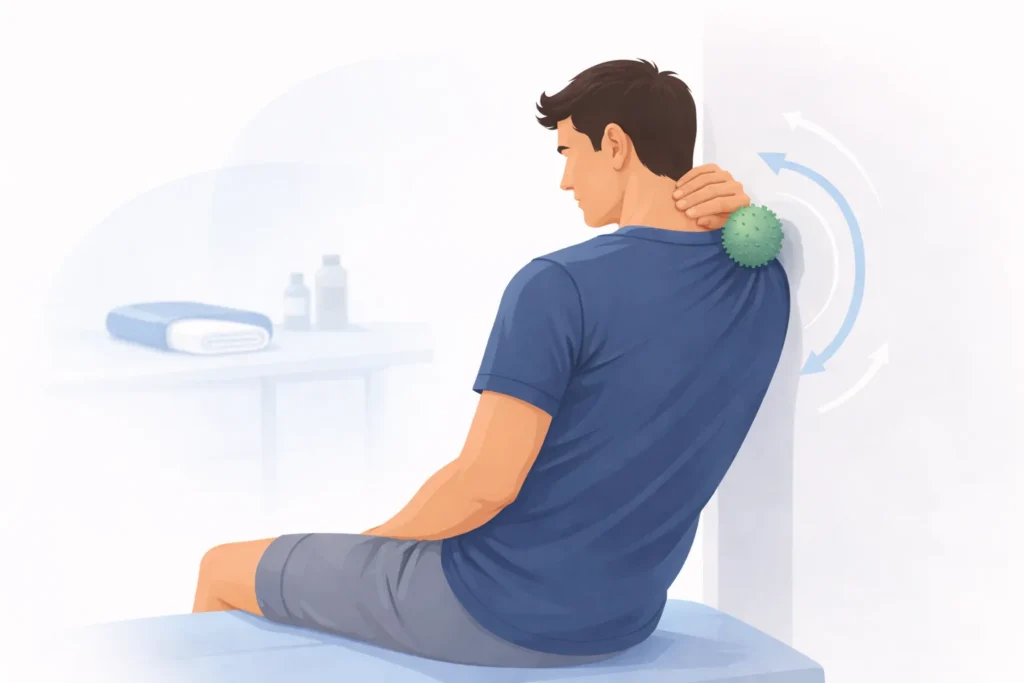
Signs you may need more than manual therapy include:
- Pain keeps returning after temporary relief
- Movement still feels limited during activity
- Strength or endurance is lacking
- Symptoms worsen with increased activity
In these cases, a more active approach becomes essential.
Is Manual Therapy Safe?
Manual therapy is generally safe when performed by a licensed physical therapist.
Your therapist will screen for conditions in which certain techniques should be avoided. They will also adjust intensity based on your comfort and medical history.
Communication is important. If something feels uncomfortable or unclear, it should be discussed during treatment.
When Should You Consider Manual Therapy?
You may benefit from manual therapy if:
- You feel stiff or restricted in a joint
- Movement is limited due to pain
- Muscles feel tight or guarded
- You are having difficulty starting or progressing with exercise
It is especially helpful early in recovery or during flare-ups when movement feels difficult.
When to See a Physical Therapist
If pain or stiffness is limiting your ability to move, exercise, or complete daily activities, it may be time for an evaluation.
A physical therapist can:
- Identify what is contributing to your symptoms
- Determine if manual therapy is appropriate
- Build a plan that supports long-term improvement
The goal is not just to reduce pain, but to help you move better and return to the activities you enjoy.
Frequently Asked Questions
Is manual therapy painful?
Manual therapy should not feel aggressive or overwhelming. Some techniques may cause mild discomfort, especially in sensitive areas, but they should stay within a tolerable range.
How many manual therapy sessions do you need?
This varies depending on the condition. Some patients benefit from a few sessions early on, while others need fewer as they progress with exercise and movement.
Do I need manual therapy to get better?
Not always. Manual therapy can help reduce pain and improve movement, but long-term progress typically comes from strength, mobility, and activity-based rehab.
Closing Thoughts
Manual therapy can be a helpful part of physical therapy, especially when pain or stiffness is getting in the way of movement. It is most effective when combined with an active plan that builds strength, control, and confidence.
If you are dealing with ongoing discomfort or limited mobility, a physical therapy evaluation can help you understand what is happening and the steps to move forward safely.
At Calibration Physical Therapy, we see this pattern frequently in active adults and runners working to return to full activity.
Tags

About the Author
Dr. Traci Smiley, DPT
Traci is a licensed physical therapist and owner of Calibration Physical Therapy, serving the Kansas City area. A Board-Certified Orthopedic Clinical Specialist with advanced training in manual therapy and strength conditioning, she helps individuals overcome pain and return to what they love.