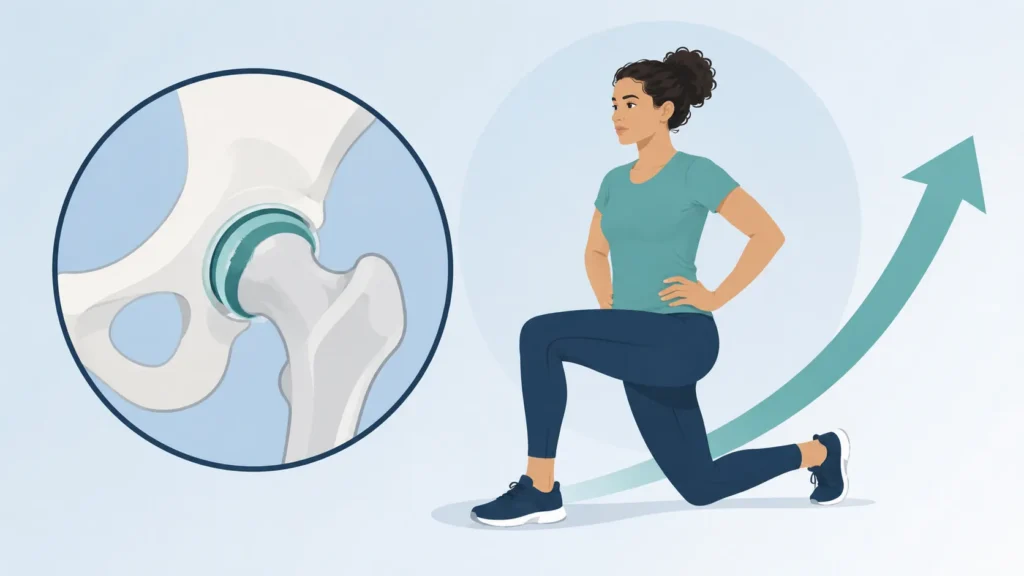
Feeling motivated and being physically ready are not the same thing. Many runners wonder whether they are ready to resume running, seeking to determine whether returning to running will advance or hinder their progress.
From a physical therapy standpoint, running readiness is not about motivation, time off, or confidence. It is about whether the body can tolerate impact, control movement under load, and recover consistently.
This guide outlines how physical therapists evaluate running readiness and what to look for before returning to running.
What Being Ready for a Run Really Means
From a physical therapy perspective, being ready for a run is not a feeling. It is a capacity.
Readiness to run means your musculoskeletal system can tolerate:
- Repeated impact forces
- Sustained loading over time
- Adequate recovery between sessions
Running places forces of approximately two to three times body weight through the lower extremities with every stride, repeated hundreds to thousands of times in a single session.
Consequently, readiness is determined less by motivation or cardiovascular fitness and more by tissue load tolerance, movement control, and recovery response.
Clinical research consistently shows that aerobic fitness often returns faster than the capacity of tendons, bones, and connective tissue to tolerate impact loading. This mismatch is a primary reason runners experience pain or injury shortly after returning to running.
From a PT standpoint, readiness is assessed by asking three questions:
- Can the tissues tolerate impact today?
- Can the body control movement under load?
- Does the body recover appropriately after stress?
If the answer to any of these is “not consistently,” the runner may feel ready, but biologically, they are not.
Key takeaway:
Running readiness is not about how long it has been since an injury or how confident you feel. It concerns whether the body can sustain the demands of repeated, predictable running without breaking down.
Why Runners Get Injured When They Feel Ready
Many running injuries occur during return-to-run phases because different body systems recover at different rates.
Cardiovascular fitness often returns quickly with walking, cycling, or other low-impact activity. In contrast, tendons, bone, and connective tissue adapt more slowly to impact loading, particularly after injury or time off. When running is reintroduced before these tissues regain sufficient load tolerance, injury risk increases even when the runner feels capable.
Another common issue is delayed symptom response. Running-related pain often appears later the same day or the following day, after cumulative tissue stress exceeds recovery capacity.
Strength and movement deficits also become more relevant once impact is added. During walking and daily activity, compensations may be subtle or inconsequential. In running, deficits in single-leg strength, control, or shock absorption increase mechanical stress and the risk of injury.
From a clinical standpoint, this leads to a predictable pattern. Runners feel ready based on confidence, fitness, or time since injury, but their tissues are not yet prepared for the mechanical demands of running.
This gap between confidence and capacity is a common contributor to re-injury and recurring running-related pain.
Running Readiness Checklist

This checklist is intended as a screening framework, not a pass–fail test. It reflects how physical therapists evaluate readiness to tolerate running-related impact and repetition, particularly during return-to-run or progression phases.
Meeting these criteria does not guarantee injury prevention. Failing one or more suggests the need for modification, regression, or further assessment.
1. Pain and Symptom Baseline (Non-Negotiable)
Before running is introduced, symptoms should be stable and predictable.
You should be able to:
- Walk briskly without pain or altered gait
- Perform low-level impact activities (such as light hopping) without sharp or focal pain
- Complete normal daily activities without symptom escalation later in the day
Pain that increases 12–24 hours after activity is a key warning sign. Delayed symptom response indicates that tissue load tolerance has been exceeded, even if the activity itself felt manageable.
Clinical note:
Absence of pain during activity is not sufficient. Recovery behavior matters more than momentary comfort.
2. Strength and Single-Leg Control (Impact Preparation)
Running is a series of rapid single-leg landings. Readiness requires the ability to repeatedly control the load on one limb.
Common clinical indicators include:
- Single leg balance for approximately 30 seconds without trunk sway or foot collapse
- Controlled single-leg squatting without knee valgus, trunk shift, or loss of balance
- Sufficient single-leg calf strength to tolerate repeated push-off demands
Research consistently links deficits in lower-limb strength and neuromuscular control with increased running injury risk, particularly during return-to-run phases.
Clinical note:
Perfect form is not required. Clear asymmetries, compensations, or loss of control are more meaningful than exact repetition counts.
3. Mobility and Movement Quality (Force Distribution)
Adequate mobility allows impact forces to be distributed, rather than concentrated.
Physical therapists typically assess:
- Ankle mobility to support shock absorption and stride mechanics
- Hip mobility and control for stride stability
- Trunk control during dynamic, single-leg tasks
Restrictions or poor movement quality can increase tissue stress even when strength appears adequate.
Clinical note:
Mobility alone does not prevent injury; however, inadequate mobility can increase the load on already vulnerable tissues.
4. Recovery Response
Recovery response is often the most reliable indicator of readiness.
After activity, monitor for:
- Soreness that persists beyond 24 hours
- Swelling, stiffness, or localized tenderness the next day
- Subtle changes in walking or movement quality
A body that cannot recover consistently from submaximal loading is unlikely to tolerate running volume.
Clinical note:
A short run that “feels fine” but repeatedly triggers next-day symptoms suggests insufficient readiness.
Special Situations Where Readiness Requires Caution
Running readiness is less straightforward when:
- Returning after a prior injury
- Restarting after a prolonged break
- Increasing mileage, pace, or intensity
- Returning after illness, surgery, or pregnancy
In these cases, readiness is rarely binary. Structured progression and external guidance are often necessary to avoid repeated setbacks.
Common Myths About Being Ready to Run
Misunderstandings about running readiness are common and often well-intentioned. Unfortunately, these assumptions are also a frequent cause of runners returning to activity too soon and experiencing setbacks.
“If I can walk without pain, I’m ready to run.”
Walking and running place very different mechanical demands on the body.
Running introduces higher impact forces, faster loading rates, and greater single-leg demands than walking. While pain-free walking is a necessary milestone, it does not indicate readiness to tolerate repeated impact loading. Research shows that tissues such as tendons and bone require progressive exposure to impact to adapt safely, even when daily activities are pain-free.
“Good shoes prevent running injuries.”
Footwear can improve comfort and may influence running mechanics, but evidence does not support shoes as a reliable method for preventing injuries.
Multiple studies have shown inconsistent or minimal relationships between shoe type and injury rates. Shoes do not correct deficits in strength, movement control, or load tolerance, the primary contributors to most running-related injuries.
“Stretching more makes running safer.”
Mobility contributes to movement efficiency, but stretching alone has not been shown to reduce the risk of running injuries.
Inadequate strength, poor neuromuscular control, and insufficient load tolerance are more strongly associated with injury than flexibility deficits. Stretching can be helpful when mobility is clearly limited, but it does not address the ability to absorb, control, and recover from impact forces.
Why These Myths Persist
These beliefs persist because they rely on how running feels, rather than how the body adapts to stress.
How Physical Therapists Assess Running Readiness

Physical therapists assess running readiness by evaluating whether the body can tolerate impact, control movement under load, and recover predictably across repeated sessions. This process goes beyond pain checks or time-based clearance and focuses on how the body responds to progressive stress.
A typical assessment includes the following components:
Movement Analysis
Physical therapists observe how the body moves under both low- and moderate-load conditions. This may include:
- Walking and jogging mechanics
- Single-leg tasks such as squatting, hopping, or step-downs
- Trunk and pelvic control during dynamic movement
Movement analysis helps identify compensations that may not cause pain during daily activity but become problematic when impact and repetition are added. Poor control does not always produce immediate symptoms, but it can increase cumulative tissue stress over time.
Strength and Mobility Screening
Strength and mobility are assessed together, not in isolation.
Physical therapists evaluate:
- Lower-limb strength symmetry, particularly at the hips, knees, and calves
- Ankle and hip mobility relevant to shock absorption and stride mechanics
- Trunk stability during single-leg loading
Deficits in these areas have been consistently associated with increased risk of running injuries, particularly during return-to-run phases or training progression.
Load Tolerance Evaluation
Load tolerance refers to how well tissues handle repeated stress, not just whether a movement can be performed once.
Physical therapists assess load tolerance by examining:
- Symptom behavior during and after activity
- Response to incremental increases in impact or volume
- Recovery timelines following controlled loading
Delayed pain, swelling, or stiffness often indicates that tissue capacity has been exceeded, even when movement quality appears acceptable.
Return-to-Run Planning
Rather than issuing a simple yes-or-no response, physical therapists typically design a graded return-to-run plan.
This may include:
- Walk–run intervals
- Structured volume progression
- Strength and mobility priorities to support increased load
- Monitoring guidelines for symptom response
The goal is to reintroduce running in a way that allows tissues to adapt while minimizing unnecessary setbacks.
Why This Approach Matters
Research shows that running injuries are more closely related to training load errors and tissue tolerance than to isolated factors like footwear or flexibility.
Clinical takeaway:
The goal of physical therapy assessment is not to delay running, but to ensure that return-to-run decisions are based on biological readiness rather than confidence alone.
What to Do If You’re Almost Ready
If readiness is close but not complete, the goal is controlled exposure rather than pushing through uncertainty.
- Use walk-run intervals: Alternate short running bouts with walking to gradually introduce impact while monitoring symptoms during and after activity.
- Build lower-body strength, particularly the calves: Focus on single-leg strength and control to improve shock absorption and reduce relative load per stride.
- Increase volume before pace: Add total running time first. Delay speed, hills, and intervals until recovery is consistent.
- Let recovery guide progression using the criteria outlined above.
Backing off early often prevents longer setbacks later.
When to Seek Professional Guidance
If running-related pain recurs or its progression is uncertain, working with a physical therapist can help reduce uncertainty.
Consider professional guidance if:
- Pain returns each time you resume running
- You are unsure how to progress running volume or intensity safely
- You are returning after a previous injury or extended time off
A physical therapy assessment can identify limiting factors, establish a clear return-to-running plan, and help you progress with confidence rather than through trial and error.
If you would like to take the next step, you can:
- Book an appointment online
- Send a message
- Call us: (913) 914-7174
Early guidance helps align progression with recovery capacity and reduces the risk of repeated setbacks.
Tags

About the Author
Dr. Traci Smiley, DPT
Traci is a licensed physical therapist and owner of Calibration Physical Therapy, serving the Kansas City area. A Board-Certified Orthopedic Clinical Specialist with advanced training in manual therapy and strength conditioning, she helps individuals overcome pain and return to what they love.