A hip labral tear can make everyday movement feel less predictable. You may notice deep groin pain after sitting, a pinch when bringing your knee toward your chest, or catching when getting out of a car. Running, squatting, lunging, and changing direction may also become uncomfortable.
Some hip labral tears happen after a fall, collision, or forceful pivot. Others develop gradually in people who run, dance, lift weights, or play sports that involve repeated hip flexion and rotation.
An MRI can make the problem sound more serious than it feels. A labral tear does not automatically mean that every movement is damaging your hip or that surgery is the only treatment. Symptoms are also influenced by strength, movement control, activity volume, recovery, and the positions that currently irritate the joint.
This article explains which types of hip labral tear exercises may help mobility and strength, how physical therapy evaluates the hip, and how to return to activity without repeatedly provoking symptoms.
Quick Answer
The best exercises for a hip labral tear are those that improve comfortable hip motion and gradually strengthen the muscles around the hip and pelvis. Depending on your symptoms, a physical therapist may use gentle mobility exercises, isometric strengthening, bridges, side-lying hip exercises, step-ups, and progressive single-leg movements.
There is no single exercise routine that works for every hip labral tear. The right starting point depends on your symptoms, hip mobility, strength, training demands, and whether you have had surgery.
Exercises should not force a sharp pinch, painful catching, or repeated locking. Mild muscle fatigue is usually acceptable. Pain that increases during the exercise or remains worse the next day usually means the range, resistance, repetitions, or position needs to be changed.
Top Hip Labral Tear Exercises
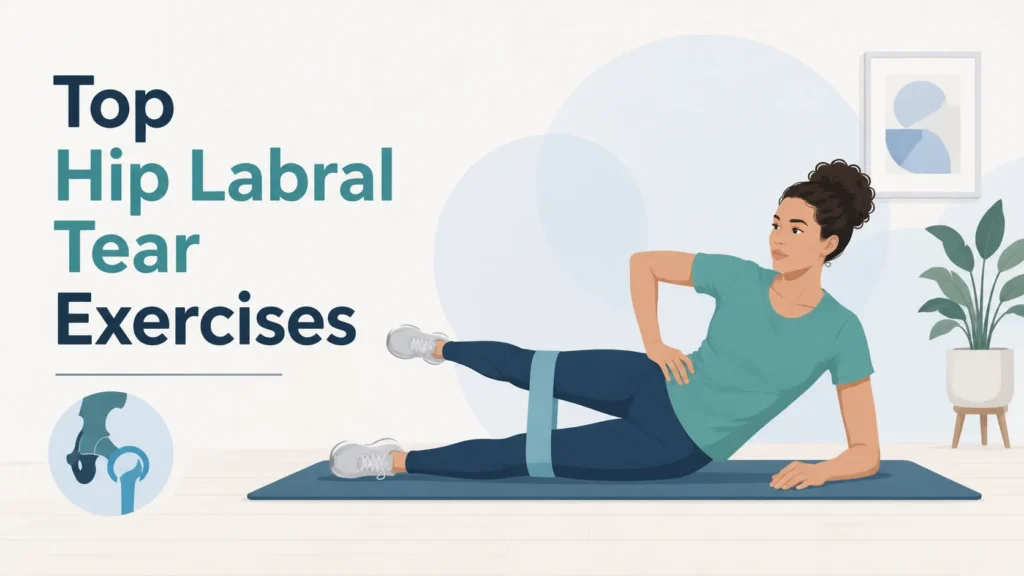
These targeted exercises help rebuild strength and mobility while protecting the injured labrum.
1. Hip Bridges (Strengthens glutes and core)
- Lie on your back with knees bent and feet flat on the floor.
- Engage your core and squeeze your glutes as you lift your hips.
- Hold for 3-5 seconds, then lower slowly.
- Repeat 10-12 times.
2. Clamshells (Activates hip stabilizers)
- Lie on your side with knees bent and feet together.
- Keep your feet touching as you lift your top knee, like opening a clamshell.
- Lower slowly and repeat 10-15 times per side.
3. Standing Hip Abductions (Improves hip stability)
- Stand tall and hold onto a sturdy surface for balance.
- Lift one leg straight out to the side, keeping it controlled.
- Slowly return to the starting position.
- Perform 10-12 reps per leg.
4. Hip Flexor Stretch (Increases flexibility)
- Kneel with one foot forward in a lunge position.
- Shift your weight forward slightly to stretch the front of your hip.
- Hold for 20-30 seconds on each side.
5. Single-Leg Balance (Enhances control and stability)
- Stand on one leg and hold for 30 seconds.
- For an added challenge, close your eyes or stand on an unstable surface.
- Switch legs and repeat 2-3 times.
What Causes a Hip Labral Tear?
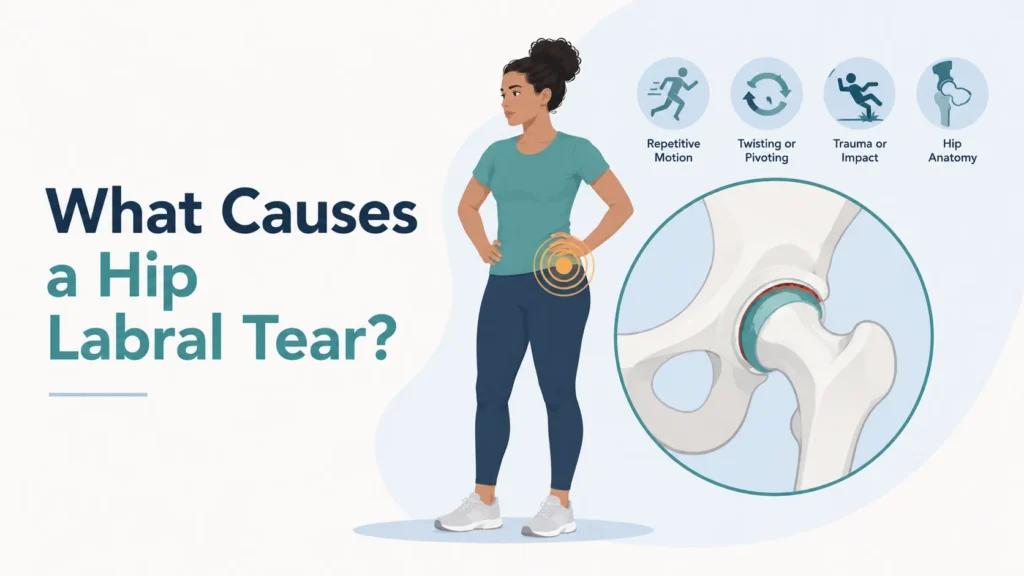
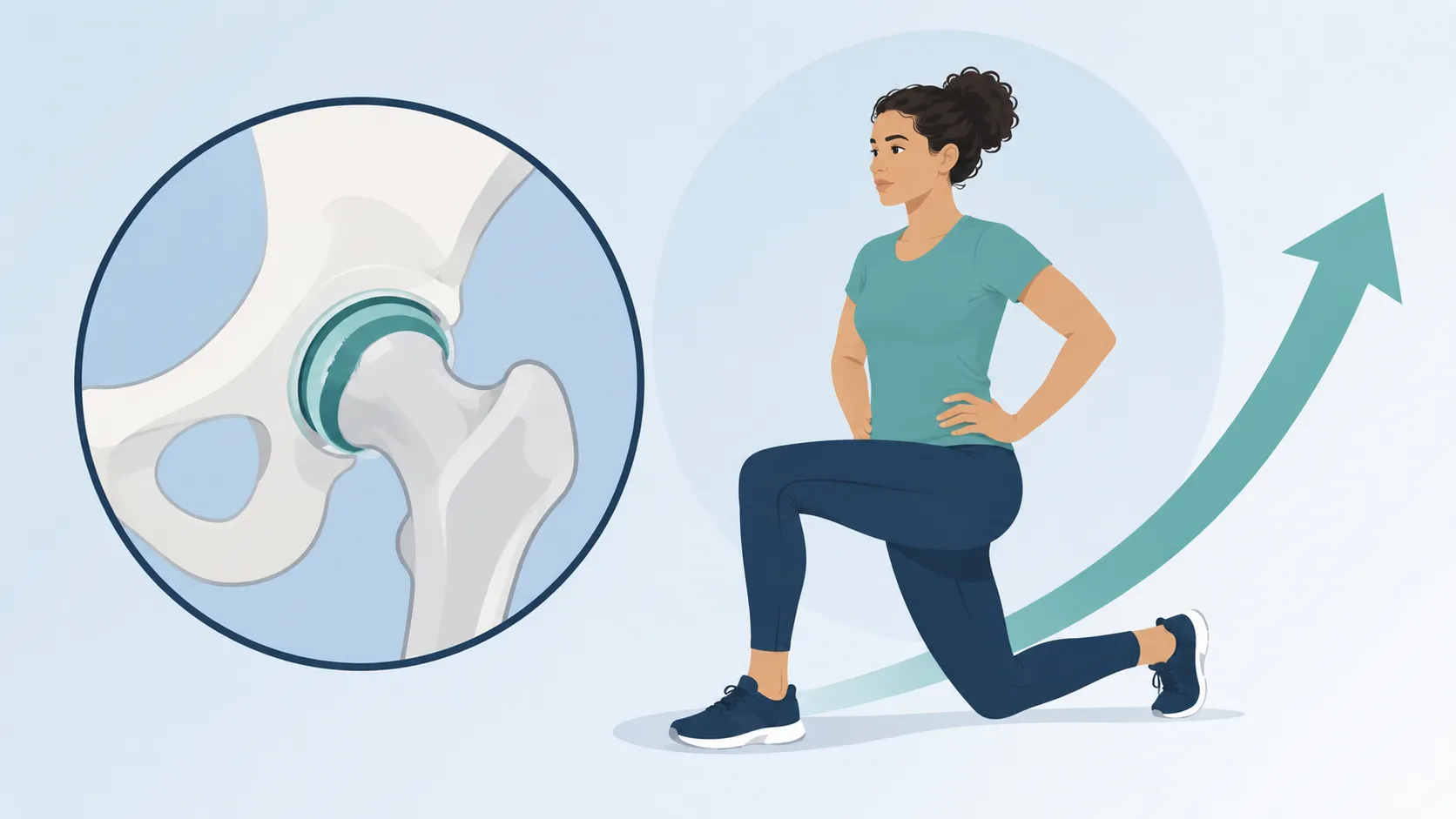
The hip labrum is a ring of firm tissue around the edge of the hip socket. It helps deepen the socket and contributes to stability as the hip moves.
A tear may occur after a fall, collision, forceful pivot, or deep twisting motion. A soccer player may feel symptoms after changing direction, while a weightlifter may notice pain after a deep squat or rotational movement.
Symptoms can also build gradually. Repeated hip flexion and rotation during running, dancing, cycling, lifting, or sport may irritate the joint over time. Training volume, limited recovery, and changes in activity can all influence how the hip responds.
Some people also have hip anatomy that causes contact within the joint to occur earlier during deep flexion or rotation. This may make certain positions more sensitive, but it does not mean those movements must be avoided permanently.
Muscle strength and coordination matter too. If the pelvis shifts, the knee moves inward, or the thigh rotates excessively during a step-down or landing, the hip may be exposed to more load than it can currently manage. This does not mean poor movement caused the tear. It helps explain why rehabilitation often includes strengthening and movement retraining.
What Does a Hip Labral Tear Feel Like?
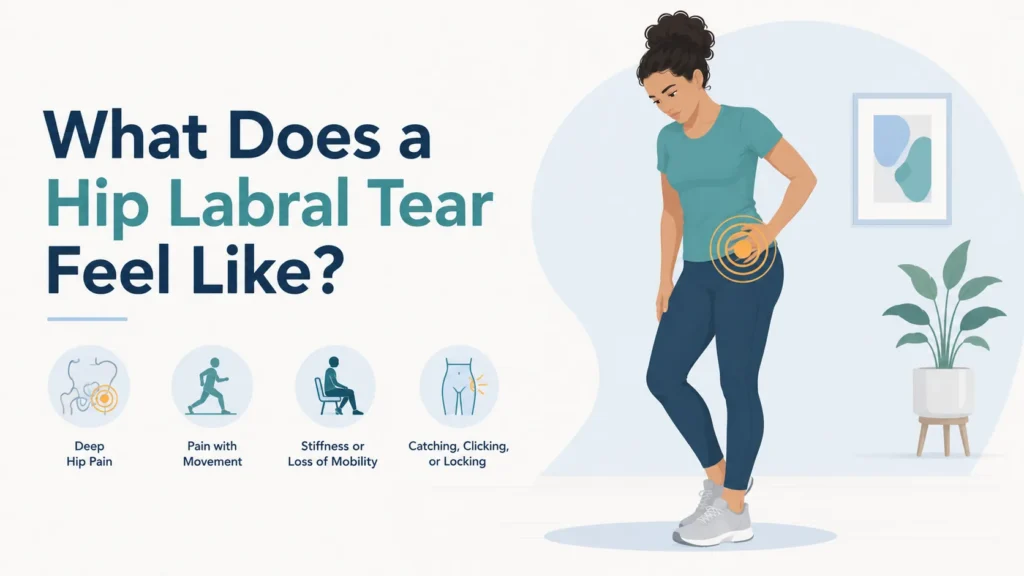
Many people describe pain deep in the front of the hip or groin. Others feel symptoms along the side or back of the hip. Pain may be sharp with one specific movement, dull after activity, or difficult to locate.
Common symptoms include:
- Pain or stiffness after sitting
- A pinch when bringing the knee toward the chest
- Catching, clicking, or a feeling that the hip briefly sticks
- Pain with pivoting or changing direction
- Discomfort during squats or lunges
- Pain when getting out of a car
- Symptoms during or after running
- Reduced strength or mobility on one side
Clicking does not always mean the hip is being damaged. It becomes more important when it is painful, associated with weakness or instability, or followed by increased symptoms.
A hip that repeatedly locks, feels stuck, or causes significant loss of motion deserves a more specific evaluation.
How Symptoms Behave During Activity
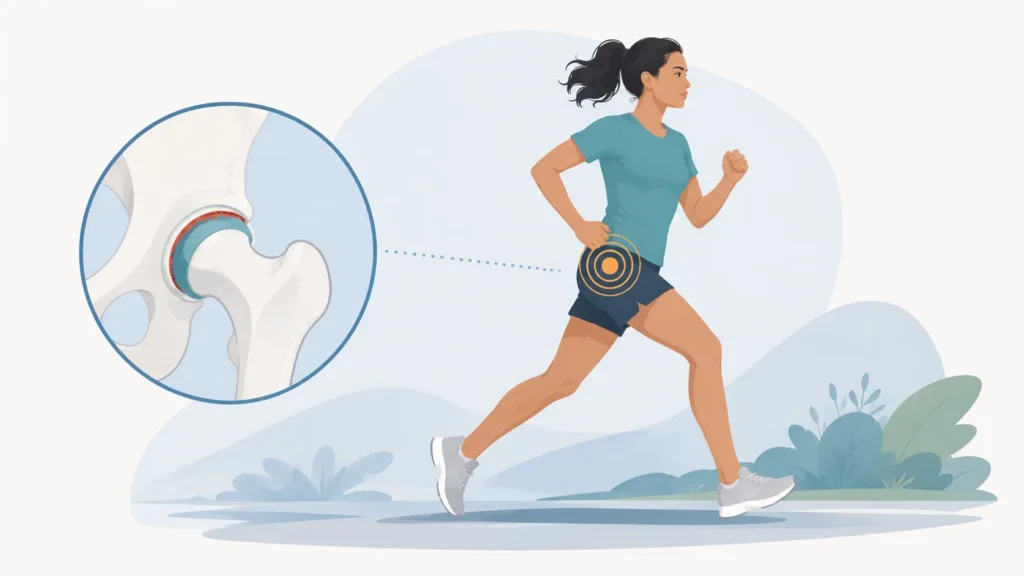
Hip labral symptoms often depend on position, load, repetition, and fatigue. A movement may feel comfortable once but become painful after several repetitions.
For example, a runner may feel fine during the first part of a workout and then notice groin pain as fatigue changes their stride. A lifter may tolerate a shallow squat but feel a pinch when repeatedly working into a deeper position.
Sitting can also bring on symptoms. The hip stays flexed for a prolonged period, so standing after a long drive or workday may feel stiff or painful even though you were not exercising.
Climbing stairs, stepping into a vehicle, and turning on one leg can reproduce symptoms because they combine hip movement with body weight and balance demands.
Pay attention to both the activity and the recovery period. A mild, familiar symptom that settles shortly after activity may be manageable. Pain that steadily increases, changes how you move, or remains noticeably worse the next morning suggests that the workload is too high.
Common Mistakes People Make When Symptoms Start
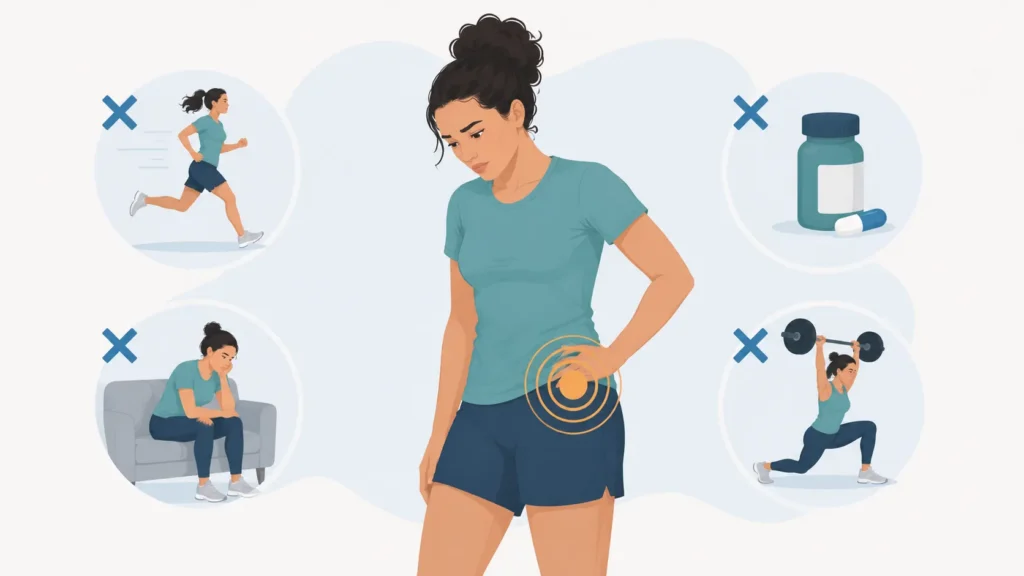
One mistake is stopping all activity immediately. Rest may calm symptoms for a short time, but it does not rebuild the strength and coordination needed for walking, running, lifting, or sport. Modifying the most provocative activities while maintaining comfortable movement is often more useful.
Another mistake is forcing stretches into a painful pinch. A hip can feel stiff without needing aggressive stretching. If a stretch repeatedly creates sharp pain in the front of the hip, reduce the range or choose another movement.
It is also common to search for one exercise that will fix the problem. Hip labral tear exercises are not interchangeable. An exercise that helps one person may aggravate another because mobility, strength, anatomy, and symptom sensitivity vary from person to person.
Start with movements the hip can control. Increase one variable at a time, such as range, resistance, repetitions, speed, or complexity.
Why Symptoms Often Develop Gradually
Gradual symptoms often reflect a mismatch between the hip’s current capacity and the amount of work it is handling. This can happen after increasing running mileage, adding hills, starting a new lifting program, returning to sport, or training more days each week.
Recovery is part of the overall load. A hip may tolerate one demanding session but react when the same workload is repeated without enough time between sessions.
Sleep, stress, prolonged sitting, work demands, and changes in training surface can also affect symptoms. These factors do not necessarily mean that the hip is becoming damaged. They may simply reduce how much activity the body can comfortably tolerate at that time.
Hip Labral Tear vs. Hip Flexor Strain
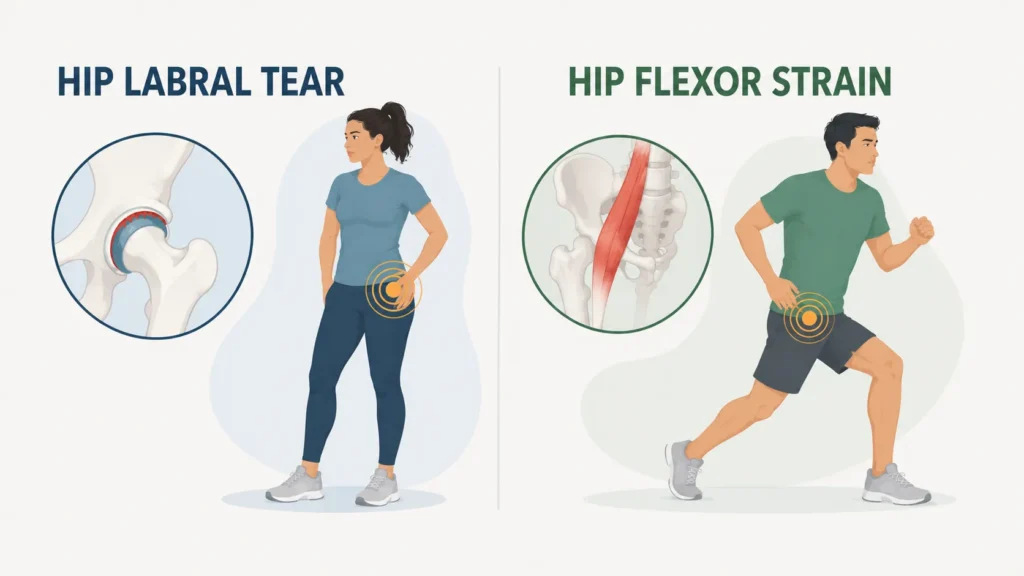
A hip labral tear and a hip flexor strain can both cause pain in the front of the hip, but they often behave differently.
A hip flexor strain is more likely to follow a sprint, kick, jump, or sudden increase in speed. It may hurt when lifting the thigh against resistance or performing a resisted march.
Labral symptoms are more likely to include deep groin pain, catching, pinching, or discomfort with combined hip flexion and rotation. The two problems can occur together, and symptoms alone cannot confirm either diagnosis.
Pain from the hip joint, tendon irritation, or the lower back can feel similar. A physical therapy evaluation helps compare these possibilities instead of assuming every deep hip symptom comes from the labrum.
How Physical Therapy Evaluates a Hip Labral Tear
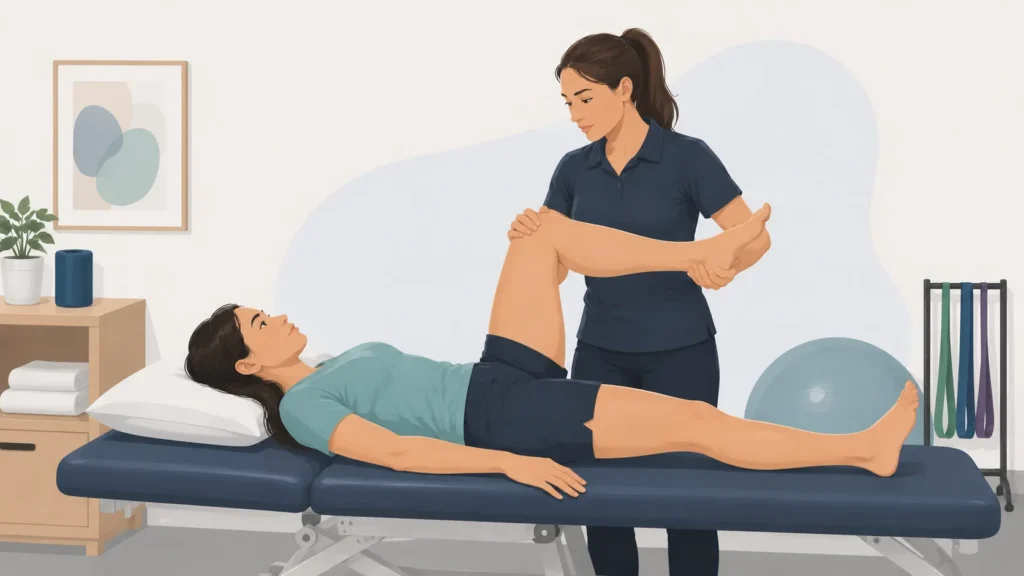
The evaluation begins with the activities that matter to you. A physical therapist may ask about running distance, sitting tolerance, lifting positions, sports practice, sleep, and when symptoms appear during or after activity. These details help identify which movements and workloads are most relevant.
The therapist assesses hip range of motion to see which directions are limited and which reproduce symptoms. The goal is to understand whether motion is limited by pain, stiffness, weakness, or protective muscle tension.
Strength testing may include the gluteus maximus, gluteus medius, hip rotators, hip flexors, and trunk muscles. Functional movements such as a step-down, squat, single-leg balance, bridge, or controlled lunge show how the hip behaves under load.
The therapist also looks at the relationship between the pelvis, trunk, thigh, and foot. This helps identify whether the main limitation is mobility, strength, coordination, activity volume, or a combination of factors.
Imaging can be useful, but it is considered alongside the history and examination. A labral tear seen on an MRI may not be the only source of pain.
How Physical Therapy Helps a Hip Labral Tear
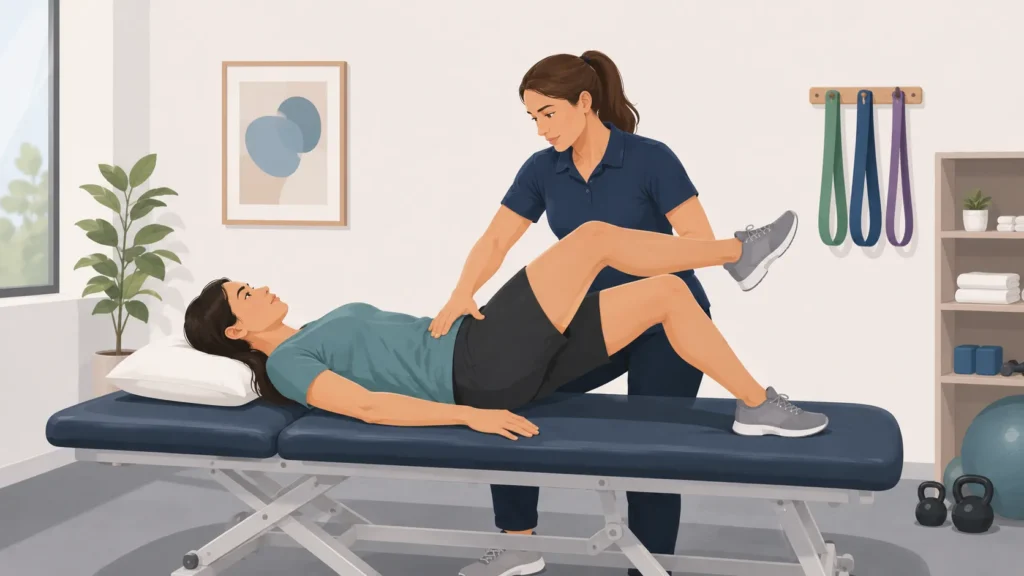
Physical therapy helps improve the hip’s ability to tolerate movement and load. Treatment may include comfortable mobility work, progressive strengthening, balance training, and gradual exposure to the positions required for work, exercise, or sport.
For example, a person who feels a pinch during deep squats may begin with a box squat to a comfortable height. The therapist may pair this with glute and trunk strengthening to improve control of the pelvis and thigh.
As symptoms improve, the box height can be lowered, resistance can be added, or the movement can progress toward the demands of the person’s training.
The exercise selection should change according to the hip’s response. If a bridge creates a painful pinch, the therapist may adjust the hip position, reduce the range, or choose a different strengthening strategy. The goal is to build useful capacity without repeatedly provoking the hip.
Rehabilitation Progression
A typical rehabilitation progression may include these stages:
| Stage | Goal | Examples |
|---|---|---|
| Comfortable movement | Maintain motion and reduce irritability | Gentle mobility, supported marching, short walks |
| Foundational strength | Improve hip and pelvic control | Isometrics, bridges, side-lying hip exercises |
| Functional strength | Tolerate loaded and single-leg movement | Step-ups, supported split squats, resisted walking |
| Activity preparation | Match exercise or sport demands | Jog-walk intervals, progressive lifting, controlled direction changes |
Progression does not always mean using more weight. You may also progress by adding repetitions, increasing range, reducing hand support, improving balance, adding speed, or introducing a more demanding movement.
The right progression challenges the hip without causing a flare-up that lasts into the following day.
Returning to Activity
Return to activity by rebuilding the movements that matter most to you. A runner may start with walking and short jog intervals before increasing total running time.
An athlete may begin with straight-line drills, then add controlled changes of direction, faster cuts, and eventually reactive play. A lifter may start with a comfortable squat depth before gradually returning to deeper positions or heavier loads.
Avoid increasing mileage, speed, hills, and training frequency at the same time. Changing several variables makes it difficult to know what the hip tolerated and can create a sudden workload spike.
Use the next 24 hours as feedback. If symptoms return to their usual level and movement remains comfortable, repeat the same workload or progress slightly. If pain increases during the session or remains elevated the following day, reduce the volume, range, speed, or resistance.

When to See a Physical Therapist
A physical therapy evaluation is reasonable when hip or groin pain lasts several weeks, returns every time you exercise, or limits sitting, walking, running, lifting, or sleep.
It can also help when you have imaging but are unsure what the findings mean for your activity. A therapist can help you understand which movements to modify and which exercises are appropriate to begin.
Seek prompt medical evaluation after significant trauma, when you cannot bear weight, or when pain is sudden and severe. Fever, unexplained weight loss, progressive weakness, or numbness also warrant medical attention.
Final Thoughts
Hip labral tear exercises should restore comfortable mobility and gradually rebuild strength around the hip and pelvis. The most useful program is not necessarily the one with the most exercises. It is the one that matches your symptoms, goals, current capacity, and recovery.
Avoid repeatedly forcing a painful pinch. Modify activities that clearly exceed your current tolerance, and progress one variable at a time.
Physical therapy can help clarify what is contributing to your symptoms and provide a structured path back to running, lifting, and sport.
When Hip Labral Pain Keeps Returning
If hip pain, catching, or stiffness continues to limit your activity, Calibration Physical Therapy in Overland Park, Kansas can help. A physical therapist can evaluate how your hip responds to movement and load, guide your rehabilitation, and build a progressive plan for returning to the activities that matter to you. Schedule an evaluation to get started.
Tags

About the Author
Dr. Traci Smiley, DPT
Traci is a licensed physical therapist and owner of Calibration Physical Therapy, serving the Kansas City area. A Board-Certified Orthopedic Clinical Specialist with advanced training in manual therapy and strength conditioning, she helps individuals overcome pain and return to what they love.