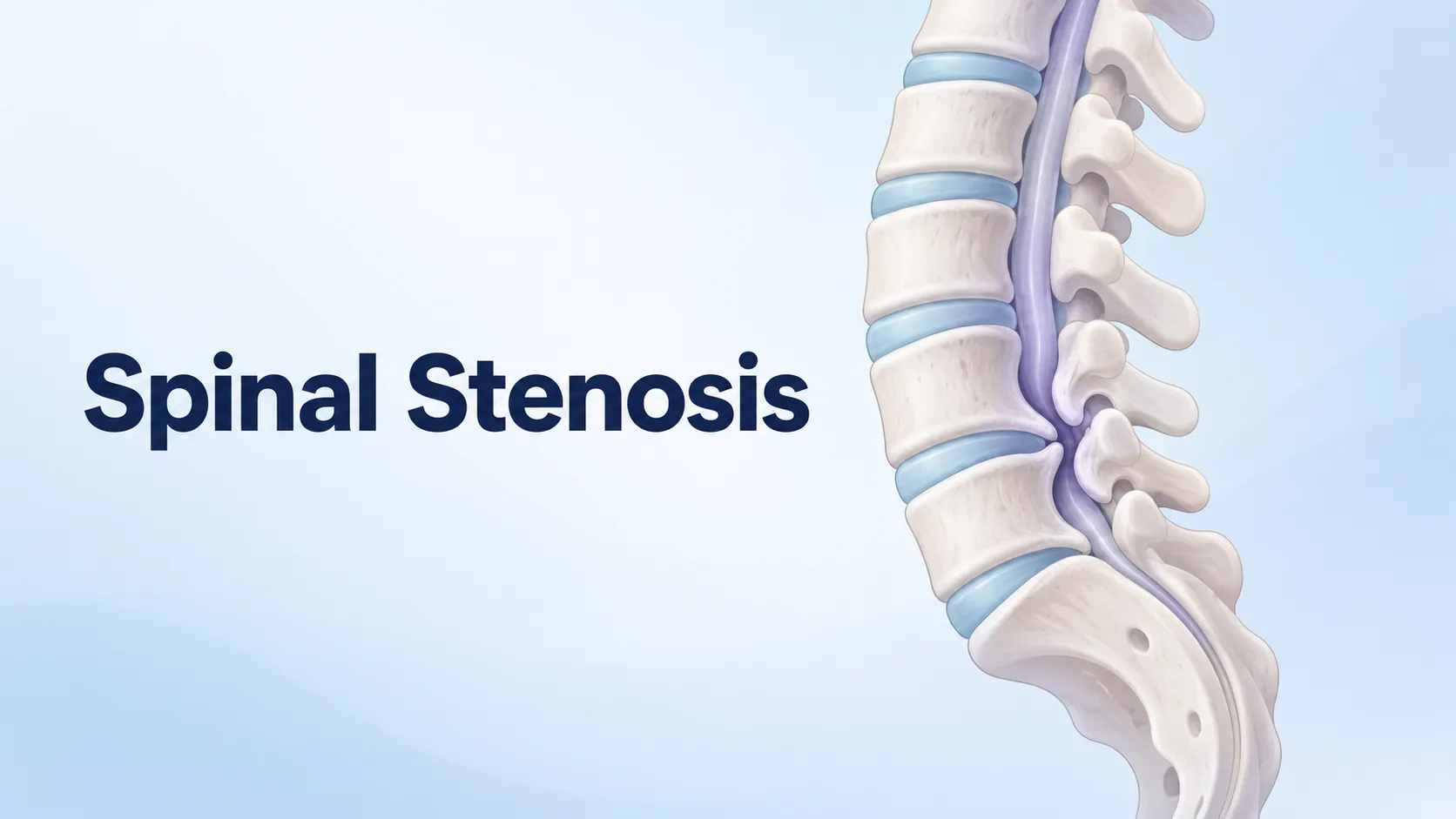
You may be able to sit comfortably but develop aching, numbness, tingling, or heaviness in your legs after standing or walking for a while. Leaning forward or sitting down may help, but symptoms return when you stand up.
This pattern can occur with lumbar spinal stenosis. Spinal stenosis means that one or more spaces around the spinal cord or spinal nerves have become narrower. Arthritis, disc changes, bone spurs, and thickened ligaments can all contribute to that narrowing.
The narrowing itself does not always cause symptoms. What matters is whether it affects nerve function and how that changes your ability to walk, stand, work, exercise, or take part in everyday activities.
What Is Spinal Stenosis?
Spinal stenosis is a narrowing of the spaces around the spinal cord or spinal nerves. The narrowing can occur in the lower back, neck, or middle back.
It often develops as the spine changes over time. Arthritis, bone spurs, disc changes, thickened ligaments, and a naturally narrow spinal canal can all reduce the space available for nerves.
Spinal stenosis does not always cause symptoms. Some people have narrowing on an MRI or X-ray without pain or activity limitations. Symptoms are more likely when the narrowing affects nerve function, which may lead to back or neck pain, leg or arm symptoms, numbness, tingling, weakness, balance changes, or difficulty walking.
An imaging report alone cannot establish that spinal stenosis is causing your symptoms. A clinician considers the scan alongside your symptom pattern, physical examination, strength, sensation, balance, and activity limitations.
What Causes Spinal Stenosis?

Spinal stenosis usually develops gradually as several spinal structures change. Arthritis can enlarge the spinal joints, bone spurs can form, discs can lose height or bulge, and supporting ligaments can become thicker. Each change can reduce the space available for the spinal cord or nerves.
Age-related changes are common, but symptoms are not determined by age or imaging alone. A person may have significant narrowing without pain, while someone with less obvious narrowing may have meaningful symptoms.
Symptoms often become noticeable when the nerves have less room to tolerate certain positions or activity demands. In the lower back, standing and walking may bring on leg symptoms for some people. In the neck, nerve involvement may affect the arms, hands, walking, or balance.
Spinal stenosis can affect different areas of the spine. The symptoms depend partly on whether the narrowing affects nerves traveling to the legs, arms, or hands.
Spinal stenosis can affect different areas of the spine. The symptoms depend partly on whether the narrowing affects nerves traveling to the legs, arms, or hands.
| Location | Symptoms that may occur | Activities or functions that may be affected |
|---|---|---|
| Lower back, or lumbar spine | Low-back discomfort, leg pain, numbness, tingling, heaviness, or weakness | Walking, standing, shopping, cooking, hiking, or prolonged time on your feet |
| Neck, or cervical spine | Neck pain, arm or hand numbness, weakness, changes in coordination, or balance problems | Walking, using stairs, writing, buttoning clothing, or other hand tasks |
| Middle back, or thoracic spine | Less common and dependent on the nerves involved | Symptoms may affect the trunk, legs, walking, or balance |
This table describes patterns that can occur with spinal stenosis, not a way to diagnose yourself. Other conditions can cause similar symptoms, so a clinician must interpret the pattern alongside a physical examination.
What Does Spinal Stenosis Feel Like?

Lumbar spinal stenosis may cause low-back discomfort, pain traveling into the legs, tingling, numbness, heaviness, or weakness. Some people notice symptoms on one side, while others feel them in both legs.
A common pattern is that symptoms build during standing or walking and ease after sitting or bending forward. You may notice the problem while walking through a grocery store, waiting in line, cooking dinner, or taking a longer walk around the neighborhood. A shopping cart or countertop may help because leaning forward changes your spine’s position.
Activity doesn’t affect everyone the same way. Hills, uneven ground, a faster pace, carrying a backpack, or simply walking farther than usual may change your symptoms. Fatigue can also make a familiar activity harder later in the day.
Notice how your symptoms respond during the activity and after you stop. Do they settle quickly when you sit, or do they continue for several hours? Can you tolerate several shorter walks better than one long walk? These details can help a physical therapist understand your condition, but they cannot confirm a diagnosis on their own.
Leg symptoms can also come from the hip, peripheral nerves, blood vessels, muscles, or another part of the spine. Symptom location alone does not establish the cause.
Staying Active With Spinal Stenosis

A diagnosis or imaging finding does not automatically mean you need to stop moving. At the same time, repeatedly pushing through increasing numbness, weakness, or loss of balance is not a useful training strategy.
A better approach is to adjust the activity so you can continue building capacity without creating a prolonged flare-up. That may mean walking for shorter intervals, sitting for planned breaks during errands, changing your pace, or using a stationary bicycle if the seated position is more comfortable.
Progression should match the activity you need to perform. Someone who wants to walk through a large store may start with several shorter walks. Someone preparing for a hiking trip may begin on level ground before adding distance, hills, or uneven terrain. Someone who stands at work may practice alternating between standing, walking, and supported sitting.
Increase one demand at a time and pay attention to your symptoms later that day and the next morning. A manageable response should return close to your usual level by later that day or the following morning. If symptoms continue to build, spread, or affect strength and balance, adjust and reassess the activity.
Spinal Stenosis vs. Sciatica
Spinal stenosis describes a narrowing in the spine. Sciatica describes symptoms involving the sciatic nerve or related nerve roots. The two can overlap, but they are not interchangeable.
Spinal stenosis may contribute to sciatic-type pain, tingling, numbness, or weakness. However, leg symptoms can also come from a disc problem, the hip, peripheral nerves, circulation, or another condition.
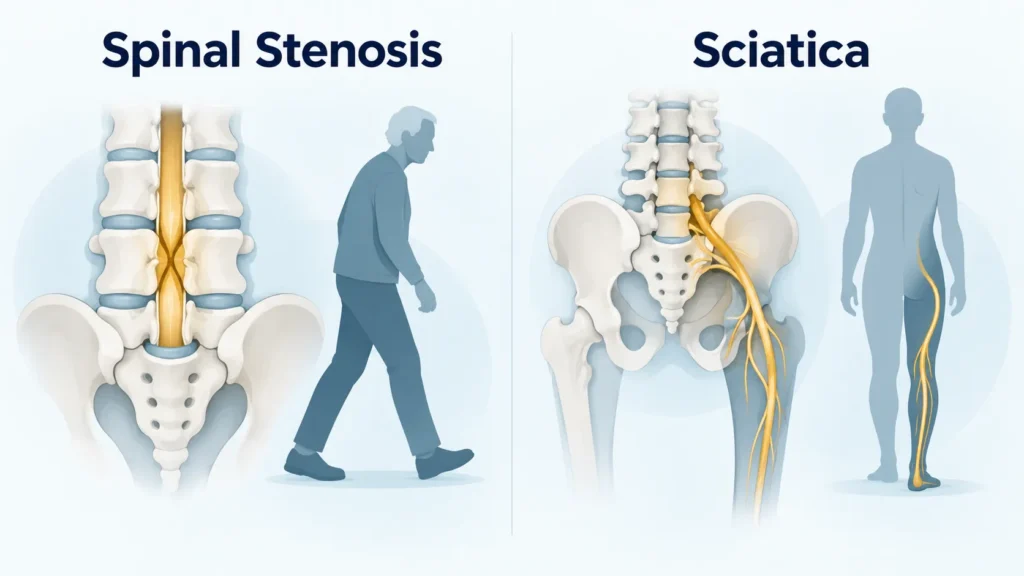
The difference matters because treatment depends on what is affecting the nerve and how symptoms behave. Symptoms that increase mainly with standing and walking may suggest a different mechanical pattern than symptoms that worsen with lifting, bending, coughing, or prolonged sitting. These patterns can guide an evaluation, but they cannot confirm a diagnosis on their own.
How Physical Therapy Evaluates Spinal Stenosis
A physical therapist will start by asking what you can and cannot do. The important details may include how far you can walk, how long you can stand, what happens when you sit, and whether symptoms affect work, sleep, exercise, travel, or recreation.
The therapist may observe your walking and assess how symptoms change with different positions or activity demands. They may also examine leg strength, sensation, balance, coordination, and movement in the hips and lower back.
During the evaluation, the therapist may compare your walking and standing tolerance, observe whether sitting or leaning forward changes your symptoms, and assess strength, sensation, balance, coordination, and movement in the hips and lower back. The goal is to connect those findings to the activities you need to perform, such as shopping, working on your feet, climbing stairs, hiking, or exercising.
A medical diagnosis may be based on your symptom history, physical examination, and neurological findings. When clinically appropriate, imaging such as an MRI can show the location and degree of narrowing, but clinicians interpret the scan alongside your symptoms and function. An imaging finding alone does not establish that spinal stenosis is causing your limitations.
How Physical Therapy Helps Spinal Stenosis
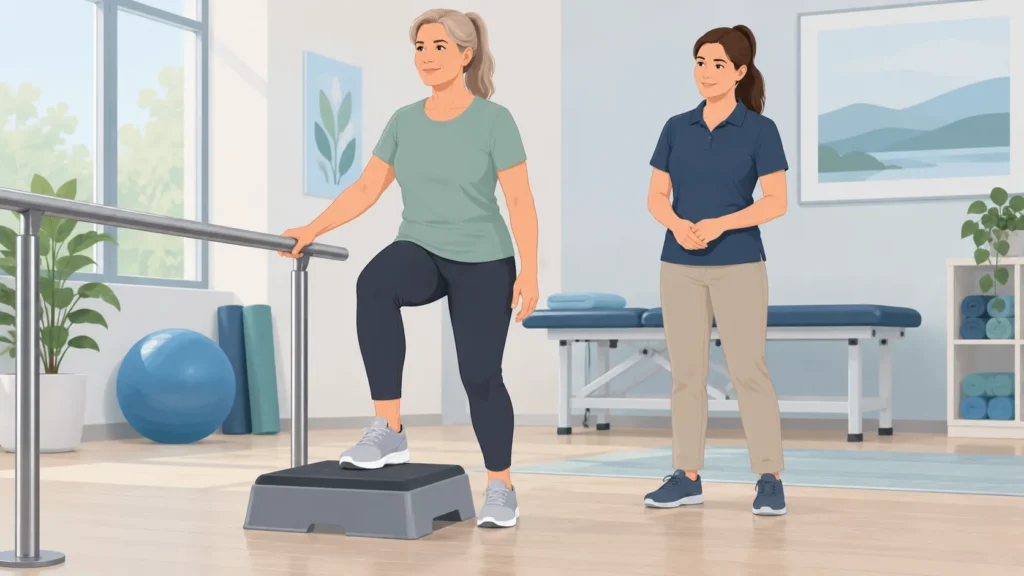
Physical therapy does not remove structural narrowing from the spine, but it may help you manage symptoms and improve your ability to move through daily life.
Treatment may include education about symptom behavior, activity modification, progressive strengthening, balance work, and conditioning. The plan is adjusted to the positions and activities you currently tolerate, then progressed as your function improves.
For example, someone who develops leg heaviness after 10 minutes of walking may begin with shorter walking intervals and planned recovery breaks. Strengthening and conditioning can be done in more comfortable positions, then gradually connected to standing and walking. Over time, the person may work toward longer errands, neighborhood walks, or other specific goals.
Progress is not measured only by whether every symptom disappears. It may look like walking farther before symptoms begin, recovering faster after activity, taking fewer breaks, feeling steadier on stairs, or returning to exercise with more confidence.
Different activities may advance at different rates. Progress walking distance, standing tolerance, balance, and recreational goals based on the person’s symptoms, examination findings, and response between sessions.
Some people also need medical follow-up with a primary care clinician, sports medicine physician, neurologist, or spine specialist, depending on their symptoms and examination findings.
When Should You Seek Help?
A physical therapy evaluation may help when back or leg symptoms limit walking, standing, work, exercise, sleep, or daily activities. It can also help when symptoms keep returning, or you are unsure how to stay active without repeatedly aggravating them.
There is no single timeline for improvement. Progress depends on symptom severity and behavior, neurological findings, overall conditioning, other health factors, and the demands of your daily life. Improvement may mean walking farther, recovering more quickly, needing fewer breaks, or returning to an activity that had become difficult.
Seek prompt medical evaluation for new or worsening significant weakness, repeated falls, major changes in coordination, or new bowel or bladder changes. Don’t manage these symptoms by changing your exercise routine alone.
Get Help With Walking or Standing Symptoms
If back or leg symptoms are limiting your walking, standing, work, exercise, or daily activities, Calibration Physical Therapy in Overland Park, Kansas can help evaluate the problem and build a treatment plan around your goals. Schedule an evaluation to get started.
Tags

About the Author
Dr. Traci Smiley, DPT
Traci is a licensed physical therapist and owner of Calibration Physical Therapy, serving the Kansas City area. A Board-Certified Orthopedic Clinical Specialist with advanced training in manual therapy and strength conditioning, she helps individuals overcome pain and return to what they love.