
If you exercise regularly, feeling tired after a hard workout is normal. Most people expect some soreness, fatigue, or a temporary drop in energy after a demanding training session.
The problem is when that fatigue never seems to go away. You might feel drained during workouts, struggle to recover between sessions, or notice that your performance is slowly declining despite continuing to train hard.
Underfueling happens when your body consistently receives less energy than it needs to support both exercise and normal daily function. This can affect runners, lifters, recreational athletes, active adults, and people with busy lifestyles who exercise several times per week.
In sports medicine, prolonged underfueling may contribute to a condition known as Relative Energy Deficiency in Sport (RED-S). RED-S can affect recovery, performance, bone health, hormonal function, and overall health when energy availability remains too low for an extended period.
It is not always obvious at first. Many people are still eating regularly, still completing workouts, and still functioning day to day. The issue is that their total energy intake may not be sufficient to meet the demands they are placing on their bodies.
Understanding the signs of underfueling can help you recognize when the issue is not a lack of motivation or fitness, but a mismatch between your activity level and your body’s energy needs. This article explains why underfueling happens, what it feels like, how symptoms typically develop, and how physical therapy can help identify contributing factors and support a healthy return to training.
What Causes Underfueling?

Underfueling is not always the result of intentionally dieting. In many cases, active people simply underestimate how much energy they need to support training, recovery, work, family responsibilities, and everyday movement.
Sometimes the problem develops after increasing mileage, adding extra gym sessions, training for a race, or returning to exercise after a period of time away. Energy demands increase, but eating habits remain largely unchanged. A routine that worked during a lower-activity period may no longer be enough.
Other common contributors include:
- Skipping meals because of a busy schedule
- Trying to lose weight while increasing training volume
- Avoiding certain food groups without adequate replacements
- Training multiple times per day
- Prioritizing exercise while neglecting recovery habits
- Relying on small snacks instead of complete meals
Underfueling can also happen when people spread their food intake poorly across the day. For example, someone may eat enough by dinner but train hard in the morning or afternoon without enough fuel beforehand. The total day may look reasonable, but the timing does not support the activity’s demand.
The body can compensate for a short period, but prolonged energy deficits often lead to noticeable changes in recovery, performance, and overall well-being.
What Does Underfueling Feel Like?
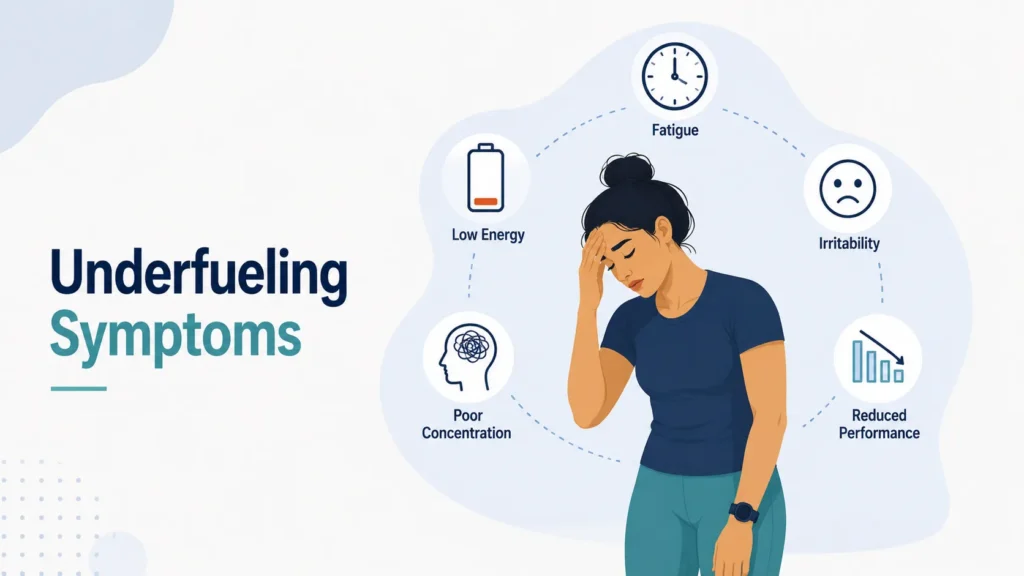
Many people expect underfueling to feel like extreme hunger. In reality, the signs are often more subtle and can be mistaken for stress, poor sleep, overtraining, or simply getting older.
Symptoms typically develop gradually. Someone who previously felt strong and energized during workouts may start feeling flat, sluggish, or unusually fatigued throughout the day.
The following patterns are commonly reported:
| What people often notice | What it may mean |
|---|---|
| Workouts feel harder than usual | Energy stores may not be keeping up with training demands |
| Fatigue that lingers for days | Recovery may be incomplete between sessions |
| Reduced performance | The body may not have enough resources to adapt to training |
| Increased soreness | Recovery processes can become less efficient |
| Difficulty concentrating | Low energy availability can affect more than muscles |
| Feeling cold more often | The body may be conserving energy |
Some people also notice mood changes, reduced motivation, disrupted sleep, frequent illness, or a feeling of constantly running on empty despite maintaining their normal exercise routine.
How Symptoms Behave During Activity
One of the most frustrating aspects of underfueling is that symptoms do not always appear immediately.
A runner may complete a workout successfully but feel unusually exhausted later that afternoon. A recreational athlete may perform reasonably well during a weekend competition yet struggle with fatigue for several days afterward. Someone in the gym may find that weights that previously felt manageable suddenly seem much heavier.
Many people notice that symptoms become more apparent as training volume accumulates. A single workout may feel acceptable, but multiple sessions over several days can create a growing sense of fatigue that never fully resolves.
Recovery also tends to take longer. Activities that once caused minor soreness may leave someone feeling depleted for days. The issue is often not the workout itself but the body’s reduced ability to recover from repeated physical demands.
Training quality often changes before training quantity does. An athlete may still complete their usual workouts but notice that their pace, strength, coordination, or concentration is slipping.
Outside of exercise, people may find themselves needing more naps, relying heavily on caffeine, struggling through workdays, or feeling unusually tired during routine tasks such as walking the dog, climbing stairs, or completing household chores.
Common Mistakes People Make When Symptoms Start
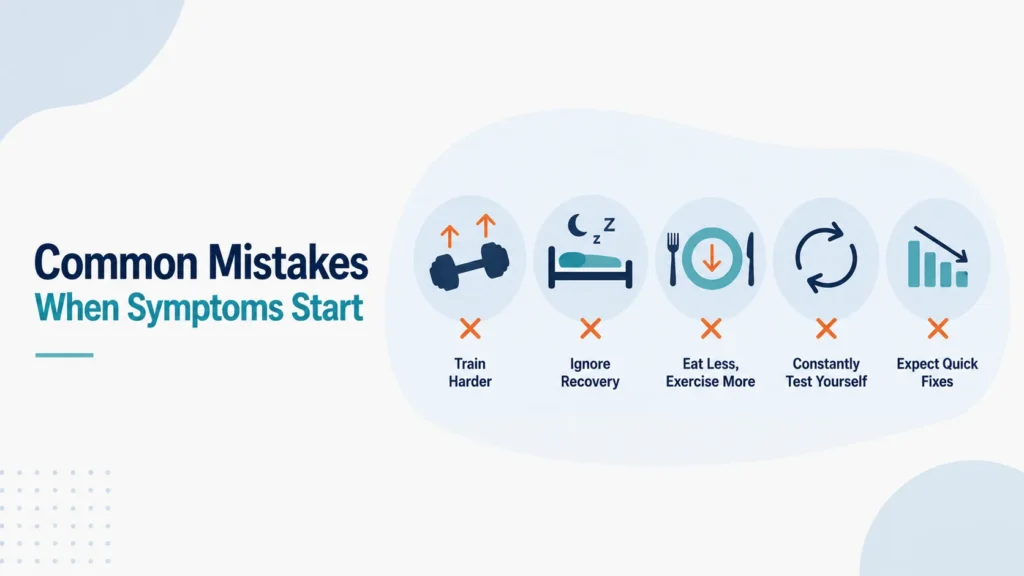
One of the most common mistakes is assuming the answer is to train harder.
When performance declines, many active people respond by adding extra workouts, increasing intensity, or pushing through fatigue to regain fitness. Unfortunately, if the underlying issue is inadequate energy intake, this approach often worsens the problem.
Another common mistake is focusing exclusively on exercise while ignoring recovery. Training sessions are highly visible and easy to measure, but recovery happens between workouts. If the body lacks adequate energy, sleep, hydration, and nutrition, progress can stall even when training is well designed.
Some people become trapped in a cycle of trying to eat less while exercising more. They may see temporary weight changes but eventually notice increasing fatigue, declining performance, and a growing inability to recover.
Others repeatedly test themselves. They may continue attempting hard workouts every few days to see whether they feel better yet. When recovery is incomplete, these frequent tests can make symptoms more persistent and create frustration when performance fails to improve.
Why Symptoms Often Develop Gradually
The body has several ways to compensate when energy intake falls short for a brief period. Energy stores can help bridge temporary gaps, allowing someone to continue training and functioning normally. Because performance may initially remain stable, many people assume everything is working fine.
Over time, however, the gap between energy intake and energy expenditure can become more difficult to sustain. Recovery slows. Training adaptations become less effective. Fatigue begins to accumulate.
Many active adults ignore the early warning signs because they seem manageable. As weeks or months pass, those subtle changes often become more consistent and begin affecting both athletic performance and daily life.
Part of the challenge is that underfueling rarely creates a single dramatic symptom. Instead, people often notice several small changes that seem unrelated. They may feel a little more tired during workouts, need extra caffeine in the afternoon, struggle to hit previous training numbers, and feel less motivated to exercise. Each issue may seem minor on its own.
Life stress can make recognition even harder. Busy work schedules, family responsibilities, poor sleep, and travel can all create fatigue. As a result, many people assume their symptoms are simply the result of a hectic lifestyle rather than an energy deficit that has been developing for months.
This gradual progression is one reason underfueling is often overlooked until symptoms become difficult to ignore.
Underfueling vs Overtraining
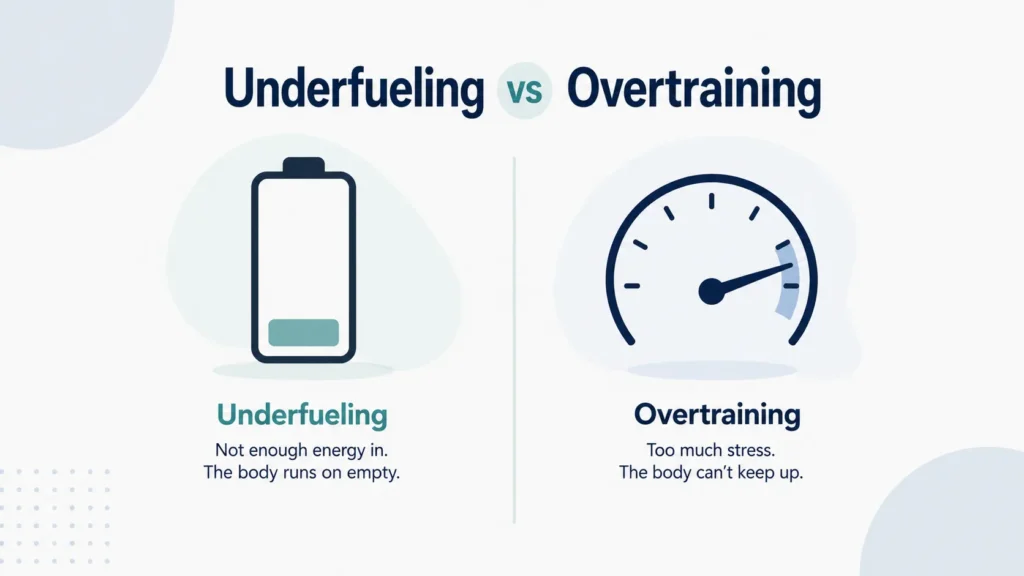
People often use the terms interchangeably, but they describe different problems.
While overtraining involves excessive training stress relative to recovery, underfueling specifically refers to inadequate energy availability. In many cases, the two can overlap.
The distinction matters because reducing training volume alone may not solve the problem if energy intake remains insufficient.
| If you notice | Underfueling may be more likely when |
|---|---|
| Persistent fatigue | Food intake has not increased with training demands |
| Poor recovery | Symptoms improve when nutrition improves |
| Performance decline | Training volume has recently increased |
| Low energy throughout the day | Fatigue extends beyond workouts |
| Feeling cold or unusually hungry | General energy availability appears low |
In many cases, both factors contribute and need to be addressed together.
How Physical Therapy Evaluates Underfueling-Related Concerns

Physical therapists do not diagnose nutritional deficiencies, but they frequently work with active people whose symptoms may be influenced by inadequate recovery and energy availability.
Because persistent fatigue can have multiple causes, physical therapists also consider whether symptoms warrant referral to a physician or other healthcare professional for further evaluation.
The evaluation process often begins with an understanding of training history, recent changes in activity, recovery habits, and symptom patterns.
Several findings may raise questions about recovery capacity:
| During evaluation | What it may suggest |
|---|---|
| Rapid increase in training volume | Recovery demands may have exceeded current capacity |
| Persistent soreness | Recovery may be lagging behind the workload |
| Declining performance despite consistent training | Adaptation may be limited by recovery factors |
| Fatigue affecting daily activities | Symptoms extend beyond normal exercise fatigue |
| Recurrent aches and pains | Tissue recovery may be compromised |
A physical therapist also evaluates movement quality, strength, mobility, training demands, and functional activities. The goal is to understand how the body responds to current workloads and to identify factors that may be contributing to ongoing symptoms.
When appropriate, physical therapists may recommend discussing nutrition concerns with a physician or registered dietitian to ensure all aspects of recovery are being addressed.
How Physical Therapy Helps

Physical therapy is not about simply telling someone to stop exercising. Instead, treatment focuses on understanding the relationship between symptoms, training load, recovery capacity, and movement demands. For many active people, the goal is to continue moving while improving recovery rather than completely eliminating activity.
A physical therapist looks at the entire picture. Someone may arrive complaining about fatigue, slower running times, lingering soreness, or recurring aches and pains, but those symptoms rarely exist in isolation. Training volume, sleep quality, work stress, recovery habits, recent changes in activity, and nutritional considerations can all influence how the body responds to exercise.
Physical therapists help identify whether current training demands are appropriate for the individual’s present capacity. Sometimes, temporary modifications allow symptoms to settle while maintaining fitness and consistency.
Treatment may also focus on improving movement efficiency, addressing strength deficits, restoring mobility limitations, and reducing unnecessary stress on specific tissues. When the body moves more efficiently, the overall workload may be easier to tolerate, and recovery demands may be more manageable.
Education is often a major part of the process. Many people assume they need to either push harder or stop completely when symptoms develop. Physical therapy helps create a middle ground by identifying which activities can continue, which may need temporary adjustment, and how to progress safely over time.
Perhaps most importantly, physical therapy helps people understand how to adjust activity levels in response to symptoms rather than relying solely on motivation or willpower. This approach often leads to more consistent training, better recovery, and greater confidence in returning to exercise.
Rehabilitation Progression
Recovery from underfueling-related fatigue is rarely an all-or-nothing process. Rehabilitation typically moves through overlapping phases as recovery improves and activity tolerance returns.
| Rehab phase | Main goal |
|---|---|
| Early phase | Reduce excessive fatigue and identify contributing factors |
| Recovery phase | Improve energy availability and support recovery |
| Rebuilding phase | Gradually restore strength, endurance, and training consistency |
| Return to performance | Reintroduce higher-demand exercise and sport participation |
Progression depends on symptom response rather than a fixed timeline. Some people improve quickly after making recovery-focused changes, while others require a more gradual approach.
Returning to Activity

Returning to full activity works best when training progresses gradually, and recovery remains a priority.
Many active adults feel tempted to immediately resume their previous training volume once they start feeling better. However, a rapid return to high mileage, intense workouts, or multiple training sessions per day can recreate the same cycle that contributed to symptoms in the first place.
A better approach is to increase workload progressively while monitoring energy levels, soreness, sleep quality, and recovery between sessions. Consistent tolerance is usually a better sign of readiness than completing one particularly hard workout.
This is especially important for runners, endurance athletes, and active adults preparing for events or competitions. The goal is to complete multiple training sessions over time while continuing to recover well enough to adapt and improve.
Confidence also tends to improve as people experience successful training weeks without excessive fatigue. Better sleep, more stable energy, improved workout quality, and less lingering fatigue are often signs that recovery is moving in the right direction.
When to See a Physical Therapist
It may be helpful to schedule an evaluation if:
- Fatigue has persisted for several weeks despite rest
- Workouts feel significantly harder than expected
- Recovery takes much longer than it used to
- Recurrent aches and pains are limiting activity
- You are unsure whether symptoms are related to training, recovery, or another issue
An evaluation can help determine whether training load, movement limitations, recovery habits, or other factors may be contributing to your symptoms.
Final Thoughts
Underfueling occurs when the body’s energy needs consistently exceed the energy being provided through nutrition. While symptoms often begin gradually, they can eventually affect recovery, performance, daily activities, and overall quality of life.
One of the challenges is that the warning signs often look like other problems. Fatigue, slower recovery, declining performance, lingering soreness, and reduced motivation are easy to blame on stress, aging, or a demanding schedule. In some cases, however, the body is simply not receiving enough energy to support the workload it is placed under.
Addressing recovery, training demands, and overall energy availability often allows people to return to more consistent progress and a healthier relationship with exercise.
How Calibration Physical Therapy Can Help
Persistent fatigue, recurring aches and pains, and declining exercise performance are not always problems that can be solved by pushing harder. Sometimes, a closer look at training demands, recovery habits, movement limitations, and overall activity levels is needed to understand what is contributing to the issue.
At Calibration Physical Therapy in Overland Park, Kansas, we help active adults, runners, lifters, and recreational athletes evaluate factors that may be affecting recovery and performance. Through a thorough assessment and individualized treatment plan, we can help you better understand your symptoms and build a practical path back to comfortable, confident activity.
Tags

About the Author
Dr. Traci Smiley, DPT
Traci is a licensed physical therapist and owner of Calibration Physical Therapy, serving the Kansas City area. A Board-Certified Orthopedic Clinical Specialist with advanced training in manual therapy and strength conditioning, she helps individuals overcome pain and return to what they love.