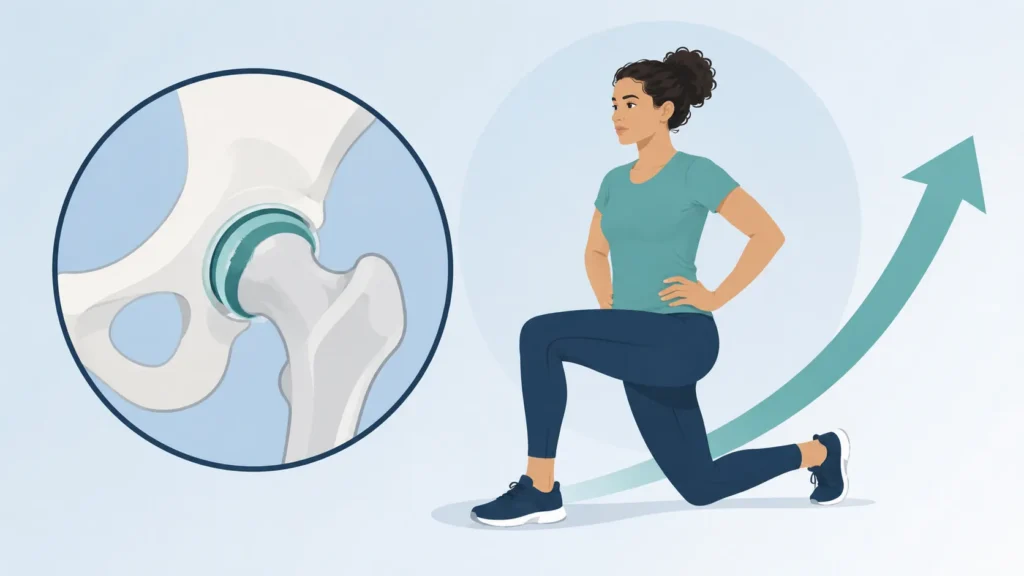
Athletes are often told they need to stretch more when a movement starts to feel limited. Sometimes that is true. Just as often, the issue is not flexibility itself but how well the body can control the movement it already has.
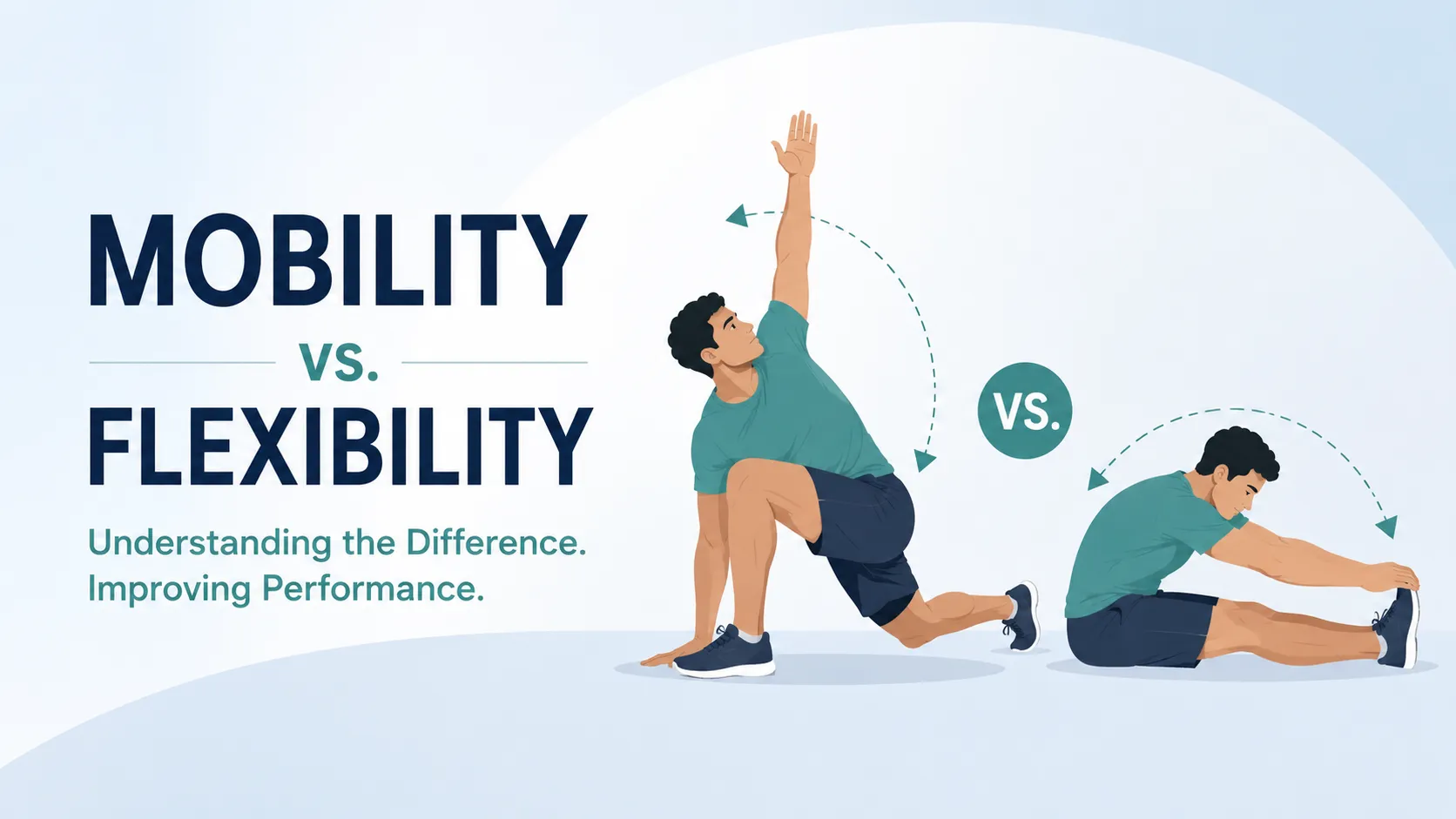
The difference between mobility and flexibility matters because flexibility describes how much range a muscle or joint can access passively, while mobility describes how well you can actively use and control that range during real movement.
For runners, lifters, recreational athletes, and active adults, this difference matters because performance rarely depends solely on passive range. A deep squat, smooth stride, stable overhead press, or powerful rotation all require strength, coordination, control, and enough available range to move efficiently.
This article explains the difference between mobility and flexibility, how each affects athletic performance, and how physical therapy can help identify what is actually limiting your movement.
Why Mobility Matters More Than Flexibility for Performance

Mobility and flexibility are related, but they are not interchangeable.
Flexibility gives your body access to a range of motion.
Mobility helps you use that range during activity.
An athlete may be flexible enough to reach a position during stretching but still lack the strength, timing, or control to use that same position while running, lifting, jumping, or changing direction.
That is why stretching alone does not always solve stiffness, restricted movement, or performance limitations. If the issue is control, strength, coordination, or workload tolerance, the plan needs to address more than tissue length.
In practical terms, most athletes need enough flexibility to move well, but they need mobility to perform well.
What Causes Mobility and Flexibility Limitations?
Movement limitations rarely develop because a single muscle suddenly becomes tight. More often, they reflect how your body has adapted to the demands you place on it over time.
For athletes and active adults, mobility and flexibility are influenced by training history, sport demands, strength, previous injuries, recovery habits, and the amount of time spent in certain positions. A runner who spends years logging mileage may develop different movement adaptations than someone who lifts weights, cycles, or plays tennis several times per week.
Some of these adaptations are beneficial. A baseball pitcher, for example, may develop changes in shoulder mobility that actually improve throwing performance. Cyclists often become very efficient in flexed positions because that is where they spend most of their training time. Problems tend to arise when your movement capacity no longer matches the demands you place on your body.
This is one reason why two people with the same complaint of tight hips may require completely different approaches. One person may genuinely benefit from improving flexibility, while another may need better strength, movement control, recovery, or training management.
How Mobility and Flexibility Problems Affect Performance

Mobility and flexibility limitations rarely present as isolated problems. Instead, athletes usually notice changes in performance, movement quality, or recovery during specific activities.
How Athletes Describe Movement Limitations
Most people do not walk into a physical therapy clinic and say they have a mobility problem or a flexibility problem.
Instead, they describe specific frustrations. A runner might say their stride feels shorter than it used to. A lifter may notice they can no longer comfortably reach the bottom of a squat. A golfer might feel as though they have lost rotation and power in their swing. Others describe feeling stiff during warm-ups, feeling unstable in certain positions, or one side of their body moving differently from the other.
The sensation of being tight does not always mean that a muscle is physically short or that flexibility is the primary problem. Many athletes have adequate flexibility when tested passively but struggle to actively control that same range of motion during movement. In those cases, the issue may be related to strength, coordination, balance, or movement control.
How Symptoms Change During Activity
The timing of symptoms often provides important information about what may be contributing to movement limitations.
Some athletes feel stiff during the first few minutes of exercise but gradually loosen up as they warm up. Others move well initially but become increasingly restricted, unstable, or inefficient as fatigue develops. These patterns often provide important clues about whether the primary limitation involves flexibility, mobility, strength, recovery, or training load.
For example, a runner who develops hip stiffness only during longer runs may be dealing with a combination of strength, endurance, and workload management issues rather than a true flexibility deficit. A weightlifter who loses squat depth during heavier sets may have adequate mobility but struggle to maintain control and positioning under load. Similarly, a tennis player or golfer who notices reduced rotation late in a match may be experiencing fatigue-related changes in movement quality rather than a permanent loss of range of motion.
For this reason, physical therapists rarely evaluate mobility using a single measurement in isolation. Understanding how movement changes during activity, under load, and during fatigue often provides more useful information than simply measuring how far a joint can move.
Common Mistakes People Make When Symptoms Start
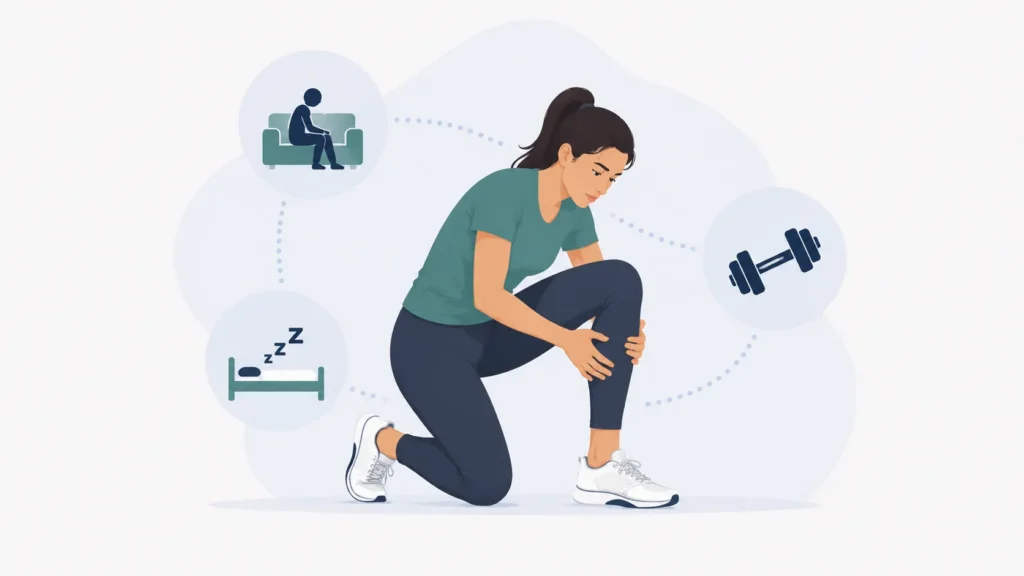
When movement starts to feel restricted, most athletes and active adults try to solve the problem themselves first. Sometimes those approaches help, but in many cases, the body’s response to pain, stiffness, or movement limitations can be misleading. Several common assumptions can make it harder to identify what is actually contributing to the problem.
Assuming Every Problem Is a Flexibility Problem
When movement starts to feel restricted, most people assume they simply need to stretch more. Sometimes that helps, but many mobility limitations are actually related to strength, motor control, fatigue, or changes in training load. Feeling tight does not necessarily mean that a muscle or joint lacks range of motion.
Treating the Symptom Instead of the Cause
Athletes often focus on the area that feels restricted rather than identifying why it feels restricted.
For example, persistent hip tightness during running may reflect strength or endurance limitations, while difficulty reaching squat depth may involve ankle mobility, balance, or movement control rather than hip flexibility alone.
Collecting Exercises Instead of Identifying the Problem
Social media offers thousands of mobility drills, stretches, and movement routines. The challenge is that the best intervention depends entirely on the reason for the movement limitation. Performing more exercises is not always the same thing as addressing the underlying issue.
Ignoring Gradual Changes in Performance
Many mobility problems develop slowly enough that athletes simply adapt to them. Changes in movement quality, recovery, or performance may occur for months before pain or significant limitations appear. Addressing these changes early is often easier than trying to reverse them later.
Separating Mobility From Strength
Long-term improvements in mobility often require developing strength and control within new ranges of motion. Gaining additional flexibility without learning how to use it during activity frequently produces only temporary results.
Why Movement Limitations Often Develop Gradually

Most mobility and flexibility limitations do not appear overnight. Instead, they develop gradually as the body adapts to the demands placed on it over time.
This adaptation process is not inherently bad. In fact, many sport-specific movement patterns are beneficial. A cyclist may become more comfortable and efficient in flexed positions, while a baseball player may develop shoulder adaptations that support throwing performance. The body is constantly adjusting to the activities it performs most often.
Problems tend to occur when movement capacity no longer matches the demands of training, work, or daily life. This often happens after increases in training volume, changes in activity, periods of reduced recovery, or previous injuries that alter movement patterns over time.
Many athletes adapt without realizing it until performance, recovery, or movement quality begins to decline.
How Physical Therapy Evaluates Mobility and Flexibility
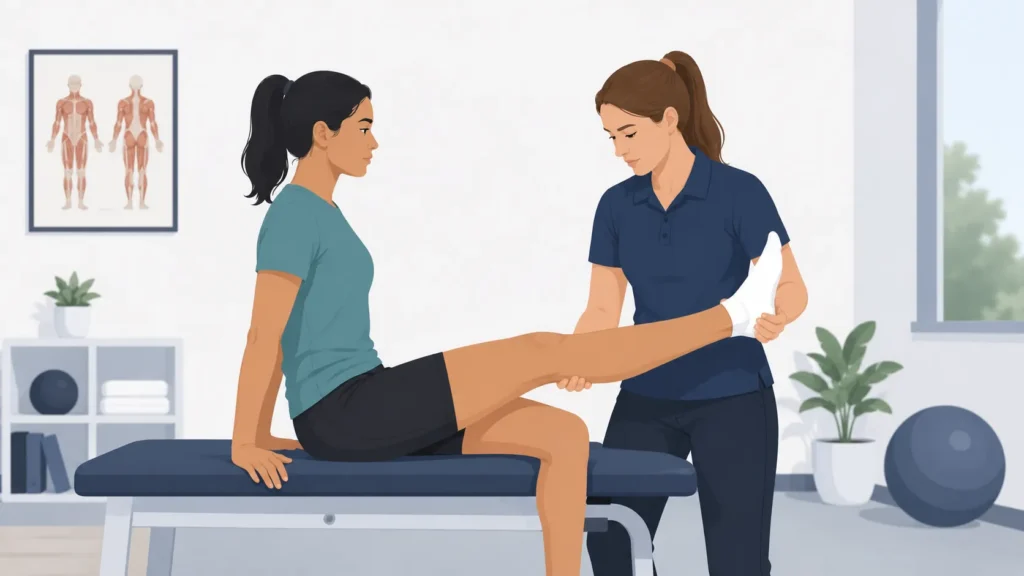
A physical therapy evaluation focuses less on measuring flexibility and more on understanding why movement feels limited in the first place.
The evaluation typically begins with questions about training history, recent changes in activity, previous injuries, recovery patterns, and the specific movements that feel restricted. Understanding when symptoms occur and how they affect performance often provides as much information as the physical examination itself.
From there, a physical therapist may assess range of motion, strength, balance, movement control, and sport-specific movement patterns. The goal is not simply to determine whether a joint moves enough, but whether the body can effectively control that movement during activity.
For example, an athlete struggling to reach the bottom of a squat may have adequate hip flexibility but limitations in ankle mobility, balance, or strength. Similarly, a runner with persistent hip tightness may actually be dealing with changes in running mechanics, muscular endurance, or training load.
This process helps identify which factors are most likely contributing to movement limitations and guides treatment toward improving performance and long-term function.
How Physical Therapy Helps Mobility and Performance
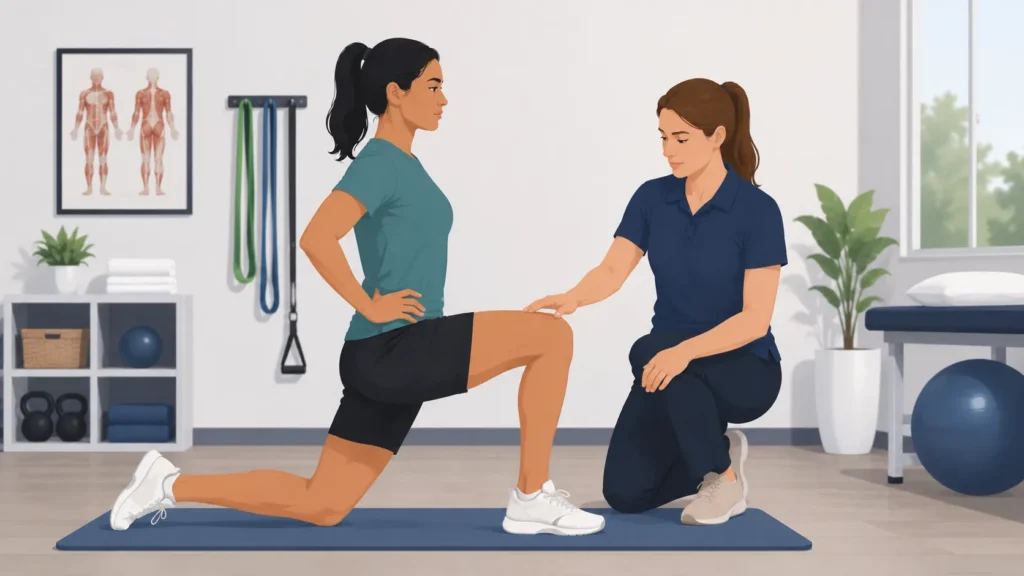
Physical therapy for mobility limitations is usually less about increasing flexibility and more about improving movement capacity.
Treatment depends on why movement feels restricted in the first place. In some cases, improving flexibility is an important part of rehabilitation. In others, the primary focus may be building strength, improving movement control, modifying training load, or helping an athlete become more comfortable and confident using existing movement ranges.
For example, an athlete struggling with overhead shoulder mobility may benefit from improving thoracic mobility, strengthening the muscles that control the shoulder blade, and gradually progressing overhead movement patterns under load.
The goal is not to achieve the maximum possible range of motion, but to develop the mobility, strength, and control needed to perform the activities that matter most.
Rehabilitation Progression
Improving mobility is rarely about achieving a certain number on a flexibility test. The goal is to develop movement that can be controlled, tolerated under load, and ultimately transferred into sport, exercise, and daily activities.
For this reason, rehabilitation typically progresses from restoring movement capacity to building strength and control within that range before finally integrating those improvements into more demanding activities.
| Phase | Primary Goal |
|---|---|
| Initial | Improve movement quality and reduce restrictions |
| Intermediate | Build strength and control within new ranges |
| Advanced | Integrate movement into athletic activities |
| Return to sport | Restore performance-specific movement demands |
The pace of progression depends on symptom response, movement quality, recovery capacity, and the demands of the individual’s sport or activity. Progression is rarely perfectly linear, and temporary setbacks often provide useful information about workload tolerance and recovery.
Returning to Activity
One of the biggest challenges after improving mobility is returning to training at an appropriate pace. Athletes often feel better before their bodies have fully adapted to the new movement demands being placed on them.
For example, a runner whose hip mobility has improved may feel ready to increase mileage, while a lifter who regains squat depth may be tempted to quickly return to previous training loads. In reality, the tissues, movement patterns, and recovery systems involved often require additional time to build tolerance.
For this reason, returning to activity usually involves a gradual increase in volume, intensity, or complexity rather than making multiple changes at once. Monitoring how symptoms respond during activity, later that day, and over the following 24 to 48 hours can provide valuable information about whether progression is occurring at an appropriate pace.

When to See a Physical Therapist
Not every mobility or flexibility limitation requires professional treatment. Many minor movement restrictions improve with changes in training, recovery, or activity levels.
However, it may be worth scheduling an evaluation if movement limitations persist despite self-management efforts, continue to affect performance, or repeatedly return after temporary improvement. Similarly, if stiffness or movement restrictions are associated with pain, changes in movement quality, or difficulty returning to activities you enjoy, a more detailed assessment may be helpful.
One of the benefits of a physical therapy evaluation is that it can help determine whether the primary issue involves flexibility, mobility, strength, movement control, training load, recovery, or a combination of several factors. Identifying the underlying cause often leads to a more efficient and effective approach than continuing to experiment through trial and error.
Final Thoughts
For athletes and active adults, movement limitations are not always simply a matter of tightness. Performance depends on having enough range of motion to perform a task and the strength and control to use that range effectively.
Understanding the difference between mobility and flexibility can help you spend less time chasing temporary solutions and more time addressing the factors that actually affect performance and recovery.
When Mobility Work Never Seems to Stick
If you constantly feel stiff despite stretching, struggle to maintain movement gains, or feel like certain positions never improve, a physical therapy evaluation may help identify what is actually limiting your movement.
At Calibration Physical Therapy in Overland Park, Kansas, we work with active adults, runners, and athletes to evaluate movement patterns, identify performance limitations, and develop individualized plans that support both performance and long-term physical health.
Tags

About the Author
Dr. Traci Smiley, DPT
Traci is a licensed physical therapist and owner of Calibration Physical Therapy, serving the Kansas City area. A Board-Certified Orthopedic Clinical Specialist with advanced training in manual therapy and strength conditioning, she helps individuals overcome pain and return to what they love.