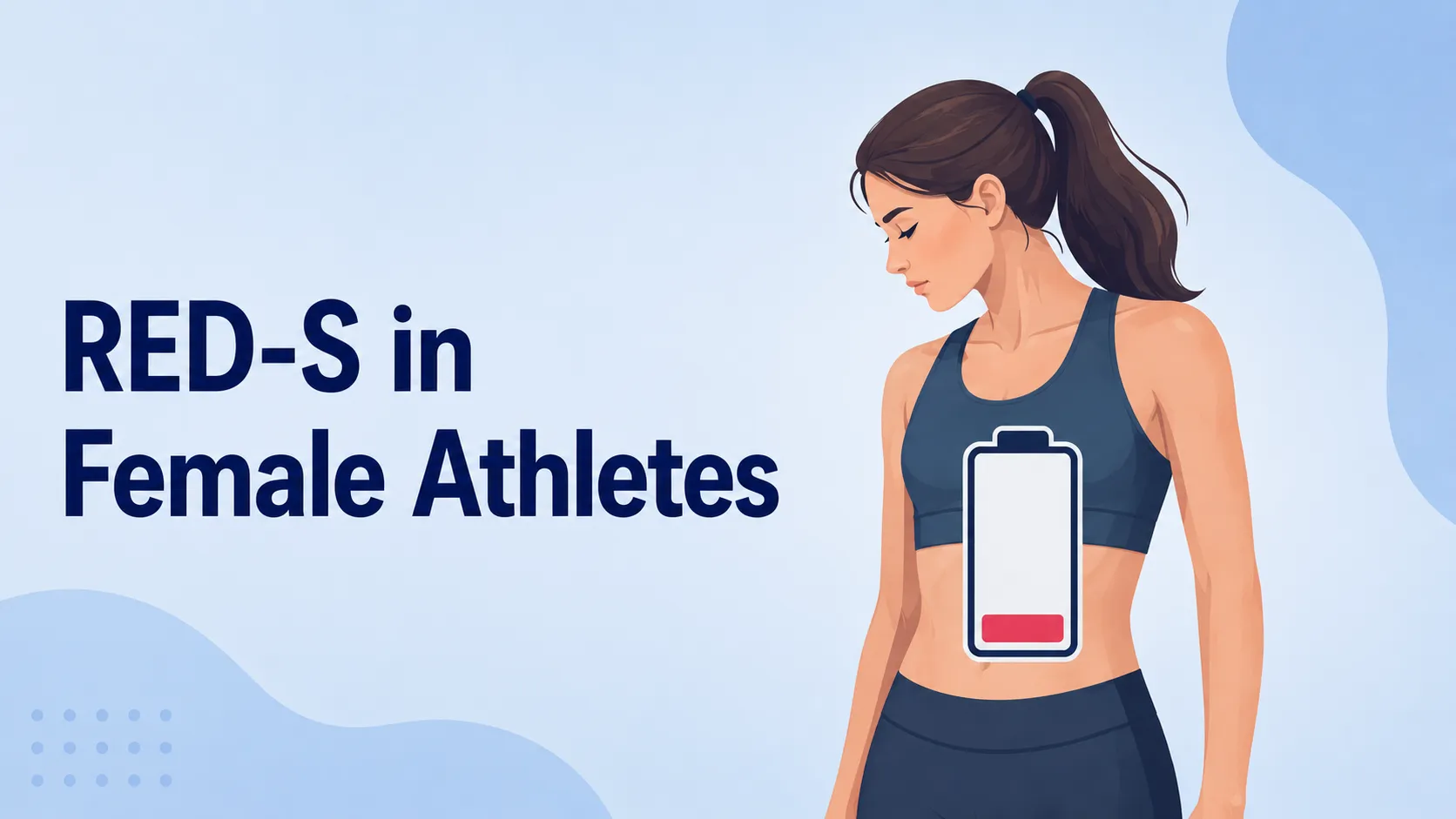
Relative Energy Deficiency in Sport, often called RED-S, occurs when the body lacks sufficient energy to support both athletic activity and normal bodily functions. It is most commonly discussed in female athletes, though it can affect athletes of any gender and at many different activity levels.
Many active women do not realize they are dealing with RED-S at first. Symptoms often develop gradually and may initially look like normal training fatigue or accumulated stress from exercise and daily life. A runner may notice declining performance despite training hard. A recreational athlete may feel unusually sore for days after workouts. Someone lifting regularly may struggle to recover between sessions, even though they are sleeping reasonably well.
RED-S is not limited to high-level or professional athletes. We see similar patterns in runners training for races, highly active adults balancing busy schedules, dancers, fitness enthusiasts, and athletes returning to activity after weight changes or dietary restrictions. Sometimes the issue starts with intentional dieting. Other times, it develops unintentionally because activity demands increase faster than nutrition and recovery can keep up.
This article explains how RED-S develops, what symptoms it often causes, how physical therapy can help identify contributing factors, and when it may be important to seek further medical support.
What Causes RED-S?

RED-S develops when energy intake consistently falls short of the body’s total demands. That includes exercise, daily activity, recovery, hormone regulation, bone health, and normal metabolic function.
In many cases, there is not one single cause. The issue usually develops through a combination of training load, nutrition habits, recovery limitations, and lifestyle stress. A college athlete increasing mileage during preseason may unintentionally underfuel. A busy professional training for a half-marathon may skip meals due to work demands. Someone returning to exercise after a long break may aggressively reduce calories while simultaneously increasing activity.
The body can compensate for a short period, but prolonged low energy availability eventually impairs recovery and performance. Hormonal systems often begin conserving energy, which can influence menstrual health, sleep quality, bone health, mood, and tissue recovery.
Some common contributors include:
- Rapid increases in training volume or intensity
- Restrictive dieting or under-eating
- High activity levels combined with busy schedules
- Frequent double workouts or inadequate recovery days
- Pressure to maintain a certain body composition
- Returning to sport too aggressively after illness or injury
The problem is not always obvious because many athletes continue functioning relatively well for months before symptoms become more noticeable.
What Does RED-S Feel Like?
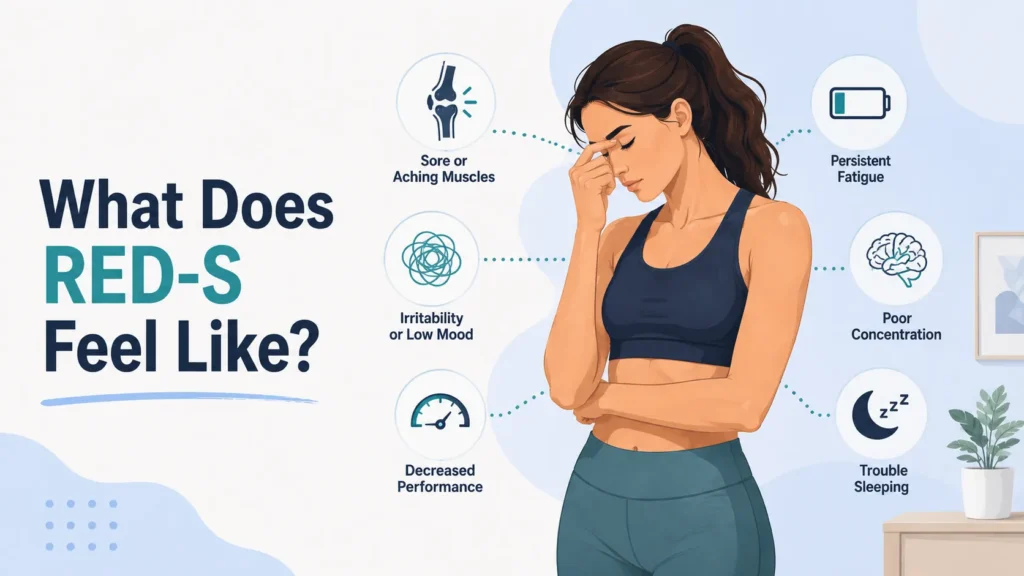
Symptoms can vary significantly between individuals. Some athletes primarily notice a decline in performance, while others experience fatigue, recurring injuries, or changes in menstrual cycles.
Many people describe feeling that their bodies are no longer responding normally to training. Recovery takes longer. Workouts that previously felt manageable suddenly feel harder. Small aches and pains become more persistent.
Before looking at symptom patterns, it helps to understand how RED-S often shows up in everyday activity and training.
| What people often notice | What it may feel like |
|---|---|
| Persistent fatigue | Feeling drained even after rest days |
| Declining performance | Slower pace, reduced strength, poor workout tolerance |
| Frequent soreness | Muscles staying irritated longer than expected |
| Menstrual changes | Irregular cycles or missed periods |
| Recurrent injuries | Repeated tendon pain, stress injuries, or overuse symptoms |
| Difficulty recovering | Feeling sore or depleted for several days after activity |
Some athletes also notice changes outside of exercise. They may feel colder than usual, experience disrupted sleep, struggle with concentration, or notice mood changes during periods of higher training demand.
In more persistent cases, bone stress injuries become a concern because low energy availability can reduce the body’s ability to maintain healthy bone tissue over time.
How Symptoms Behave During Activity
One of the more confusing aspects of RED-S is that symptoms do not always behave predictably. Some athletes feel relatively normal during exercise but crash afterward. Others feel sluggish at the beginning of activity and improve once warmed up.
A runner may complete a workout successfully but feel unusually exhausted later that evening or the following day. A lifter may notice that weights feel heavier despite maintaining the same program. Someone taking group fitness classes may find that soreness accumulates week after week rather than resolving between sessions.
Symptoms also tend to fluctuate based on overall stress and recovery. Sleep disruption, work stress, travel, illness, or a sudden increase in activity can all worsen symptoms. Many athletes mistake this for a motivation or fitness problem rather than a recovery and fueling issue.
Recovery time becomes an important clue. Normally, the body adapts to training stress over time. With RED-S, recovery capacity may instead gradually decline. The body gradually becomes less capable of handling the same workload.
Common Mistakes People Make When Symptoms Start
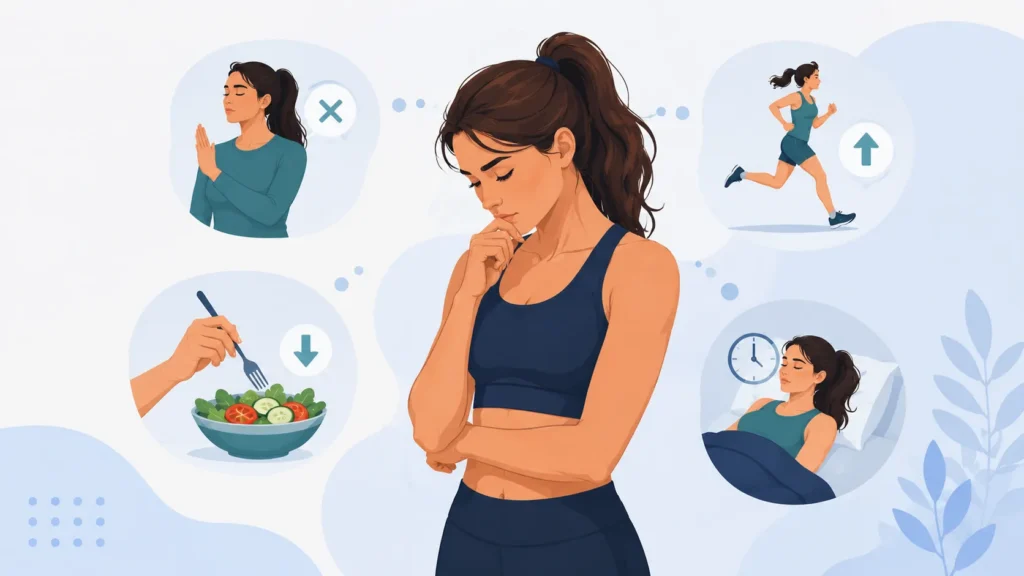
A common mistake is assuming the solution is simply to push harder. Athletes are often used to working through discomfort, so early warning signs can be ignored for quite a while.
Another issue is repeatedly increasing training while simultaneously trying to lose weight. Many people unintentionally create a cycle in which the quality of recovery drops while physical demands continue to rise. The body eventually struggles to keep up.
Some athletes respond by stopping their activity completely out of fear of injury. In many cases, complete inactivity is not necessary. The better approach is usually to modify load, improve recovery, and address nutrition support while maintaining appropriate movement.
Repeatedly testing painful activity can also become a problem. For example, a runner with early signs of bone stress may continue to attempt speed workouts every few days to see if it feels better. This often delays recovery because tissues never fully calm down between loading sessions.
Why Symptoms Often Develop Gradually
RED-S rarely appears overnight. The body is remarkably good at adapting temporarily to increased demands, which is part of why athletes can overlook early signs.
At first, symptoms may seem minor. A person feels slightly more fatigued than normal. Recovery takes an extra day. Performance plateaus instead of improving. These changes are easy to dismiss during busy training periods.
Over time, though, the cumulative effect becomes harder to ignore. Hormonal disruption, reduced recovery capacity, and repeated tissue stress can gradually increase symptom consistency. What started as occasional fatigue may progress into chronic soreness, recurring injuries, or persistent low energy.
This gradual progression is also why early intervention matters. Addressing recovery, fueling, and training balance earlier is often much easier than trying to recover after months of accumulated stress.
RED-S vs Overtraining
RED-S and overtraining can overlap, but they are not exactly the same thing. Understanding the difference helps guide treatment and recovery decisions.
| RED-S | Overtraining |
|---|---|
| Often driven by low energy availability | Often driven by excessive training load |
| Commonly affects hormonal and menstrual health | More closely tied to accumulated training fatigue |
| Frequently linked to underfueling | Can occur even with adequate nutrition |
| May contribute to bone stress injuries | More commonly associated with generalized fatigue and performance decline |
| Recovery usually requires nutrition and workload changes | Recovery focuses more heavily on training modification |
In reality, many athletes experience elements of both simultaneously. A runner who increases mileage while under-eating may develop overlapping symptoms, including fatigue, performance decline, and persistent tissue irritation.
How Physical Therapy Evaluates RED-S

Physical therapists do not diagnose RED-S through imaging or a single test. Evaluation is based on understanding the broader pattern of symptoms, training history, recovery behavior, and physical presentation.
A PT will usually ask detailed questions about activity levels, recovery patterns, sleep, nutrition habits, symptom behavior, and injury history. Menstrual health can also be an important discussion point for female athletes because changes in the menstrual cycle may provide useful information about overall energy availability.
Movement assessment helps identify how the body is tolerating load. Some athletes show strength deficits, movement compensation, or reduced tolerance to impact and repetition. Others mainly present with persistent soreness and difficulty recovering between sessions.
The evaluation process often involves examining the relationship between symptoms and training demands.
| During evaluation | What it may suggest |
|---|---|
| Pain worsens with repetitive impact | Reduced load tolerance or possible bone stress involvement |
| Declining performance despite consistent training | Recovery limitations or low energy availability |
| Persistent fatigue with high activity volume | Inadequate recovery relative to demand |
| Multiple overuse injuries over time | Chronic under-recovery |
| Significant soreness after moderate exercise | Reduced tissue recovery capacity |
Physical therapists also help identify when referral to a physician, sports dietitian, or other provider may be appropriate for additional medical evaluation.
How Physical Therapy Helps RED-S
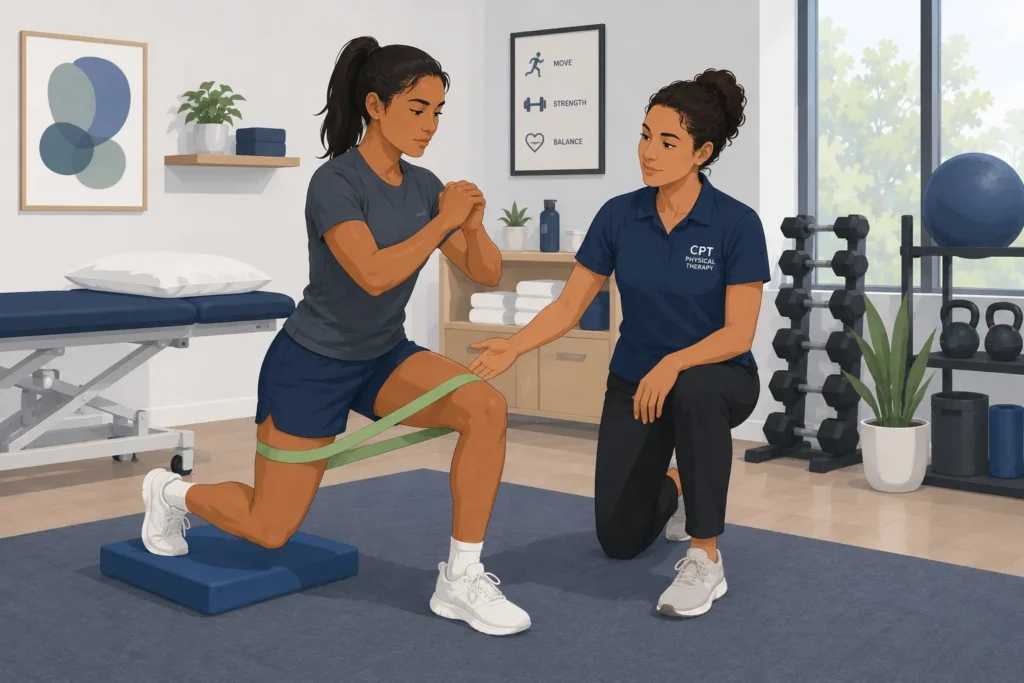
Physical therapy for RED-S is not simply about prescribing exercises. The larger goal is to help the athlete restore a healthier relationship among training, recovery, and physical capacity.
Early treatment often focuses on reducing symptom irritability and modifying activities that are consistently overwhelming the body’s recovery ability. This does not always mean complete rest. Instead, activity is adjusted to a level the athlete can tolerate more consistently.
As symptoms settle, rehab shifts toward rebuilding strength, movement tolerance, and confidence. This may include resistance-training progression, impact management, mobility work as needed, and a gradual return to higher-demand activity.
Education also plays an important role during recovery. Many athletes benefit from understanding how training volume, recovery time, sleep, and nutrition interact over the course of a week rather than viewing symptoms as isolated workout problems. This often helps people make more sustainable decisions about activity progression and recovery.
When appropriate, PTs often collaborate with sports medicine physicians, dietitians, coaches, or trainers to support long-term recovery.
Rehabilitation Progression
Rehabilitation usually progresses gradually as recovery capacity improves and symptoms become less reactive.
| Rehab phase | Main goal |
|---|---|
| Early phase | Reduce excessive load and calm symptom irritability |
| Middle phase | Improve strength, movement tolerance, and recovery consistency |
| Advanced phase | Reintroduce higher training demands gradually |
| Return to sport | Build sustainable workload tolerance and confidence |
The timeline varies considerably depending on symptom severity, training history, and whether bone stress injuries or hormonal changes are involved.
Returning to Activity
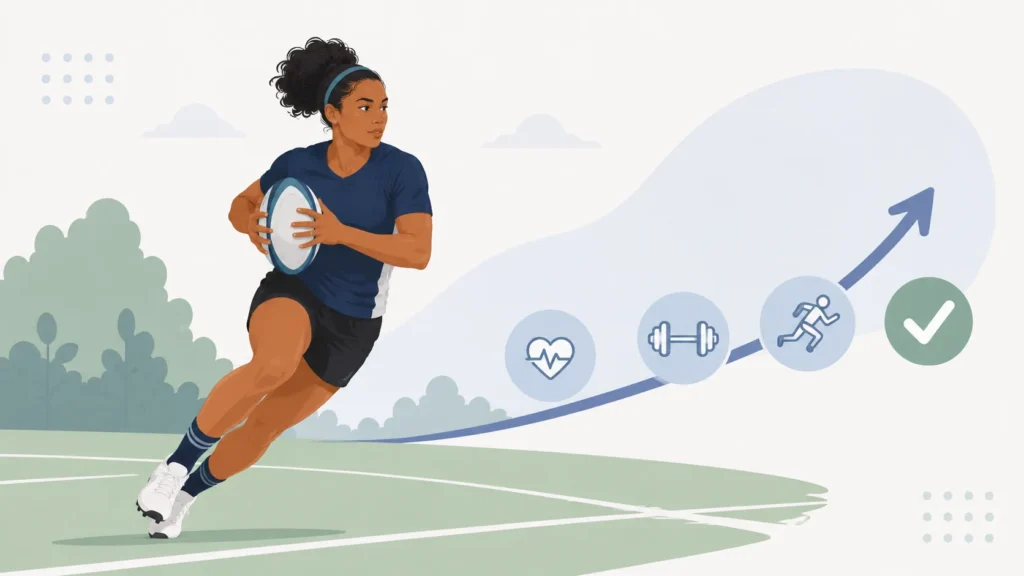
Returning to full activity too quickly is one of the most common setbacks with RED-S recovery. Athletes often feel better before their recovery systems have fully stabilized.
A gradual progression tends to work better than dramatic jumps in workload. A runner returning from symptoms may begin with lower mileage and easier effort before adding speed or hills again. Strength training may temporarily reduce training frequency or total volume while rebuilding tolerance.
Long-term consistency usually matters more than isolated hard training sessions. The goal is to build consistent tolerance so the athlete can train, recover appropriately, and continue progressing without significant symptom flare-ups afterward.
Monitoring recovery response becomes especially important during this stage. Lingering exhaustion, persistent soreness, worsening sleep, or recurring pain can all suggest that progression is outpacing the body’s current tolerance.
When to See a Physical Therapist
Many athletes try to manage RED-S symptoms on their own for a long time before seeking help. That is understandable because the symptoms often develop gradually and may resemble normal training fatigue at first. The challenge is that persistently low energy availability affects multiple systems simultaneously, making recovery increasingly difficult over time.
A physical therapy evaluation can help identify whether symptoms are primarily related to training load, recovery limitations, movement tolerance, or a broader pattern of under-recovery. Early evaluation is often especially helpful for athletes dealing with recurring injuries, persistent soreness, or repeated setbacks when trying to return to activity.
It may be helpful to see a physical therapist if:
- Fatigue and soreness persist despite rest days
- Training tolerance is steadily declining
- Pain keeps returning during running or exercise
- Recovery feels unusually slow after workouts
- Recurrent overuse injuries continue happening
- Exercise performance drops without a clear explanation
Physical therapists can also help determine when additional support from a physician, sports dietitian, or other healthcare provider may be appropriate. In many cases, addressing symptoms earlier helps athletes return to training more consistently and with fewer long-term interruptions.
Final Thoughts

RED-S can affect recovery, performance, hormone health, and overall physical function in ways that are easy to dismiss early on. Because symptoms often develop gradually, many athletes assume they simply need to train harder, recover better, or stay more disciplined. Over time, though, persistent under-recovery can make the body less tolerant of the demands of normal training and daily activity.
The earlier these patterns are recognized, the easier they are usually to address. Adjusting workload, improving recovery habits, and restoring appropriate energy availability can help athletes rebuild consistency and reduce the cycle of recurring soreness, fatigue, and overuse symptoms.
Physical therapy can help identify how symptoms relate to training demands, movement tolerance, and recovery capacity while guiding a more gradual return to activity. For athletes dealing with persistent fatigue, repeated injuries, or declining performance, getting evaluated can help provide clearer direction before symptoms become more disruptive.
Schedule a Physical Therapy Evaluation
Persistent fatigue, recurring injuries, declining performance, or unusually slow recovery are not always just part of training harder. In many cases, they are signs that the body is struggling to keep up with overall activity and recovery demands.
At Calibration Physical Therapy in Overland Park, Kansas, we work with runners, active adults, lifters, and athletes to better understand what may be contributing to ongoing symptoms and develop practical plans for returning to activity with more consistency and confidence.
If you have been dealing with recurring overuse injuries, prolonged soreness, difficulty recovering between workouts, or an ongoing decline in performance, a physical therapy evaluation can help identify what may be contributing to those symptoms and how to move forward more confidently. Schedule an evaluation today.
Tags

About the Author
Dr. Traci Smiley, DPT
Traci is a licensed physical therapist and owner of Calibration Physical Therapy, serving the Kansas City area. A Board-Certified Orthopedic Clinical Specialist with advanced training in manual therapy and strength conditioning, she helps individuals overcome pain and return to what they love.