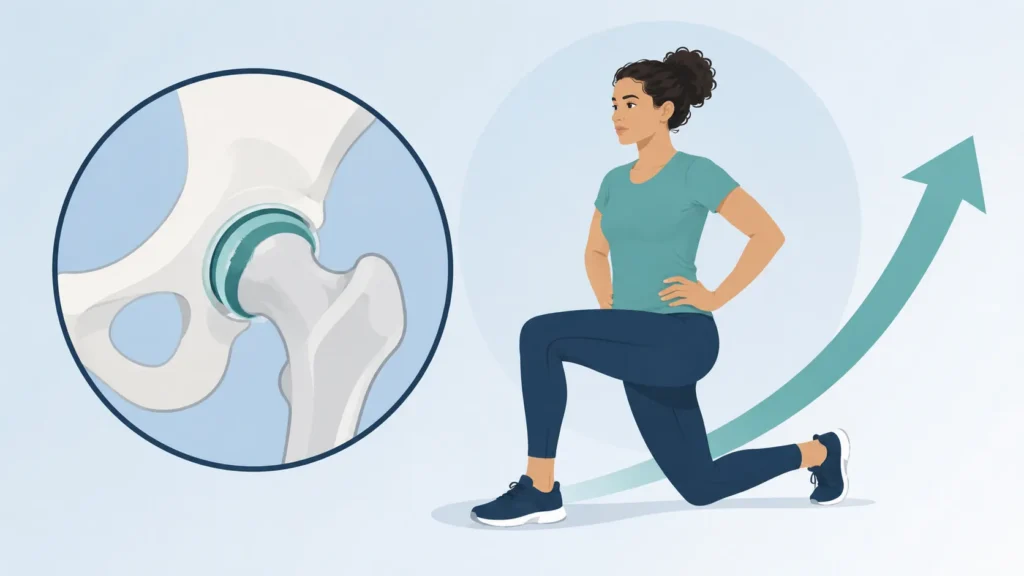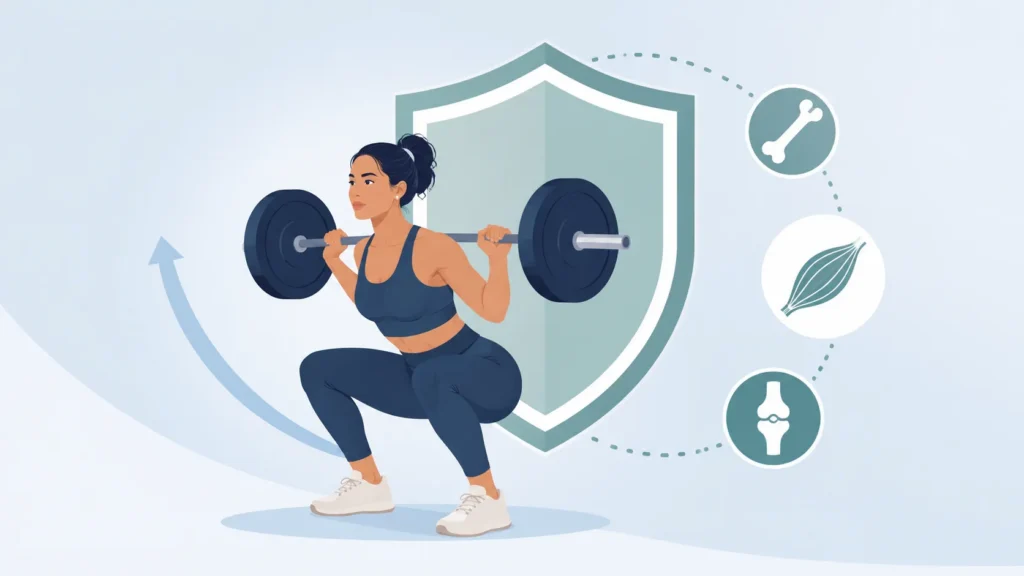
What are Bone Stress Injuries?
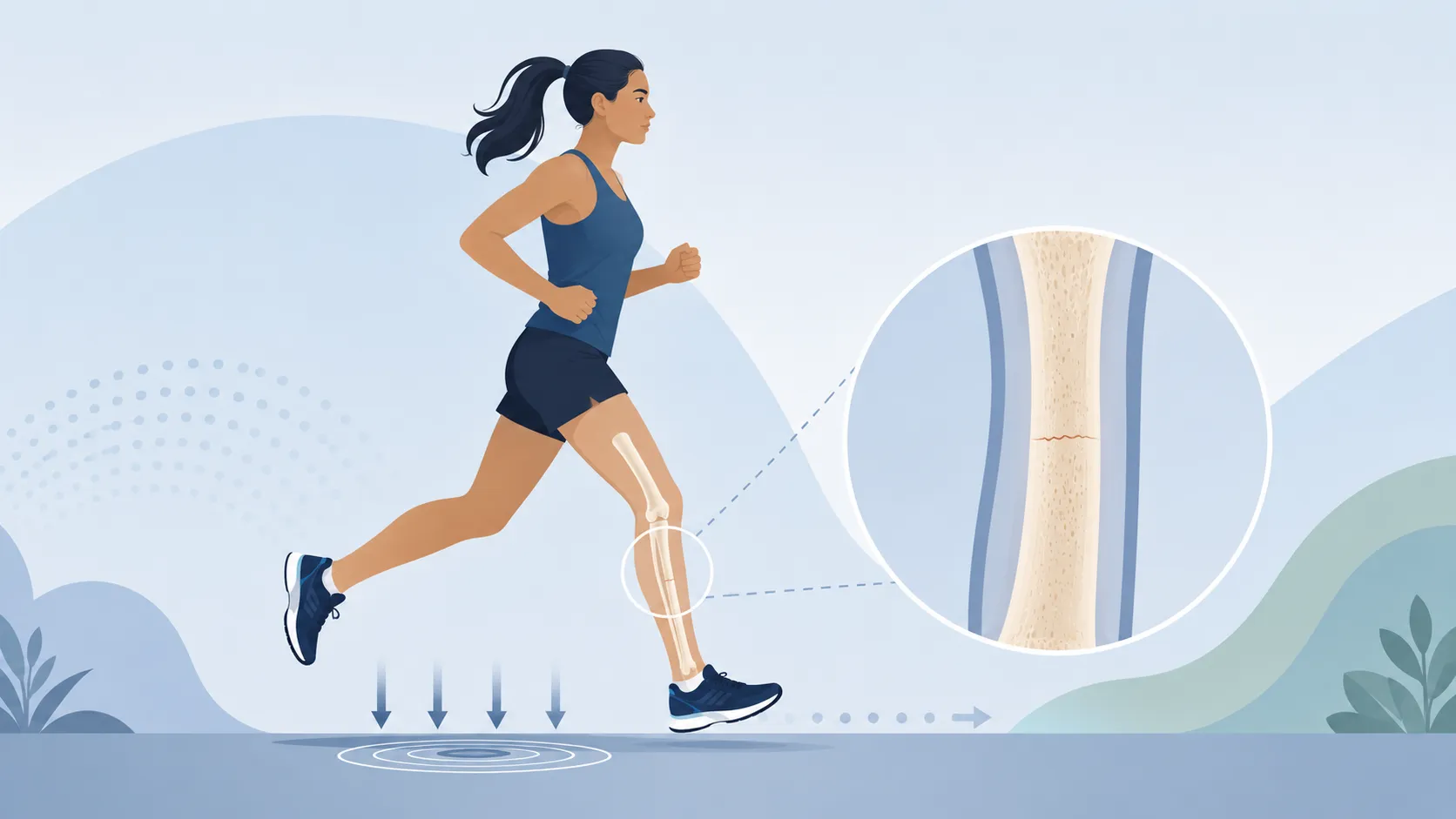
Bone stress injuries develop when repetitive loading exceeds the body’s ability to recover and adapt. They exist along a spectrum, ranging from mild bone stress reactions to more significant stress fractures.
Female athletes may face a higher risk of bone stress injuries due to a combination of training demands, recovery factors, and energy availability. Runners, dancers, gymnasts, field-sport athletes, and other active individuals who engage in repetitive impact activities are commonly affected.
One reason these injuries can be difficult to recognize is that symptoms often begin subtly. What starts as mild discomfort during exercise may seem easy to ignore, especially when performance remains largely unaffected.
Recognizing the early signs of a bone stress injury can help athletes address the problem before it affects training, performance, or daily activities. This article explains why bone stress injuries occur, what they feel like, how physical therapists evaluate them, and how athletes safely return to activity.
What Causes Bone Stress Injuries?

Bone is constantly remodeling itself in response to physical demands. During exercise, small amounts of microscopic stress occur within the bone. Under normal circumstances, the body repairs these changes, and the bone becomes stronger over time.
Problems arise when training demands increase faster than the body’s ability to recover and adapt. Instead of adapting successfully, the bone begins accumulating stress faster than it can repair itself.
Several factors can contribute to this process:
- Sudden increases in training volume or intensity
- Large changes in running mileage or workout frequency
- Inadequate recovery between training sessions
- Low energy availability from insufficient nutrition
- Strength or movement deficits that increase repetitive loading
- Previous history of bone stress injuries
For female athletes, energy availability is particularly important. When the body consistently receives less energy than it needs to support training, recovery, and normal physiological functions, bone health can be affected. Over time, this may increase susceptibility to stress-related bone injuries.
Menstrual cycle irregularities, a history of low energy availability, and previous bone stress injuries can further increase risk. These factors do not guarantee an injury will occur, but they are important considerations when symptoms develop.
Bone stress injuries commonly occur in weight-bearing regions such as the shin, foot, pelvis, hip, and lower leg because these areas absorb repetitive forces during running, jumping, and sport participation.
What Does a Bone Stress Injury Feel Like?

Unlike many acute injuries, bone stress injuries rarely begin with a single memorable event. Symptoms often emerge gradually over days or weeks.
Many athletes initially notice discomfort during a run, workout, or practice session. The pain may feel localized to a specific area rather than spread across a larger region. Early symptoms often improve quickly with rest, which is one reason they are easy to dismiss.
As the condition progresses, symptoms often become easier to reproduce and may begin appearing during everyday activities.
The following patterns are commonly reported:
| What people often notice | What it may mean |
|---|---|
| Mild pain that appears late in a workout | Early bone stress response |
| Pain that returns during the same activity repeatedly | Recovery is not keeping up with loading demands |
| Tenderness in one specific area | Localized bone involvement may be present |
| Pain during walking after exercise | Symptoms may be progressing |
| Discomfort during normal daily activities | Higher level of irritation requiring evaluation |
Many athletes report that symptoms seem minor at first, then gradually become harder to ignore. Activities that were previously comfortable begin producing discomfort earlier in a workout or at lower levels of effort.
How Symptoms Behave During Activity
One of the defining features of bone stress injuries is how symptoms respond to repeated loading.
For example, a runner may feel completely normal during the first mile of a run. By mile three or four, a dull ache develops in the shin or foot. Initially, the discomfort may disappear after resting.
As the injury progresses, symptoms often begin earlier. The same runner may start noticing pain during warm-ups, easy runs, or even brisk walking.
Athletes participating in jumping sports may experience discomfort during repeated landings but not during isolated movements. Someone playing basketball might feel increasingly sore throughout practice while feeling relatively comfortable at rest.
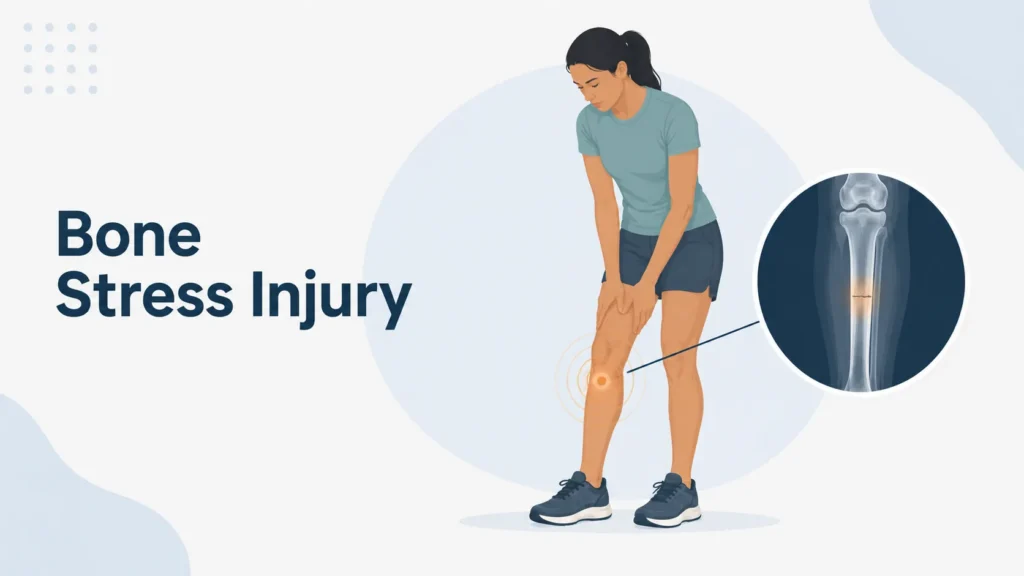
Unlike many muscle strains, symptoms often become more predictable as loading accumulates and may repeatedly appear at similar points during activity.
Daily activities can also become affected. Walking long distances, climbing stairs, carrying groceries, or standing for extended periods may begin to produce symptoms previously associated only with sports participation.
One of the most important clues is that symptoms often correlate with cumulative load. The longer or more frequently the affected area is stressed, the more likely symptoms are to appear.
Common Mistakes People Make When Symptoms Start
One of the most common mistakes is assuming the discomfort is simply normal soreness and continuing to increase training volume.
Because bone stress injuries often begin gradually, athletes frequently convince themselves that symptoms will improve if they push through them. Unfortunately, continuing to load an irritated bone without making adjustments can allow the injury to progress.
The opposite extreme can also be unhelpful. Some individuals immediately stop all physical activity, even when temporary modifications would be sufficient. Complete inactivity may not always be necessary and can sometimes make returning to activity more difficult.
Another common issue is repeatedly testing the painful activity. An athlete may take two or three days off, feel better, then attempt a hard workout to see if the problem is gone. When symptoms return, the cycle repeats. This repeated cycle often delays recovery because the irritated area never receives enough time or appropriate loading to settle and adapt.
It is also common to focus only on where the pain is located instead of asking why the area became overloaded in the first place. Training changes, recovery habits, nutrition, and cumulative workload often provide important clues.
Why Symptoms Often Develop Gradually
Bone stress injuries are rarely the result of a single workout. Instead, they typically develop because small amounts of stress accumulate over time.
The body is remarkably good at adapting to training when recovery keeps pace with demand. Problems occur when this balance shifts.

A runner who gradually increases mileage over several months may do well. The same runner who suddenly doubles weekly mileage after time off may exceed the bone’s current capacity to adapt.
Small day-to-day fluctuations in activity and recovery can make symptoms feel inconsistent at first, which is one reason many athletes delay seeking evaluation.
As stress accumulates, the gap between load and recovery widens. Symptoms typically become easier to provoke, more predictable, and more disruptive to normal activities.
Bone Stress Injury vs Normal Muscle Soreness
Athletes frequently struggle to determine whether they are dealing with normal training soreness or something more significant.
While both can occur after exercise, they often behave differently.
| Feature | Bone Stress Injury | Muscle Soreness |
|---|---|---|
| Location | Very specific area | Broader muscle region |
| Timing | Often during activity | Usually after activity |
| Tenderness | Localized spot tenderness | Diffuse muscle tenderness |
| Progression | May worsen with continued loading | Typically improves within days |
| Daily activities | May become painful | Usually minimally affected |
While muscle soreness is usually widespread, bone stress injuries are often notable for how specific and localized the discomfort feels.
Muscle soreness is generally a normal response to training and tends to improve as recovery occurs. Bone stress injuries are more likely to persist or worsen when the same loading pattern continues.
How Physical Therapy Evaluates Bone Stress Injuries
A physical therapy evaluation begins with understanding the athlete’s history and training demands.
Understanding when symptoms began changing is often more valuable than identifying the exact day pain first appeared.

Rather than focusing solely on the painful area, a therapist looks at the broader picture. Recent changes in activity, recovery habits, training volume, and symptom progression often provide important clues.
Movement assessment helps identify factors that may be increasing load on the affected region. Running mechanics, landing patterns, strength deficits, mobility limitations, and sport-specific demands can all influence loading patterns.
The evaluation may include several components:
| During evaluation | What it may suggest |
|---|---|
| Review of training history | Potential overload patterns |
| Symptom location and behavior | Likely tissue involvement |
| Strength testing | Areas contributing to excessive stress |
| Mobility assessment | Movement restrictions affecting mechanics |
| Functional tasks | How symptoms respond to load |
| Sport-specific movement analysis | Factors relevant to return to activity |
Imaging can sometimes play a role in diagnosis, but it is not the starting point for every athlete. Clinical findings, symptom behavior, and activity history often provide valuable information that helps guide decision-making.
How Physical Therapy Helps Bone Stress Injuries
Treatment focuses on creating an environment where healing can occur while maintaining as much activity as safely possible.
The first priority is reducing irritation by modifying activities that consistently provoke symptoms. This does not necessarily mean complete rest. In many cases, alternative activities can help maintain fitness while decreasing stress on the affected area.

As symptoms become less irritable, rehabilitation shifts toward addressing factors that may have contributed to the injury. This may include improving lower-extremity strength, enhancing movement efficiency, increasing load tolerance, and gradually restoring confidence in athletic activities.
Recovery is not simply about eliminating pain. The goal is to improve the body’s ability to tolerate future training demands. In many cases, the rehabilitation process also includes discussions about training structure, recovery practices, and nutrition. Addressing these factors can be just as important as strengthening exercises when the goal is preventing future bone stress injuries.
Physical therapists also help athletes understand how symptoms should respond during rehabilitation. Knowing the difference between acceptable soreness and a meaningful flare-up can make progression more effective and less frustrating.
Rehabilitation Progression
Rehabilitation typically moves through overlapping phases as symptoms become less irritable and activity tolerance improves.
| Rehab phase | Main goal |
|---|---|
| Early phase | Reduce irritation and modify aggravating load |
| Middle phase | Improve strength and movement tolerance |
| Advanced phase | Reintroduce impact and sport-specific demands |
| Return to activity | Build consistency and resilience under normal training loads |
Recovery timelines vary depending on the severity, location, and stage of the injury. Some athletes progress relatively quickly, while others require a more gradual approach.
Consistent improvement is generally more important than rushing through stages. Building capacity steadily often produces better long-term outcomes than attempting to return too quickly.
Returning to Activity
Returning to activity after a bone stress injury requires balancing progression with recovery.
Athletes are often eager to return to previous training levels once symptoms begin to settle. However, pain reduction does not necessarily mean the body is fully prepared for normal training loads.
A gradual progression allows the athlete to evaluate how the body responds between sessions. Recovery time becomes an important indicator. Many clinicians pay close attention to how symptoms respond over the following 24 hours rather than focusing only on how an athlete feels during the activity itself. If symptoms remain stable and recovery is predictable, training demands can often be advanced appropriately.
Sudden spikes in workload are one of the most common reasons symptoms return. Increasing mileage, intensity, frequency, or duration too quickly can recreate the circumstances that initially contributed to the injury.
Successful return-to-sport programs focus on consistency. Athletes typically perform better when they build sustainable training habits rather than trying to regain lost fitness as quickly as possible.

When to See a Physical Therapist
An evaluation may be appropriate if symptoms are becoming more consistent or interfering with normal activity.
Consider seeking professional guidance if:
- Pain repeatedly occurs during the same activity
- Symptoms are becoming more frequent over time
- Walking or daily activities are becoming uncomfortable
- Rest provides only temporary improvement
- Returning to exercise consistently causes symptoms to return
- Pain that occurs in a specific spot when hopping, running, or jumping
Early evaluation can help identify contributing factors before symptoms begin to affect training consistency or daily activities.
Final Thoughts
Bone stress injuries develop when repetitive loading exceeds the body’s ability to recover and adapt over time. While symptoms often begin subtly, persistent localized pain during activity should not be ignored, particularly when it becomes easier to reproduce or starts affecting everyday movement.
Physical therapy helps identify contributing factors, guide activity modifications, improve strength and movement capacity, and create a safe progression back to exercise and sport. Early evaluation can help athletes address contributing factors before symptoms become more disruptive.
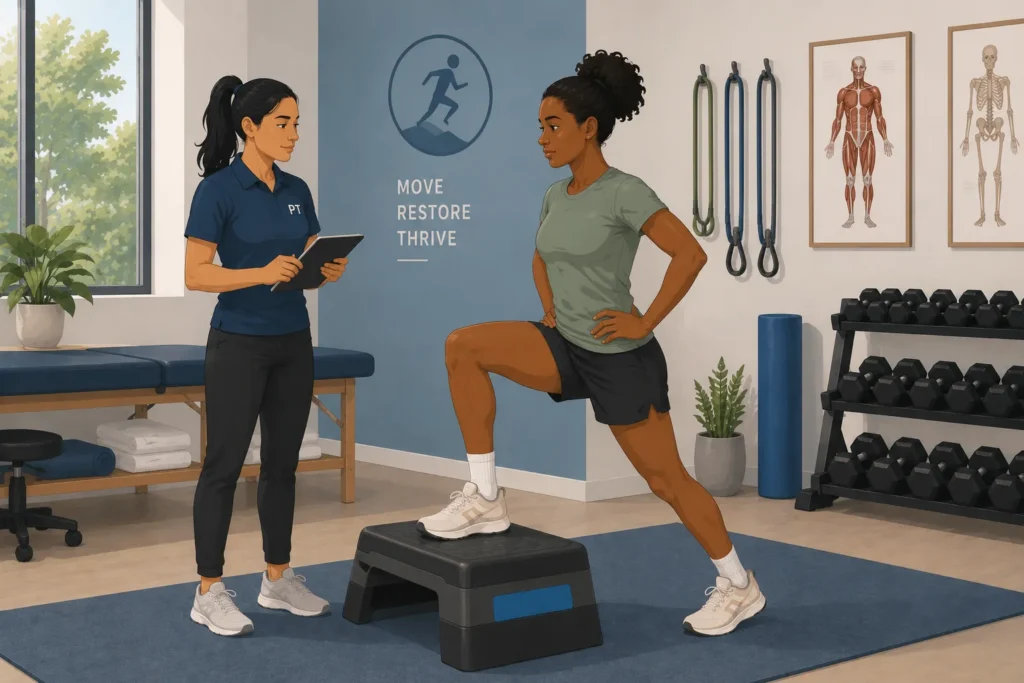
Get PT for Bone Stress Injuries
At Calibration Physical Therapy in Overland Park, Kansas, we help active adults and athletes identify the factors contributing to persistent pain, improve load tolerance, and develop practical plans to return to training and sport with confidence. Schedule an evaluation to start your recovery path.
Tags

About the Author
Dr. Traci Smiley, DPT
Traci is a licensed physical therapist and owner of Calibration Physical Therapy, serving the Kansas City area. A Board-Certified Orthopedic Clinical Specialist with advanced training in manual therapy and strength conditioning, she helps individuals overcome pain and return to what they love.