
Pain just below the kneecap can make stairs, squats, running, and jumping surprisingly uncomfortable. Some people feel it during activity. Others notice more soreness later that day or the next morning.
It often starts after a change in workload, such as beginning a jumping program, adding hill work, increasing running mileage, or returning to heavy strength training.
Here is how to recognize the pattern, decide what to modify, and rebuild tolerance for work, exercise, or sport.
What is Patellar Tendonitis?
Patellar tendinitis describes pain in the tendon connecting the kneecap to the shinbone. That tendon helps straighten the knee and absorb or produce force when you walk, squat, run, jump, or land.
Clinicians often use patellar tendinopathy for pain that develops gradually or lasts longer. The terms are not perfectly interchangeable, but both point to the same practical question: is the tendon being asked to handle more force or repetition than it is ready for?
Physical therapy can help identify the aggravating demands, adjust them without unnecessary inactivity, and rebuild the strength needed for your daily activities and goals.
What Causes Patellar Tendinitis?

The patellar tendon helps transfer force from the thigh muscles through the kneecap to the lower leg. It works harder when you jump, land, sprint, stop quickly, squat, lunge, or climb stairs.
Problems often develop when those demands increase faster than the tendon can handle. This may happen when basketball season starts, a runner adds hill work, someone increases their mileage, or a person returns to heavy squats after time away from the gym. The activity itself is not necessarily harmful. The issue is often the combination of more force, more repetitions, and not enough time to recover.
Patellar tendon pain is not usually caused by one bad movement or one weak muscle. Your hip, knee, ankle, and trunk can all influence how force is distributed, but those factors need to be considered alongside your training history, symptoms, and goals.
Recovery is part of the picture, too. Poor sleep, high stress, demanding workouts scheduled too close together, or a sudden change in activity can make a familiar exercise feel much harder on the tendon. A physical therapist can help identify which demands are contributing to your symptoms and decide what to adjust while you rebuild capacity.
What Does Patellar Tendinitis Feel Like?

Patellar tendon pain is usually felt just below the kneecap, although it may extend along the tendon toward the shinbone. The area may be tender when you press on it, especially after exercise or a day with more walking, stairs, squatting, or kneeling than usual.
You may notice the pain when getting up from a chair, walking downstairs, performing a squat, or stepping down from a curb. Running, jumping, landing, and changing direction can make it more noticeable, particularly as repetitions build or your legs become tired.
Some people feel stiff at the beginning of activity and loosen up after a few minutes. Others feel relatively comfortable while moving but notice soreness later that day or the next morning. That delayed response is useful information because it can show that the overall workload was more than the tendon was ready to handle.
Pain below the kneecap does not automatically confirm patellar tendinitis. Significant swelling, locking, giving way, a sudden loss of strength, or pain that began with a major injury may suggest a different problem and should be evaluated more broadly.
How Symptoms Behave During Activity
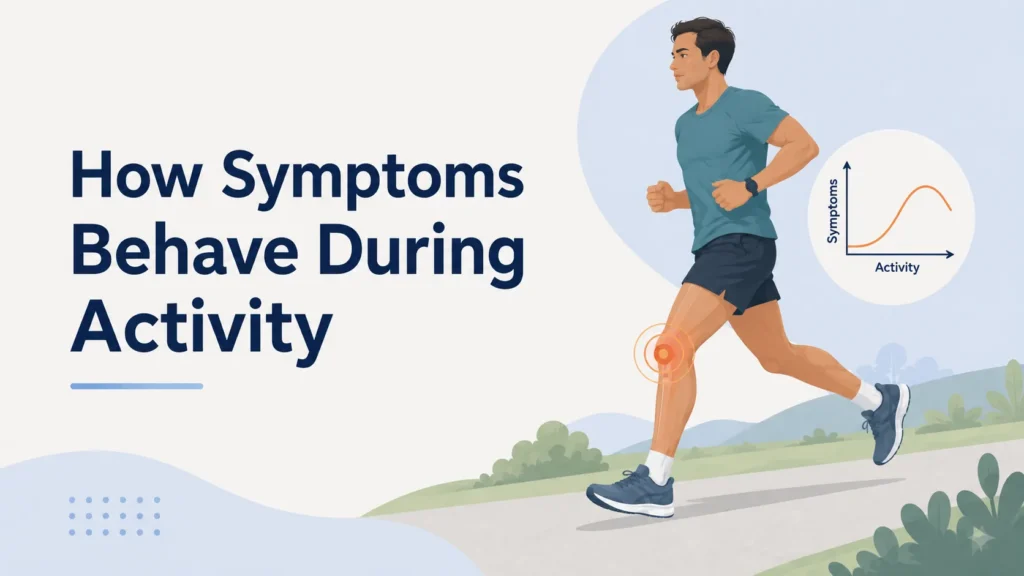
Patellar tendon pain often changes depending on how much force the knee has to handle. A slow, controlled squat may feel manageable, while a deep squat, quick change of direction, or hard landing may bring on sharper symptoms. Running on flat ground may be tolerable, but hills, sprints, or a longer-than-usual session may cause the pain to build.
Repetition matters, too. You may feel fine during the first few jumps and notice more discomfort after several sets. Fatigue can also affect how the movement feels because tired muscles may have more difficulty controlling the knee and absorbing force.
Pay attention to what happens during the activity and after it. If symptoms remain fairly steady and settle without a significant increase later that day or the next morning, the activity may be within your current tolerance. If the pain continues to build, changes the way you move, or leaves the knee noticeably worse afterward, the workload may need to be reduced.
There is no universal pain rule that determines what you can or cannot do. The right level of activity depends on your symptoms, strength, current workload, and goals. A physical therapist can help you interpret that response and adjust your progression.
Common Mistakes People Make When Symptoms Start
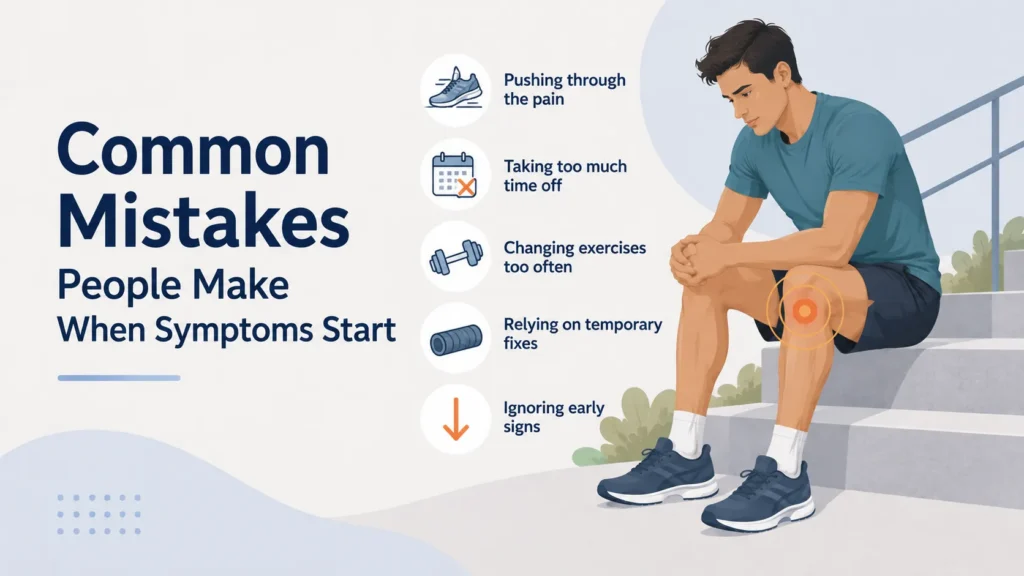
When patellar tendon pain first appears, people commonly:
- Keep running, jumping, or lifting at the same intensity and hope the pain will warm up.
- Stop all lower-body activity, then return to the same workload as soon as the knee feels better at rest.
- Repeatedly test the painful movement with deep squats, maximal jumps, or hard runs.
- Change several variables at once, such as mileage, pace, hills, footwear, and strength training.
- Rely on stretching, massage, or other passive treatments without rebuilding strength.
- Ignore soreness that lasts longer or feels worse the next morning.
Complete rest may calm symptoms without preparing the tendon for the demands of work, exercise, or sport. A better approach is usually to reduce the activities that aggravate the knee, keep the movement you can tolerate, and gradually rebuild strength and loading capacity.
Why Symptoms Often Develop Gradually
Patellar tendon pain often builds over time instead of starting with one clear injury. The tendon may handle your usual activity well until the amount, speed, or frequency of loading changes.
That change could be:
- Adding another basketball or volleyball practice each week
- Increasing running distance and speed at the same time
- Starting a jumping or plyometric program
- Running more hills or training on a different surface
- Increasing the weight or volume of squats and leg presses
- Returning to sport after several weeks or months away
The first noticeable pain may show up after a game, a long run, or a hard workout, even though the contributing workload has been increasing for days or weeks. Recovery time, sleep, stress, and the spacing between demanding sessions can also affect how the tendon responds.
Looking at the full pattern is more helpful than focusing only on the most recent activity. A physical therapist can help connect your symptoms to changes in workload and determine how to adjust your routine while maintaining progress.
Patellar Tendinitis vs. Other Sources of Front Knee Pain
Pain below the kneecap can come from several different structures. The location and activity that aggravates the pain can offer clues, but they do not confirm the diagnosis by themselves.
| Condition | How it may present |
|---|---|
| Patellar tendinopathy | More focused pain below the kneecap, often aggravated by jumping, landing, or forceful knee extension |
| Patellofemoral pain | More diffuse pain around or behind the kneecap, often aggravated by stairs, squatting, or sitting for a long time |
| Quadriceps tendinopathy | Pain closer to the upper edge of the kneecap |
| Acute tendon or ligament injury | Sudden pain, swelling, weakness, or loss of function after an injury |
These symptoms can overlap. A physical therapist looks at how the pain began, which movements reproduce it, how the knee responds afterward, and what demands you need to return to. That information helps guide treatment instead of relying on location alone.
How Physical Therapy Evaluates Patellar Tendinitis
A physical therapist will first ask how your symptoms started and what has changed recently. That may include your running or jumping schedule, strength training, work demands, sport participation, training surfaces, footwear, and recovery between sessions.
The evaluation will also focus on what reproduces your symptoms. You may be asked to perform a squat, step-down, lunge, or other controlled movement. If appropriate, the therapist may also look at jumping, landing, running, or changing direction.
Your hip, ankle, trunk, and overall movement may also be considered when they affect the activity you want to resume. The evaluation helps determine which activities should be modified, which areas need more capacity, and how progress can be measured.
How Physical Therapy Helps Patellar Tendinitis
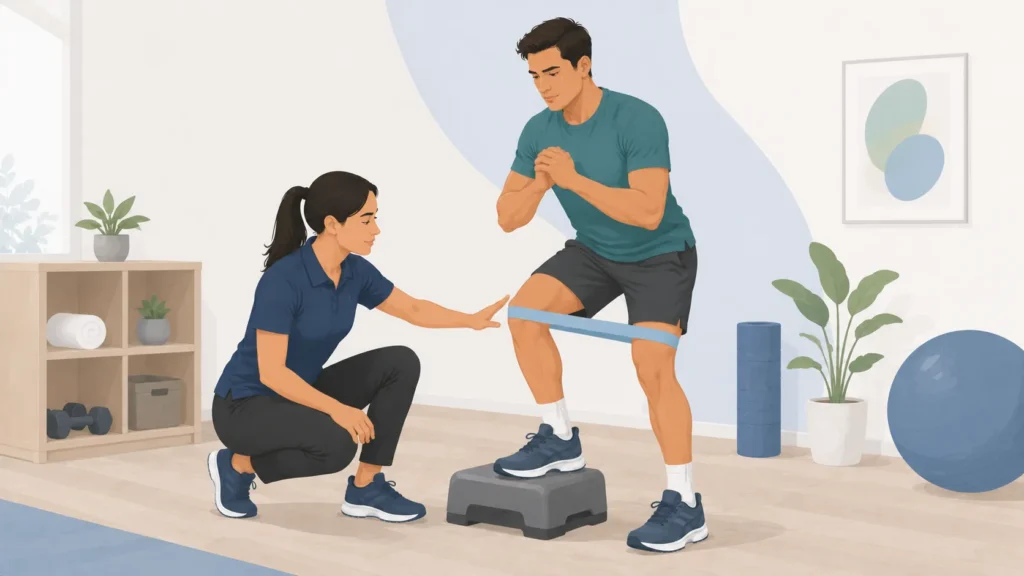
Physical therapy usually focuses on helping the tendon tolerate the demands that have been aggravating it. Treatment may include education, temporary activity changes, progressive strengthening, and a gradual return to faster or more demanding movements.
You may not need to stop all activity. A volleyball player might reduce repeated jumping for a short time while continuing upper-body training, walking, and lower-body exercises that the knee can tolerate. A runner might adjust distance, pace, hills, or workout frequency instead of stopping every form of running.
Strengthening begins at a level the knee can handle. Depending on your symptoms, that may include controlled contractions, slower squats, split squats, step-downs, leg presses, or other exercises. As your tolerance improves, the program can progress toward heavier resistance, deeper knee angles, hopping, jumping, sprinting, and changes of direction.
For example, a basketball player may begin with controlled strength work, progress to single-leg exercises and low-volume hops, then add repeated jumps, acceleration, deceleration, and cutting. The progression should reflect the demands of basketball rather than stop once everyday walking feels comfortable.
Manual therapy or other treatments may sometimes help with comfort or movement. They are most useful when they support the larger rehabilitation plan and help you participate in progressive loading.
Rehabilitation Progression
Rehabilitation does not follow the same schedule for everyone. The stages may overlap, and one activity may progress before another. For example, you may be ready to increase strength training while still limiting full-speed jumping. Progress is guided by your symptoms, strength, movement quality, and how well you recover between sessions.
| Stage | Main focus | Examples |
|---|---|---|
| Maintain movement | Reduce the most aggravating activities while staying active | Walking, modified squats, controlled strength work |
| Build strength | Improve tolerance to greater force through the knee and hip | Slow squats, split squats, leg press, step-downs |
| Add faster loading | Prepare the tendon for hopping, landing, and jumping | Hopping, landing drills, low-volume jumps |
| Rebuild specific demands | Return to the movements required for work, exercise, or sport | Running intervals, repeated jumps, cutting, practice drills |
Progress is not measured only by whether the knee feels completely pain-free. Better signs include less soreness after exercise, improved strength, more controlled movement, and the ability to complete more activity without a significant flare-up later that day or the next morning.
Returning to Activity
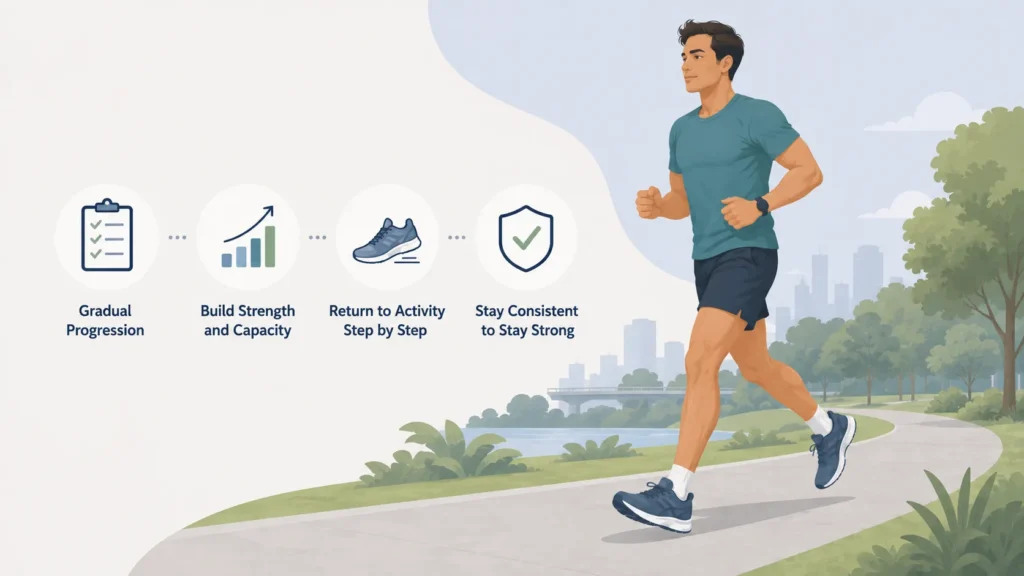
Your return should match the demands you need to meet. A runner may need to rebuild distance, pace, hills, and weekly frequency. A volleyball player may need to restore approach jumps, repeated takeoffs, landing control, and practice volume. A warehouse worker may need to tolerate repeated squatting, lifting, carrying, and kneeling.
Increase one major demand at a time when possible. A runner might add distance before speed work. An athlete might increase jump volume before returning to repeated maximal jumps.
Pay attention to the knee during the activity and later that day or the following morning. A small, manageable response may be acceptable, but symptoms that continue to build or remain noticeably worse afterward suggest that the workload needs to be adjusted.
Recovery between demanding sessions is part of the progression. Avoid stacking heavy squats, sprinting, jumping, and full-intensity practices on consecutive days until your knee is ready to tolerate that schedule.
How Long Does Patellar Tendinitis Take to Improve?
Recovery varies. It depends on how long symptoms have been present, how irritable the tendon is, the size of the workload change, current strength, recovery, and how consistently the program is followed.
Meaningful improvement may look like climbing stairs with less discomfort, completing a workout with less lingering soreness, tolerating a gradual return to running, or recovering more quickly after practice. Pain does not always disappear immediately, and short-term fluctuations do not necessarily mean that rehabilitation has failed.
An evaluation may be useful if symptoms repeatedly flare with every increase in activity, daily function is declining, or progress has plateaued despite a carefully managed program.
When to See a Physical Therapist
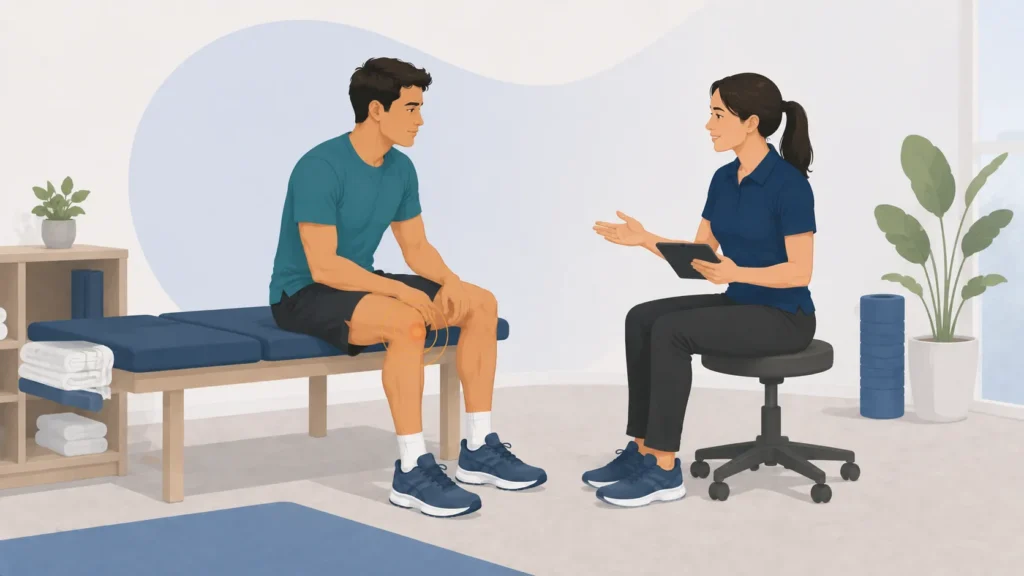
Consider seeing a physical therapist when knee pain is limiting stairs, work, exercise, running, jumping, or sport. An evaluation can be helpful when symptoms persist, return whenever you increase activity, or are difficult to interpret on your own.
Prompt medical evaluation may be appropriate after significant trauma, a sudden loss of strength, inability to actively straighten the knee, substantial swelling, fever, redness, or other unusual symptoms. These findings may not fit a straightforward overuse presentation.
Final Thoughts
Patellar tendon pain often develops when knee demands increase faster than the tendon can handle. A thoughtful plan can reduce aggravating loads, rebuild strength, and restore the movements you need for work, exercise, or sport.
Physical therapy can help you make those changes without avoiding movement indefinitely.
Get Help With Patellar Tendon Pain
If patellar tendon pain is limiting your daily life, work, exercise, running, jumping, or sport, Calibration Physical Therapy in Overland Park, Kansas can help you understand the problem and plan your return to activity. Schedule an evaluation to get started.
Tags

About the Author
Dr. Traci Smiley, DPT
Traci is a licensed physical therapist and owner of Calibration Physical Therapy, serving the Kansas City area. A Board-Certified Orthopedic Clinical Specialist with advanced training in manual therapy and strength conditioning, she helps individuals overcome pain and return to what they love.