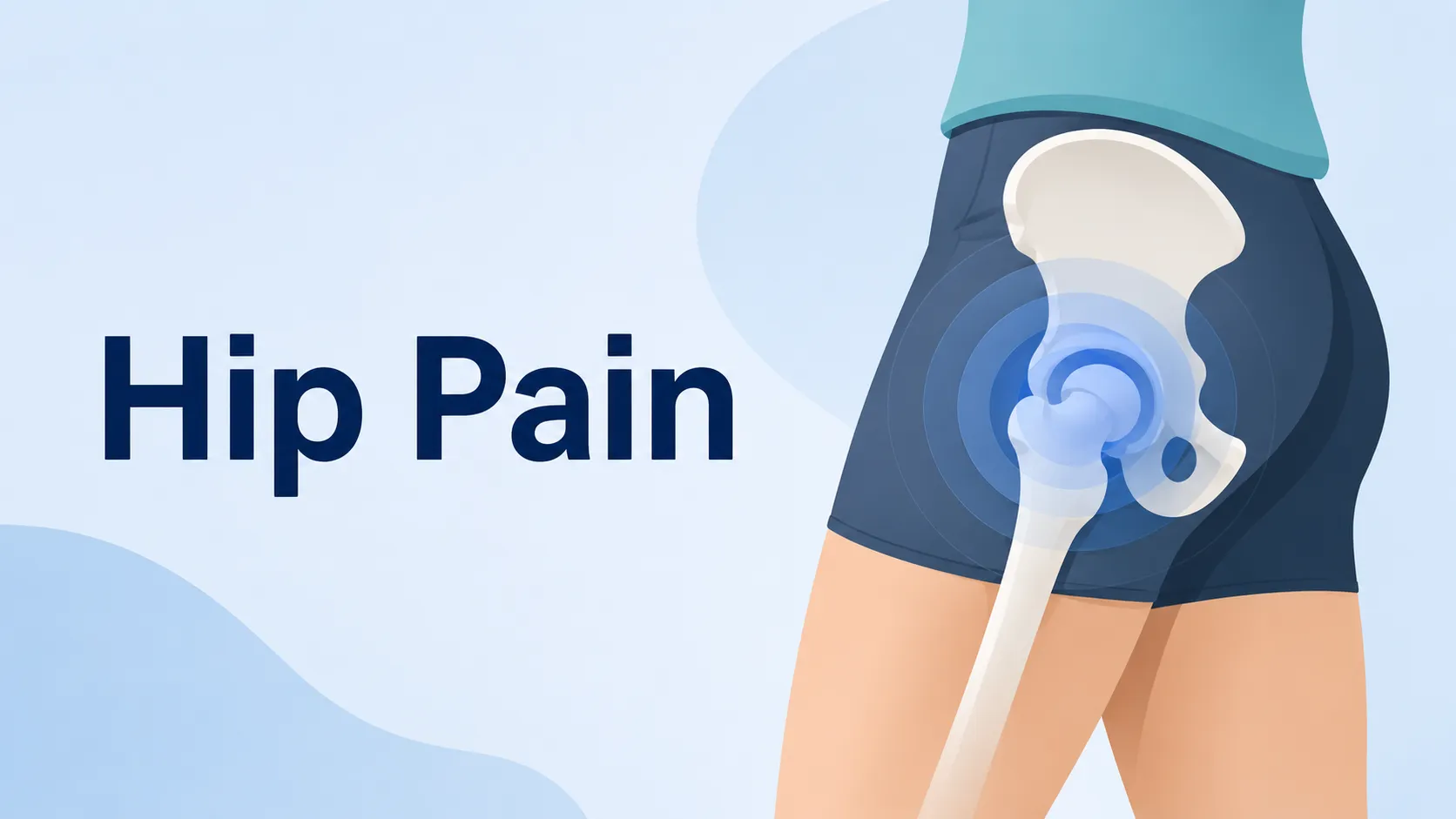
Hip pain is common in active adults, runners, and people who spend long hours sitting, lifting, or exercising. Sometimes symptoms begin suddenly after a workout or awkward movement, but more often they develop gradually over time.
This article explains common causes of hip pain, how symptoms often respond to activity, and how physical therapy can help active adults move more comfortably again.
What Is Hip Pain?
Hip pain refers to discomfort felt around the hip joint, groin, outer hip, buttock, or upper thigh. Symptoms may come from the joint itself, nearby tendons or muscles, irritation around the lower back, or changes in how the body is tolerating movement and load.
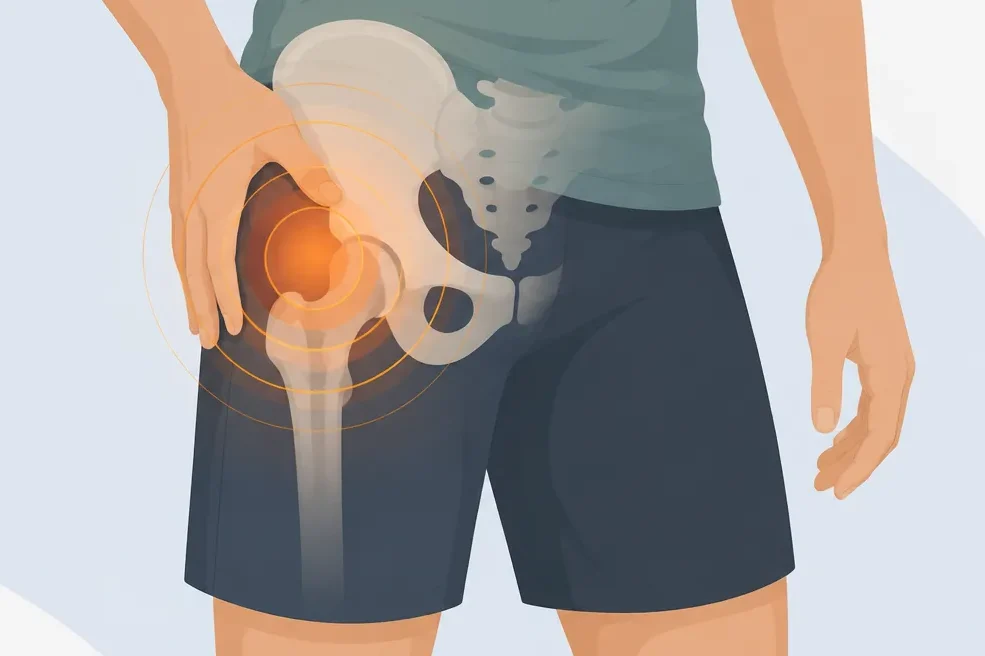
Some people feel sharp pain with certain movements. Others notice stiffness, aching, pinching, or soreness that builds over the course of the day. Hip pain can affect both athletic performance and everyday tasks, especially when symptoms begin to limit walking, exercise, or sitting tolerance.
The hip is designed to handle large amounts of force during movement. Problems often develop when tissues become overloaded faster than the body can recover or adapt.
Common Causes of Hip Pain in Active Adults

Hip pain is not always caused by a single injury. In many cases, symptoms build gradually because of repeated stress, training changes, mobility restrictions, or reduced strength around the hip and pelvis.
The hip handles force constantly throughout the day during walking, running, lifting, stairs, and single-leg balance activities. When tissues stop tolerating load efficiently, symptoms can begin developing during both exercise and everyday movement.
Common contributors include:
- Sudden increases in running or workout volume
- Long periods of sitting or desk work
- Reduced hip mobility
- Muscle weakness around the hip or core
- Repetitive impact activities
- Compensation from back, knee, or ankle problems
Training errors are one of the biggest contributors to hip pain in runners and recreational athletes. Increasing mileage too quickly, adding sprint work abruptly, or returning to exercise aggressively after time off can overload tissues before the body has adapted to the new demand.
Work and recovery habits also matter. Extended sitting, limited recovery time, poor sleep, and consistently training through soreness can all contribute to lingering irritation.
Diagnoses Associated With Hip Pain
Several conditions can contribute to hip pain in active adults. The location of symptoms and the activities that aggravate them often provide important clues during evaluation.
| Condition | Common symptom location |
|---|---|
| Gluteal tendinopathy | Outer hip |
| Hip impingement | Front of hip or groin |
| Hip osteoarthritis | Groin, stiffness, deep ache |
| Labral irritation | Groin, pinching, clicking |
| Muscle strain | Front, side, or back of hip |
| Referred pain from low back | Buttock or upper thigh |
Pain location alone does not always identify the exact issue. For example, groin pain may come from irritation within the hip joint itself, while outer hip pain is often more related to tendon irritation or load sensitivity around the side of the hip. This is one reason movement testing and activity history are important during evaluation.
What Does Hip Pain Feel Like?
Hip pain can present in several ways, depending on the tissues involved and the activities performed.
Some people notice symptoms primarily during exercise. Others feel discomfort during basic daily movements long before workouts become difficult. Pain may develop in the groin, outer hip, buttock, or upper thigh, and the location is not always perfectly consistent from day to day.
Common symptoms include:
- Pain when walking or climbing stairs
- Groin discomfort during deep bending
- Outer hip pain when lying on one side
- Stiffness after sitting
- Pinching sensations during squatting
- Soreness after running or workouts
The timing of symptoms can also vary. Some people feel sharp discomfort during movement itself, while others mainly notice stiffness or soreness afterward. It is common for the hip to feel relatively normal during activity, then become irritated later in the day or the following morning.
Symptoms often fluctuate based on activity levels and recovery. Many people notice increasing discomfort during busier training weeks, longer walks, repeated stair use, or prolonged standing.
How Hip Symptoms Behave During Activity
The way hip pain responds to movement often helps physical therapists understand what may be contributing to symptoms.
Some hip conditions become more sensitive to compression or deep flexion. Others become irritated by repetitive impact, prolonged standing, or extended walking. Understanding these patterns helps guide treatment and activity modification.
| Activity | Common response |
|---|---|
| Sitting for long periods | Stiffness or front hip discomfort |
| Running hills or speed work | Increased soreness afterward |
| Deep squatting | Pinching in the front of the hip |
| Sleeping on one side | Outer hip irritation |
| Long walks | Aching or fatigue around the hip |
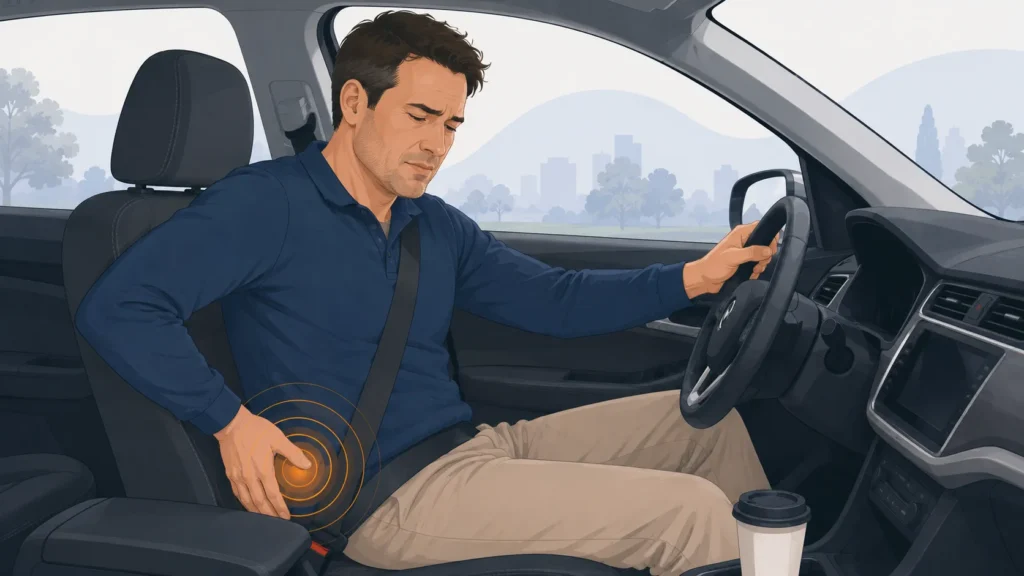
| Getting out of a car | Sharp stiffness initially |
Symptoms often improve after warming up, then become more noticeable later in the day as activity accumulates.
Some people begin changing how they move without realizing it. They may shorten their stride while running, shift weight to one side, avoid stairs, or rotate differently during exercise. Over time, these compensations can contribute to lingering symptoms.
Why Hip Pain Often Develops Gradually
Many active adults expect pain to result from a single injury. Hip pain frequently develops more slowly.
Tendons, joints, and muscles respond to repeated stress over time. When recovery, mobility, or strength cannot keep up with demand, symptoms may begin appearing during activities that previously felt normal.
This progression is common in runners and active adults who:
- Increase mileage too quickly
- Add new workouts abruptly
- Return to activity after time off
- Sit for long periods during the workday
- Continue training through increasing soreness
One common pattern is feeling fine during activity but progressively worse afterward. Someone may complete a workout with little discomfort, only to notice stiffness later that evening or the following morning. This delayed soreness pattern is common when tissues are becoming overloaded faster than they can recover.
This variability is one reason people often delay treatment. Many assume the problem will resolve on its own until symptoms begin interfering with normal routines, exercise consistency, or sleep.
Hip Pain vs. Low Back Pain
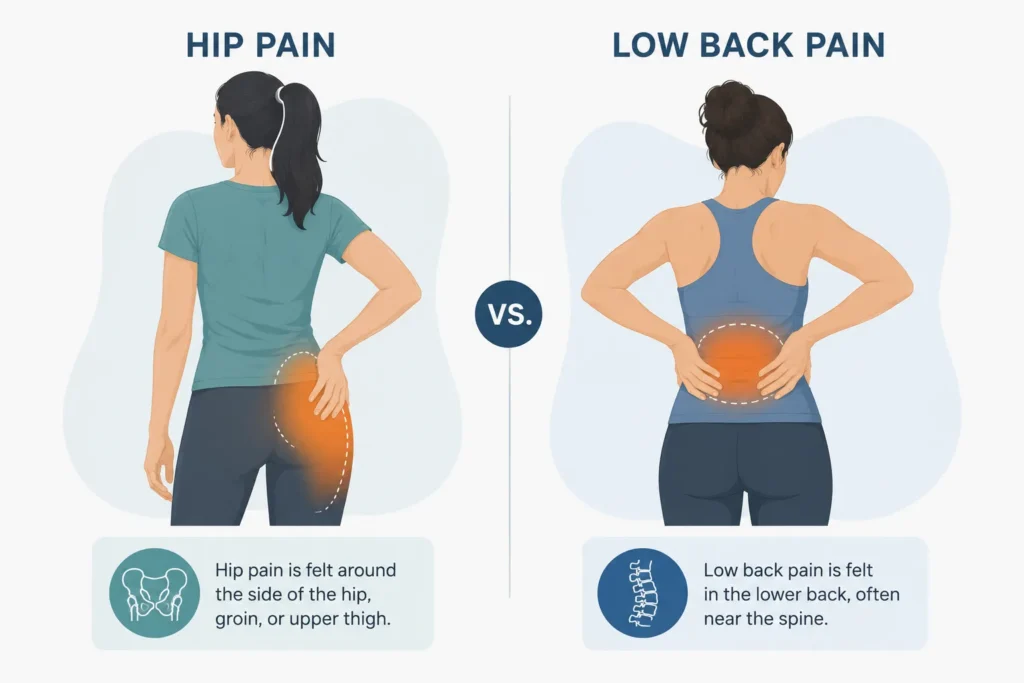
Hip and lower back symptoms can overlap significantly. Pain felt in the buttock, side of the hip, or upper thigh may sometimes be influenced by the lumbar spine rather than the hip joint itself.
A physical therapy evaluation helps determine whether symptoms are driven more by hip or spinal movement, or by a combination of both. This distinction matters because treatment strategies may differ depending on the primary source of symptoms.
| Symptoms | Hip Pain | Back Pain |
|---|---|---|
| Groin discomfort | Yes | Less common |
| Pain during deep bending | Yes | Sometimes |
| Symptoms below the knee | Less common | More common |
| Stiffness after sitting | Common | Common |
| Pain with spinal movement | Sometimes | Often |
| Difficulty lying on side | Common | Less common |
The overlap between hip and back symptoms is one reason self-diagnosis can be difficult. Someone may assume they have a hip problem when symptoms are partially coming from the lower back, or vice versa. Looking at how symptoms respond during movement testing often provides more useful information than pain location alone.
How PT Evaluates Hip Pain
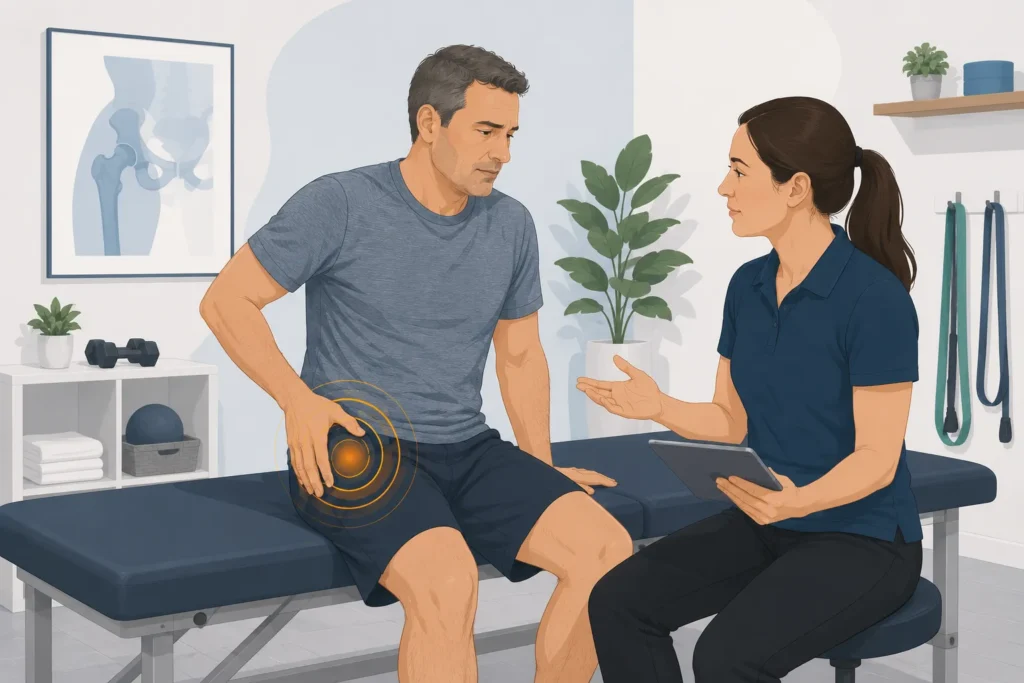
A physical therapy evaluation focuses on how the hip responds during movement and activity rather than relying only on imaging findings.
Many people have MRI or X-ray findings that do not fully explain their symptoms. Physical therapists assess how the body moves, which activities aggravate symptoms, and how different movements affect discomfort levels.
The evaluation may include:
- Walking and movement analysis
- Hip mobility testing
- Strength assessment
- Balance and single-leg control testing
- Squat or step-down mechanics
- Repeated movement testing
Physical therapists also assess surrounding areas, such as the lower back, pelvis, knees, and ankles. Hip pain is often influenced by how the body distributes force during movement, especially during single-leg activities like walking, stair climbing, and running.
For runners and active adults, the evaluation may also include discussion around training volume, exercise programming, recovery habits, and workload progression.
How Physical Therapy Helps Hip Pain
Treatment depends on the specific presentation, symptom irritability, and activity goals of the individual.
Early treatment often focuses on reducing irritation while keeping people moving as normally as possible. Completely avoiding activity is not usually necessary, but temporary modifications may help calm symptoms enough to restore normal movement.
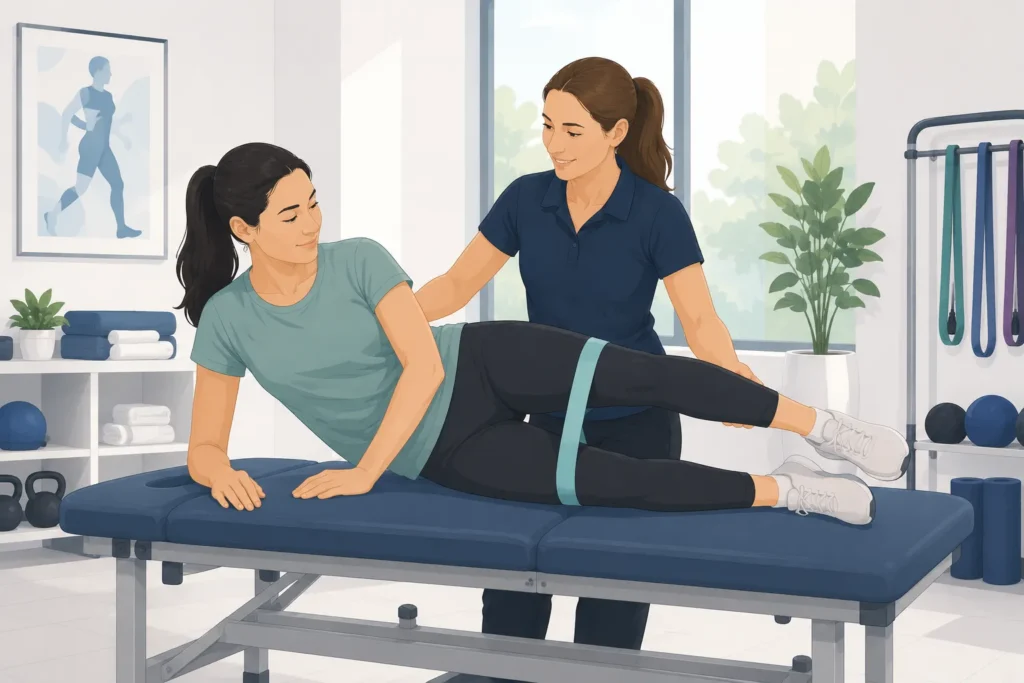
Treatment commonly includes:
- Improving hip mobility
- Building strength around the hip and pelvis
- Restoring movement confidence
- Improving balance and control
- Adjusting activity volume temporarily
- Gradually rebuilding load tolerance
Physical therapy also includes education around pacing, recovery, movement habits, and symptom management. Small changes to training volume or daily activity can sometimes significantly reduce irritation.
As symptoms improve, rehab usually becomes more focused on rebuilding tolerance to higher-demand activities. For runners and active adults, this often includes improving single-leg control, strengthening around the pelvis, and gradually reintroducing impact or deeper movement positions that were previously uncomfortable.
Example Rehab Progression
| Rehab phase | Primary focus |
|---|---|
| Early phase | Reduce irritation and improve tolerance to daily movement |
| Mid phase | Restore mobility and improve strength |
| Strength phase | Improve load tolerance and movement control |
| Return to activity | Reintroduce running, lifting, or sport-specific tasks |
Progress is rarely perfectly linear. Some soreness during rehab is normal, especially when returning to higher-demand activities. The goal is usually gradual improvement in overall function and activity tolerance rather than eliminating every sensation immediately.
Returning to Exercise and Running
Many active adults worry that hip pain means they need to stop exercising entirely. In most cases, movement remains important during recovery.
The key is finding an appropriate level of activity that does not continue overloading irritated tissues. For some people, that may mean temporarily reducing intensity or workout volume while staying active in ways the hip tolerates more comfortably.
Temporary modifications may include:
- Reducing running volume
- Avoiding steep hills temporarily
- Shortening workout duration
- Limiting deep hip flexion positions
- Breaking up prolonged sitting
- Adding recovery days between harder sessions
As strength and tolerance improve, activity levels are gradually increased again. This process helps tissues adapt rather than repeatedly becoming irritated. For runners especially, returning too quickly to previous mileage is one of the most common reasons symptoms continue lingering.
When to See a Physical Therapist
It is usually a good idea to seek evaluation when hip pain begins to limit normal activity or lingers beyond a few weeks.
People often benefit from physical therapy when they notice:
- Ongoing pain during walking or exercise
- Difficulty returning to running
- Stiffness that keeps worsening
- Pain during sleep
- Reduced tolerance to sitting or stairs
- Recurrent flare-ups with activity
Some people wait until symptoms become severe before seeking treatment, but earlier evaluation can often help identify contributing factors before movement limitations become more frustrating or persistent.
This is especially true for active adults who are modifying their workouts, avoiding certain movements, or reducing their activity levels due to ongoing discomfort. Even when symptoms seem manageable, persistent irritation can gradually affect strength, movement confidence, and overall activity tolerance over time.
Getting Help for Hip Pain
Hip pain can make everyday movement frustrating, especially when symptoms start to affect exercise, work, or sleep. The good news is that many hip conditions respond well to a structured rehabilitation approach focused on movement, strength, and gradual return to the activities you love.

At Calibration Physical Therapy, treatment begins with understanding how your symptoms behave during real activities and identifying the factors contributing to irritation. Your physical therapist will evaluate movement patterns, activity limitations, mobility, strength, and overall workload to build a treatment plan tailored to your goals.
If hip pain has been limiting your activity or keeping you from the things you enjoy, a physical therapy evaluation can help identify the factors contributing to your symptoms and create a plan to return to normal activity safely.
Tags

About the Author
Dr. Traci Smiley, DPT
Traci is a licensed physical therapist and owner of Calibration Physical Therapy, serving the Kansas City area. A Board-Certified Orthopedic Clinical Specialist with advanced training in manual therapy and strength conditioning, she helps individuals overcome pain and return to what they love.