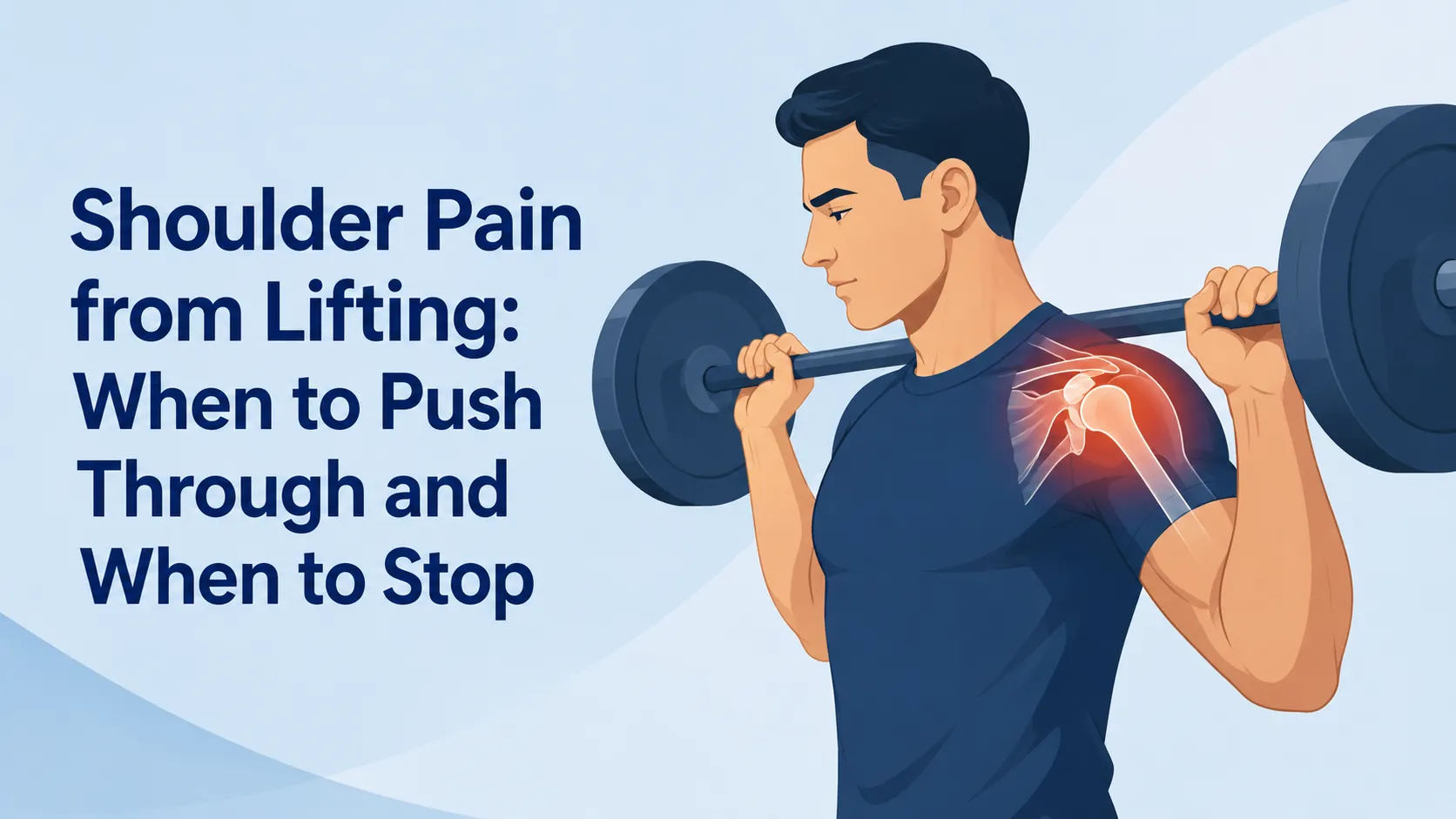
Shoulder pain from lifting is common in active adults, recreational athletes, and people returning to exercise after time away. Symptoms often appear during pressing movements, overhead lifting, pulling exercises, or repetitive upper-body training.
Some discomfort during training can be normal. Pain that becomes progressively more noticeable, limits workouts, or lingers long after activity usually deserves more attention.
In many cases, symptoms are less about a single injured structure and more about how the shoulder responds to training demands over time.
This article explains why lifting-related shoulder pain develops, how symptoms commonly behave during activity, and how physical therapy helps people return to training safely.
What Causes Shoulder Pain from Lifting?
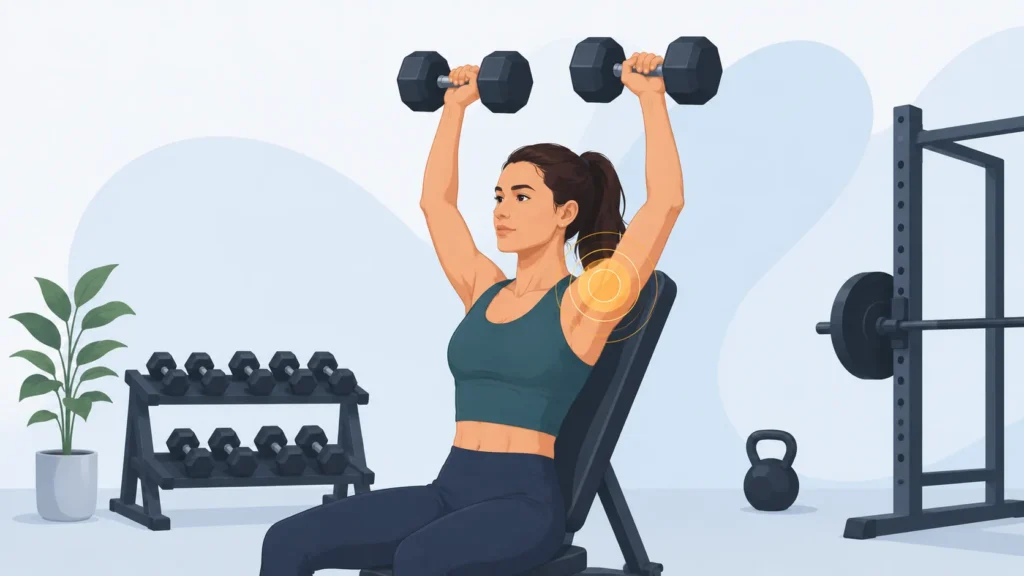
Shoulder pain during lifting is usually influenced by several factors rather than a single cause. Training history, exercise selection, recovery, mobility, and overall workload all play a role.
Symptoms often build from a combination of training stress and incomplete recovery rather than from a single isolated mistake. This can happen after increasing workout intensity too quickly, adding more upper body days, returning to lifting after time away, or repeatedly training through fatigue without enough recovery between sessions.
Mobility limitations can also contribute, particularly in the upper back and shoulders. Some people also develop symptoms after gradually compensating for strength imbalances or painful movement patterns for long periods without realizing it.
Sometimes symptoms begin after a specific workout that felt unusually demanding. Other times, people cannot identify a clear starting point because irritation has built gradually.
Exercise technique can influence symptoms, but shoulder pain is rarely caused by a single “bad” rep or an imperfect movement pattern alone.
What Does Shoulder Pain from Lifting Feel Like?
Symptoms can vary depending on which tissues are irritated and what types of movements are involved. Many people first notice discomfort during specific gym exercises before symptoms begin affecting daily activities.
Pain is commonly felt around the front, side, or deep inside the shoulder. Some people describe a sharp pinch during pressing or overhead movements, while others experience a dull ache that lingers afterward.
For many people, symptoms build gradually rather than appearing suddenly.
| Symptoms | What people commonly notice |
|---|---|
| Early irritation | Mild discomfort during heavier lifts |
| Moderate irritation | Pain during warm-ups or lighter sets |
| Increasing sensitivity | Pain with reaching, dressing, or sleeping |
| Persistent symptoms | Lingering soreness after workouts or daily activity |
Many people first notice symptoms during workouts rather than during daily activities. Pressing movements, overhead lifts, pull-ups, or dips are common triggers early on. As irritation builds, the shoulder may also become uncomfortable during reaching, dressing, carrying weight, or sleeping on the affected side.
Some symptoms only appear once the shoulder is fatigued. Others happen immediately in certain positions, especially deep pressing or overhead movements. Many people notice that the shoulder feels more reliable on some days than others, especially when training volume, sleep, or recovery habits fluctuate throughout the week.
How Symptoms Behave During Activity
Shoulder pain during lifting rarely behaves exactly the same from workout to workout. Some people notice symptoms only during heavier sets, while others feel relatively fine during training and become sore afterward.
The shoulder also responds differently depending on the movement. A person may tolerate push-ups but struggle with dips. Incline pressing may feel worse than flat benching. Wide-grip overhead movements often become irritating earlier than neutral-grip pulling exercises.
Fatigue changes symptoms as well. A movement that feels manageable early in a workout can become painful later once the shoulder muscles tire and lose some control.
Training structure matters too. Consecutive upper body days, sudden increases in volume, or repeatedly training to failure can all increase irritation when the shoulder is already sensitive. In many cases, symptoms are less about one specific exercise and more about the total workload the shoulder is trying to recover from across the week.
Understanding these patterns helps guide rehabilitation and exercise modification. Most people do not need to avoid movement completely. Instead, physical therapy helps identify which movements and loading levels the shoulder currently tolerates while gradually rebuilding strength and confidence over time.
Common Mistakes People Make When Shoulder Pain Starts

One of the most common mistakes is swinging between extremes. Some people continue training exactly the same way despite worsening pain. Others stop all upper-body activity immediately out of fear of damaging their shoulders.
Most people recover better somewhere between those extremes.
Completely ignoring symptoms can increase irritation if training volume, exercise selection, or recovery demands are not adjusted. On the other hand, complete rest often leads to deconditioning and loss of confidence with movement.
Another common issue is repeatedly testing painful movements too aggressively. People often keep trying heavy bench presses or overhead lifts every few days to “see if it still hurts.” This can keep the shoulder irritated without giving it enough time to adapt to modified loading.
In many cases, the goal is not avoiding movement entirely. The goal is to identify movements and loading levels the shoulder currently tolerates while gradually rebuilding strength and capacity.
Why Symptoms Often Develop Gradually
Most lifting-related shoulder pain develops over time rather than from one traumatic injury. Early symptoms are often mild enough that people continue training normally without making adjustments.
Early on, symptoms may only appear near the end of a workout or during heavier sets. Because the discomfort feels manageable, many people continue increasing training volume or intensity without realizing recovery is no longer keeping pace with demand.
Over time, the shoulder can become more sensitive. Exercises that were previously tolerable may begin to cause symptoms earlier in workouts or at lighter resistance.
This gradual progression is common in active adults who train consistently. The issue is not necessarily that exercise is harmful. More often, the shoulder simply needs better load management and greater tolerance for the demands placed on it.
Shoulder Impingement vs Rotator Cuff Pain
People often use the term “shoulder impingement” to describe pain during lifting, especially with overhead movements. In reality, shoulder pain is usually more complex than one structure being pinched.
| Condition | What people commonly notice |
|---|---|
| Rotator cuff-related pain | Pain with lifting, reaching, or resisted movements |
| Shoulder impingement | Pinching sensation during overhead motion |
| General shoulder irritation | Broad soreness with multiple exercises |
| Labral or instability issues | Clicking, shifting, or feelings of instability |
The important point is that symptoms alone do not always identify one exact structure. Physical therapy focuses more on understanding movement tolerance, strength, symptom behavior, and functional limitations than on precisely labeling every painful tissue.
How Physical Therapy Evaluates Shoulder Pain from Lifting

A physical therapy evaluation assesses how the shoulder responds to movement and loading demands rather than focusing solely on pain location.
The process usually begins with questions about training history, symptom behavior, exercise routines, and activity modifications. Understanding when symptoms occur often provides important clues.
The evaluation usually assesses shoulder mobility, rotator cuff strength, upper back movement, scapular control, and symptom response to repeated or loaded movements. Experienced physical therapists also look closely at training structure, recovery patterns, and which exercises consistently trigger symptoms.
Functional testing matters too. Reaching overhead, pressing movements, carrying weight, or sport-specific tasks often provide more useful information than isolated strength testing alone.
Several movement patterns commonly appear during evaluation.
| During evaluation | What it may suggest |
|---|---|
| Pain with overhead motion | Reduced load tolerance in elevated positions |
| Weakness during resisted testing | Rotator cuff or shoulder stabilizer involvement |
| Limited thoracic mobility | Reduced movement options during lifting |
| Symptoms with fatigue | Capacity issue rather than structural injury alone |
Imaging is not always necessary, especially when symptoms are improving with movement modification and progressive rehabilitation.
How Physical Therapy Helps Shoulder Pain from Lifting
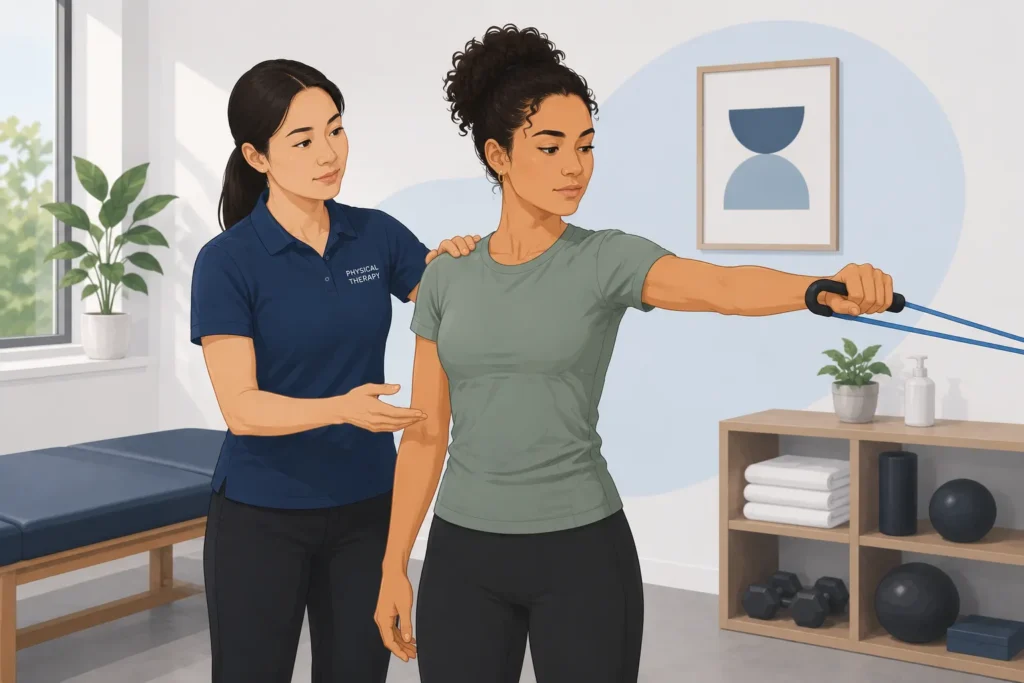
Physical therapy helps reduce shoulder irritability while rebuilding strength and tolerance for lifting activities. The goal is not simply to eliminate pain temporarily but to improve the shoulder’s ability to handle training demands long term.
Early treatment often focuses on reducing symptom aggravation without completely stopping activity. This may involve modifying exercise selection, adjusting training volume, or temporarily reducing intensity.
As irritability improves, rehab shifts toward rebuilding the shoulder’s tolerance for pressing, pulling, overhead movement, and heavier loading. Strengthening is usually combined with mobility work, movement retraining, and gradual exposure to previously painful exercises.
Exercise selection is usually based on symptom response, training goals, and current tolerance levels rather than on a single rigid protocol.
Technique can matter, but rehab is not about forcing “perfect” movement. The goal is to help the shoulder handle training demands more consistently without excessive irritation afterward.
Rehabilitation Progression
Rehabilitation usually progresses gradually as the shoulder becomes less sensitive to load and movement.
Most rehab plans move through overlapping stages depending on symptom severity and activity goals.
| Rehab phase | Main goal |
|---|---|
| Early phase | Reduce irritability and modify aggravating load |
| Middle phase | Improve strength and movement tolerance |
| Advanced phase | Reintroduce heavier lifting demands |
| Return to training | Build consistency and long-term capacity |
Progress during rehab is rarely perfectly linear. Temporary soreness can happen, especially when reintroducing heavier lifting or higher training volume. What matters more is whether symptoms settle appropriately afterward rather than continuing to escalate between sessions.
Returning to Activity
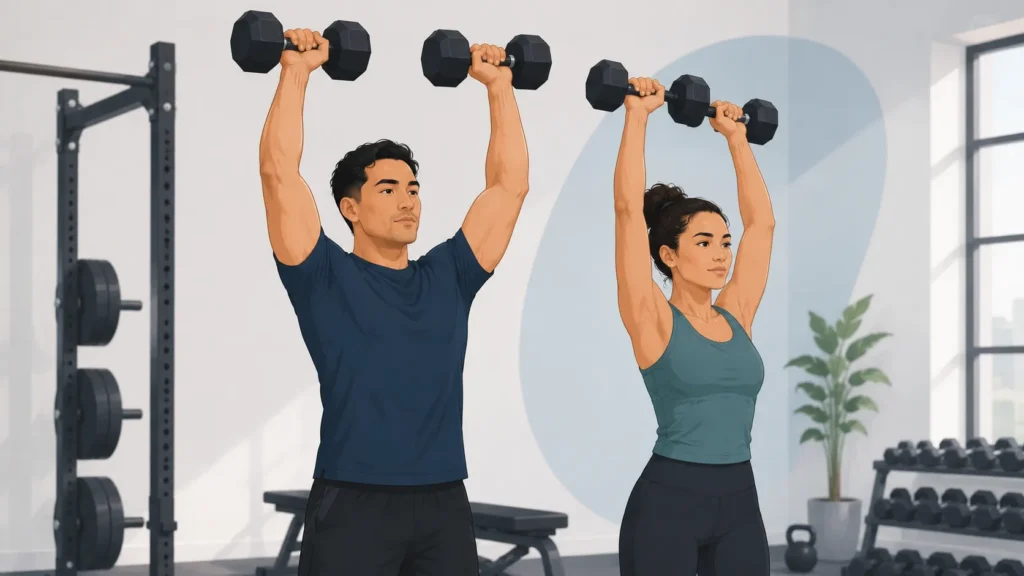
Returning to lifting after shoulder pain is usually most successful when progression is gradual and consistent. Many setbacks happen when people feel slightly better and immediately resume previous training levels.
Most people do better when they rebuild training volume and intensity gradually rather than immediately returning to previous workout levels. That may mean temporarily reducing weight, shortening workouts, lowering training frequency, or modifying exercises that still create excessive irritation.
Recovery between sessions matters just as much as the workout itself. A shoulder that tolerates training reasonably well and settles afterward is usually responding differently from one that becomes progressively more painful over the next 24 to 48 hours.
Pain during rehab does not always indicate damage. Some mild discomfort may be acceptable if symptoms settle reasonably afterward and overall tolerance continues to improve over time. A physical therapist helps determine when symptoms are within a manageable range versus when the shoulder is overloaded.
Confidence is also an important part of recovery. Many people become hesitant with pressing or overhead movements after dealing with persistent pain. Gradual exposure helps rebuild both physical capacity and trust in the shoulder again.
When to See a Physical Therapist
It may be helpful to see a physical therapist if shoulder pain is limiting workouts, interfering with daily activity, or not improving with basic modifications.
An evaluation is especially useful if you notice:
- Pain that persists for several weeks
- Symptoms worsening during normal workouts
- Pain interfering with sleep
- Loss of strength during lifting
- Difficulty reaching overhead
- Fear or uncertainty about returning to exercise
Early evaluation often helps people avoid long periods of unnecessary rest or repeated cycles of flare-ups.
Final Thoughts
Shoulder pain during lifting is common, especially in active adults who train consistently or return to exercise after time away. In many cases, symptoms develop gradually as the shoulder becomes less tolerant of the demands being placed on it during training and recovery.
Physical therapy helps identify what is driving symptoms, modify aggravating factors, and progressively rebuild strength and confidence. Most people do not need to stop exercising completely. They usually need a better plan for managing load and for gradually returning to activity.
At Calibration Physical Therapy in Overland Park, Kansas, we help active adults, runners, lifters, and athletes understand what is contributing to their shoulder pain and develop practical plans to return to training with more confidence and less irritation. If you’re experiencing shoulder pain and live in the Kansas City area, book an evaluation with us to help reduce pain, improve recovery, and regain strength.
Tags

About the Author
Dr. Traci Smiley, DPT
Traci is a licensed physical therapist and owner of Calibration Physical Therapy, serving the Kansas City area. A Board-Certified Orthopedic Clinical Specialist with advanced training in manual therapy and strength conditioning, she helps individuals overcome pain and return to what they love.