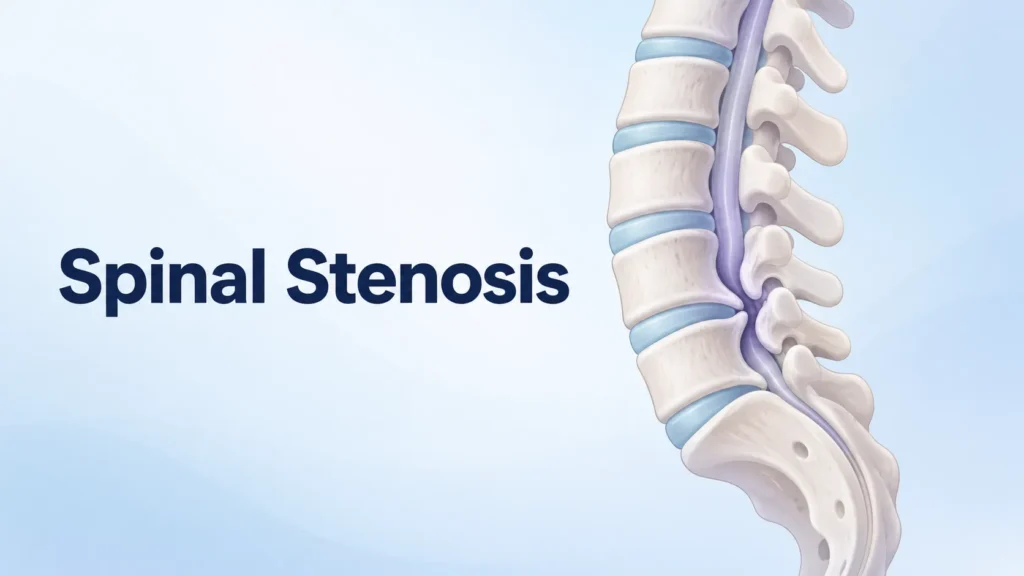
Piriformis syndrome is a condition where a small muscle deep in the buttocks irritates the sciatic nerve. This can cause buttock pain that sometimes travels down the back of the leg, especially during sitting, running, or long drives.
Because these symptoms can resemble sciatica, it is not always easy to determine the cause. This article explains what piriformis syndrome is, how it typically presents, and how physical therapy can help reduce irritation and improve movement.
What Is Piriformis Syndrome?
Piriformis syndrome occurs when the piriformis muscle irritates or compresses the sciatic nerve. The piriformis is a small muscle located deep in the buttocks that helps rotate the hip and stabilize the pelvis during walking and running.
When the muscle becomes irritated, tight, or overloaded, it can put pressure on the nearby sciatic nerve. This can cause buttock pain and, sometimes, symptoms that travel down the back of the thigh.
Unlike a disc-related nerve issue coming from the spine, piriformis syndrome usually starts locally in the hip or buttock region. The symptoms tend to vary depending on how the hip is used during daily activities.
Where The Piriformis Muscle Is Located

The piriformis lies deep in the buttocks, beneath the larger gluteal muscles. It runs from the sacrum at the base of the spine to the upper part of the femur.
Its job is to help rotate and stabilize the hip during movement. Because the sciatic nerve passes very close to the muscle, irritation in this area can sometimes create buttock pain and symptoms that travel down the back of the leg.
What Piriformis Syndrome Often Feels Like
Most people with piriformis syndrome describe a deep ache or tightness in the buttock. The discomfort usually feels deep in the hip rather than on the surface of the muscle. Patients often point to the center of the buttock when describing where they feel the pain.
The symptoms may remain localized to the buttock or may travel partway down the back of the thigh. This happens because the sciatic nerve runs directly alongside the piriformis. When the muscle becomes irritated, it can also irritate the nearby nerve tissue.
People often notice that the symptoms build slowly during activity rather than appearing instantly. Someone might start a run feeling normal, then notice their buttocks tightening after several minutes. Others feel the discomfort most during sitting or when standing up after being in one position for a long time.
Common complaints patients describe include:
- Deep buttock pain on one side
- Pain that spreads down the back of the thigh
- Discomfort after sitting for long periods
- Tightness during walking or running
- Pain when climbing stairs or squatting
- Irritation when getting up after sitting
The symptoms often fluctuate depending on how much load the hip has been subjected to that day. Someone may feel relatively comfortable in the morning but notice the buttock becoming progressively tighter during a longer walk, run, or day of sitting.
Prolonged sitting is one of the most common aggravating factors. Sitting places the hip in a position that compresses the deep glute muscles, which can make the piriformis more sensitive. This is why people frequently report worsening symptoms during long drives, desk work, or airplane travel.
How Symptoms Often Behave During Daily Activities
One of the most helpful clues for piriformis-related pain is how symptoms respond to different positions and movements. Patients often notice that certain activities consistently provoke symptoms while others feel surprisingly comfortable.
Many people report that the pain builds gradually rather than appearing instantly. Someone may sit down feeling fine and then notice the buttock becoming increasingly tight after twenty or thirty minutes. Others feel the irritation more during walking or running, especially as the hip muscles fatigue.
The pattern often reflects how much load the hip has sustained throughout the day. A person might tolerate daily movement but notice symptoms that appear later during a longer walk, a workout, or prolonged sitting.
| Activity | What patients often notice |
|---|---|
| Sitting for long periods | Buttock pain increases over time |
| Driving | Aching or burning in the buttock |
| Walking uphill or up stairs | Hip or buttock tightness |
| Running | Gradual increase in buttock discomfort |
| Getting up after sitting | Temporary sharp or tight feeling |
Another common pattern is temporary stiffness when first standing up after sitting. The hip may feel tight or sensitive for a few steps before loosening as walking continues. Patients often describe the sensation as the muscle needing a moment to “wake up.”
Long static positions are often the biggest irritant. Desk work, long drives, or airplane travel can place continuous pressure on the deep gluteal muscles, increasing the piriformis’s sensitivity. This is why symptoms often feel worse later in the day after prolonged sitting.
Movement usually helps once the area settles down. Light walking or gentle activity can reduce stiffness and restore circulation to the surrounding muscles. When the hip begins moving normally again, the symptoms often ease temporarily.
What Causes Piriformis Syndrome

Piriformis irritation usually develops when the hip is asked to handle a load it is not ready for. This often occurs after a change in activity rather than from a single injury.
The piriformis works with the glutes and other hip stabilizers to control movement. If the surrounding muscles are not contributing well, or if training volume increases too quickly, the muscle can become sensitive.
Common contributing factors include:
- Sudden increases in running or training volume
- Long periods of sitting or driving
- Limited hip mobility
- Weakness or poor coordination in the glute muscles
- Changes in terrain, footwear, or workout intensity
- Repetitive twisting or pivoting activity
Prolonged sitting is a common factor because it compresses the deep hip muscles for extended periods. Then, when those muscles are asked to stabilize the hip during walking, running, or lifting, they may not tolerate the demand very well.
In many cases, the irritation builds gradually. Small stresses accumulate over time until the area becomes sensitive during normal daily activity.
How Piriformis Syndrome Differs From Sciatica
Because the sciatic nerve can be involved, piriformis syndrome is sometimes mistaken for sciatica coming from the lower back. While the symptoms can overlap, how the pain behaves often provides useful clues.
Back-related sciatica usually includes noticeable back pain or symptoms that worsen with spinal movement. Piriformis-related symptoms often feel more localized to the buttocks and respond more to hip movement.
| Feature | Piriformis Syndrome | Lumbar Sciatica |
|---|---|---|
| Main pain location | Buttock | Lower back and leg |
| Sitting | Often aggravates symptoms | May or may not aggravate |
| Back movement | Often tolerated well | Often aggravates symptoms |
| Hip rotation | Can reproduce pain | Less likely to trigger symptoms |
While these patterns can help guide suspicion, symptoms do not always fit perfectly into one category. Some people have a combination of hip and lower back factors contributing to nerve irritation.
This is one reason movement testing is so important during an evaluation. A therapist may ask the patient to move the lower back in different directions, rotate the hip, or perform simple functional movements such as squatting or stepping.
If symptoms consistently appear with hip rotation or pressure around the buttock, the piriformis becomes a stronger suspect. If symptoms respond more strongly to spinal movement, the lower back may be playing a larger role.
Because the sciatic nerve runs through multiple regions of the body, identifying the exact source of irritation requires observing how the body behaves during movement rather than relying solely on symptom location.
Because symptoms can overlap, it is often helpful to have a movement-based evaluation to determine whether the irritation is coming from the hip, the lower back, or both.
How Physical Therapists Evaluate Piriformis Syndrome

A physical therapy evaluation focuses on understanding how symptoms respond to movement and daily activity. The goal is not just to locate the painful area, but to determine which movements, positions, or loads are provoking the irritation.
Physical therapists usually begin by asking detailed questions about how the pain behaves during everyday life. Sitting tolerance, running history, recent changes in activity, and the timing of symptoms during the day can all provide useful clues.
The next step is observing how the hip and lower body move. Many people with piriformis irritation have subtle changes in how their hip muscles coordinate during walking, squatting, or single-leg balance. These patterns can increase stress on the smaller deep hip muscles.
During the movement exam, therapists often look at:
- Hip mobility during rotation and flexion
- Muscle activation in the glutes and hip stabilizers
- Walking or running mechanics
- Sensitivity of the deep buttock muscles
- How symptoms respond to repeated movement
Therapists may also use specific movement tests to see whether the piriformis muscle reproduces the symptoms. These tests gently place the hip in positions that load the deep rotator muscles. If those movements reproduce the familiar buttock pain or leg symptoms, they provide useful information about the source of irritation.
Equally important is ruling out other causes of sciatic nerve symptoms. A therapist will usually screen the lower back, hip joint, and surrounding muscles to ensure that another structure is not causing the problem.
These movement patterns often tell a clearer story than imaging alone. Many people have MRI findings in the spine that are unrelated to their symptoms. Observing how the body behaves during movement often provides the most helpful guidance for treatment.
How Physical Therapy Helps Piriformis Syndrome
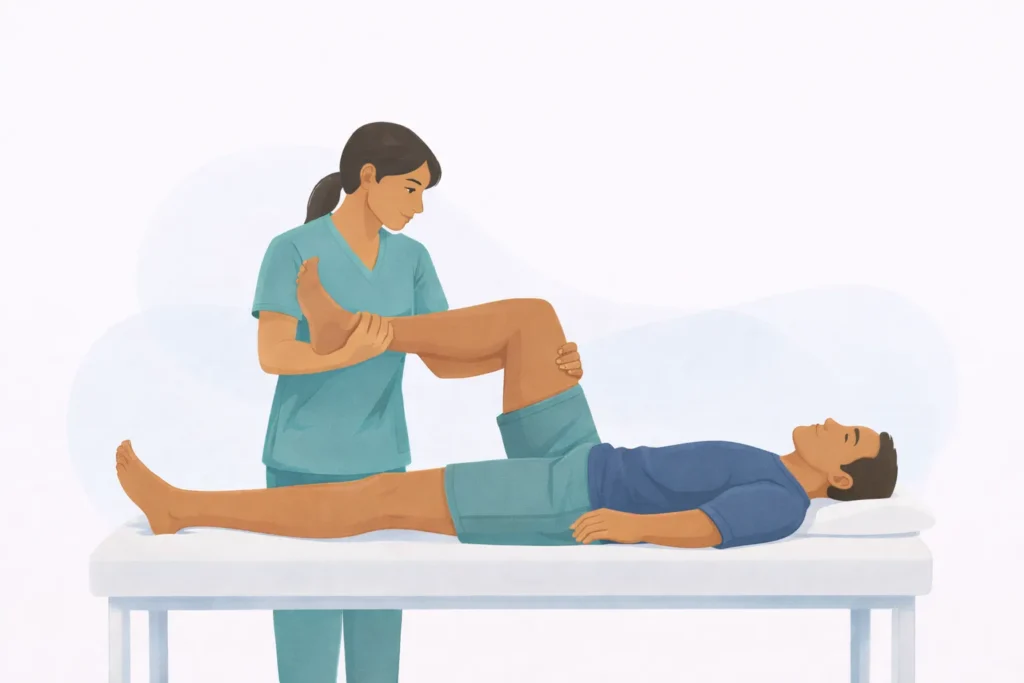
Physical therapy focuses on reducing irritation around the piriformis while improving the hip’s movement and load handling. The goal is not simply to calm the painful muscle. Treatment focuses on restoring normal movement patterns so the piriformis is no longer being asked to do extra work.
Most people improve when therapy addresses both the irritated tissue and the movement habits that allowed the irritation to develop. That usually involves a combination of activity modification, mobility work, and strengthening of the surrounding hip muscles.
Reducing Symptom Irritability
Early treatment often focuses on calming the irritated area so the muscle and nearby nerve tissue can settle down. When symptoms are very reactive, certain activities may repeatedly aggravate the piriformis throughout the day.
Therapists often help patients temporarily adjust activities that provoke the symptoms. This might include modifying sitting positions, reducing running volume, or avoiding positions that compress the deep hip muscles.
Small changes can often make a noticeable difference, such as:
- Taking brief standing breaks during long periods of sitting
- Adjusting running mileage or workout intensity
- Avoiding prolonged sitting on hard surfaces
- Changing hip position during driving or desk work
These adjustments give the irritated tissue time to calm down while other parts of the rehabilitation program begin to improve movement capacity.
Restoring Normal Movement
Restricted hip mobility can increase stress on the piriformis during everyday movement. When the hip joint does not rotate or move freely, the surrounding muscles may compensate by working harder to control the joint.
Therapy often focuses on restoring comfortable movement in the hip and pelvis. When the joint begins moving more normally, the deep rotator muscles no longer need to stabilize the area as aggressively.
Improving hip mobility can reduce strain during common activities such as walking, climbing stairs, or getting up from a chair. Over time, this helps reduce the constant irritation that keeps the muscle sensitive.
Strengthening Supportive Muscles
The glutes and other hip stabilizers play a major role in distributing load through the hip. If these larger muscles are not contributing effectively, the smaller deep muscles may try to compensate.
This is one of the reasons piriformis irritation often develops during increases in running or training. The deep rotators are powerful muscles, but they are not designed to handle most hip stabilization during repetitive activity.
Rehabilitation usually focuses on improving strength and coordination in the glutes and surrounding hip muscles. When these muscles contribute more effectively, the piriformis no longer needs to carry as much of the demand.
Improving Load Tolerance
Once symptoms begin to settle, therapy gradually increases the load the hip can tolerate. This step is important because the goal is not just symptom relief. The goal is to help the body handle normal activity again without recurring irritation.
Load tolerance improves when the surrounding muscles become stronger and movement patterns become more efficient. Gradual progression allows the tissue to adapt while minimizing the risk of flare-ups.
For example, someone returning to running may slowly rebuild distance and intensity over time rather than immediately resuming previous training levels.
Gradual Return to Activity
Many patients want to return to exercise or sport as soon as the pain improves. While that motivation is understandable, returning too quickly can sometimes restart the irritation.
Physical therapy helps guide a gradual return to activity so the hip muscles have time to adapt. This approach focuses on steady progress rather than pushing through symptoms.
As strength, mobility, and movement control improve, most people can return to normal training and daily activity with much greater confidence.
When Should You See a Physical Therapist?

Buttock pain that lingers for several weeks or repeatedly returns with activity is often worth evaluating. Early guidance can help prevent the issue from becoming more persistent.
People often benefit from physical therapy if they notice:
- Pain that increases with sitting or driving
- Buttock pain during running or training
- Symptoms traveling down the back of the thigh
- Recurring tightness in the hip during activity
- Discomfort that limits exercise or daily movement
A movement-based evaluation can usually clarify whether the piriformis is contributing to the symptoms.
Moving Forward With the Right Evaluation
Piriformis syndrome can be frustrating because it often mimics other causes of sciatica. A careful movement assessment helps clarify whether the symptoms arise from the deep hip muscles, the lower back, or both.
At Calibration Physical Therapy, the evaluation process assesses how the hip, pelvis, and surrounding muscles respond to movement and loading. That helps guide treatment toward factors driving the symptoms.
If buttock or leg pain has been limiting your sitting tolerance, exercise, or daily movement, a physical therapy evaluation can help you understand what is contributing to the problem and what needs to improve.
Tags

About the Author
Dr. Traci Smiley, DPT
Traci is a licensed physical therapist and owner of Calibration Physical Therapy, serving the Kansas City area. A Board-Certified Orthopedic Clinical Specialist with advanced training in manual therapy and strength conditioning, she helps individuals overcome pain and return to what they love.