Dry needling and acupuncture both involve placing very thin needles into the body. Because the treatments look similar, many people assume they are the same technique. In reality, they come from different medical frameworks and serve different purposes.
In physical therapy, dry needling is used to treat muscle pain and movement problems related to trigger points or muscle tension. Acupuncture is a traditional Chinese medicine practice that focuses on balancing the flow of energy within the body.
Understanding the difference can help patients feel more comfortable when deciding whether dry needling may be helpful as part of a physical therapy treatment plan.
What Is Dry Needling?
Dry needling is a technique used by physical therapists to treat painful or tight muscles. The treatment involves inserting a very thin needle into specific muscle areas called trigger points. These areas are often sensitive, tight, and painful during movement.
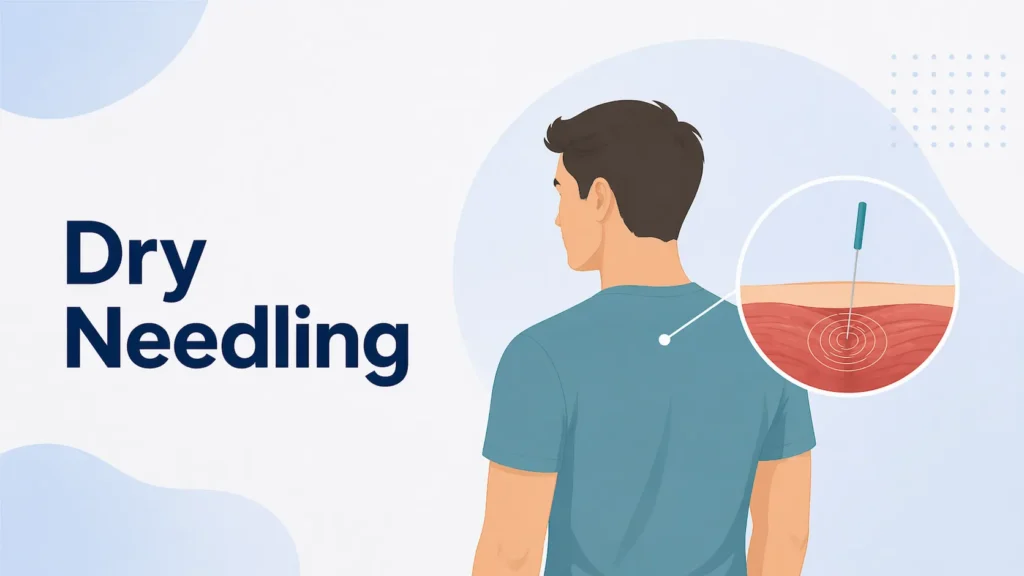
The goal of dry needling is to reduce muscle tension and restore more normal muscle function. When a trigger point is stimulated with a needle, the muscle may briefly contract and then relax. This response can help reduce pain and allow the muscle to move more comfortably again.
Dry needling is commonly used alongside other physical therapy treatments. It is rarely used as a standalone treatment and is usually combined with exercise, mobility work, and movement retraining.
What Is Acupuncture?
Acupuncture is part of traditional Chinese medicine and has been practiced for thousands of years. In this system, needles are placed along pathways in the body known as meridians. The treatment is intended to influence the flow of energy, often called “qi.”
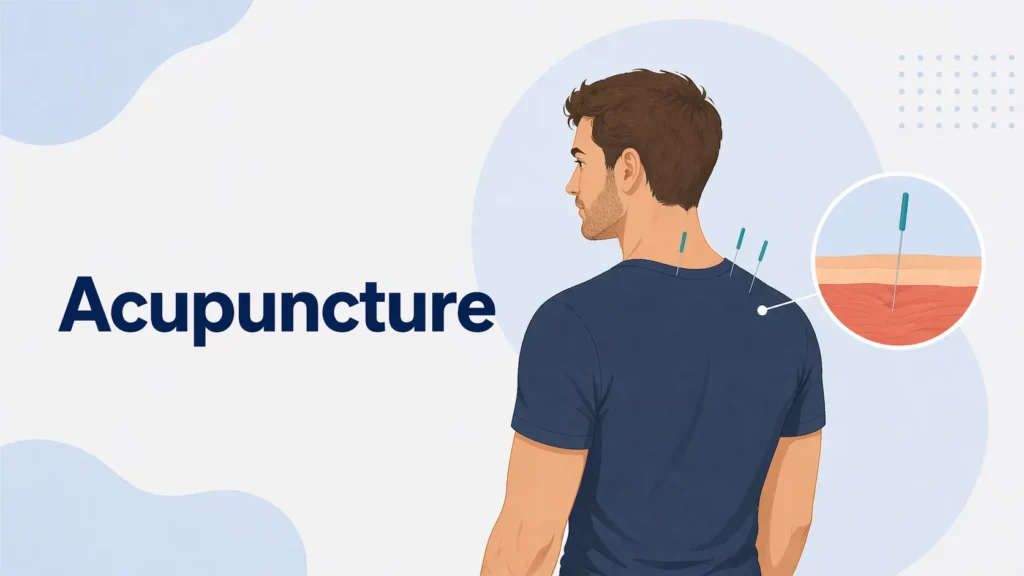
Acupuncture is commonly used for a wide range of conditions. Some people seek acupuncture for stress, headaches, digestive concerns, or general wellness.
Although the needles used in acupuncture are similar to those in dry needling, the clinical reasoning behind the treatments differs.
Summary: Acupuncture treatments are guided by traditional Chinese medicine principles, while dry needling is based on modern musculoskeletal assessment and movement evaluation.
Key Differences Between Dry Needling and Acupuncture
Even though the needles look similar, the goals and clinical reasoning behind the treatments are different.
| Treatment | Clinical focus |
|---|---|
| Dry needling | Reducing muscle tension and improving movement |
| Acupuncture | Influencing energy pathways within traditional Chinese medicine |
| Dry needling | Used as part of orthopedic rehabilitation |
| Acupuncture | Often used for whole-body health or wellness |
In physical therapy, dry needling is considered a musculoskeletal treatment. It is typically used to address muscle tightness, trigger points, and movement-related pain.
Acupuncture, on the other hand, may focus on broader health concerns that extend beyond the musculoskeletal system.
What Does Dry Needling Feel Like?
Many patients are curious about what dry needling actually feels like. The needles used in treatment are extremely thin, and most people feel only a small sensation when the needle enters the skin.
When the needle reaches a trigger point, the muscle may briefly twitch. This twitch response is normal and often indicates the needle has reached the targeted muscle area.
Some people notice a dull ache or pressure in the muscle during treatment. Others feel very little sensation.
The response can vary depending on the muscle being treated. Some muscles respond quickly and relax after a brief twitch response. Others may feel slightly achy for a short period after treatment as the muscle settles.
Most people can return to normal activity the same day. Therapists will often follow dry needling with movement or exercise to help the muscle adapt to its improved mobility.
After treatment, it is common for the muscle to feel:
- Looser during movement
- Slightly sore for a day or two
- Less sensitive to pressure
- Easier to stretch
- Less painful during activity
This temporary soreness usually feels similar to post-workout muscle soreness and typically resolves within a day or two.
Why Muscles Develop Trigger Points
Dry needling is commonly used to treat trigger points, or tight areas within a muscle. These spots can develop when muscles become overloaded, fatigued, or repeatedly irritated.
Trigger points often form when a muscle has been working harder than it can comfortably tolerate.

When a trigger point develops, the muscle may become locally sensitive and slightly shortened. This can change how the muscle behaves during movement. The surrounding muscles may begin compensating, leading to stiffness, fatigue, or discomfort during everyday activities.
Over time, this can affect how a joint moves. For example, tight muscles around the shoulder or hip may limit normal motion, making lifting, running, or reaching feel uncomfortable even when the joint itself is healthy.
Common situations that contribute to trigger points include:
- Repetitive lifting or reaching
- Long periods of desk work
- Poor shoulder or hip mechanics during exercise
- Sudden increases in activity levels
- Muscle guarding after injury
Once a trigger point forms, the muscle often becomes more sensitive and less tolerant to normal movement demands. This can make everyday activities uncomfortable, even when the surrounding tissues are otherwise healthy.
How Symptoms Behave During Activity
Muscle trigger points often create very specific symptom patterns during daily activities. People may notice pain during certain movements, while other activities feel completely normal.
For example, shoulder trigger points may cause discomfort when reaching overhead but not during walking or sitting. Hip or glute trigger points may create symptoms during running but not during casual standing.
| Activity | What people often notice |
|---|---|
| Reaching overhead | Shoulder tightness or pulling |
| Lifting objects | Muscle fatigue or localized pain |
| Running | Tightness in the hip or calf |
| Desk work | Gradual stiffness in the neck or upper back |
These symptoms are often related to how well the muscle tolerates repeated load. When a muscle is irritated or tight, it may respond poorly to repeated activity until the underlying issue is addressed.
How Physical Therapists Evaluate Muscle Pain
When someone comes to physical therapy with muscle pain, the evaluation focuses on how symptoms behave during movement.

A physical therapist will typically begin by discussing how the symptoms behave during normal activities. This helps identify whether the problem is related to muscle irritation, movement patterns, or changes in activity load.
The therapist may ask about:
- When symptoms started
- Which movements trigger pain
- Activities that feel better or worse
- Changes in activity levels or training load
Movement testing is also an important part of the evaluation process.
These movement tests help identify which muscles may be overworking or becoming irritated. For example, limited shoulder mobility may cause the upper trapezius to become overactive, while hip stiffness during running may increase load on the glutes or calves.
Identifying these patterns helps guide treatment so the underlying cause of the irritation can be addressed rather than simply reducing symptoms.
During the exam, the therapist may check for:
- Muscle tenderness or trigger points
- Limited joint mobility
- Changes in movement control
- Muscle weakness or fatigue
- Symptom response during repeated movements
This information helps determine whether muscle irritation or trigger points may be contributing to the problem.
How Dry Needling Helps in Physical Therapy
Dry needling is used to help reduce muscle irritation and improve muscle function during movement.
When trigger points relax, the surrounding muscle often becomes easier to stretch and strengthen.
In physical therapy, dry needling is often used to support other parts of the rehabilitation process.
It may help with:
- Reducing muscle tension
- Improving tolerance to movement
- Decreasing localized pain
- Restoring normal muscle activation
- Allowing exercise to feel more comfortable
Because dry needling addresses muscle irritation, it can sometimes make it easier for patients to participate in strengthening or mobility work during the same session.
How Dry Needling Fits Into a Rehab Plan
Dry needling is rarely the only treatment used in physical therapy. Instead, it is usually combined with other strategies that improve long-term movement capacity.
A typical rehabilitation approach may progress through several stages.
| Rehab phase | Focus of treatment |
|---|---|
| Early phase | Reduce irritability and restore comfortable movement |
| Mobility phase | Improve flexibility and joint mobility |
| Strength phase | Build strength in supporting muscles |
| Load tolerance phase | Gradually increase activity demands |
| Return to activity | Resume sports, exercise, or work tasks |
Dry needling may be used early in the process to reduce muscle sensitivity. Once movement improves, exercise becomes the main focus of treatment.
Is Dry Needling Safe?
Dry needling is considered a safe treatment when performed by a trained physical therapist. The needles used are sterile, single-use, and much thinner than the needles used for injections or blood draws.
Most side effects are mild and temporary. The most common reactions include:
- Mild muscle soreness
- Temporary bruising
- Localized fatigue in the treated muscle
- Minor tenderness at the needle site
Your physical therapist will review your medical history and symptoms before performing dry needling to ensure the treatment is appropriate. If dry needling is not the best option, other physical therapy treatments can address the same movement problem.
When Dry Needling May Be Helpful
Dry needling is commonly used for muscle-related pain conditions. It is often helpful when symptoms involve tight or sensitive muscles that limit movement.
Situations where dry needling may be considered include:
- Shoulder pain during reaching or lifting
- Neck and upper back tension from desk work
- Hip or glute tightness during running
- Persistent muscle knots that do not respond to stretching
- Calf tightness that limits activity
Dry needling is not appropriate for every patient. A physical therapist will determine whether it fits the treatment plan based on the evaluation.
When to See a Physical Therapist
Muscle pain often develops gradually and may start as mild stiffness or tightness during activity. When symptoms persist or begin limiting normal movement, it can be helpful to have the problem evaluated.
A physical therapy evaluation can identify whether muscle irritation, movement limitations, or changes in training load may be contributing to the symptoms.

If dry needling is appropriate, it can be used as part of a broader treatment plan focused on restoring comfortable movement and improving the body’s tolerance to activity.
At Calibration Physical Therapy, treatment focuses on understanding how your symptoms behave during movement and identifying the factors that contribute to pain. When appropriate, dry needling can be used alongside exercise and movement training to help restore comfortable, confident movement.
Tags

About the Author
Dr. Traci Smiley, DPT
Traci is a licensed physical therapist and owner of Calibration Physical Therapy, serving the Kansas City area. A Board-Certified Orthopedic Clinical Specialist with advanced training in manual therapy and strength conditioning, she helps individuals overcome pain and return to what they love.