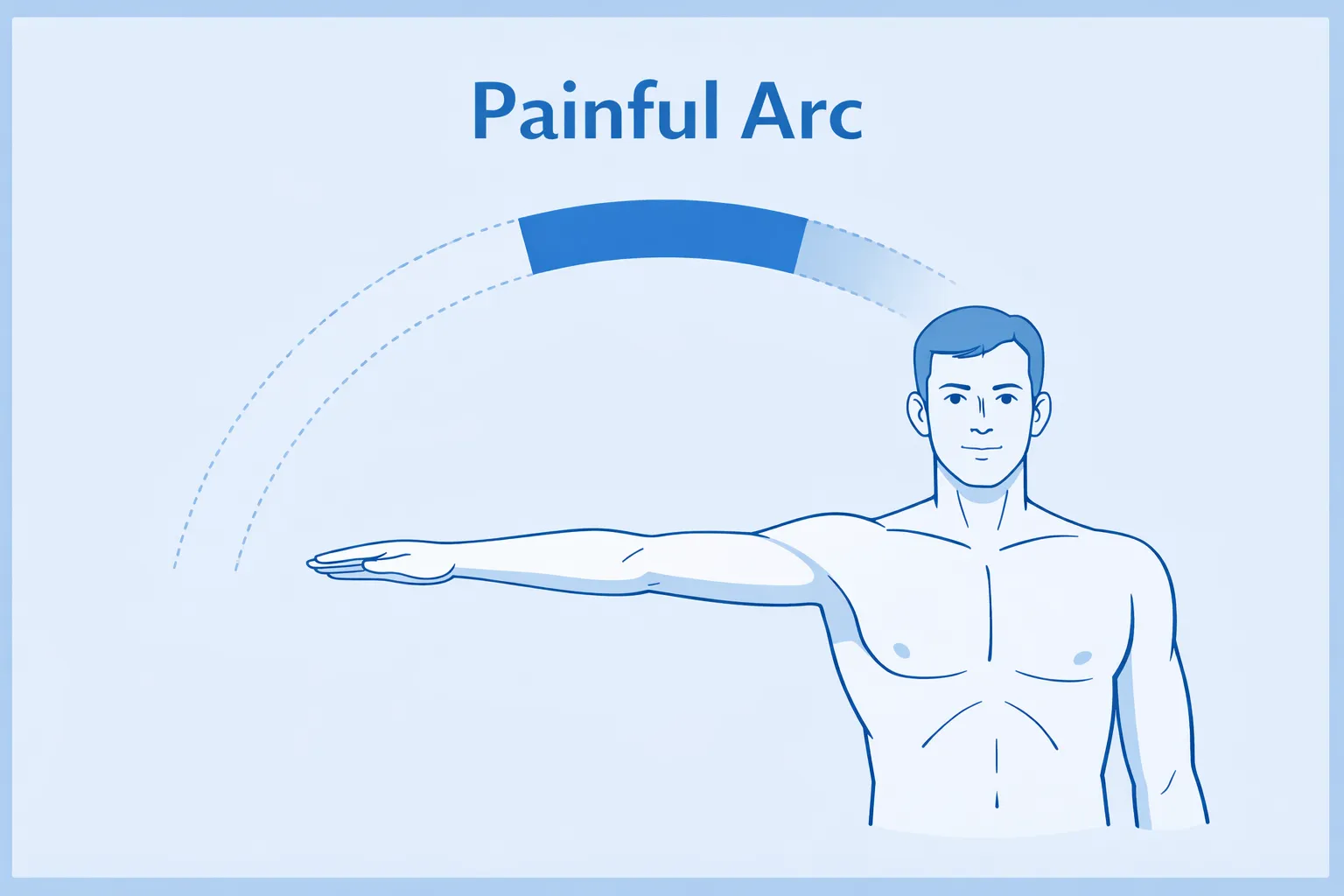
Shoulder pain often occurs during specific phases of movement. One pattern many people notice is pain when lifting the arm to the side, which improves as the arm moves higher. Physical therapists refer to this pattern as the “painful arc”.
This movement pattern provides useful information when evaluating shoulder pain. In this article, we will explain what the painful arc is, why it happens, how symptoms behave during activity, and how physical therapy helps restore comfortable movement.
What Is the Painful Arc?
The painful arc refers to shoulder pain that occurs during a specific portion of arm elevation, most commonly when the arm is lifted out to the side.
Many people notice that the arm moves comfortably at first, begins to hurt partway through the lift, and then becomes more comfortable again once the arm moves higher. This creates a pattern in which pain occurs during the middle portion of the motion.
In clinical settings, the painful arc typically occurs between about 60 and 120 degrees of arm elevation. The exact range can vary from person to person, but the key feature is that pain appears during a predictable part of the movement rather than throughout the entire motion.
This pattern is most noticeable during everyday tasks such as:
- Reaching into a cabinet
- Lifting the arm to put on a shirt
- Raising the arm to wash hair
- Reaching sideways to grab an object
- Lifting something from a shelf
Physical therapists pay close attention to this pattern because it helps them identify how the shoulder responds to movement and load. The painful arc itself is not a diagnosis. Instead, it is a movement pattern that often appears when the rotator cuff or surrounding shoulder tissues become irritated during arm elevation.
What Does the Painful Arc Feel Like?
People usually notice the painful arc during active arm movement rather than at rest.
The most common description is a sharp or pinching sensation that appears as the arm approaches shoulder height. The discomfort often fades once the arm moves higher overhead.

Other people describe the pain as a dull ache that gradually builds during the lift. The shoulder may feel tired or irritated after repeated reaching tasks.
Common symptom patterns include:
- Pain when lifting the arm to the side
- Discomfort while reaching overhead
- A catching or pinching sensation during the lift
- Reduced comfort when lowering the arm back down
- Fatigue or soreness later in the day
Symptoms often become more noticeable with repeated shoulder use. Activities like cooking, cleaning, or desk work can gradually increase shoulder irritation.
Why the Painful Arc Happens
The shoulder is designed to move through a large range of motion. To do that smoothly, several structures must work together during arm elevation.
As the arm lifts, the rotator cuff muscles guide the ball of the shoulder joint while the shoulder blade rotates upward along the rib cage. This coordination helps maintain space for the tendons and soft tissues that pass through the shoulder.
When this movement becomes less efficient, certain tissues may become irritated during specific portions of the lift. This is often when the painful arc appears.
During the middle part of arm elevation, the shoulder works harder to control the joint’s position. If the rotator cuff is fatigued, irritated, or not coordinating well with the shoulder blade, the tissues can become sensitive during this portion of the movement.
Several factors can contribute to this situation over time:
- Irritation of the rotator cuff tendons
- Reduced shoulder blade control during reaching
- Muscle fatigue during repeated overhead activity
- Stiffness in the shoulder or upper back
- Gradual overload from new or increased activity
These changes usually develop slowly rather than from a single injury. Many people notice a painful arc after a period of heavier shoulder use, such as increased exercise, sports, or overhead work.
How Symptoms Behave During Activity
One of the most helpful parts of evaluating shoulder pain is observing how symptoms respond during movement. The painful arc pattern often follows predictable behavior during activity.
Some movements trigger symptoms quickly, while others remain comfortable.
| Activity | Typical symptom response |
|---|---|
| Lifting the arm to shoulder height | Pain appears in the middle of the lift |
| Lowering the arm from overhead | Discomfort during the middle portion |
| Reaching straight forward | Often less painful than lifting sideways |
| Carrying objects close to the body | Usually comfortable |
| Overhead work | Symptoms increase with repetition |
Many people notice that symptoms become more noticeable after repeated use of the arm. For example, painting a wall or organizing shelves may gradually increase irritation.
Pain may also increase later in the day as the shoulder becomes fatigued.
Why the Middle of the Motion Hurts
Many people find the painful arc confusing because the shoulder may feel comfortable at the beginning and end of the lift. The discomfort appears only in the middle portion of the motion.
This happens because different parts of the shoulder movement place different demands on the joint.
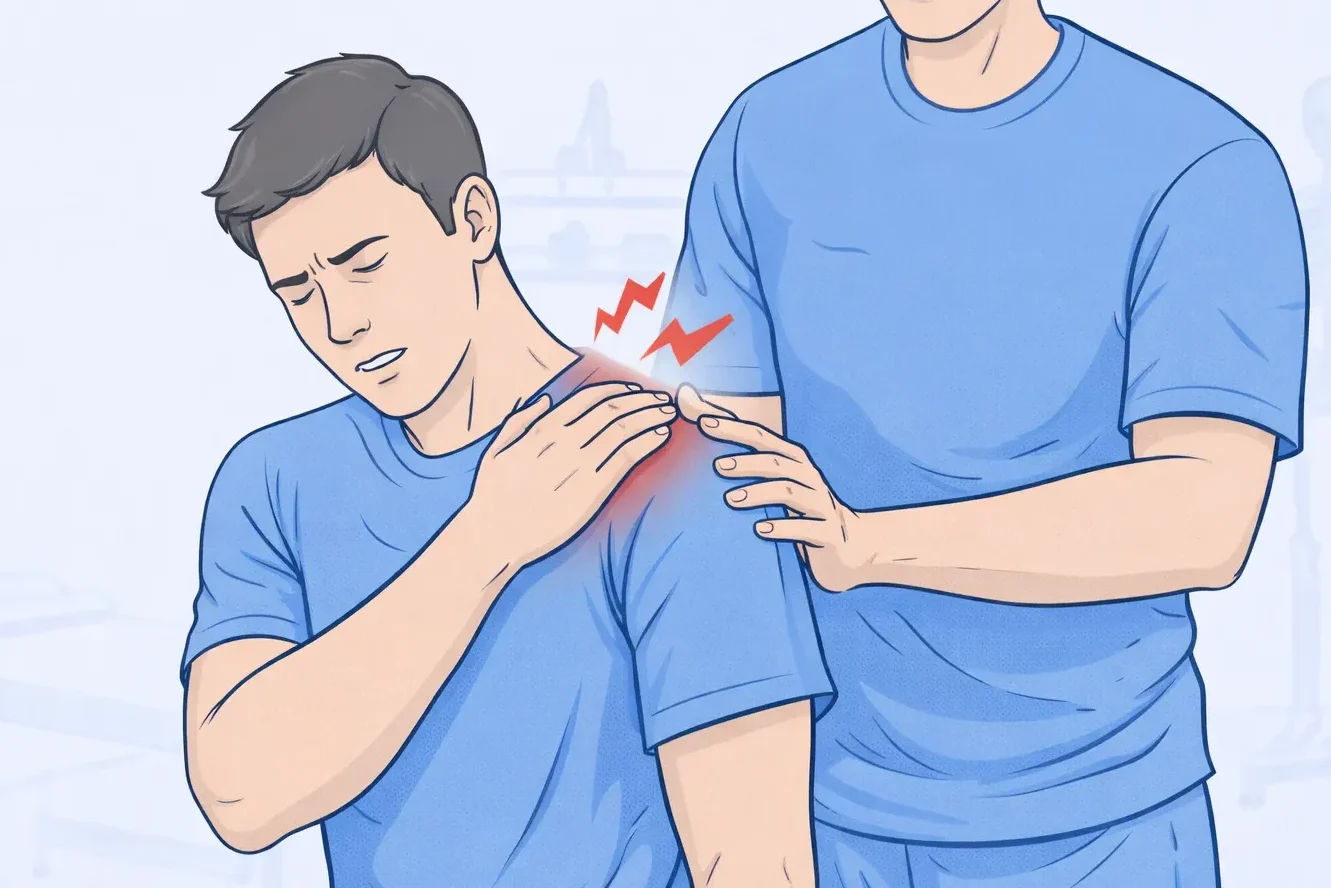
At the start of the lift, the arm is close to the body, and the rotator cuff is working with a relatively low load. As the arm approaches shoulder height, the muscles must work harder to control the joint’s position and guide the arm upward.
This is also the portion of the motion during which irritated tissues may experience greater compression or tension. If the rotator cuff tendons or surrounding structures are sensitive, symptoms often appear during this middle range.
Once the arm moves higher overhead, the shoulder blade rotates more, and the joint position changes. This can sometimes reduce irritation and make movement more comfortable again.
This pattern explains why some people notice pain during:
- Lifting the arm to the side
- Reaching to shoulder height
- Lowering the arm from overhead
- Repeated reaching tasks
- Certain gym exercises, like lateral raises
Understanding where pain occurs during movement helps physical therapists determine which movements contribute to irritation and how to adjust activity during recovery.
Why the Painful Arc Often Develops Gradually
In many cases, the painful arc develops slowly rather than appearing suddenly. Small changes in activity levels or movement patterns can gradually increase stress on the shoulder.
This can occur when someone begins new workouts, increases training volume, or performs repeated overhead tasks at work.
The shoulder is generally very tolerant of movement. Problems tend to occur when the joint is asked to handle a load it is not currently prepared to handle.
Situations that sometimes contribute include:
- Sudden increases in exercise intensity
- Repeated overhead work tasks
- Long periods of desk posture without shoulder movement
- Reduced upper back mobility
- Fatigue of the shoulder stabilizing muscles
Over time, these factors can change how the shoulder moves during arm elevation. This is when the painful arc pattern may begin to appear.
Painful Arc vs Other Types of Shoulder Pain
The painful arc is one pattern among several that clinicians look for when evaluating the shoulder. Not all shoulder pain behaves this way.
Some people experience discomfort only at the very top of the motion. Others feel pain when reaching behind their backs or when lying on their shoulders.
The painful arc specifically refers to symptoms that appear during the middle portion of arm elevation.
| Shoulder pattern | When pain appears |
|---|---|
| Painful arc | Middle of arm elevation |
| End range discomfort | Near the top of overhead reach |
| Posterior shoulder pain | Reaching behind the back |
| Night pain | Lying on the shoulder |
Understanding when symptoms appear helps physical therapists narrow down which tissues may be involved.
How Physical Therapists Evaluate a Painful Arc
During a physical therapy evaluation, the goal is to understand how the shoulder responds to movement rather than simply locating a painful spot.
The process usually begins with a discussion of daily activities, training habits, and the onset of symptoms. Many people notice a painful arc when reaching into cabinets, lifting objects, or performing overhead exercises.

The therapist will then observe how the arm moves through different ranges of elevation. Particular attention is given to when symptoms appear, how the shoulder blade moves, and whether repeated movements increase or reduce discomfort.
Sometimes the therapist will ask the patient to lift the arm several times in a row or perform small variations of the same movement. These repeated movement tests help determine whether symptoms are related to irritation, fatigue, or shoulder muscle coordination issues.
Strength testing and simple functional tasks such as reaching, lifting, or carrying objects also provide useful information about how the shoulder handles load.
| Evaluation focus | What the therapist observes |
|---|---|
| Arm elevation | When pain begins during the lift |
| Shoulder blade motion | How the shoulder blade rotates during reaching |
| Repeated movement | Whether symptoms change with repetition |
| Strength testing | How the rotator cuff responds to load |
| Functional tasks | Reaching, lifting, or carrying objects |
This process helps identify which movements are most irritating and which ones remain comfortable.
The goal is not simply to locate a painful spot, but to understand how the shoulder behaves under load.
How Physical Therapy Helps
Physical therapy focuses on improving shoulder movement and load tolerance during everyday activities.
In many cases, the first step is reducing irritation while maintaining comfortable movement. Completely avoiding shoulder movement is rarely helpful. Instead, therapists help patients identify which movements remain comfortable and which ones should be temporarily modified.
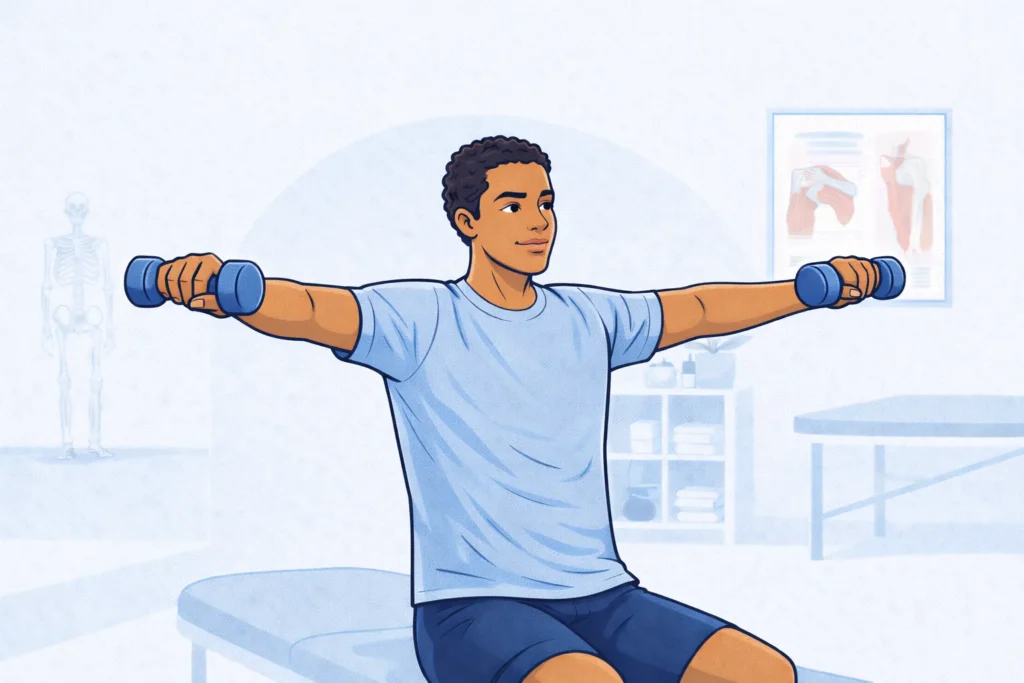
As symptoms calm down, treatment shifts toward restoring strength and coordination. Exercises are introduced gradually so the shoulder can adapt without becoming irritated again.
Rehabilitation often focuses on improving the coordination between the rotator cuff and the scapula during arm elevation. When these muscles coordinate well, the shoulder usually moves more comfortably through the range that previously produced the painful arc.
Over time, strengthening and movement retraining help the shoulder tolerate normal activities again.
Rehabilitation often includes:
- Improving shoulder blade coordination
- Strengthening the rotator cuff
- Restoring a comfortable range of motion
- Improving upper back mobility
- Gradually reintroducing overhead activity
The goal is to help the shoulder move efficiently again, rather than avoiding movement entirely.
Typical Rehabilitation Progression
As shoulder symptoms improve, rehabilitation usually progresses through several stages. The goal is to gradually increase how much movement and load the shoulder can tolerate without triggering irritation.
| Rehab phase | Focus |
|---|---|
| Early stage | Reduce irritation and restore comfortable movement |
| Strength phase | Build rotator cuff and shoulder blade strength |
| Control phase | Improve coordination during arm elevation |
| Load tolerance | Gradually reintroduce lifting and overhead activity |
| Return to activity | Resume sports or daily tasks with improved tolerance |
The pace of progression depends on how the shoulder responds to movement. Some people improve within a few weeks, while others may need a longer course of treatment if symptoms have been present for a long time.
Returning to Normal Activity
As shoulder strength and coordination improve, most people can gradually return to their normal activities.

Reaching overhead, lifting objects, and exercising typically become more comfortable as the shoulder adapts to increasing load. Some mild soreness can occur during recovery, but symptoms should settle as the shoulder builds tolerance.
Physical therapy helps guide this progression so the shoulder continues to improve rather than becoming irritated again.
Many active adults return to activities such as:
- Strength training
- Running and recreational sports
- Overhead lifting
- Yard work and home projects
- Work tasks involving reaching
Improving movement control and load tolerance often reduces the painful arc pattern over time.
When to See a Physical Therapist
Shoulder pain that persists for several weeks or interferes with normal activity warrants evaluation.
A physical therapy assessment can help identify what is contributing to the painful arc and how the shoulder responds to movement.
Treatment focuses on restoring comfortable motion, improving strength, and helping the shoulder tolerate daily activities again.
Understanding how your shoulder responds to movement allows your therapist to develop a plan to restore comfortable range of motion and help you return to normal activities.
Tags

About the Author
Dr. Traci Smiley, DPT
Traci is a licensed physical therapist and owner of Calibration Physical Therapy, serving the Kansas City area. A Board-Certified Orthopedic Clinical Specialist with advanced training in manual therapy and strength conditioning, she helps individuals overcome pain and return to what they love.