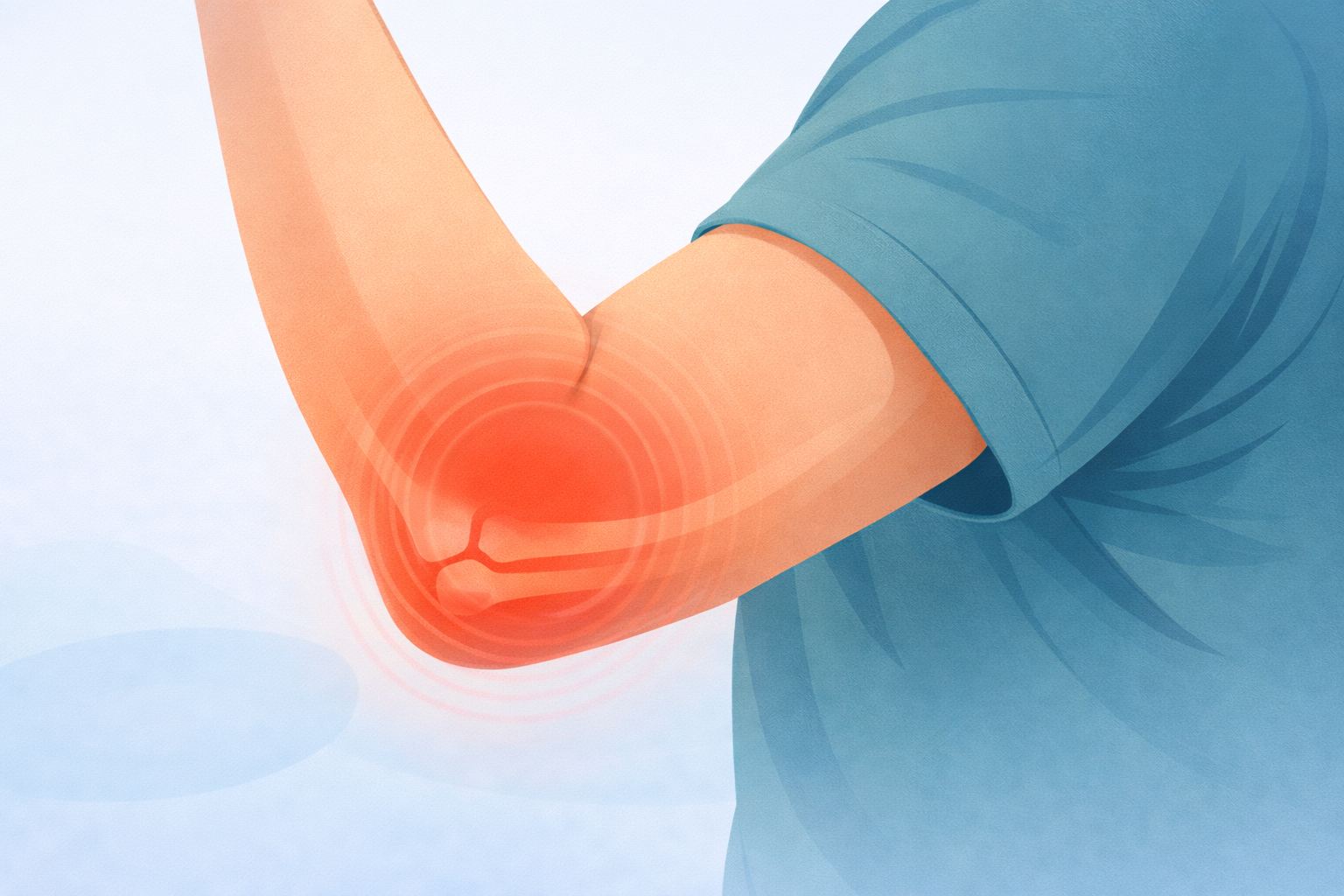
Elbow tendonitis refers to irritation of the tendons that attach the forearm muscles to the elbow. These tendons help control gripping, lifting, and wrist movement, which means they are active during everyday tasks. When these tendons are stressed repeatedly without enough recovery time, they can become sensitive and painful.
This article explains what elbow tendonitis is, common causes and symptoms, how it develops over time, and how physical therapy can help support recovery.
What Is Elbow Tendonitis?
Elbow tendonitis is a condition involving irritation of the tendons that connect the forearm muscles to the elbow joint. These tendons transmit force from the forearm muscles to the bones of the elbow, allowing the wrist and fingers to move.
When the forearm muscles contract during gripping, lifting, or twisting movements, the tendons absorb the mechanical load. If that load increases faster than the tendon can adapt, irritation may develop.
In simple terms, elbow tendonitis occurs when tendons around the elbow are asked to handle more stress than they can tolerate.
People with elbow tendonitis often notice:
- Pain around the inside or outside of the elbow
- Tenderness when touching the area
- Discomfort when gripping or lifting objects
- Reduced tolerance for repetitive arm movements
The condition usually develops gradually and is commonly caused by repeated strain over time rather than by a single injury.
Where Elbow Tendonitis Occurs
Two main tendon groups around the elbow are typically involved in elbow tendon irritation. The location of the pain often helps determine the specific condition.
| Pain location | Common name | Medical term | Movements affected |
|---|---|---|---|
| Outside elbow | Tennis elbow | Lateral epicondylitis | Wrist extension, gripping |
| Inside elbow | Golfer’s elbow | Medial epicondylitis | Wrist flexion, gripping |
Although the names come from sports, many people who develop these conditions do not play tennis or golf. The terms simply describe where the tendon irritation occurs.
Tennis Elbow (Lateral Epicondylitis)
Tennis elbow, medically known as lateral epicondylitis, affects the tendons on the outside of the elbow. These tendons help extend the wrist and fingers and stabilize the wrist during gripping tasks.
This condition often develops in people who repeatedly use their wrists and forearms in tasks such as lifting, typing, or tool use.
Common movements that may trigger symptoms include:
- Lifting objects with the palm facing downward
- Prolonged mouse use at a computer
- Using tools such as screwdrivers or hammers
- Carrying grocery bags
Pain usually occurs along the outside of the elbow and may extend slightly down the forearm.
Golfer’s Elbow (Medial Epicondylitis)
Golfer’s elbow, or medial epicondylitis, affects the tendons on the inside of the elbow. These tendons help flex the wrist and assist with gripping.
Although it is associated with golf swings, many cases occur in people who perform repetitive gripping or pulling activities.
Activities that may contribute include:
- Throwing sports
- Golf swings
- Climbing or pulling movements
- Repetitive gripping tasks
Pain is typically felt along the inside of the elbow and may increase when gripping objects or flexing the wrist.
Why Elbow Tendonitis Develops
Tendons are designed to tolerate repeated loads and adapt to physical stress. Gradual loading helps keep tendons strong. Problems tend to occur when the amount of stress placed on the tendon increases faster than the body can adapt.
Several factors can increase strain on the elbow tendons.
Repetitive Movements
Repeated gripping, lifting, or twisting can gradually overload the tendon. These motions are common in both work and recreational activities.
Sudden Changes in Activity
A rapid increase in sports training, exercise intensity, or manual work can place more demand on the tendon than it is prepared to handle.
Work Demands
Some occupations involve constant hand and wrist activity. Examples include computer work, construction, manufacturing, and mechanical repair.
Movement Mechanics
The elbow works closely with the shoulder, wrist, and hand. If movement patterns place extra stress on the forearm muscles, the elbow tendons may take on more load than intended.
These factors often combine over time, gradually increasing the stress on the tendon.
Common Symptoms of Elbow Tendonitis
Symptoms typically develop gradually rather than appearing suddenly. Many people first notice discomfort during tasks that involve gripping or wrist movement.
Common symptoms include:
- Pain along the inside or outside of the elbow
- Tenderness when pressing on the affected area
- Discomfort when gripping objects
- Pain when lifting or twisting the wrist
- A sense of fatigue in the forearm during activity
These symptoms are often triggered by everyday tasks. Examples:
- Shaking hands
- Turning a doorknob
- Opening jars
- Carrying grocery bags
- Lifting a coffee mug
The discomfort is often activity-related, meaning it increases during or after repeated arm use.
When Symptoms Usually Appear
The timing of symptoms can vary depending on how irritated the tendon becomes.
| Timing of symptoms | What people often notice |
|---|---|
| During activity | Pain when gripping or lifting |
| After activity | Aching or soreness following repeated arm use |
| Later in the day | Increased elbow sensitivity after a day of activity |
Early in the course of the condition, symptoms may settle quickly with rest. As irritation progresses, the tendon may need more recovery time between activities.
Who Is Most Likely to Develop Elbow Tendonitis?
Elbow tendon irritation can affect many different types of people. It is most common in individuals who perform repetitive arm or hand movements as part of their work, sports, or hobbies.
Occupations and activities that frequently involve repetitive gripping or wrist movement can increase the likelihood of developing symptoms.
Groups commonly affected include:
- Office workers who spend long hours using a mouse or keyboard
- Tradespeople who regularly use tools
- Tennis and racquet sport athletes
- Golfers
- Weightlifters
- Musicians
- Rock climbers
Age may also influence tendon tolerance. Tendons can adapt more slowly to sudden changes in workload, making gradual training progression more important.
How Elbow Tendonitis Progresses
Elbow tendon irritation often develops in stages rather than appearing all at once. Recognizing these stages can help people adjust their activities before symptoms worsen.
A common progression may look like this:
- Activity levels increase
- Mild soreness appears after activity
- Recovery between activities takes longer
- Pain begins during activity
- Everyday tasks may begin to trigger discomfort
Early symptoms are often mild and may resolve quickly with rest. However, if the same level of activity continues without adjustment, the tendon may remain irritated, and recovery may take longer.
Understanding how the condition progresses can help guide changes in activity and support a gradual return to normal movement.
How Physical Therapy Helps
Physical therapy focuses on helping the tendon tolerate normal activity again while improving overall arm function. Treatment usually addresses both the irritated tendon and the movement patterns that may be contributing to the stress.
Several areas are often addressed during therapy.
Load Management
Reducing or modifying activities that irritate the tendon helps calm symptoms while the tendon begins to recover.
This often involves adjusting:
- Frequency of activity
- Intensity of movement
- Technique during lifting or gripping
- Duration of repetitive tasks
Small adjustments can often reduce tendon stress without eliminating activity entirely.
Gradual Strength Development
Strengthening exercises help the forearm muscles support the elbow more effectively. These exercises are usually introduced gradually to match the tendon’s tolerance.
Programs may focus on improving:
- Wrist strength
- Grip strength
- Forearm endurance
- Shoulder stability
Strengthening surrounding muscles helps distribute the load more evenly across the arm.
Movement Assessment
Sometimes elbow irritation is influenced by how the arm moves during everyday tasks.
A physical therapist may evaluate:
- Grip mechanics
- Wrist positioning during lifting
- Shoulder coordination during arm movement
- Technique used during sports or work tasks
Improving movement efficiency can reduce unnecessary strain on the elbow tendons.
Activity Guidance
Many people worry that continuing activity will worsen their symptoms. While rest is the best medicine, and taking a 6-8 week break is recommended, in reality, complete rest is rarely the long-term solution.
Physical therapy often focuses on finding the right level of activity while the tendon gradually adapts. This approach allows people to maintain strength and movement during recovery.
When to Consider Seeing a Physical Therapist
Many cases of elbow tendon irritation improve with adjustments in activity. However, persistent symptoms may benefit from professional evaluation.
You may want to consider an evaluation if:
- Pain lasts several weeks
- Symptoms continue to worsen
- Grip strength feels reduced
- Daily tasks become difficult
- Work or sports activities are limited by elbow pain
A physical therapist can help identify factors contributing to the irritation and develop a plan to restore normal movement and function.
The Importance of Early Management
Addressing elbow discomfort early often leads to a smoother recovery process. When symptoms are recognized early, small changes in workload or movement patterns can reduce stress on the tendon.
These changes may include modifying activity levels, adjusting lifting techniques, improving shoulder and forearm strength, or spacing out repetitive tasks during the day.
Early management helps the tendon gradually regain tolerance to normal activity.
Takeaway
Elbow tendonitis is a common condition involving irritation of the tendons that connect the forearm muscles to the elbow. It usually develops gradually due to repeated stress on the tendon rather than a single injury.
Symptoms often appear during gripping, lifting, or repetitive arm use. Conditions such as tennis elbow and golfer’s elbow describe tendon irritation in different areas of the elbow.
Physical therapy can guide recovery by improving strength, assessing movement patterns, and helping the tendon safely adapt to normal activity again.
If elbow pain is limiting your ability to work, exercise, or perform everyday tasks, a movement evaluation can help identify contributing factors and guide the next steps in recovery.
The team at Calibration Physical Therapy can help assess your symptoms and develop a plan that supports long-term health.
Tags

About the Author
Dr. Traci Smiley, DPT
Traci is a licensed physical therapist and owner of Calibration Physical Therapy, serving the Kansas City area. A Board-Certified Orthopedic Clinical Specialist with advanced training in manual therapy and strength conditioning, she helps individuals overcome pain and return to what they love.