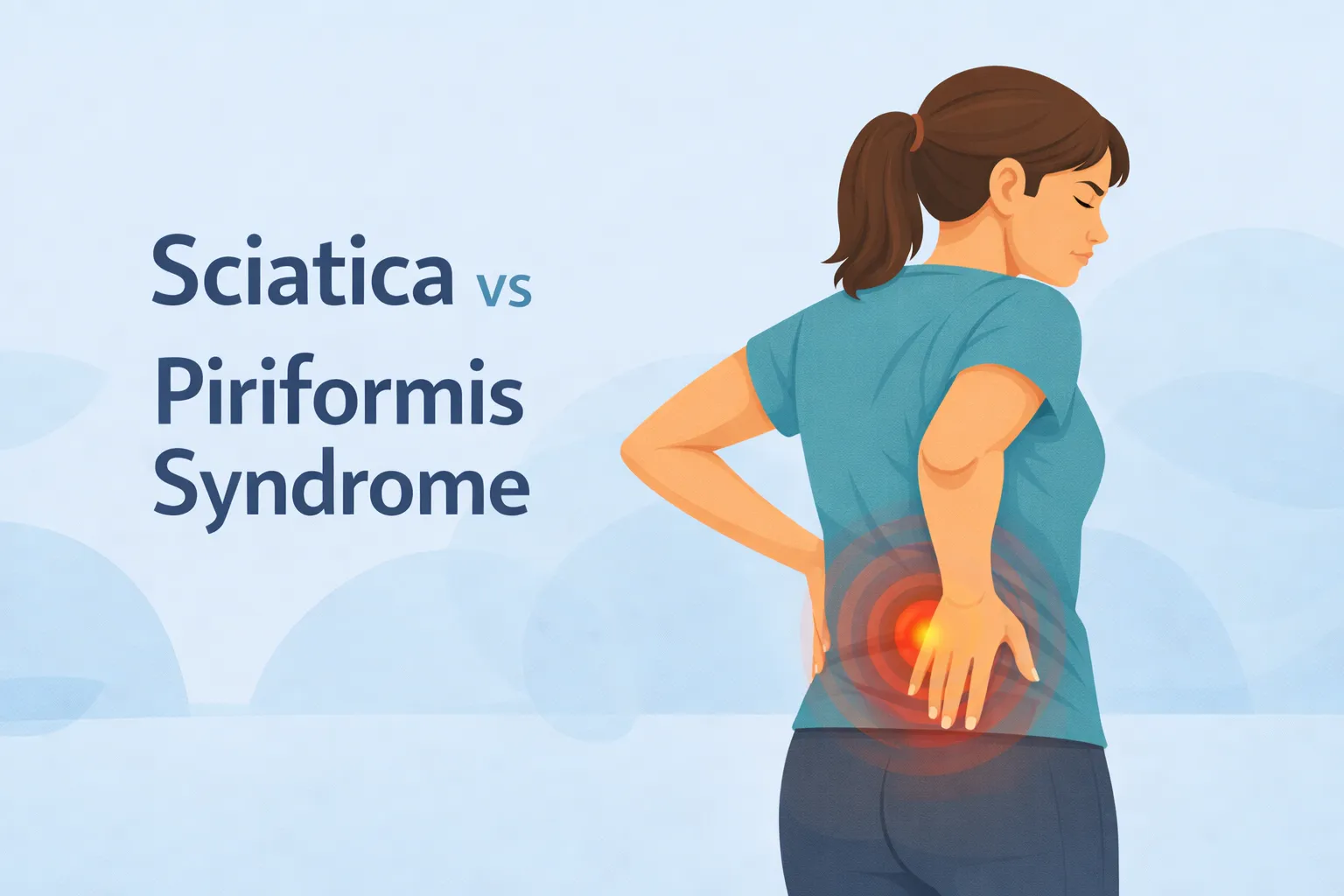
Pain that travels from the lower back or hip down the leg is often described as sciatica. However, that term does not always identify the true source of the problem. Because the symptoms can feel very similar, people are often unsure whether they are dealing with true sciatica or piriformis syndrome.
Understanding the difference can help guide treatment and determine whether the problem originates in the spine or the hip. This article explains how these conditions differ, what symptoms to watch for, and how physical therapy can help address the underlying cause.
What Is the Difference Between Sciatica and Piriformis Syndrome?
Sciatica and piriformis syndrome both involve irritation of the sciatic nerve, but the source of that irritation is different.
- Sciatica usually occurs when the sciatic nerve is compressed or irritated in the lower spine.
- Piriformis syndrome occurs when the piriformis muscle in the hip presses on or irritates the sciatic nerve.
Both conditions can cause pain that travels down the back of the leg, but the difference lies in the origin of the nerve irritation.
| Feature | Sciatica | Piriformis Syndrome |
|---|---|---|
| Source of irritation | Lower spine | Piriformis muscle in the hip |
| Typical cause | Disc bulge, disc herniation, or spinal narrowing | Tight or irritated piriformis muscle |
| Pain pattern | Often begins in the buttocks | Often begins in the buttock |
| Movement triggers | Bending, lifting, prolonged sitting | Sitting, running, and climbing stairs |
| Treatment focus | Spine mobility and nerve unloading | Hip mobility and muscle tension reduction |
While the symptoms can feel similar, identifying where the irritation begins is important. Treatment for a spine-related nerve irritation often focuses on spinal mobility and nerve compression, whereas piriformis-related symptoms respond better to hip and soft-tissue treatment. A proper evaluation helps determine which area is actually driving the symptoms.
What Is Sciatica?

Sciatica refers to symptoms caused by irritation or compression of the sciatic nerve in the lower back. The sciatic nerve is the largest nerve in the body and travels from the lumbar spine through the hips and down each leg.
When structures in the lower spine place pressure on this nerve, people may feel pain, tingling, or numbness that travels down the leg. The symptoms may start in the lower back and spread through the buttocks, thighs, and even into the calf or foot.
Common causes of sciatica include:
- Disc bulges or herniations
- Degenerative changes in the spine
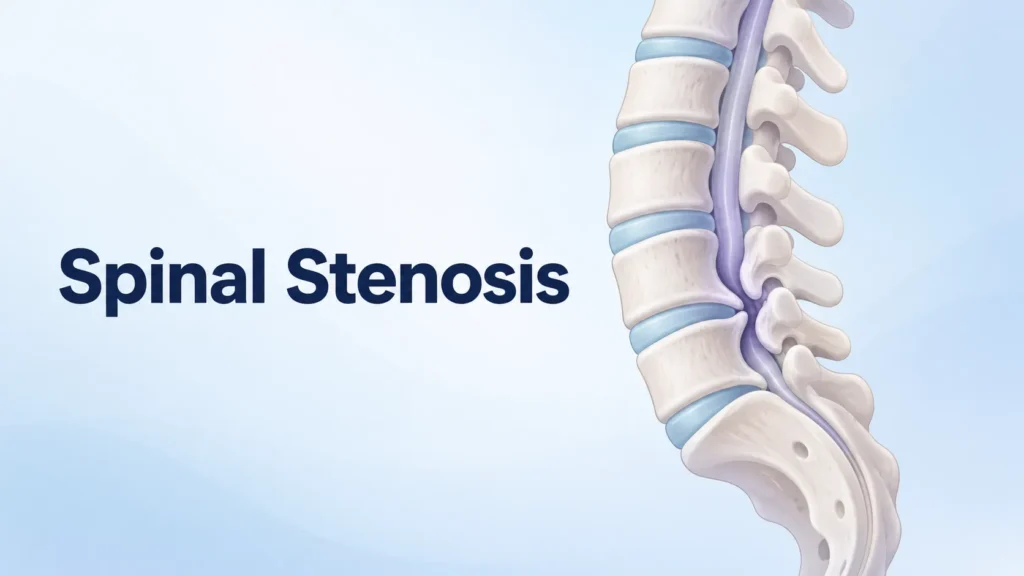
- Spinal stenosis
- Inflammation around nerve roots
- Prolonged positions that place stress on the lower back
Sciatica symptoms often worsen with certain spinal movements such as bending forward, sitting for long periods, or lifting.
Not all leg pain that travels down the back of the leg is caused by a disc problem. However, the pattern of symptoms, movement testing, and physical examination findings can often help determine whether the spine is the primary source of irritation.
What Is Piriformis Syndrome?

Piriformis syndrome occurs when the piriformis muscle irritates the sciatic nerve as it passes through the hip.
The piriformis is a small muscle located deep in the buttocks. It helps rotate the hip and stabilize the pelvis during walking and running. In some people, the sciatic nerve passes directly beneath or even through this muscle.
If the piriformis becomes tight, irritated, or inflamed, it can place pressure on the nearby nerve.
This may lead to symptoms such as:
- Deep buttock pain
- Pain that travels down the back of the leg
- Discomfort while sitting
- Pain during walking or running
- Increased symptoms with prolonged sitting
Although the symptoms may feel similar, understanding whether the issue originates in the spine or the hip is key to choosing the most effective treatment approach.
Unlike spinal sciatica, piriformis syndrome often does not start with significant lower back pain.
Key Differences in Symptoms
Because both conditions involve the same nerve, the symptoms can overlap. However, the location and triggers of the pain can provide useful clues.
Pain Location
The starting point of the pain often provides the most helpful hint.
Sciatica typically begins in the lower back before spreading down the leg. Piriformis syndrome usually begins as deep buttock pain.
People with piriformis syndrome often describe the sensation as a tight or aching feeling in the center of the buttocks.
Pain Triggers
Certain activities may aggravate one condition more than the other.
Sciatica symptoms often worsen with:
- Bending forward
- Lifting
- Sitting for extended periods
- Coughing or sneezing
Piriformis syndrome symptoms are more commonly triggered by:
- Sitting on hard surfaces
- Running
- Climbing stairs
- Rotating the hip
Back Pain vs Hip Pain
Another helpful distinction is whether lower back pain is present.
Sciatica commonly includes lower back discomfort. Piriformis syndrome often involves minimal or no back pain, with most symptoms concentrated in the hip and buttock region.
How to Tell if Your Pain Is More Likely Sciatica or Piriformis Syndrome
Although both conditions can cause similar symptoms, certain patterns can make one condition more likely than the other. A full evaluation is the best way to determine the source, but some general clues can help narrow things down.
| Symptom pattern | More common with Sciatica | More common with Piriformis Syndrome |
|---|---|---|
| Pain starts in the lower back | ✓ | |
| Pain starts deep in the buttock | ✓ | |
| Symptoms worsen when bending forward | ✓ | |
| Symptoms worsen after sitting for long periods | ✓ | ✓ |
| Pain triggered by running or climbing stairs | ✓ | |
| Pain improves with spinal movement changes | ✓ | |
| Pain improves with hip stretching or movement | ✓ |
These patterns are not definitive diagnoses, but they can provide helpful clues. Because the sciatic nerve travels through both the spine and the hip, symptoms sometimes overlap, which is why movement testing during a physical therapy evaluation is often necessary.
Why These Conditions Are Often Confused
The sciatic nerve travels through several areas of the body. When symptoms appear in the back of the leg, it can be difficult to determine where the irritation is actually occurring.
The sciatic nerve is a long nerve that travels from the lower spine through the hip and down the back of the leg. Because irritation can occur anywhere along this path, symptoms can feel similar even when the underlying cause is different.
Both sciatica and piriformis syndrome can produce:
- Radiating leg pain
- Tingling or numbness
- Tightness in the back of the thigh
- Discomfort when sitting
Without a proper evaluation, people may assume they have a spinal problem when the issue is actually coming from the hip, or vice versa.
A physical therapy assessment can help identify whether symptoms are more likely related to spinal mechanics or hip muscle tension.
How Physical Therapy Helps

Physical therapy focuses on identifying where the sciatic nerve is irritated and addressing movement or mobility limitations that contribute to the problem. Because sciatica and piriformis syndrome originate in different parts of the body, treatment strategies often focus on distinct regions.
Treatment approaches vary depending on the origin of the nerve irritation.
For Sciatica
When symptoms originate from the lower spine, therapy may focus on:
- Improving spinal mobility
- Reducing nerve irritation
- Strengthening core support muscles
- Modifying positions that aggravate the nerve
Patients often benefit from guided movement strategies that reduce pressure on the affected nerve root.
For Piriformis Syndrome
If the piriformis muscle is the source of irritation, therapy typically focuses on:
- Improving hip mobility
- Reducing muscle tension in the piriformis
- Strengthening surrounding hip muscles
- Addressing movement patterns that overload the hip
These changes help reduce pressure on the sciatic nerve as it passes through the hip.
When to Consider a Physical Therapy Evaluation

If pain is traveling from the lower back or hip down the leg and does not improve with simple rest or activity modification, a professional evaluation can help clarify the cause.
Because symptoms from the spine and hip can overlap, a physical therapy assessment focuses on movement testing, nerve sensitivity, and hip and spine mobility to determine where the irritation is occurring.
Physical therapy evaluation may be helpful if you notice:
- Persistent pain in the buttock or leg
- Symptoms that worsen with sitting
- Pain that travels down the back of the thigh
- Recurring episodes of nerve-related discomfort
- Difficulty returning to exercise or daily activity
Early evaluation can help determine whether symptoms originate from the spine, the hip, or the surrounding muscles. Addressing the problem early often makes recovery easier and helps people return to normal activity with less disruption.
An experienced PT clinician can often narrow down the source of symptoms by observing how the body responds to different movements and positions.
Bottom Line
Sciatica and piriformis syndrome can produce similar symptoms because both involve irritation of the sciatic nerve.
The key difference lies in where the irritation occurs:
- Sciatica usually originates in the lower spine.
- Piriformis syndrome typically begins in the hip.
Identifying the source of the irritation is important for choosing the right treatment approach. With proper assessment and targeted physical therapy, many people can reduce symptoms and return to normal activity.
If you are experiencing persistent pain that travels from the hip or lower back down the leg, a movement evaluation can help identify the cause and guide the next steps.
Although the symptoms may feel similar, understanding whether the issue originates in the spine or the hip is key to choosing the most effective treatment approach.
Schedule a Movement Assessment
If you are experiencing leg or buttock pain or possible sciatica symptoms, our team at Calibration Physical Therapy can help evaluate the underlying cause.
A physical therapy assessment can identify whether your symptoms are coming from the spine, the hip, or the surrounding muscles. From there, we can help develop a plan to restore comfortable movement and return to the activities you enjoy.
Tags

About the Author
Dr. Traci Smiley, DPT
Traci is a licensed physical therapist and owner of Calibration Physical Therapy, serving the Kansas City area. A Board-Certified Orthopedic Clinical Specialist with advanced training in manual therapy and strength conditioning, she helps individuals overcome pain and return to what they love.