Cupping therapy has become more visible in recent years, especially in sports and orthopedic settings. You may have seen circular marks on athletes or heard it described as “myofascial decompression,” but many people are unsure what it actually does.
In this guide, we’ll cover how cupping therapy works, what it feels like, what it is commonly used for in physical therapy, what research supports, and when it may or may not be appropriate.
If you’re considering cupping or simply want to understand it better before an appointment, this article covers the essentials.
What Is Cupping Therapy?
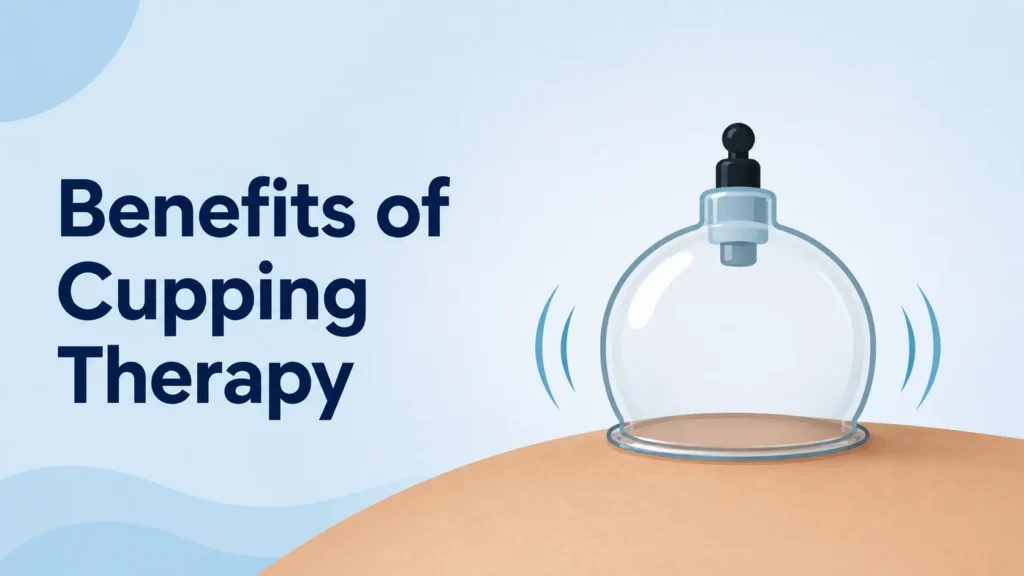
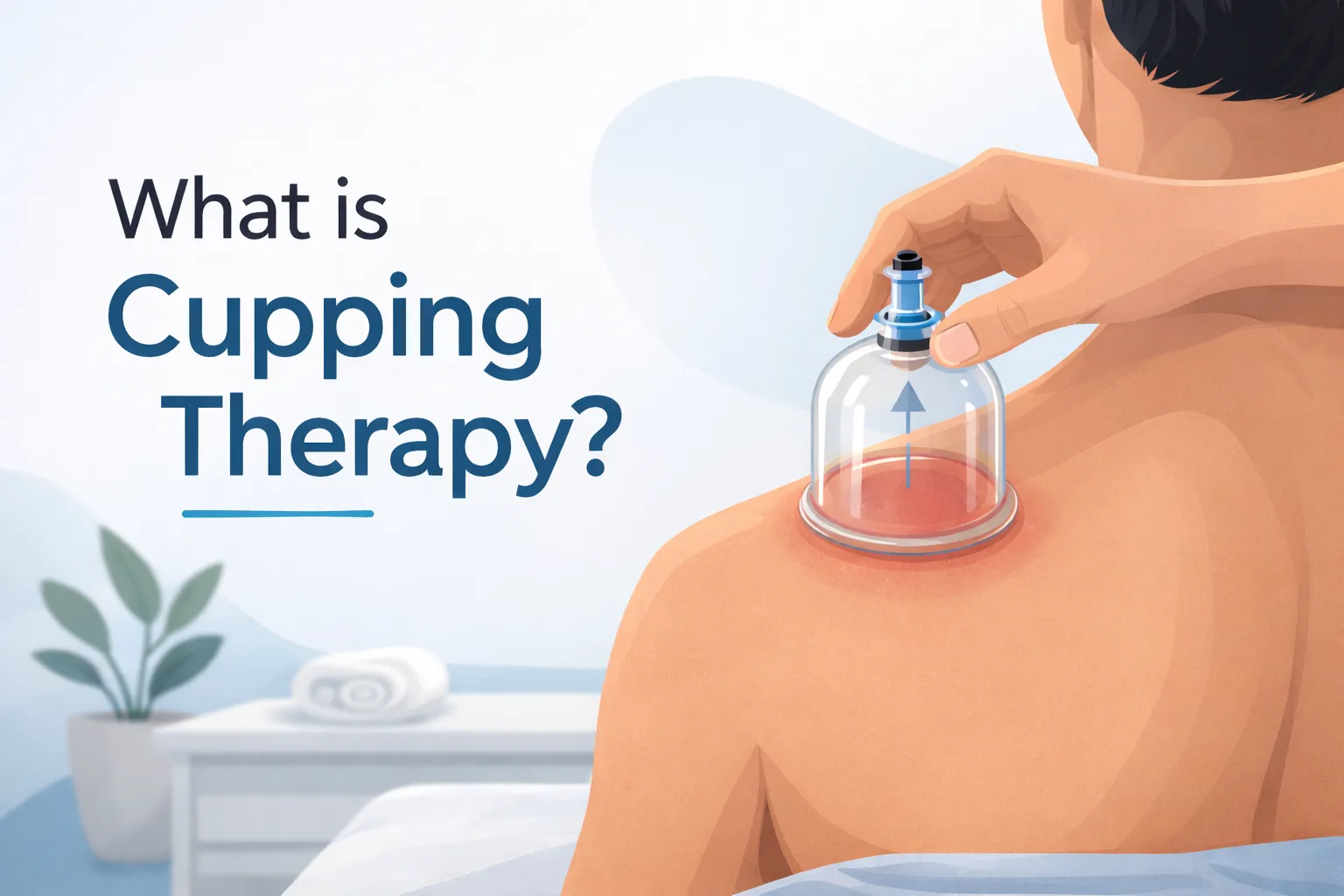
Cupping therapy is a soft tissue treatment technique that uses controlled suction to lift the skin and underlying tissue. In physical therapy, it is used to support mobility, reduce muscular tension, and improve comfort with movement.
Rather than compressing tissue, as massage does, cupping creates decompression by gently lifting tissue away from underlying layers. This shift in pressure can influence circulation, tissue glide, and the nervous system’s interpretation of tight or sensitive areas.
In an outpatient rehabilitation setting, cupping is not used as a standalone solution. It is selectively integrated into a broader treatment plan that includes mobility exercises, strengthening, and progressive loading to support long-term improvement.
How Cupping Therapy Works
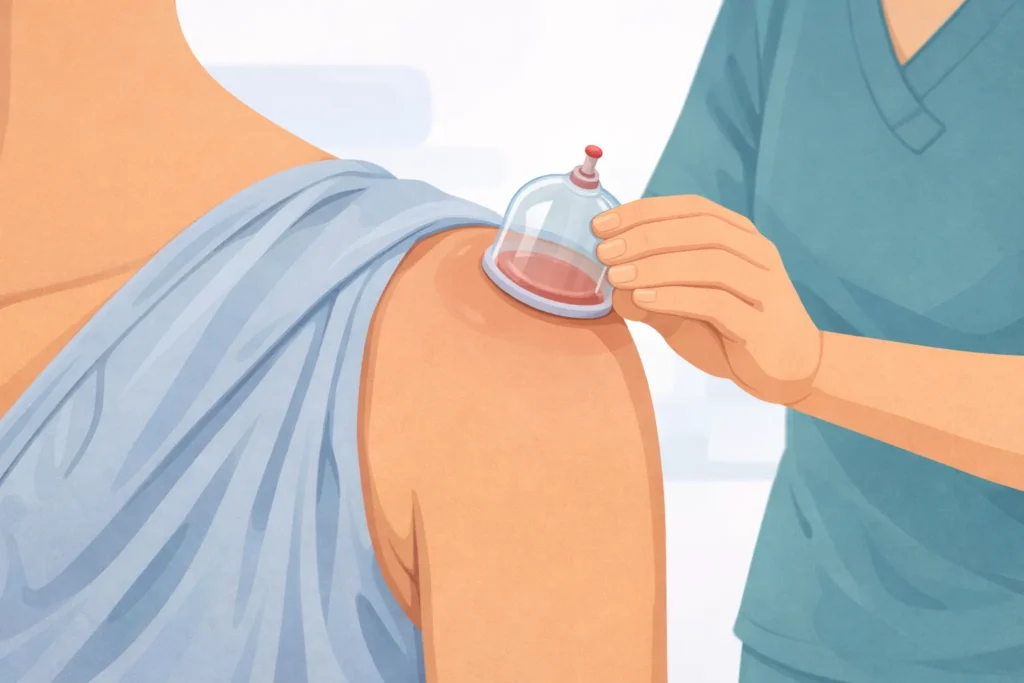
Cupping therapy works by creating negative pressure over a targeted area of soft tissue. A cup is placed on the skin, and suction gently lifts the tissue upward.
This decompression alters the mechanical environment of the area. Instead of pressing into tissue, cupping reduces compressive load and may allow tissue layers to move more freely.
From a rehabilitation perspective, the goal is not to force structural change. It is to temporarily reduce sensitivity and improve movement tolerance, allowing strengthening and mobility work to be performed more effectively.
The Basic Mechanism
When suction is applied:
- The skin and superficial fascia are lifted upward
- Local blood flow may increase
- Tissue layers may glide more freely
- Sensory receptors in the area are stimulated
This sensory input can alter pain perception and reduce protective muscle guarding.
Cupping does not “pull toxins out” of the body. It does not permanently break apart scar tissue in a single session. Cupping therapy’s effects are more closely related to changes in circulation and modulation of the nervous system.
When combined with active movement, these short-term changes can support longer-term mobility gains.
Types of Cupping Used in Physical Therapy
In an outpatient PT setting, you will typically see:
- Static cupping: The cup is placed and left in one spot for several minutes.
- Moving cupping: The cup is gently glided across the skin with lotion to allow movement.
- Active cupping: The cup stays in place while the patient moves the joint or muscle underneath.
Active cupping is common in rehab because it combines mobility work with tissue decompression.
Why Movement Is Often Combined With Cupping
In many cases, cupping is paired with active motion. For example:
- Shoulder elevation while cups are placed along the upper back
- Ankle mobility drills during calf cupping
- Thoracic rotation exercises with cups along the spine
The goal is to reinforce improved movement while the tissue is more tolerant. Without follow-up strengthening or mobility work, the effects of cupping are usually temporary. Lasting improvement comes from building strength and movement capacity over time.
What Cupping Therapy Feels Like
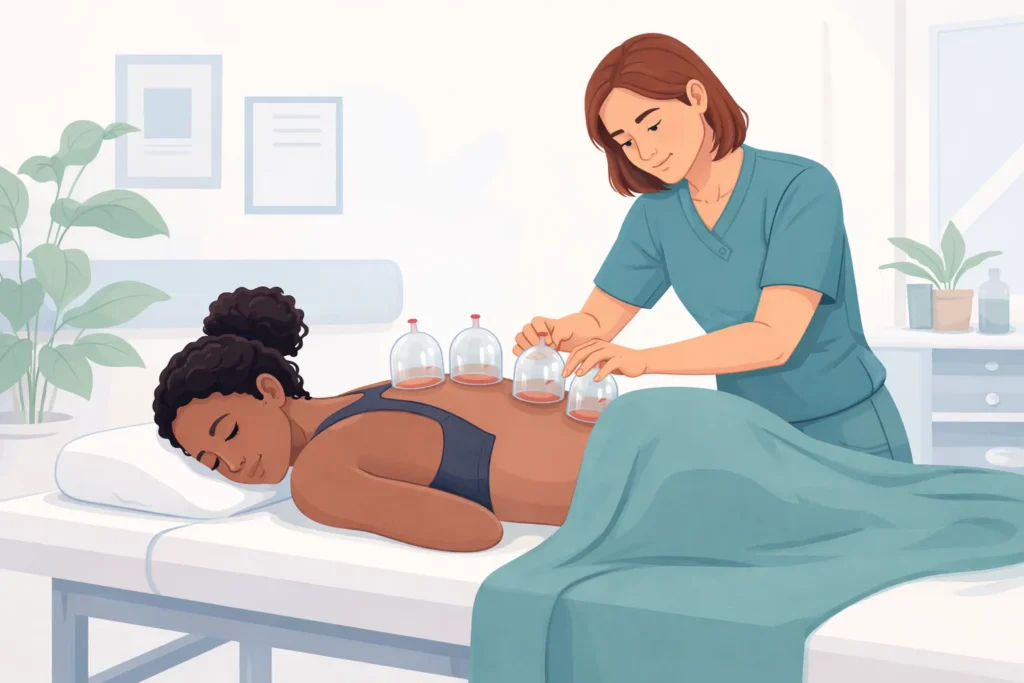
Cupping typically feels like a firm pulling or lifting sensation. The pressure is adjustable and should remain tolerable throughout treatment.
The first few seconds can feel tight, especially in sensitive or restricted areas. That sensation usually settles quickly as the tissue adapts.
After treatment, it is common to notice:
- Mild soreness similar to post-exercise soreness
- Circular discoloration at the cup sites
- A temporary sense of looseness or improved mobility
The circular marks are not traditional bruises. They occur because small capillaries respond to changes in pressure. The intensity and color vary by individual and typically fade within several days.
The presence or darkness of marks does not indicate the severity of dysfunction. It simply reflects how your tissue responded to suction.
What Is Cupping Used For in Physical Therapy?
Cupping is rarely used in isolation. It is usually combined with strengthening, mobility work, and movement retraining.
Common reasons a physical therapist may use cupping include:
Muscle Tightness and Guarding
Persistent tightness is often a protective response rather than a true shortening of muscle.
When a muscle guards due to irritation, overuse, or previous injury, it may feel stiff or restricted. Cupping can provide sensory input that temporarily reduces this protective tone.
This may help:
- Improve tolerance to stretching or mobility work
- Decrease discomfort during strengthening exercises
- Restore more natural movement patterns
Common areas include the upper back, shoulders, calves, and hip flexors.
Scar Tissue and Post-Surgical Mobility
After surgery or injury, tissue may feel stiff or restricted as it heals.
Cupping may be used around fully healed incisions or areas of mobility limitation to encourage improved tissue glide. The intent is not to aggressively break apart scar tissue, but to support gradual mobility alongside strengthening and functional movement work.
Joint Mobility Support
Joint stiffness is often influenced by surrounding soft tissue.
If mobility is limited by muscular guarding or fascial restriction, cupping may be used briefly before active drills to improve comfort and range.
Examples include:
- Limited shoulder elevation
- Stiff thoracic spine rotation
- Restricted ankle dorsiflexion
Cupping is used to support movement practice, not replace it.
Recovery and Overuse Irritation
Repetitive loading from running, lifting, or prolonged sitting can create localized soreness.
Cupping may be used to:
- Improve circulation in irritated areas
- Reduce muscle guarding
- Improve comfort before returning to activity
It is most effective when paired with load management strategies and progressive strengthening rather than used as a passive recovery method alone.
Is Cupping Therapy Evidence-Based?
Cupping therapy has been studied primarily for musculoskeletal pain. While study quality varies, several findings are consistent.
Research suggests cupping may:
- Reduce short-term pain
- Improve the short-term range of motion
- Be generally safe when applied appropriately
Evidence does not support permanent structural change from cupping alone.
Long-term improvement remains dependent on progressive strengthening, load management, and consistent movement. Cupping may assist with symptom reduction, but it is not a substitute for exercise-based rehabilitation.
Does Cupping Permanently Change Tissue?
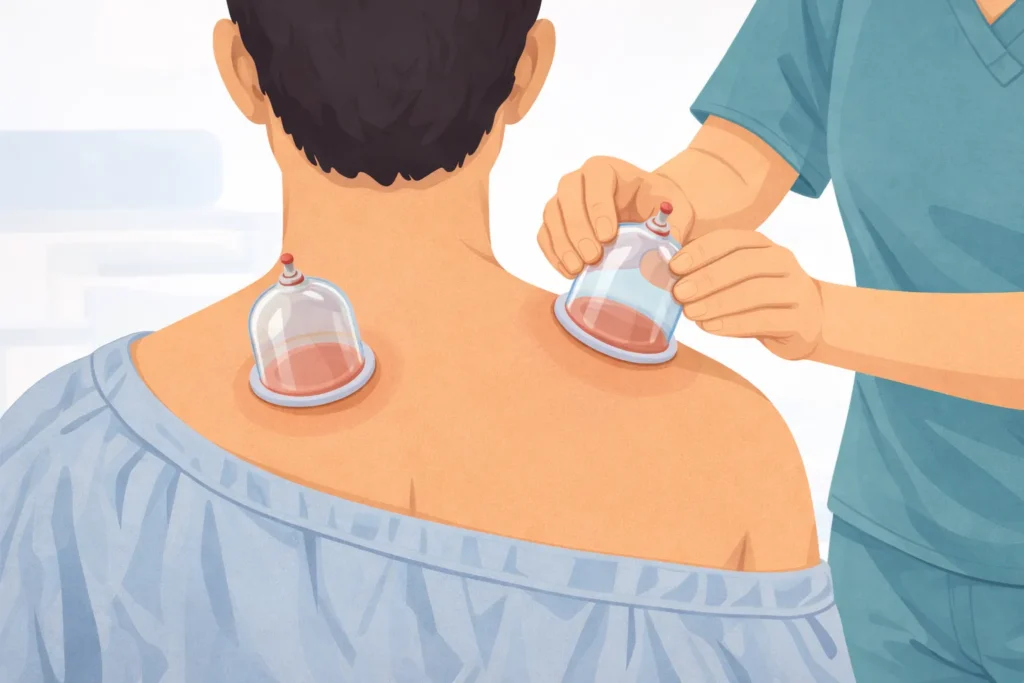
Cupping does not permanently lengthen muscle or break down scar tissue in one session.
Soft tissue adapts over time through:
- Gradual loading
- Repeated movement
- Progressive strengthening
Cupping may temporarily improve comfort and mobility, making it easier to perform exercises effectively. The durable change comes from consistent movement and progressive stress applied safely.
Is Cupping Safe?
When performed by a licensed physical therapist, cupping is generally safe.
Common temporary effects include:
- Mild soreness
- Temporary skin discoloration
- Slight skin sensitivity in the treated area
Cupping should be avoided or modified in cases of:
- Open wounds or active skin infections
- Unhealed surgical sites
- Certain bleeding disorders
- Fragile or highly sensitive skin
A thorough movement assessment and medical screening help determine whether cupping is appropriate for you.
Who May Benefit From Cupping Therapy?
Cupping has many benefits and may be helpful for individuals experiencing:
- Localized muscular tightness
- Reduced mobility due to soft tissue restriction
- Activity-related soreness
- Movement limitations associated with overuse
It is most useful as part of a structured rehabilitation plan rather than as an isolated treatment.
Some individuals may prefer alternative approaches such as manual therapy, dry needling, or exercise-based interventions alone. The appropriate choice depends on clinical findings and patient preference.
What to Expect During a Cupping Session
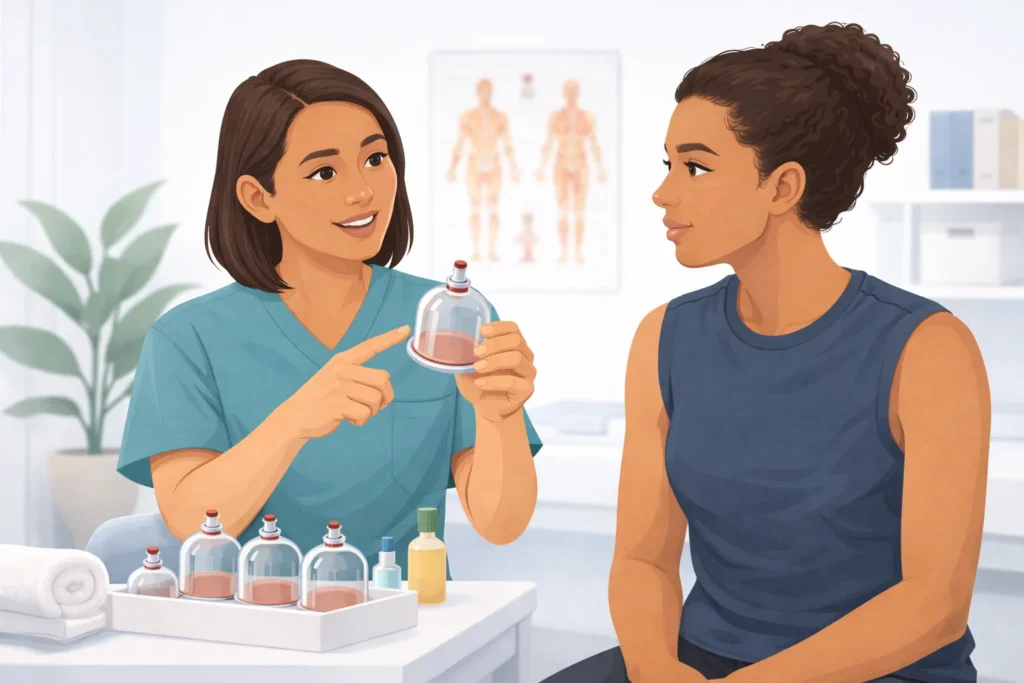
If cupping is appropriate for your condition, your physical therapist will first assess your movement patterns and identify specific areas of restriction or sensitivity.
During treatment:
- Cups are placed on targeted areas.
- Suction intensity is adjusted to your comfort level.
- You may perform guided movement while the cups remain in place.
- The cups are removed after several minutes.
Most sessions include strengthening or mobility work immediately afterward. Cupping is integrated into a broader treatment plan rather than performed in isolation.
At Calibration Physical Therapy, cupping is used selectively based on individual movement assessment rather than as a routine add-on.
Common Questions About Cupping
Does cupping hurt?
Cupping should feel like firm pulling or pressure, not sharp pain. Intensity is adjusted based on comfort and tissue response.
Are the marks dangerous?
No. The circular discoloration is temporary and fades within several days. It reflects capillary response to pressure changes, not tissue damage.
How many sessions are needed?
There is no standard number. Some individuals benefit from occasional use within a rehab plan. It is rarely performed as a long-term standalone treatment.
Is this the same cupping that professional athletes use?
The basic principle is similar. In a clinical setting, cupping is applied based on individual assessment rather than routine or trend.
Bottom Line
Cupping therapy is a soft tissue technique that uses controlled suction to influence mobility, circulation, and pain perception.
In physical therapy, it is used as an adjunct tool rather than a primary intervention. It may reduce short-term tightness and improve movement tolerance, especially when integrated with strengthening and progressive loading. Sustainable improvement comes from building strength, restoring movement capacity, and managing activity levels appropriately.
If you are experiencing stiffness, soreness, or mobility limitations, a movement assessment can help determine whether cupping or another approach best supports your goals.
Tags

About the Author
Dr. Traci Smiley, DPT
Traci is a licensed physical therapist and owner of Calibration Physical Therapy, serving the Kansas City area. A Board-Certified Orthopedic Clinical Specialist with advanced training in manual therapy and strength conditioning, she helps individuals overcome pain and return to what they love.